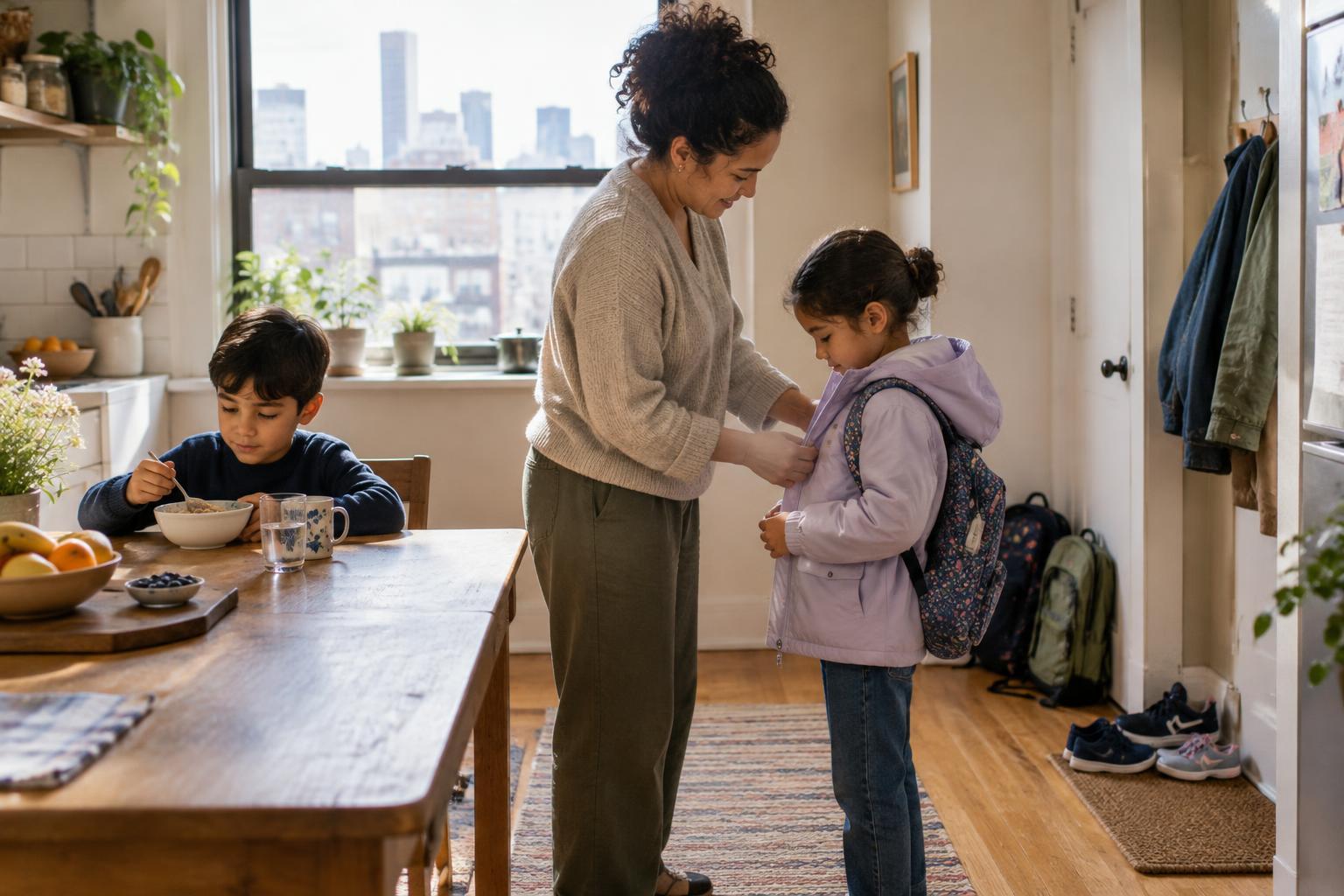
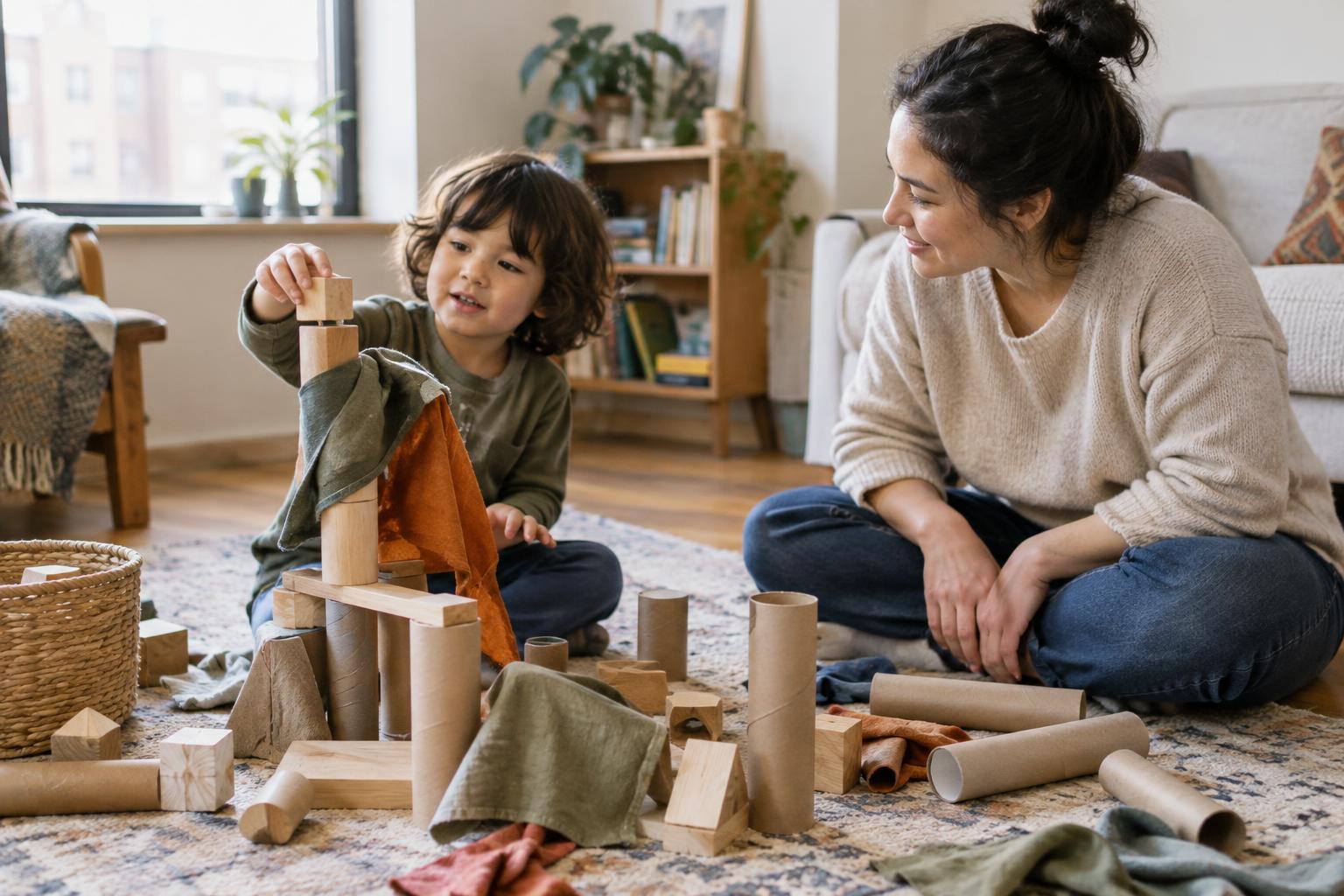
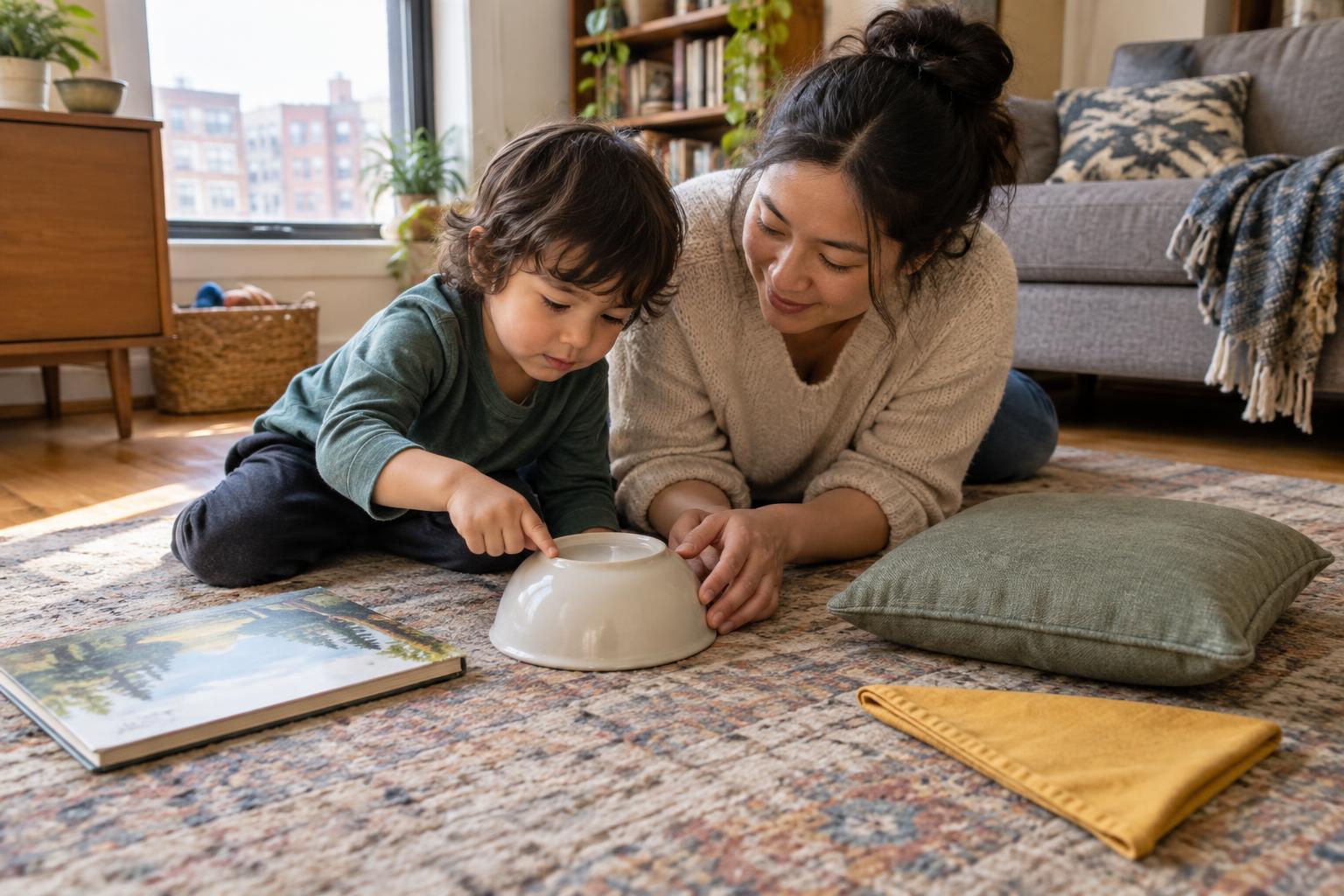
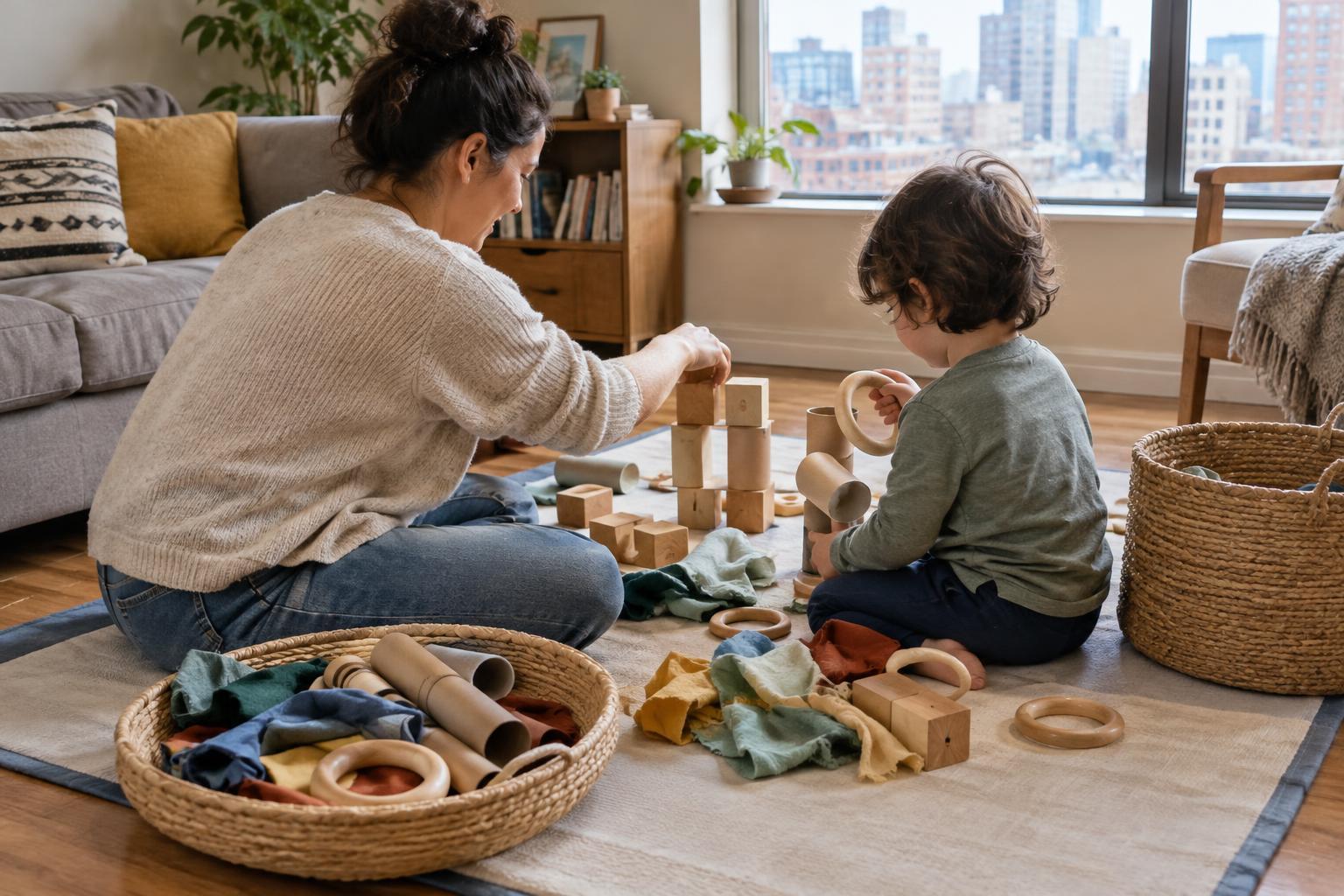
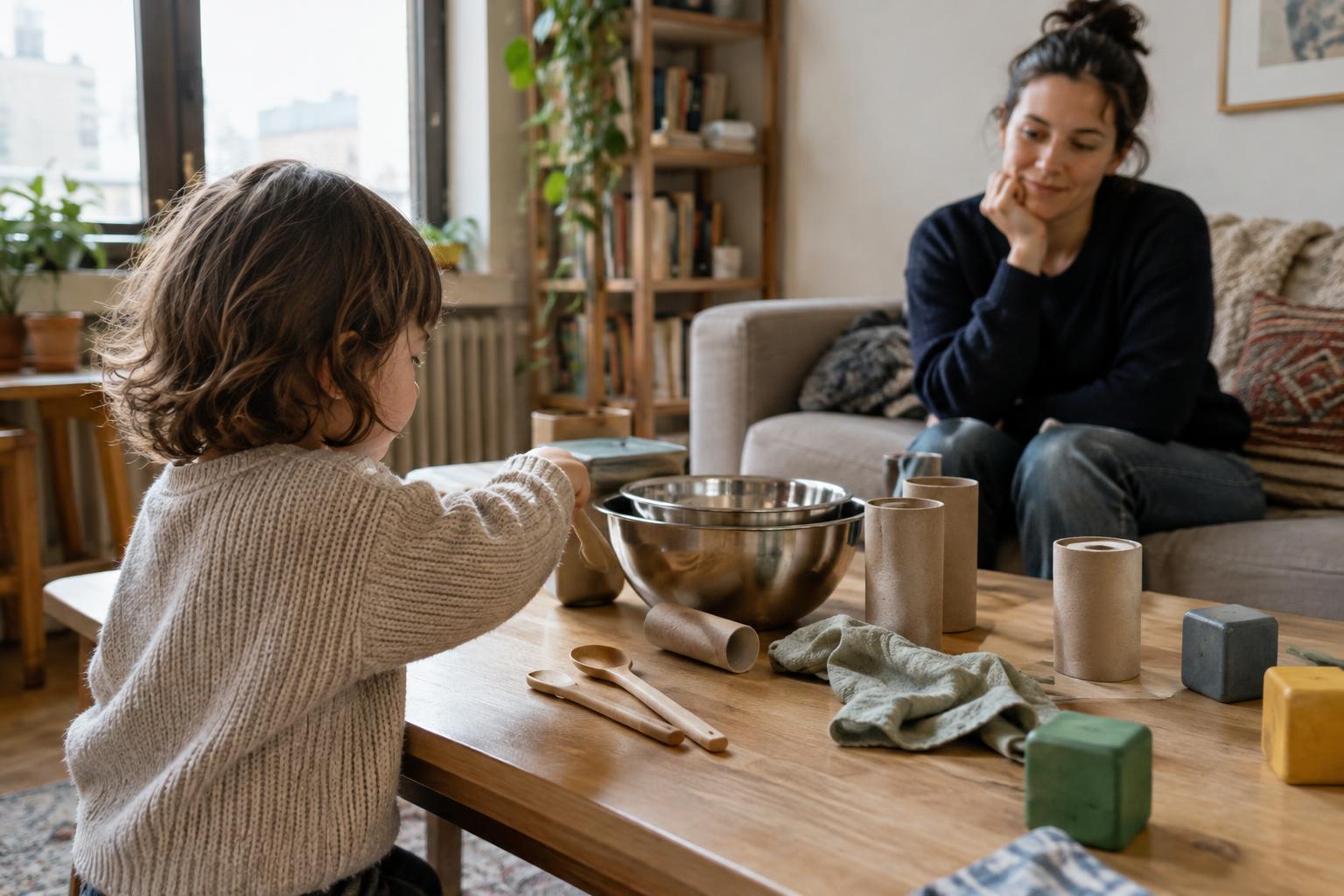
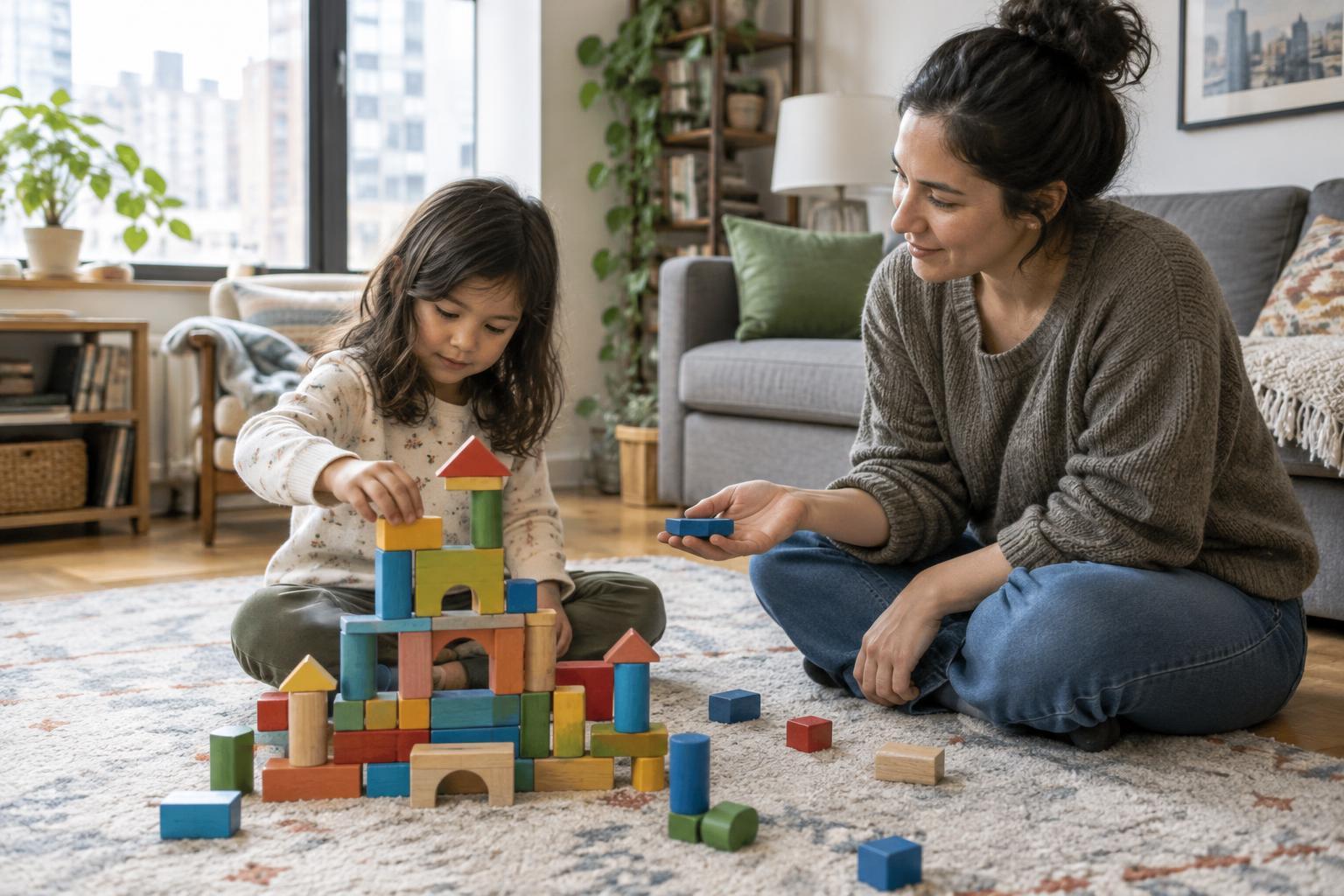
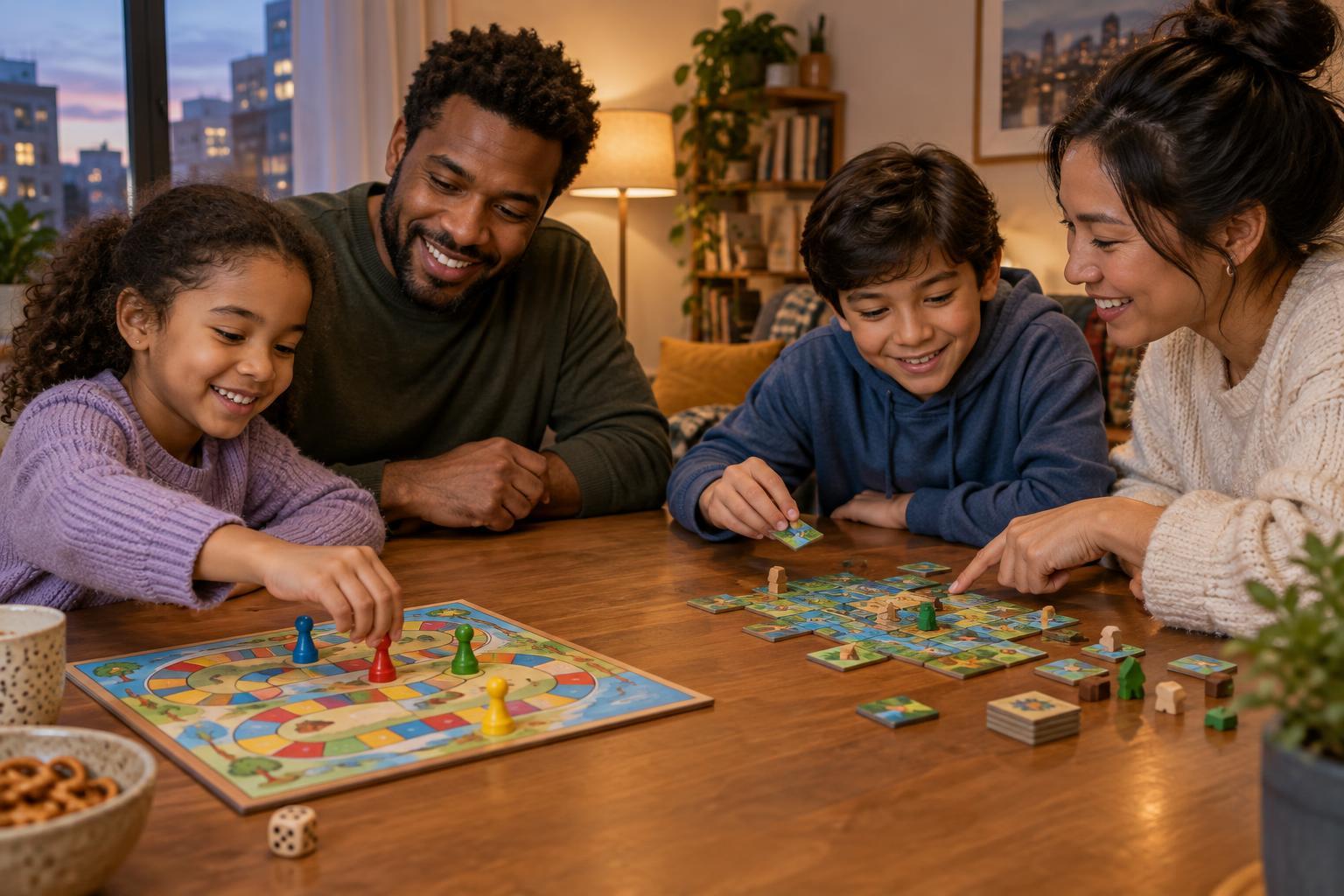
A No-Prep Family Show-and-Tell for Busy Weeknights
Family show-and-tell can turn a few ordinary objects into an easy shared activity. Here is how to keep it short, welcoming and fun for different ages, even in a small home.
Read article · 4 min↗Family Activities
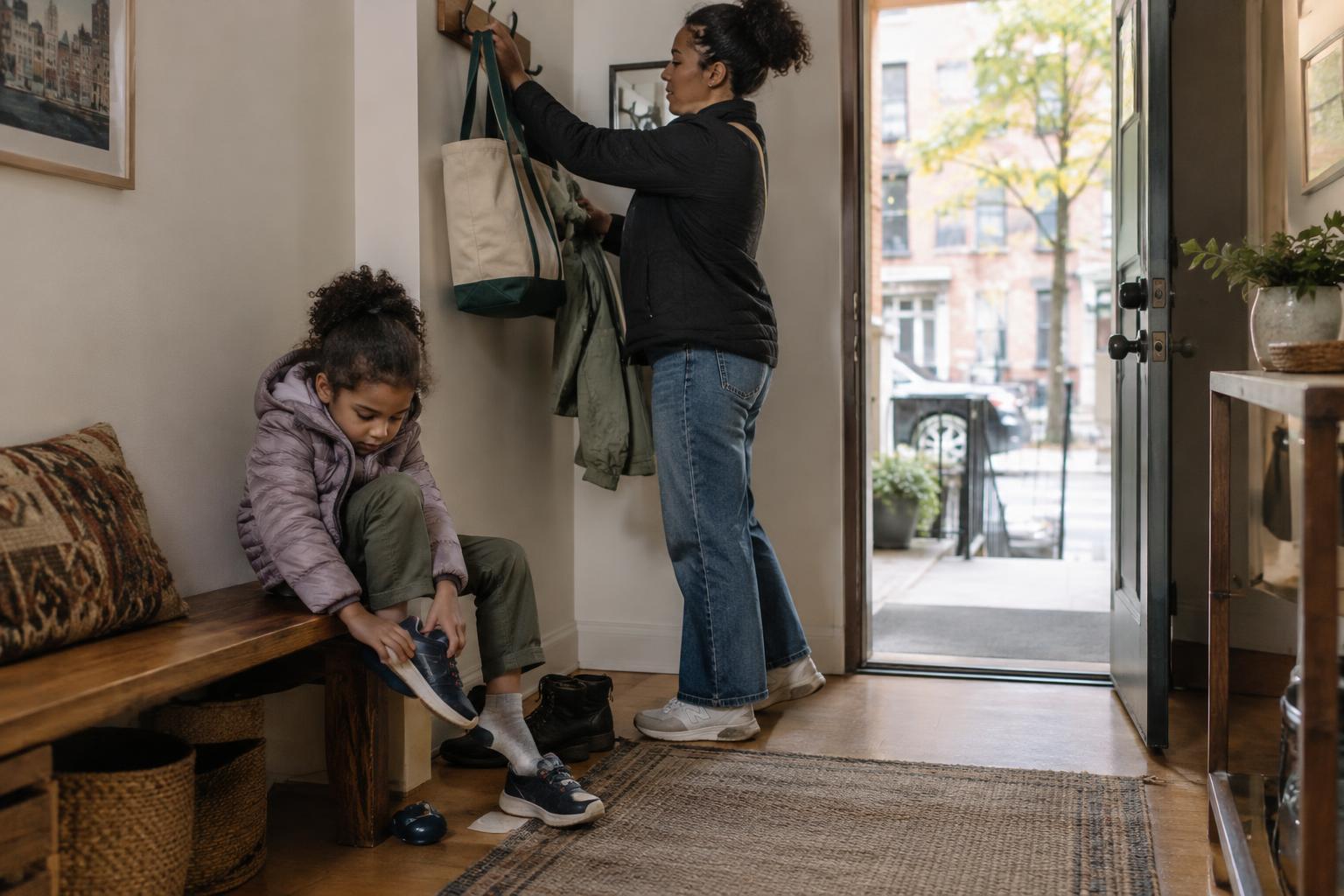
More to discover ↗Getting home from an outing can be surprisingly busy, especially when everyone is tired and bags need unpacking. A short, flexible arrival routine can help families move from the sidewalk to the next part of the day without trying to do everything at once.
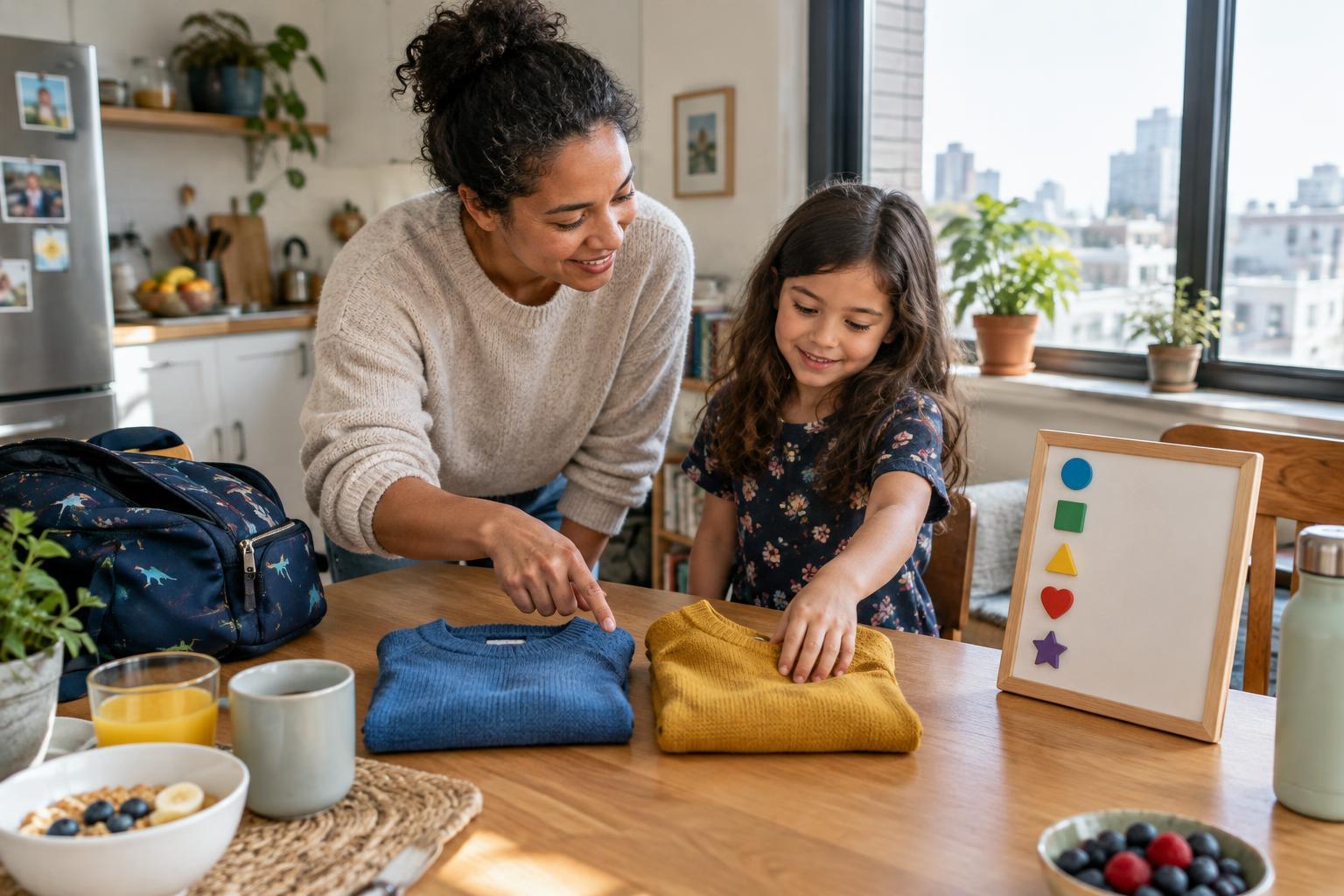
Read article ↗Family show-and-tell can turn a few ordinary objects into an easy shared activity. Here is how to keep it short, welcoming and fun for different ages, even in a small home.
Read article · 4 min↗A break does not have to mean an empty house or an uninterrupted hour. Small pauses can fit around meals, outings and bedtime when they are easy to start and flexible enough for real family life.
Read article · 3 min↗Children can have a real say in everyday routines without deciding whether the essentials happen. Start with a few nonnegotiables, offer choices you can live with, and make room to adjust when family life gets busy.
Read article · 4 min↗After a long workday, reconnecting with your child does not have to mean planning a big activity. A small transition, a few minutes of attention and a routine that fits your household can make time together feel easier.
Read article · 4 min↗A predictable goodbye can make busy mornings easier to navigate. Learn how to build a brief drop-off routine that fits your child, your caregiver, and the realities of a city commute.
Read article · 4 min↗When naps fade, a quieter part of the day can still give children and caregivers a pause. Start small, offer simple choices, and make the routine flexible enough for real family life.
Read article · 3 min↗A toothbrushing routine is easier to keep when children have a small, familiar part to play. Set up a reachable space, use a predictable sequence, and make room for practice while an adult remains involved.
Read article · 4 min↗Bath time does not have to take over the evening. A few prepared supplies, a simple sequence and room for flexibility can help families move from the bathtub to bedtime with less rushing.
Read article · 4 min↗A missed train, a school closure, or a change in work hours can throw a family’s day off course. Returning to a familiar routine does not require making up for every missed step. Start with a few dependable moments, make room for what has changed, and let the rest of the day settle gradually.
Read article · 4 min↗A family routine does not need to run perfectly to be useful. If mornings, evenings, or weekend transitions keep falling apart, the problem may be that the plan asks too much of the people using it. These common mistakes—and small adjustments—can help routines fit real family life.
Read article · 4 min↗A visual schedule can make the next step easy to see, while a verbal reminder can help a family adjust in the moment. Here is how to choose a simple approach for mornings, evenings, and everything in between.
Read article · 4 min↗When parents, relatives, sitters, and other caregivers take turns, a short, dependable handoff can make the day easier for everyone. Here’s how to share the details that matter without turning every transition into a lengthy report.
Read article · 4 min↗Weekends do not have to follow the school-day clock, but a little familiarity can make them easier for everyone. Here is a practical way to decide which family routines to keep, where to leave room for spontaneity, and how to make Sunday evening feel less like a scramble.
Read article · 4 min↗Daily chores can help children take part in family life, but reminders can quickly become arguments. Start with one manageable task, make expectations clear, and build a routine that leaves room for practice and choice.
Read article · 4 min↗Ending screen time can be easier when children know what comes next. Build a repeatable routine with a clear stopping point, a simple reminder and an appealing next activity—while leaving room for days that do not go to plan.
Read article · 4 min↗A useful homework routine does not need to run like clockwork. Start with a predictable place to check assignments, build in breaks, and leave room for the changing demands of family life.
Read article · 3 min↗A predictable family meal does not have to happen at the same minute every day. A few familiar cues, flexible time windows, and simple backup plans can make eating together feel easier, even when city life changes the plan.
Read article · 4 min↗The trip home, a snack, and a little breathing room can make afternoons feel less rushed. Build an after-school routine around a few dependable steps, then leave space for your child to choose how to spend the time between them.
Read article · 4 min↗A small bedroom or shared living area does not need to be perfectly quiet to support a predictable bedtime. Build a short sequence around the space you have, give each person a role, and keep a simpler version ready for busy nights.
Read article · 4 min↗A calmer weekday morning does not require a perfect schedule. A few decisions made the night before, a predictable order of tasks, and room for slow moments can help families get out the door with less pressure.
Read article · 4 min↗A changing schedule does not have to mean starting from scratch every day. A few small, flexible routines can help your family move between school days, work shifts, outings, and time at home.
Read article · 3 min↗Learning through play does not require a plan, a worksheet, or a perfect outcome. Small shifts in how adults join in can leave more room for curiosity, conversation, and discovery.
Read article · 3 min↗A good play question leaves room for a child’s ideas. Learn how to notice what interests them, ask open-ended questions, and keep the conversation playful rather than turning it into a test.
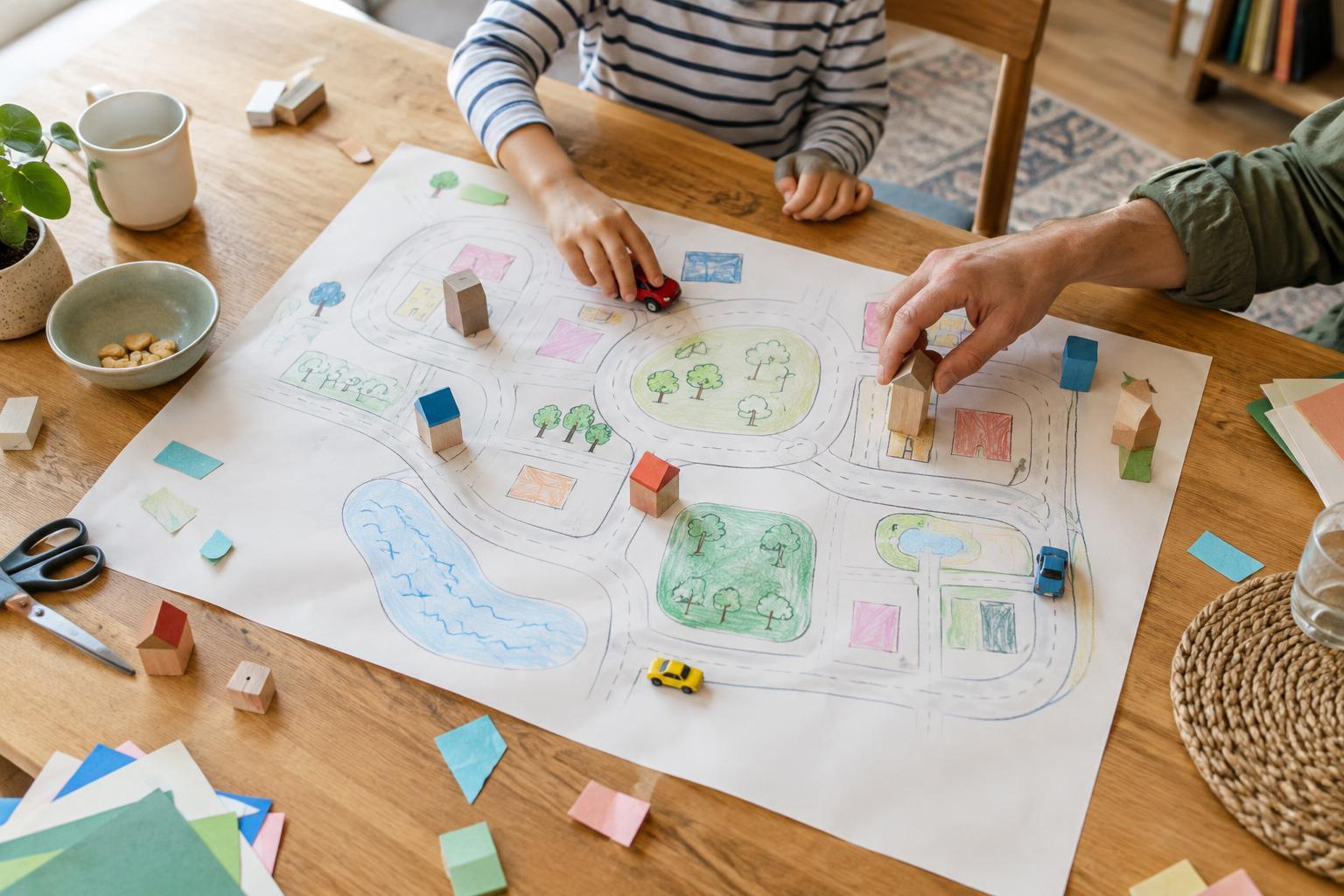
Read article · 3 min↗A pretend town map can turn blocks, toy cars, paper scraps and household objects into a shared story. Start with a few familiar places, let children decide what happens there, and change the map as the game grows.
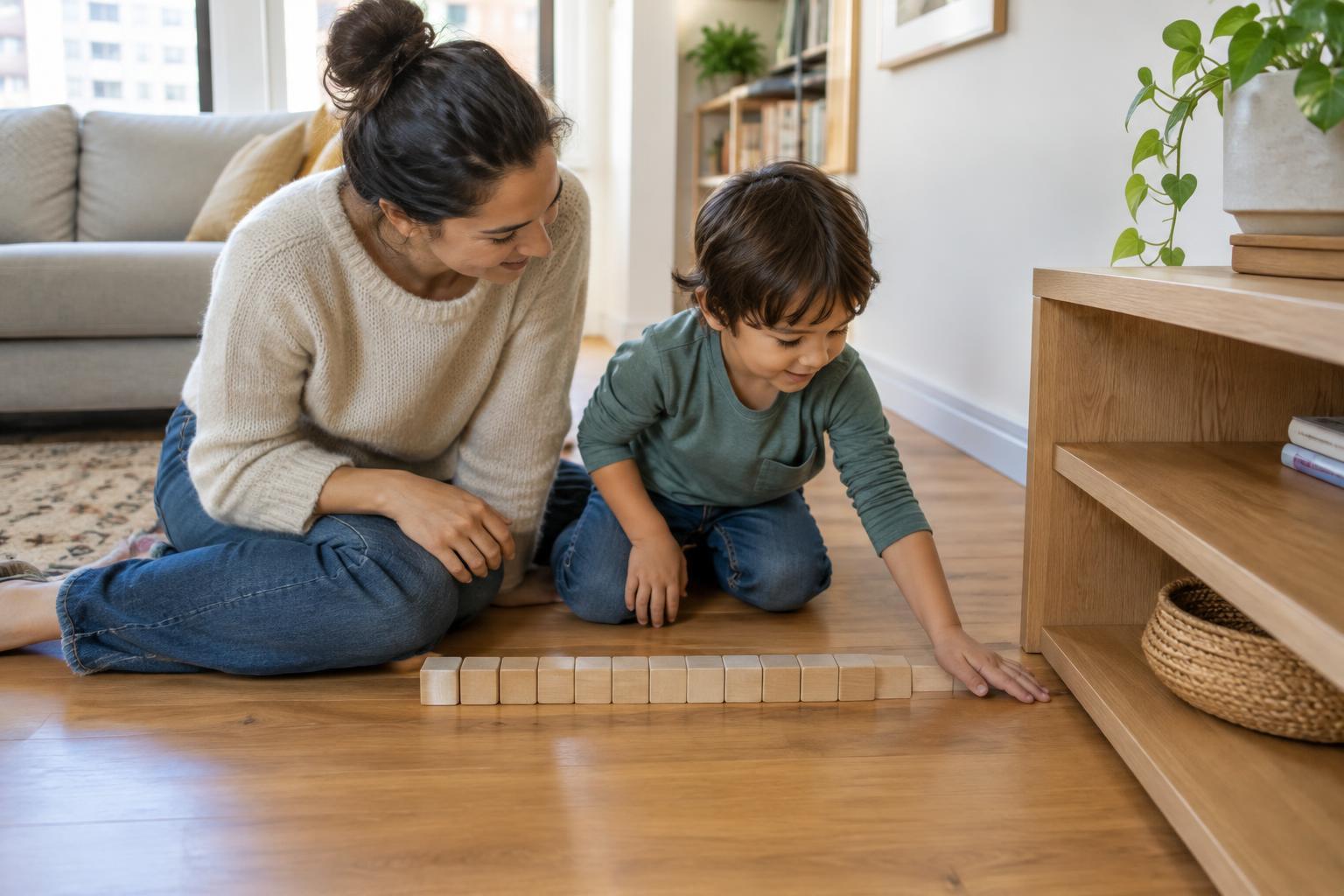
Read article · 4 min↗A ruler is not the only way to explore length. Hands, steps and blocks can turn everyday objects and spaces into playful measuring challenges that help children compare, count and ask good questions.
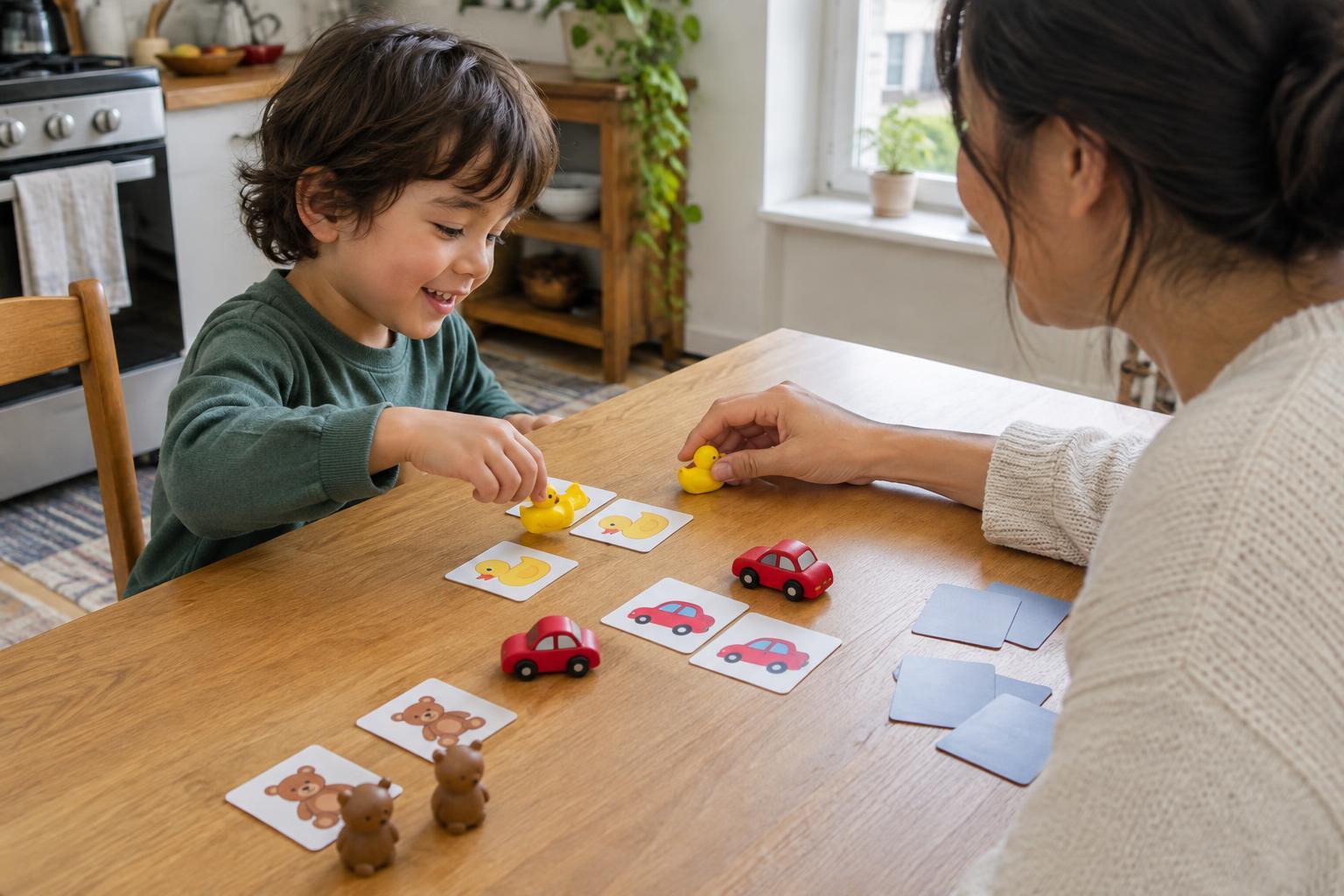
Read article · 4 min↗Matching games can fit into a few minutes at the kitchen table or on the living room floor. Learn when to use familiar objects, picture pairs or face-down memory cards, and how to keep the game playful rather than turning it into a test.
Read article · 4 min↗A sock, a paper bag, or a favorite toy can become a character with a story to tell. Try simple puppet games that make room for conversation, imagination, and connection in the middle of everyday family life.
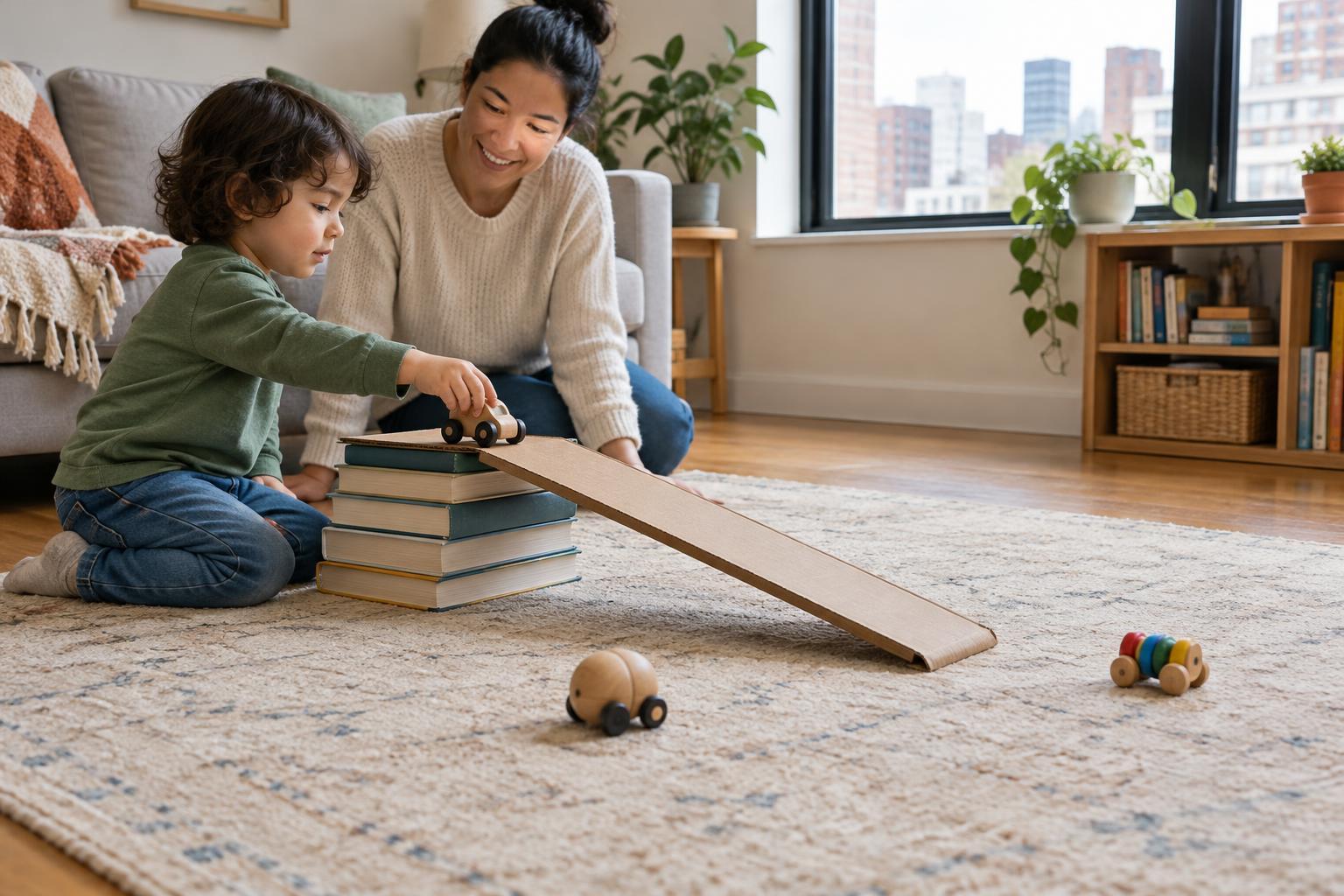
Read article · 4 min↗A cardboard ramp and a few rolling toys can turn a small space into a place to wonder, test ideas, and try again. Learn how to set up simple ramp play, ask useful questions, and keep the activity manageable at home.
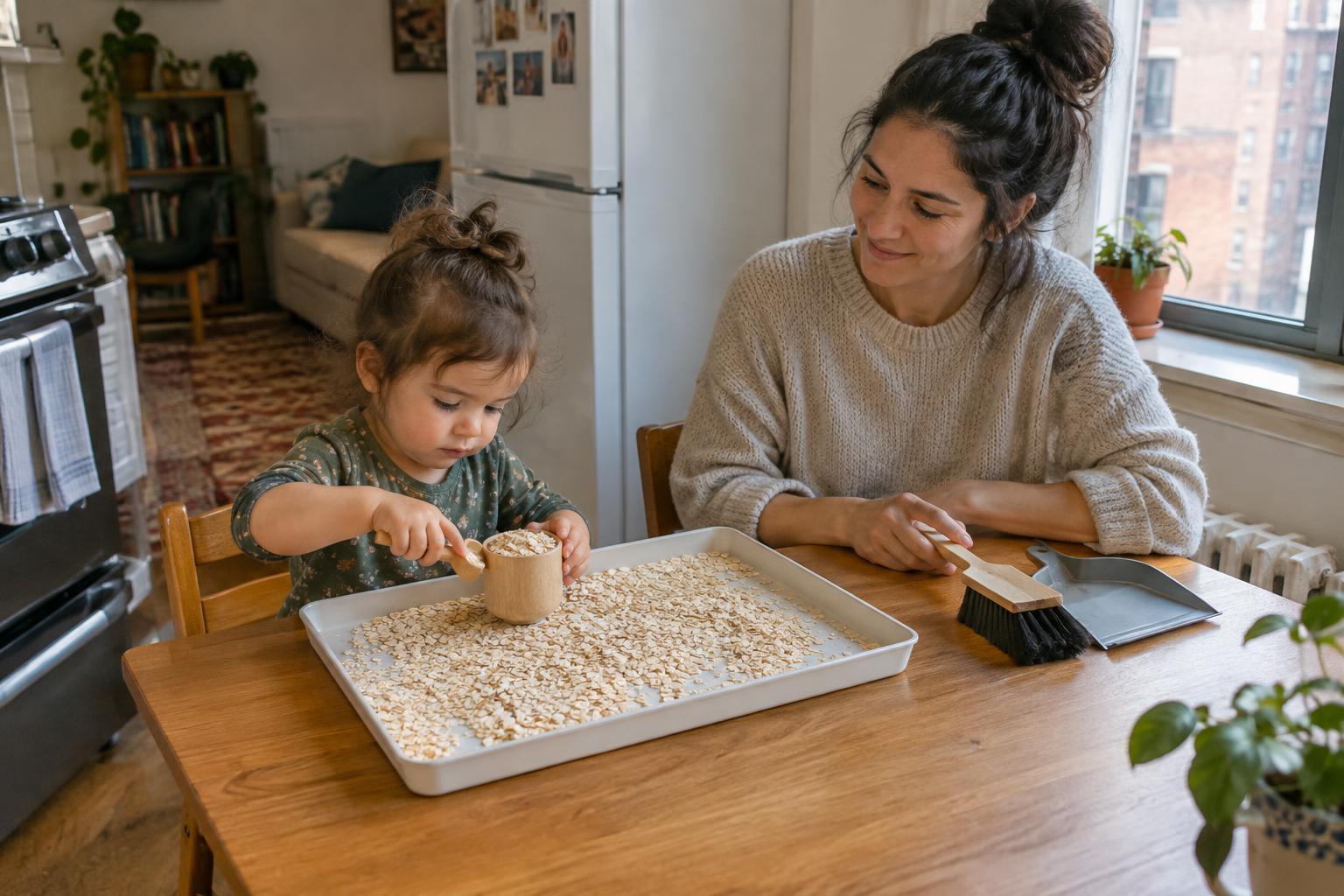
Read article · 4 min↗Sensory play does not require a dedicated playroom or a cupboard full of supplies. A single material, a defined work area, and a simple cleanup routine can make hands-on exploration easier to enjoy in a small home.
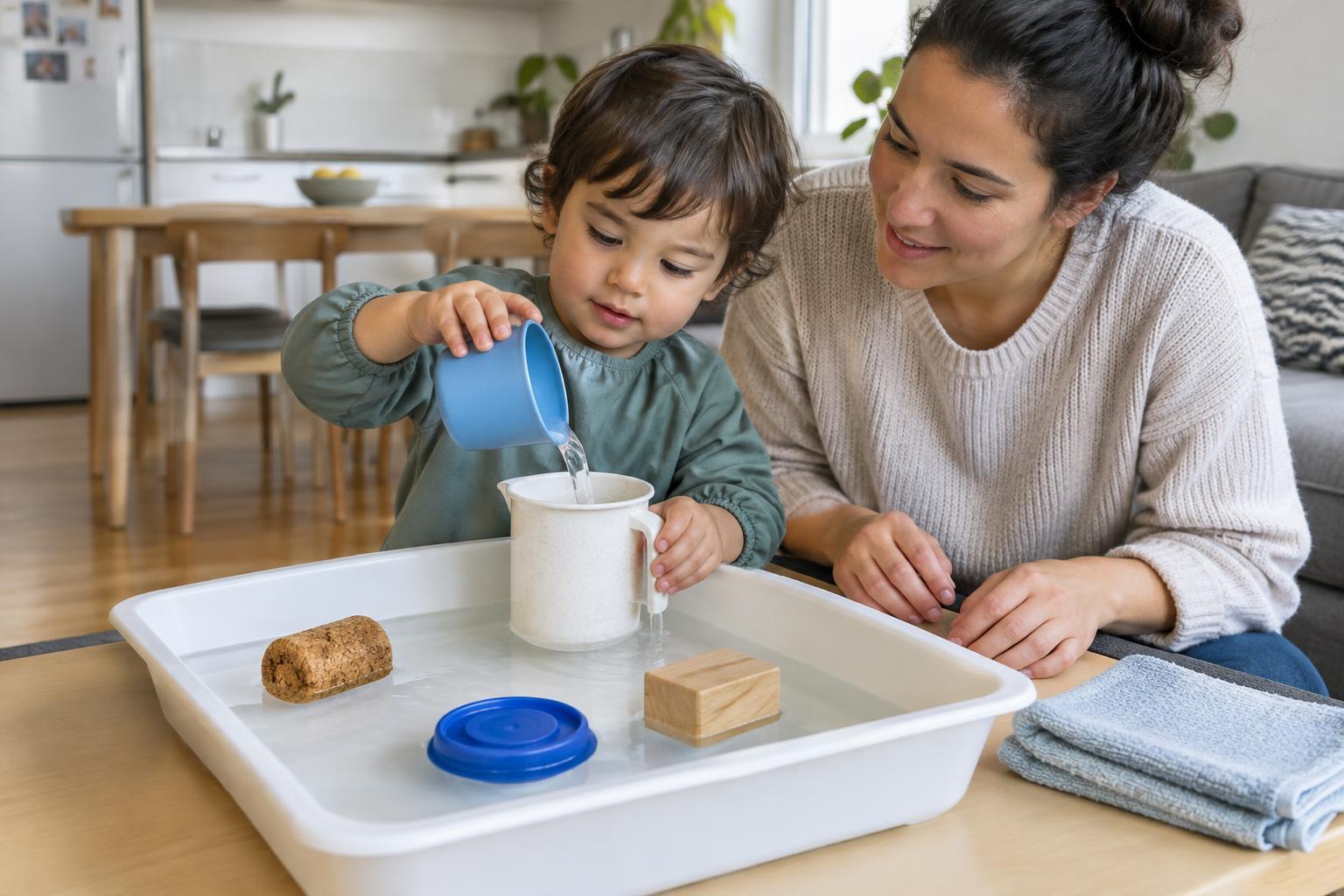
Read article · 4 min↗A shallow tray, a few household containers and a small collection of water-safe objects can turn an ordinary afternoon into hands-on play. Try simple pouring and floating activities while keeping an adult close, the setup manageable and cleanup easy.
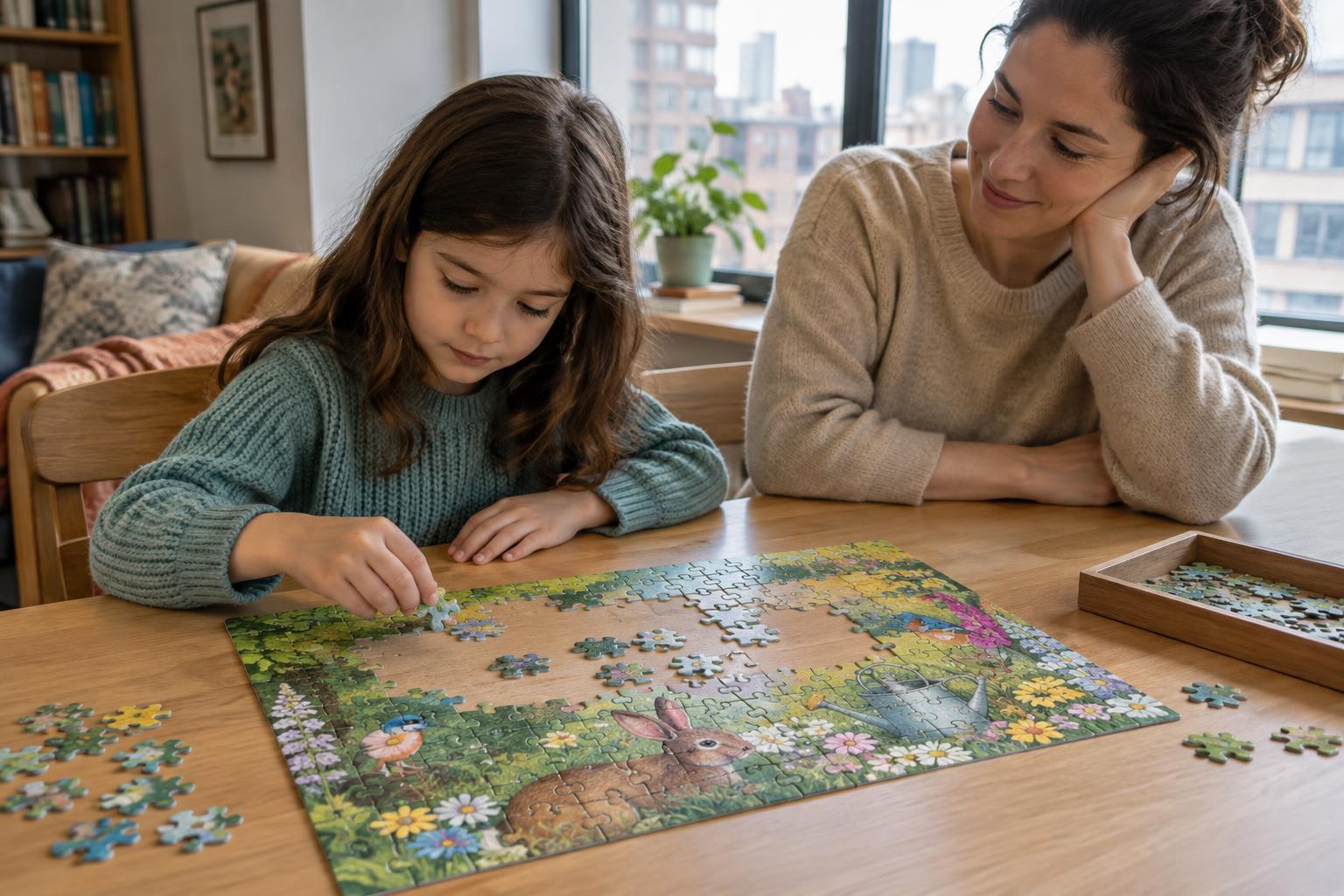
Read article · 4 min↗The right jigsaw puzzle gives a child enough clues to get started and enough challenge to keep going. Learn how to choose by picture, piece design, size and setting—and how to help without taking over.
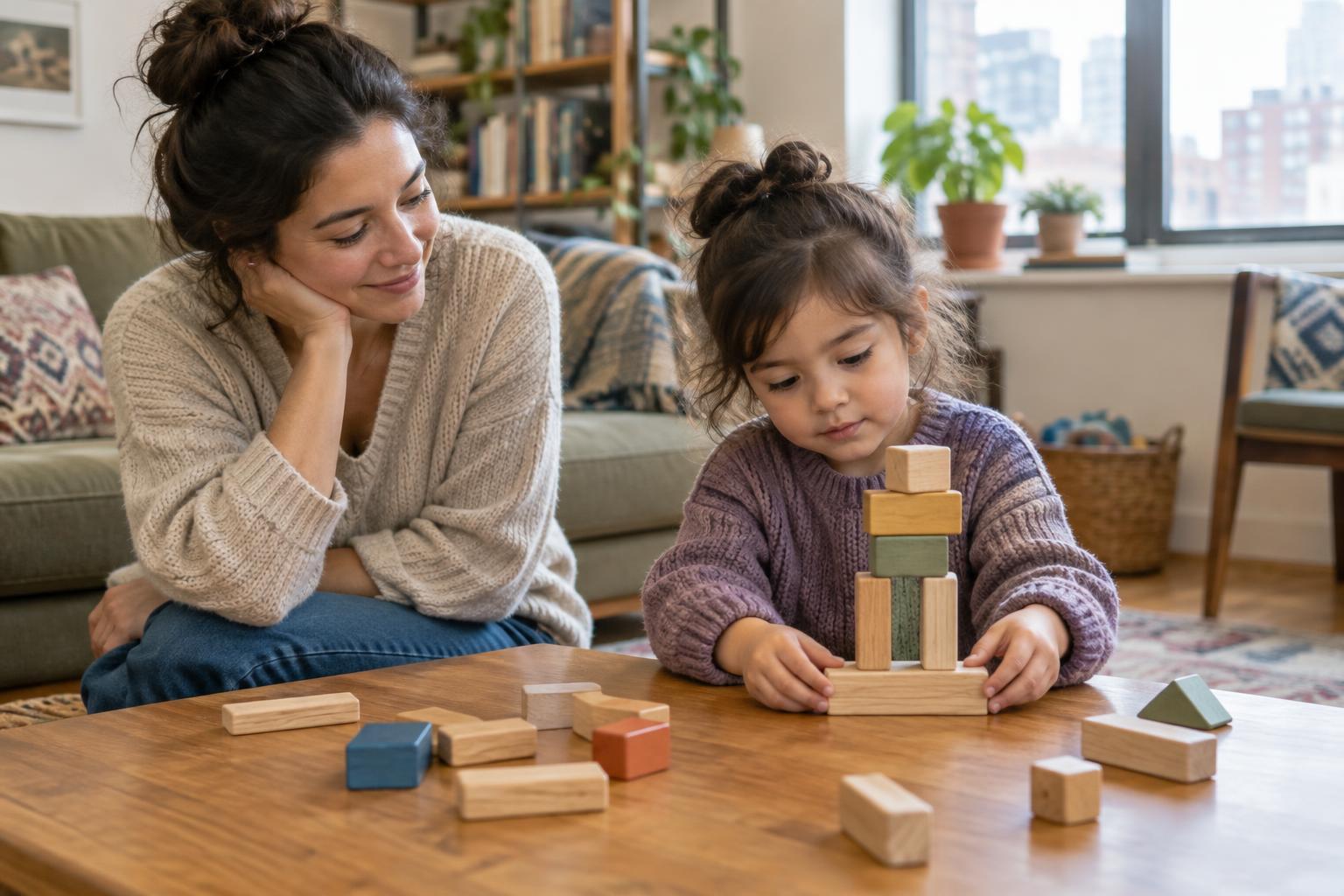
Read article · 3 min↗A block tower that tumbles can become an invitation to experiment. Try simple questions that help children notice what happened, test a new idea, and keep the play their own.
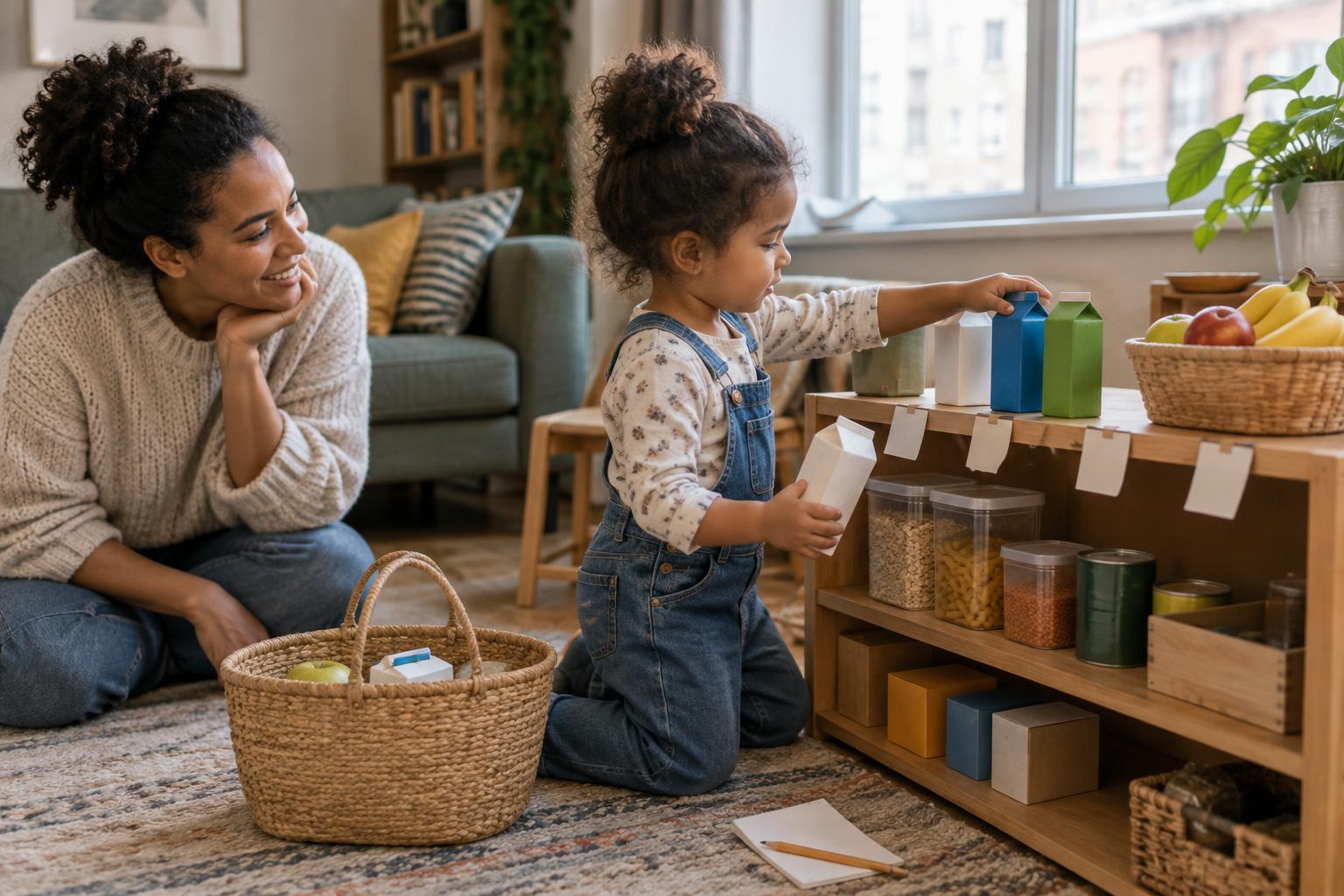
Read article · 3 min↗Turn a corner of the living room into a pretend grocery store with empty packages, paper price tags and a short shopping list. This flexible game invites children to sort, count, write and talk while leaving plenty of room for imagination.
Read article · 3 min↗Rhymes and syllables can fit into walks, chores, and quiet moments without flashcards or quizzes. Try playful word swaps, name beats, and silly sounds while letting your child decide when the game is over.
Read article · 4 min↗A shape hunt turns familiar household items into a playful search for circles, rectangles, triangles and more. Try these simple ways to help children look closely, describe what they see and keep the game going in a small space.
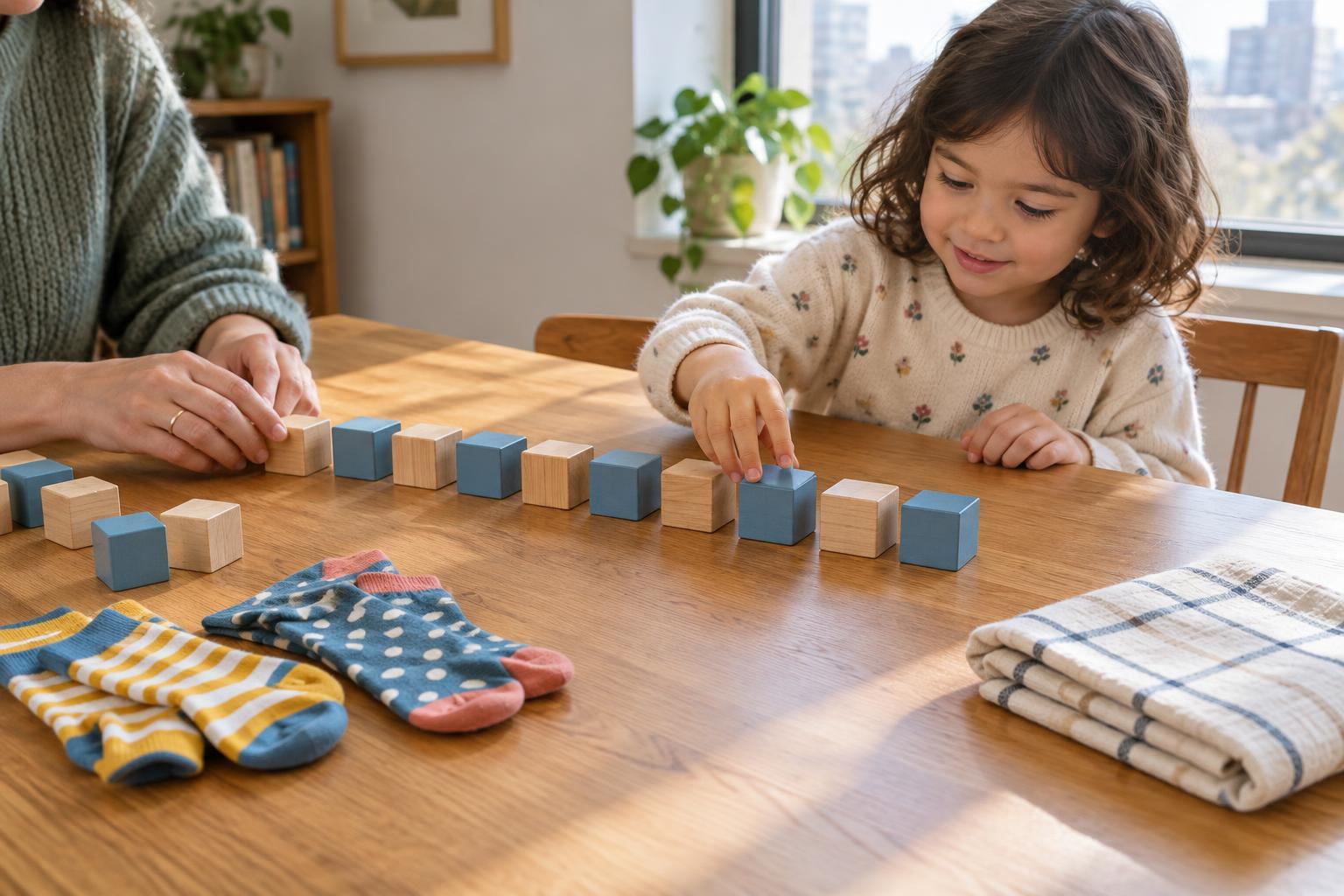
Read article · 4 min↗You don’t need a special kit to explore patterns together. Blocks, socks, kitchen towels and simple movements can help children notice what repeats, predict what comes next and make up sequences of their own.
Read article · 4 min↗Saying numbers in order is only one part of counting. Everyday games with toys, snacks, steps, and pretend play can help children connect number words to real groups of things—without turning playtime into a lesson.
Read article · 4 min↗A few familiar objects can become an inviting sorting game. Try simple ways to explore color, size and texture at home, with easy variations for different interests and attention spans.
Read article · 4 min↗Loose-parts play invites children to build, sort, pretend, and experiment with everyday objects. Here’s how to choose a manageable set of materials, make room for open-ended ideas, and set boundaries that work in a city home.
Read article · 4 min↗A play invitation is a small arrangement of materials that gives a child room to explore. Learn how to make one with household objects, keep setup manageable, and follow your child’s lead.
Read article · 4 min↗Play does not have to be entirely child-led or carefully directed by an adult. Learn how to notice what a child is exploring, join without taking over, and offer a simple prompt when play could use a fresh start.
Read article · 4 min↗When putting toys away feels like a bigger job than playing with them, the storage system may be the problem. Here are common mistakes that make cleanup harder in a busy family home, plus simple ways to make everyday tidying more manageable.
Read article · 4 min↗A family home does not need to be spotless to feel easier to use. This weekly reset helps you clear the spaces that matter most, give everyday items a place to land, and leave lower-priority chores for another day.
Read article · 4 min↗A shared living room does not have to look like a playroom all day. With flexible zones, accessible storage and a realistic reset routine, families can make space for children’s play and a calmer evening.
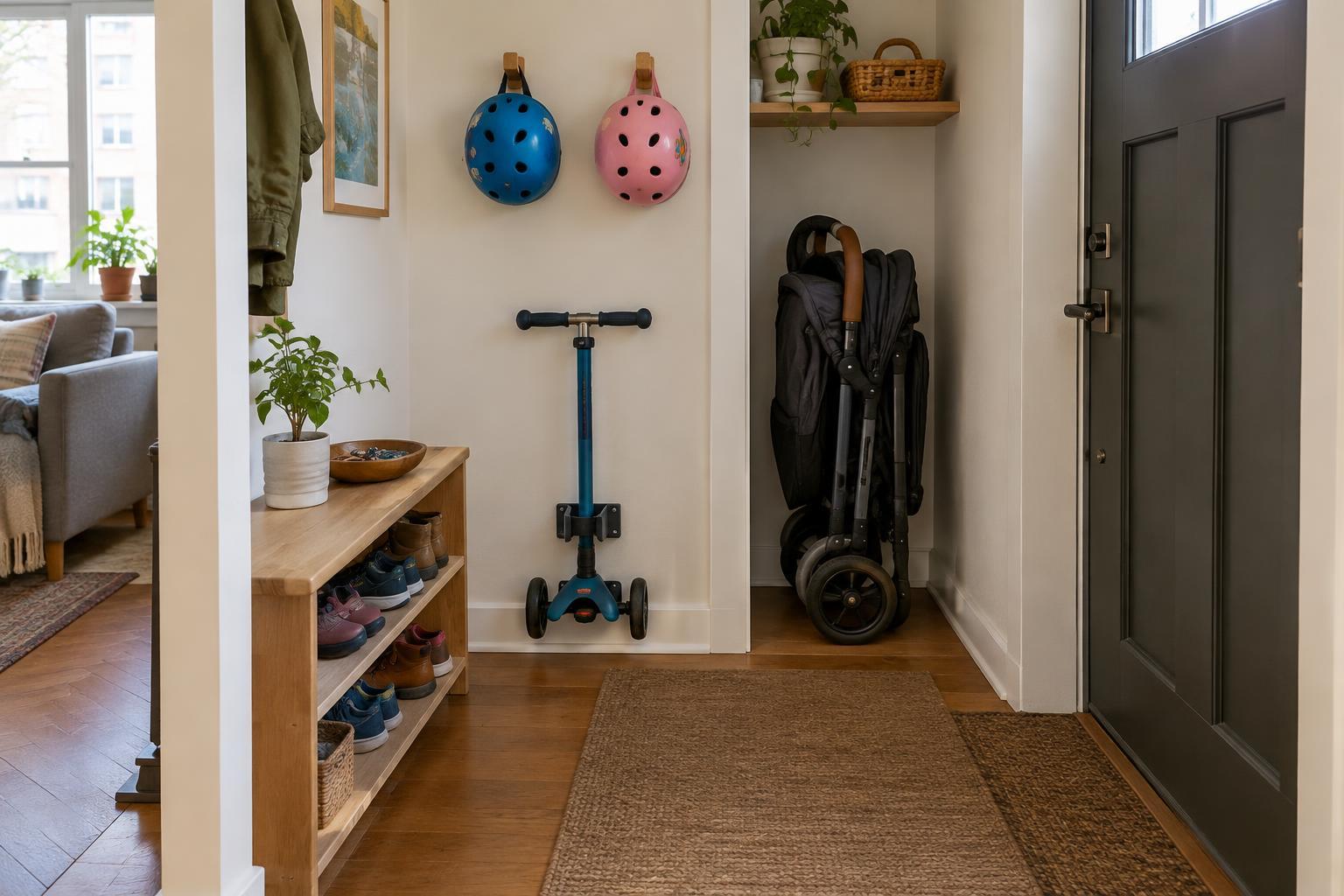
Read article · 4 min↗A stroller, a scooter and a few helmets can overwhelm a small entryway. Create a compact parking spot, give each item a place and build a simple routine for getting out the door.
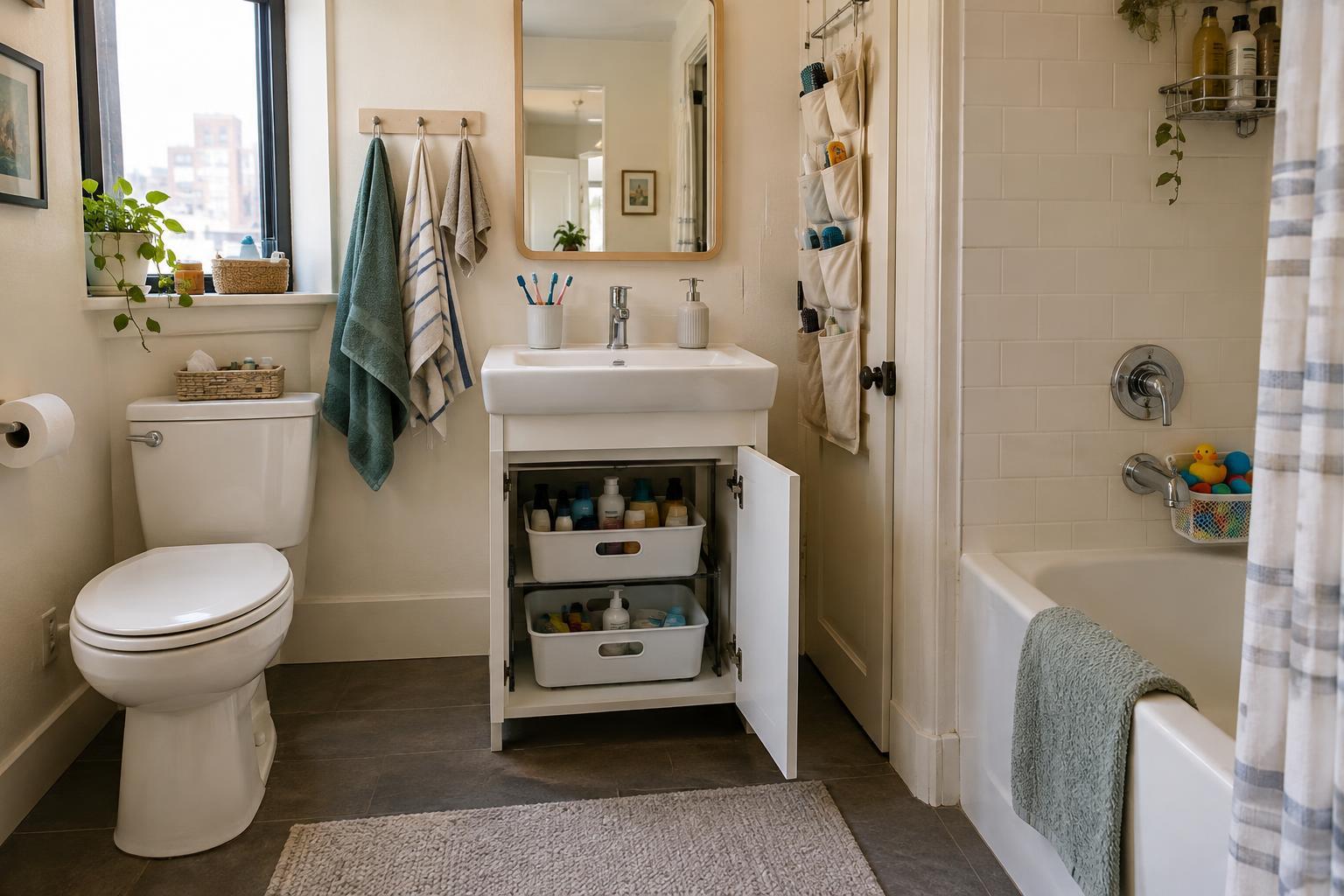
Read article · 4 min↗A small family bathroom can work well without a wall of storage. Give daily items easy-to-reach homes, move extras out of the room, and use simple routines to keep the sink, shower, and cabinets manageable.
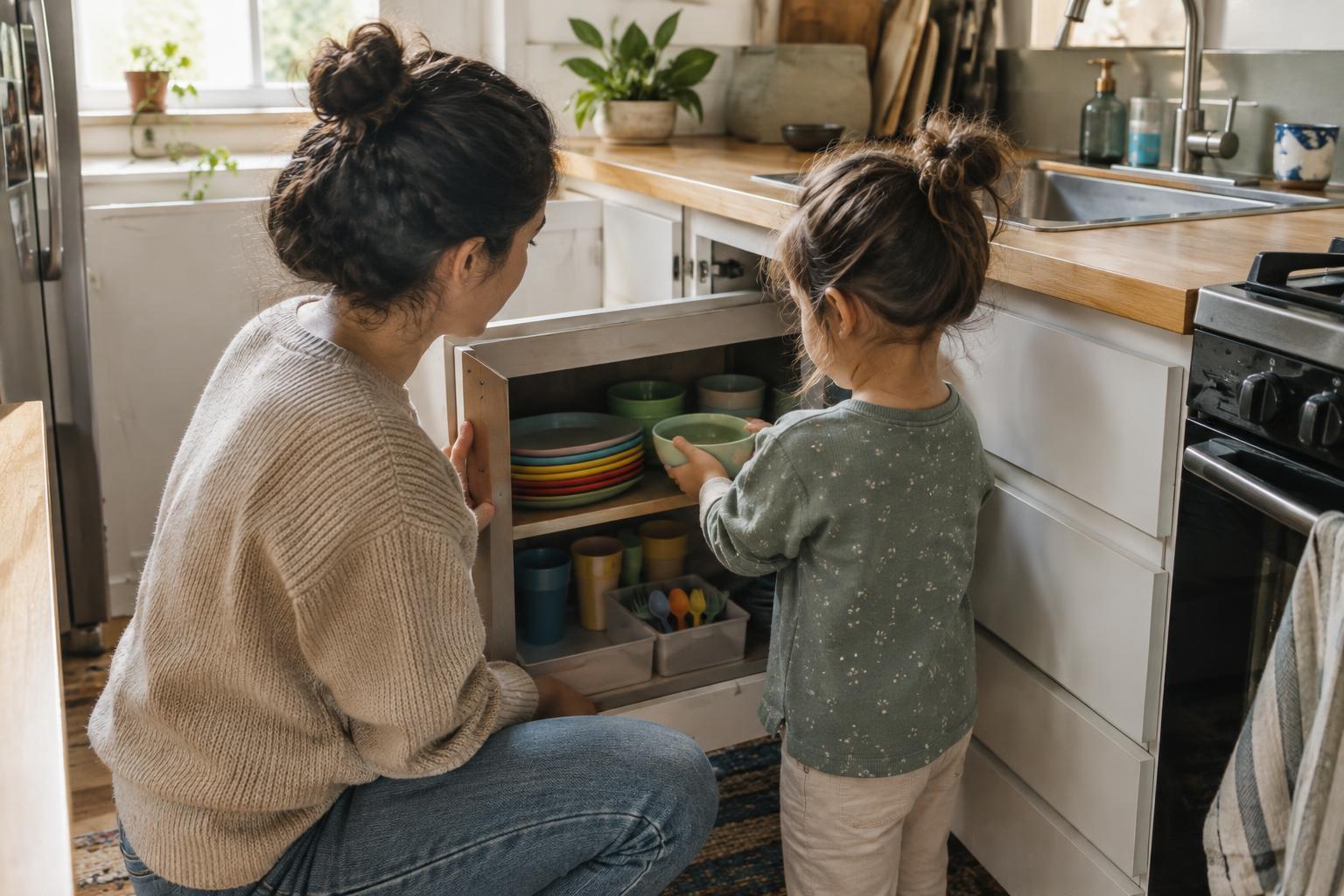
Read article · 3 min↗A small kitchen can still give children a practical place for their everyday dishes. Start with the pieces you use most, choose one reachable storage spot, and build a simple routine for getting items out and putting them away.
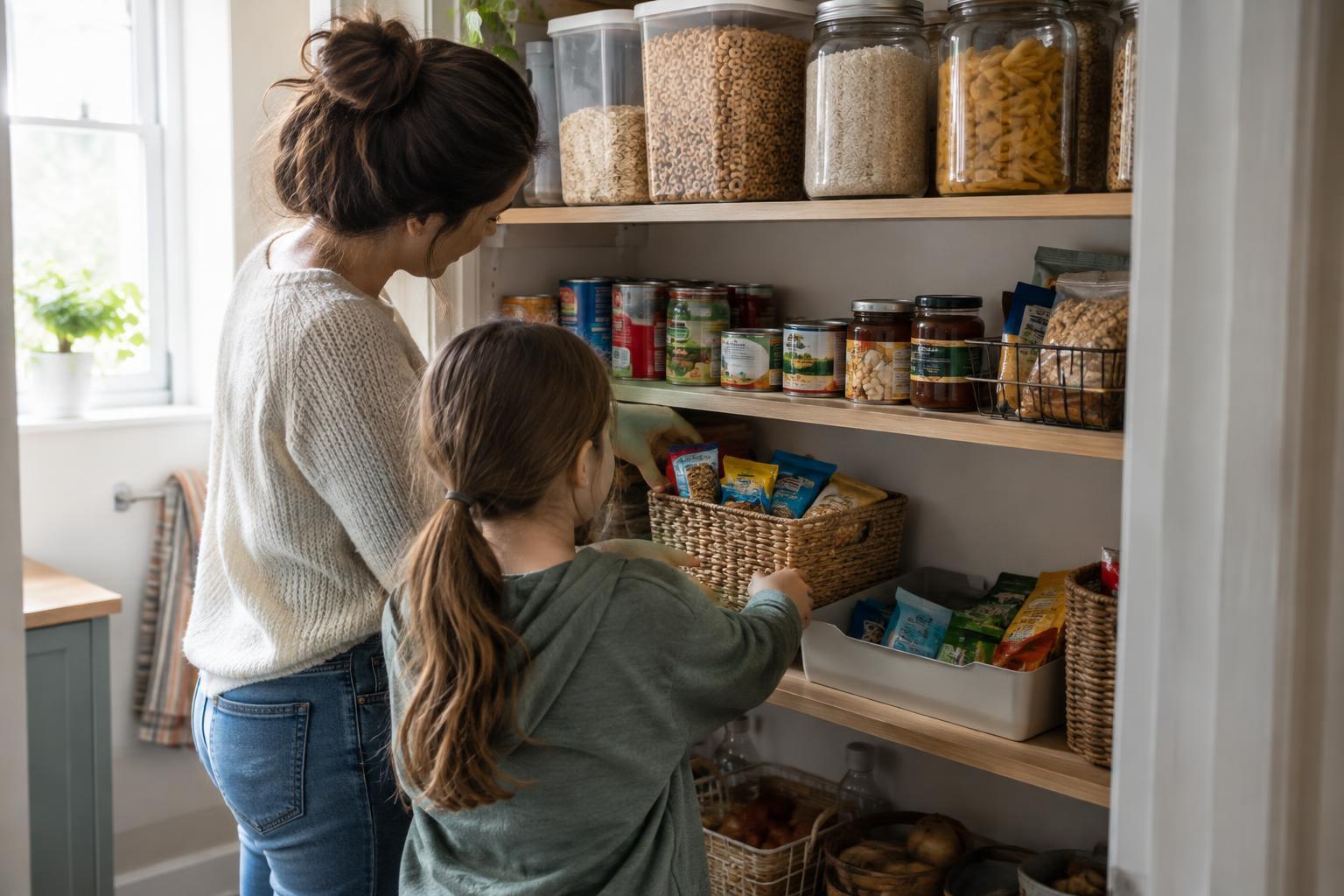
Read article · 4 min↗A family pantry does not need matching containers or a large closet to work well. Give everyday foods predictable homes, make use of limited space, and build a quick reset into your routine so everyone can find what they need.
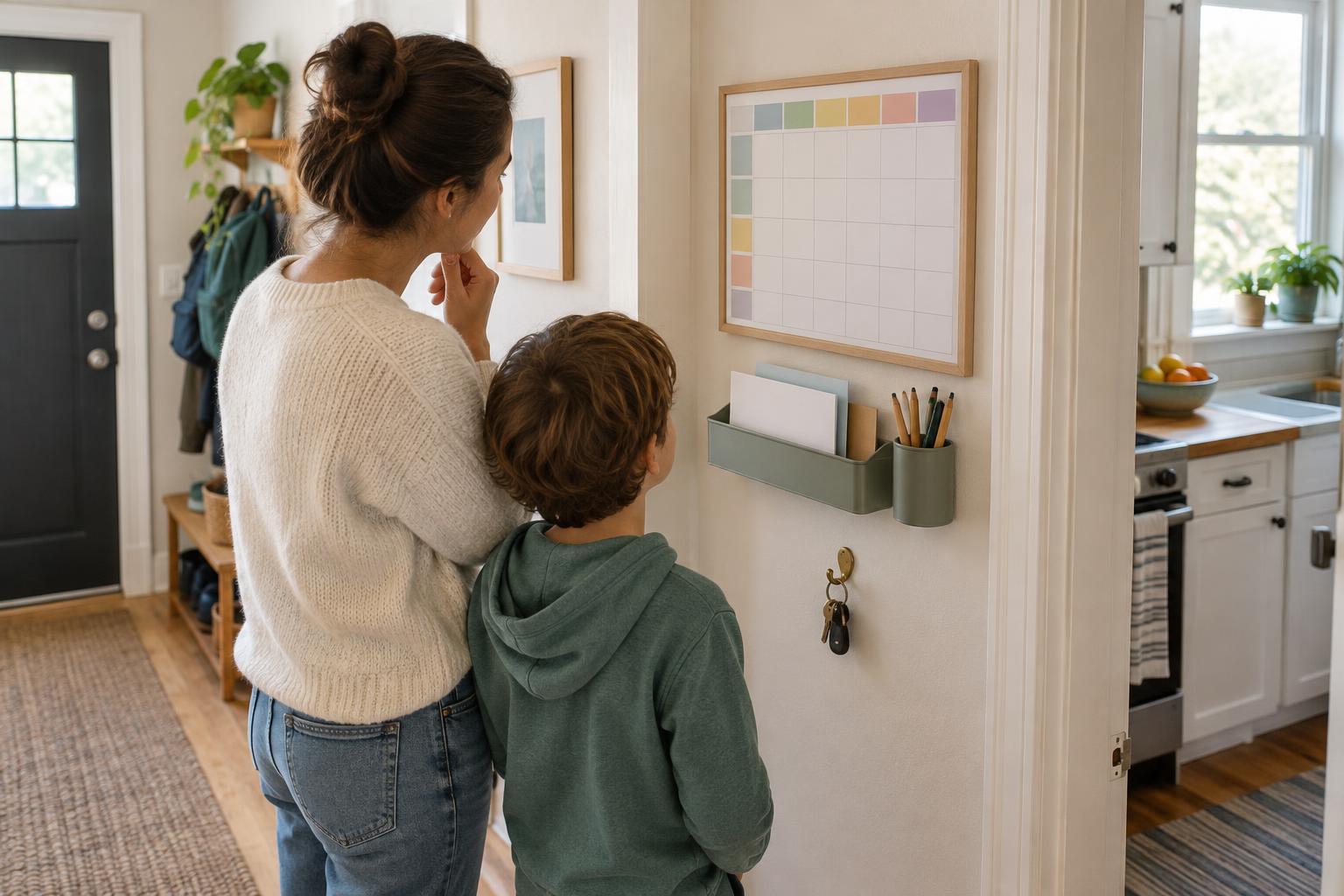
Read article · 4 min↗A family calendar station does not need its own room or even a full wall. With one visible schedule, a place for incoming papers and a short weekly check-in, a compact spot can help everyone keep track of the week ahead.
Read article · 3 min↗A family document system does not have to be elaborate. Create a few clear categories, give important originals a safe home, and make everyday paperwork easy to find with a short weekly reset.
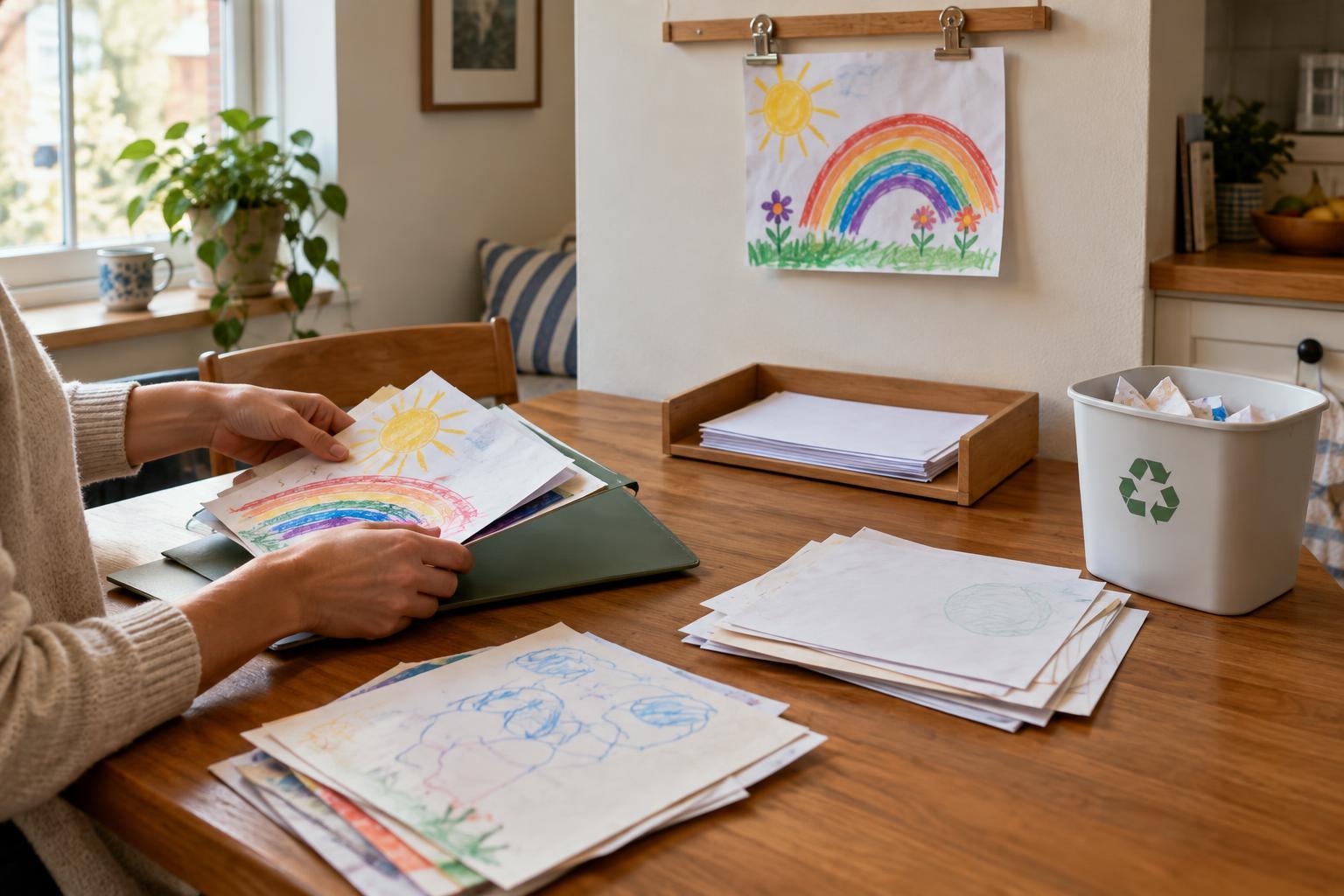
Read article · 4 min↗School papers can pile up quickly, especially when space is limited. A simple sorting routine helps families keep important information handy, enjoy favorite work and let go of the rest.
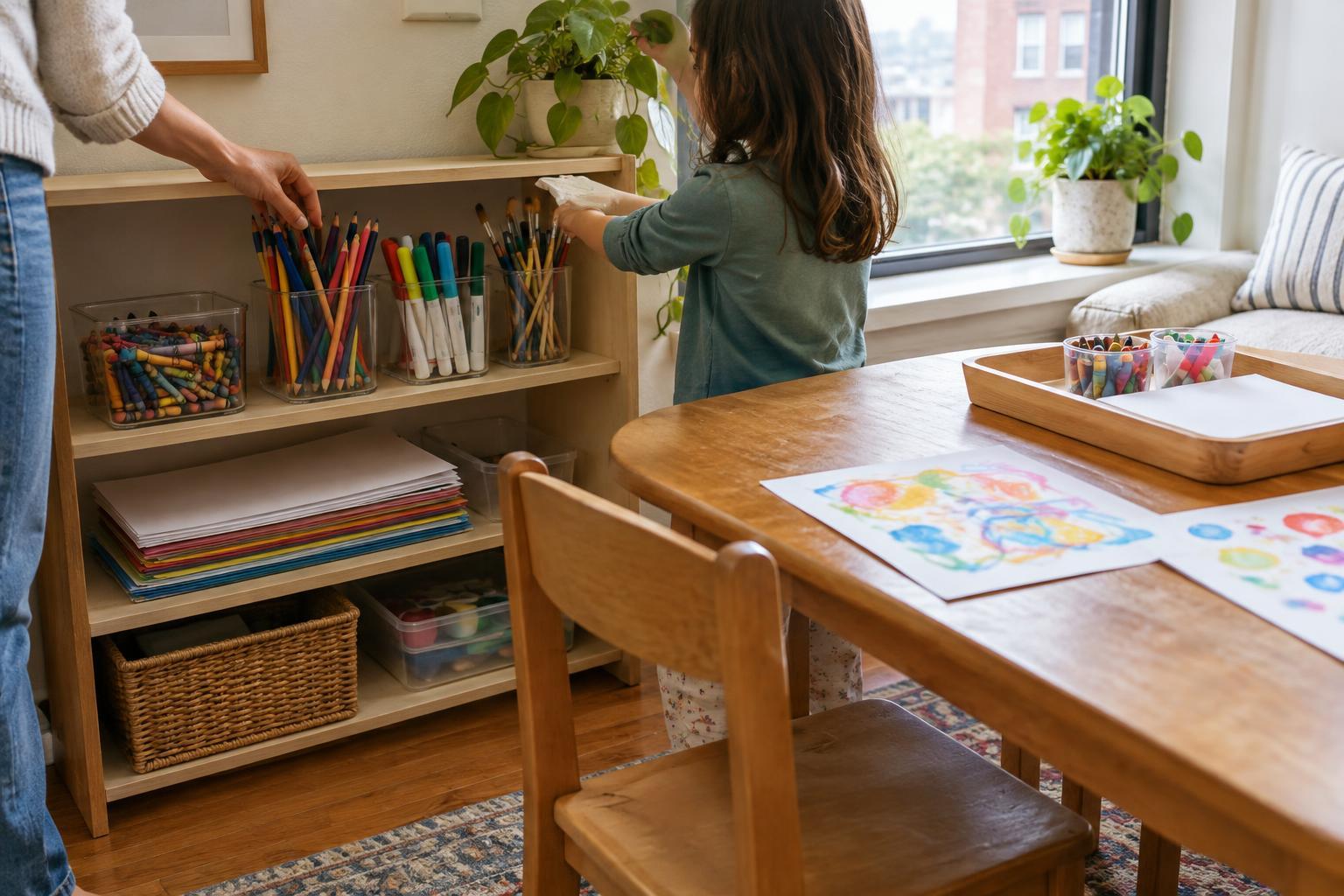
Read article · 4 min↗A kid-friendly art setup does not need a dedicated craft room. With a small selection of reachable supplies, clear containers and a simple reset routine, children can start creating without turning cleanup into a major project.
Read article · 4 min↗A shared bedroom can make room for both everyday routines and individual preferences. Start with what the room needs to do, give each child a few dependable places of their own, and use simple storage that everyone can maintain.
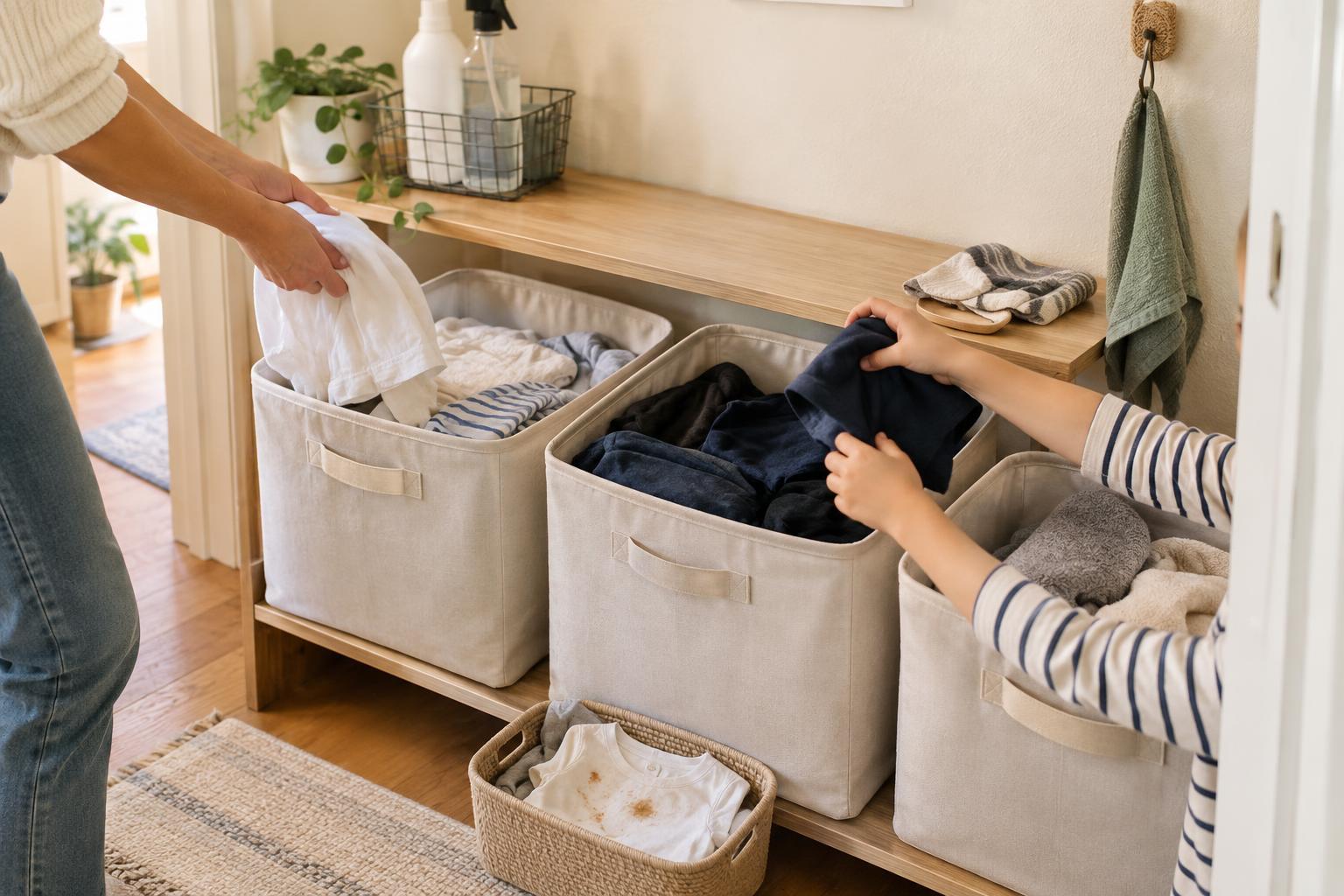
Read article · 4 min↗A laundry sorting station does not need a dedicated room. With a few labeled containers, a place for items that need attention, and a routine everyone can follow, even a small household space can make laundry day less chaotic.
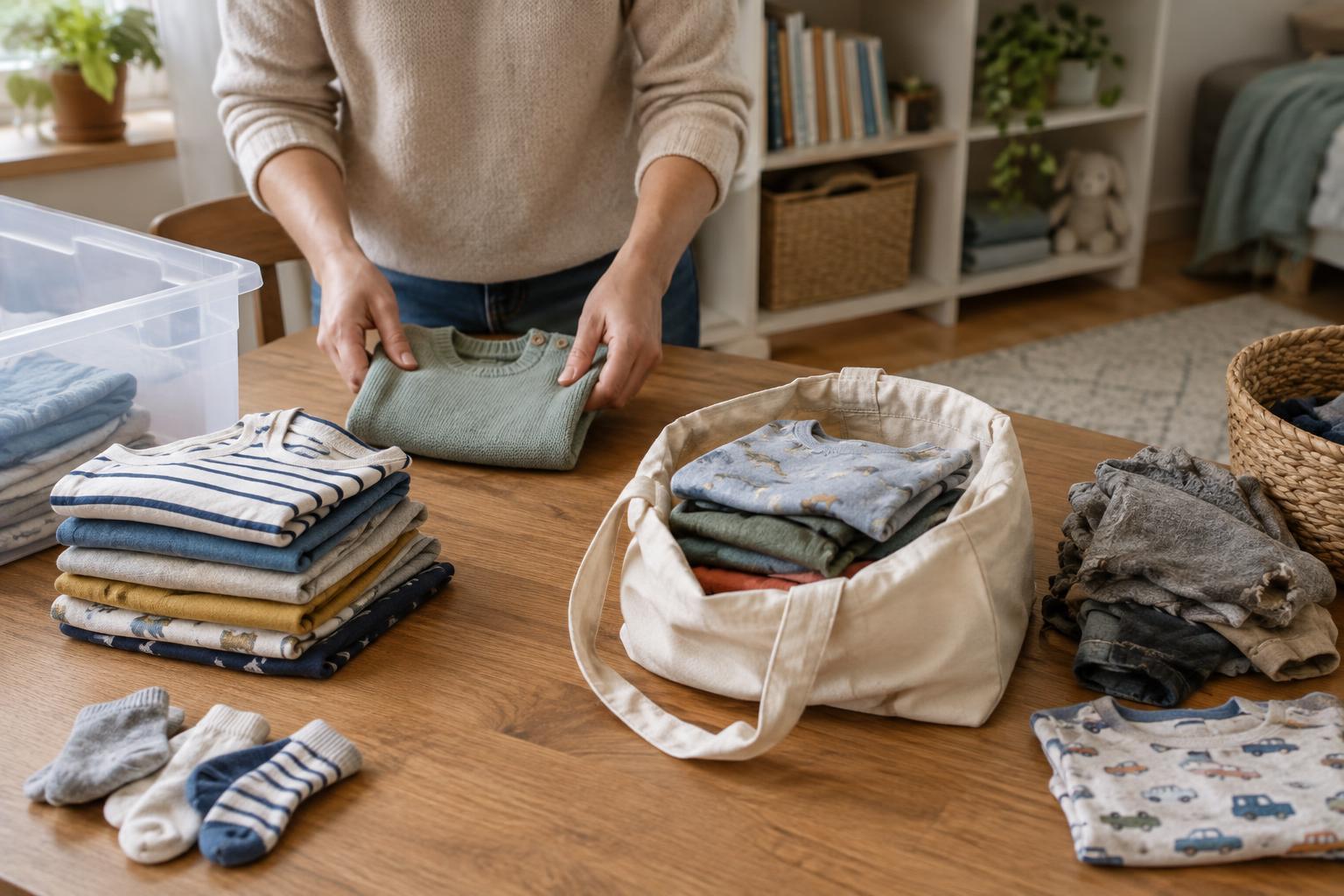
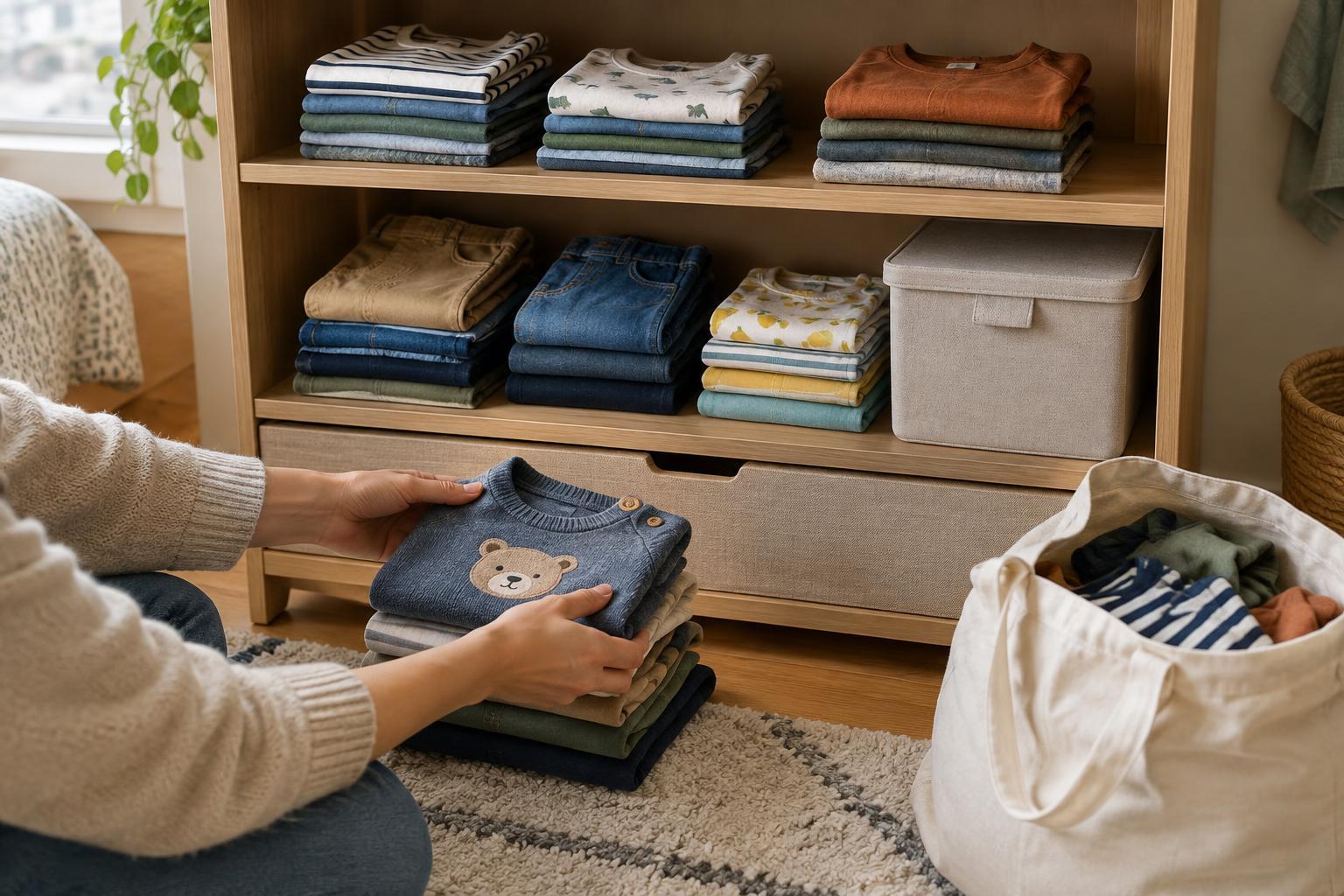
Read article · 4 min↗Outgrown clothes can pile up quickly, especially when closet space is limited. A simple keep, pass along, and let go system makes it easier to find what you need later without storing every tiny shirt and sock.
Read article · 4 min↗A practical system for sorting kids’ clothes into what fits now, what comes next, and what can leave the house. Make everyday outfits easier to find without giving seasonal storage more space than it needs.
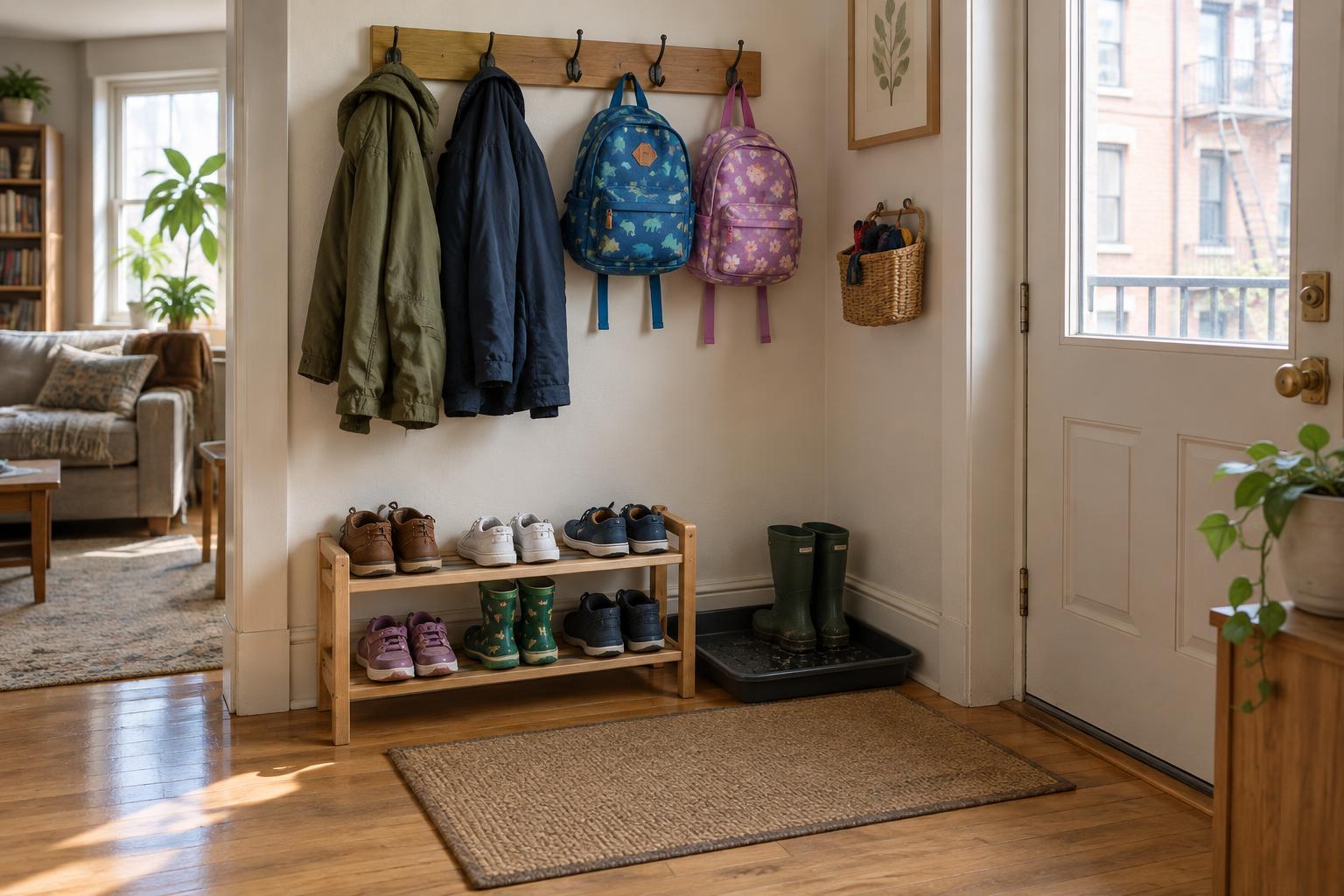
Read article · 4 min↗A family entryway does not need a renovation to work better. Give shoes, coats and backpacks clear places to land, then build a short arrival routine that keeps the space usable on busy days.
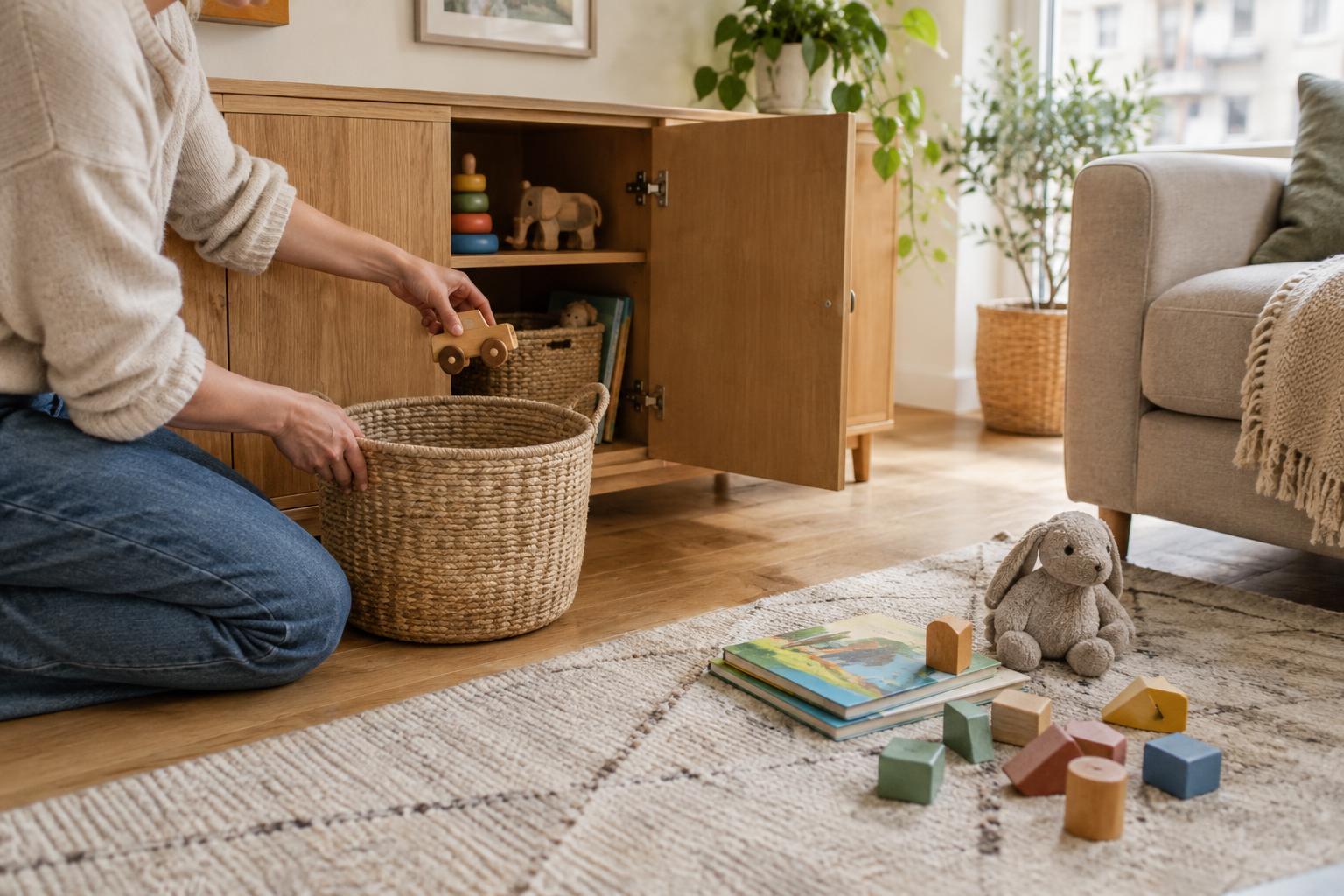
Read article · 4 min↗A toy rotation can make playtime feel less cluttered without adding bins or shelves. Start with the storage you already have, keep a manageable selection within reach, and swap toys at a pace that suits your household.
Read article · 4 min↗Toy storage works best when it fits both your space and the way your family uses it. Compare open shelves and closed bins, then build a simple system that makes play and cleanup easier.
Read article · 4 min↗Family clutter can feel too big to tackle all at once. A category-by-category approach helps you make decisions in small, manageable sessions while creating storage that works for everyday life.
Read article · 4 min↗A small apartment can support play, rest, meals, and everyday family life without needing a perfect storage system. Start by deciding what each area needs to do, keep frequently used items within reach, and make resetting shared spaces simple enough for everyone to help.
Read article · 4 min↗A family activity does not need a packed schedule or a perfect result to be worthwhile. Here are common ways outings and at-home plans become harder than they need to be, plus simple ways to make room for more enjoyment.
Read article · 3 min↗One-on-one time does not need to be a long outing. Learn how to find small, repeatable moments with each child, choose activities that fit real family routines, and keep the plan flexible when the week changes.
Read article · 4 min↗A good family evening does not have to be busy. These quiet, flexible activities help parents and caregivers spend time with children after a long day without adding a big cleanup or another demanding plan.
Read article · 3 min↗Children can have a real say in family plans without turning every outing into a long debate. A few clear limits, two workable choices, and a simple way to handle disappointment can make choosing an activity easier for everyone.
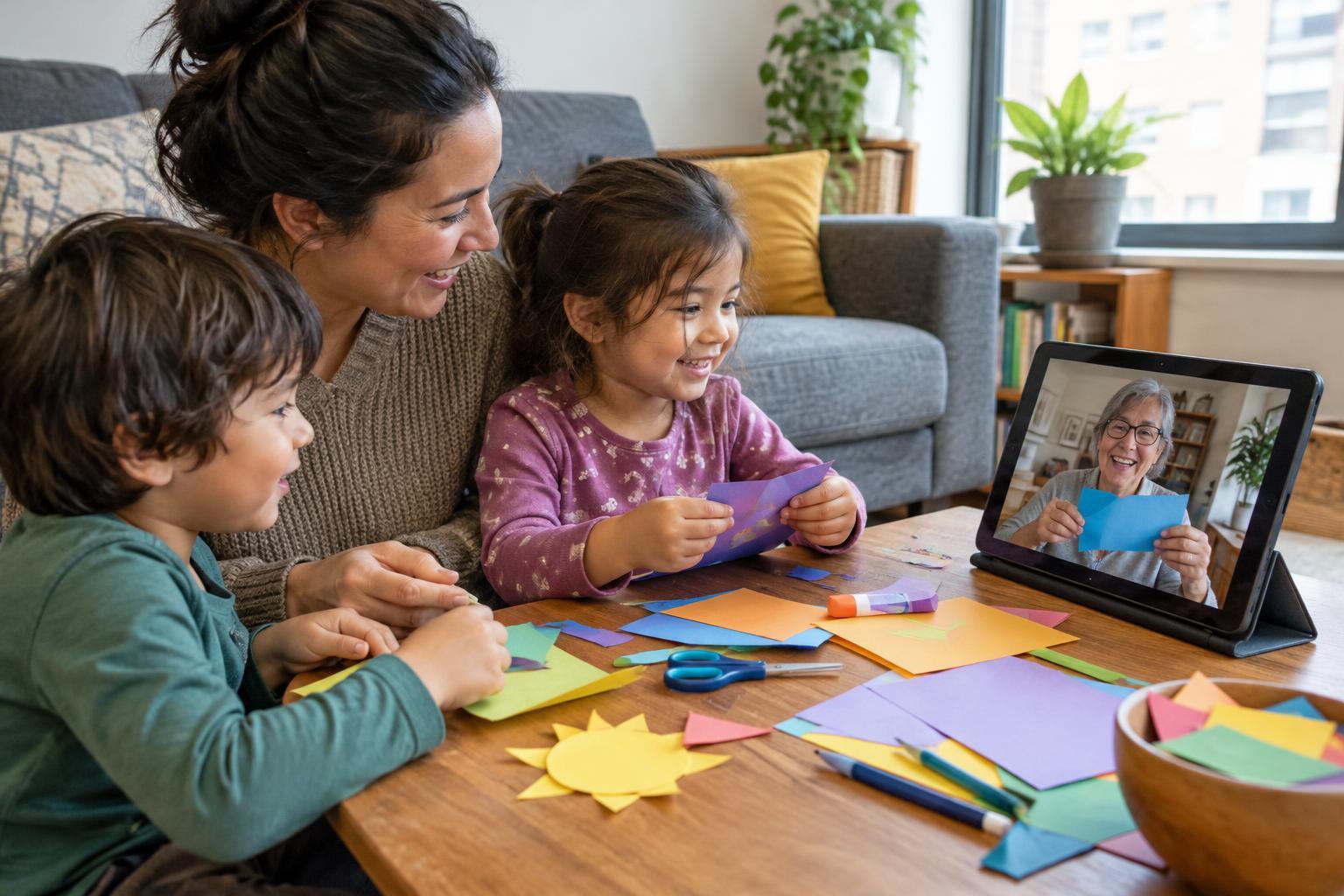
Read article · 3 min↗A distant grandparent, aunt, uncle or cousin can join family time without an elaborate setup. Choose a simple activity, give everyone a small role and keep the connection flexible enough to work across ages, schedules and screens.
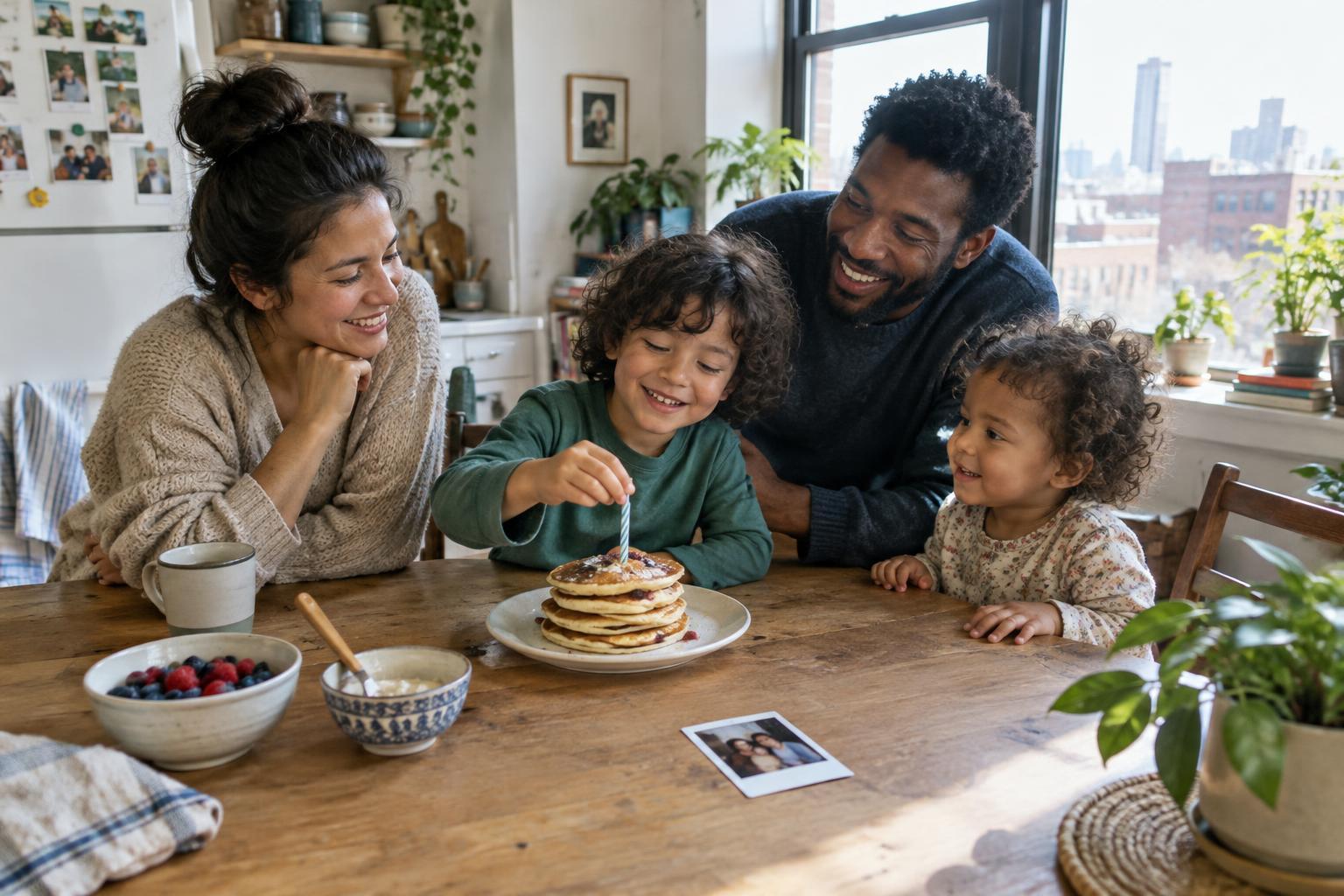
Read article · 4 min↗Family traditions do not need elaborate plans or big budgets. A familiar breakfast, a yearly photo or a short walk together can give birthdays and other milestones a sense of occasion. Here are ways to build rituals that fit your household and stay flexible as children grow.
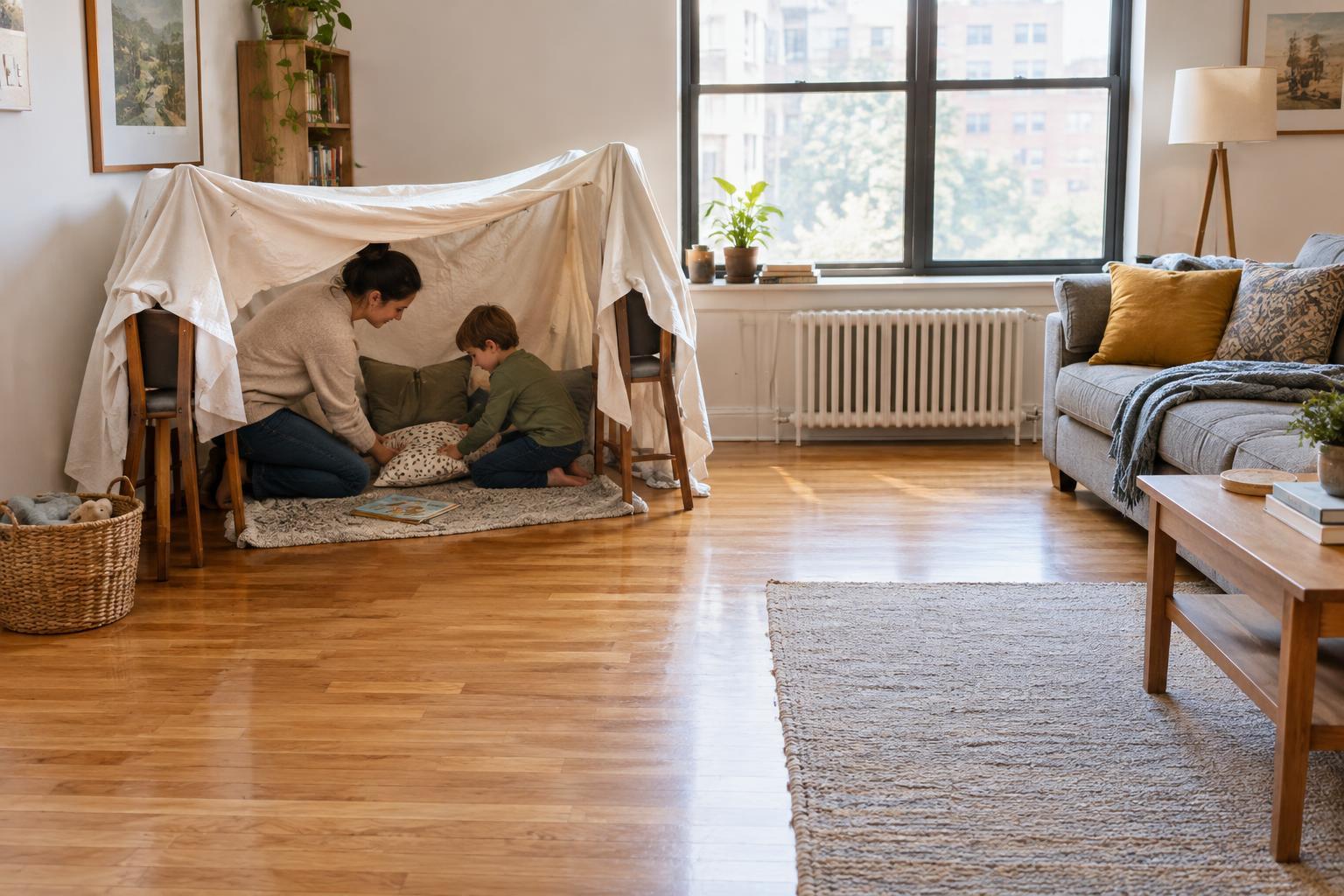
Read article · 3 min↗A blanket fort can feel like a whole new room without becoming a permanent obstacle course. Use one small corner, a few lightweight supplies, and a simple cleanup plan to make space for play and everyday family life.
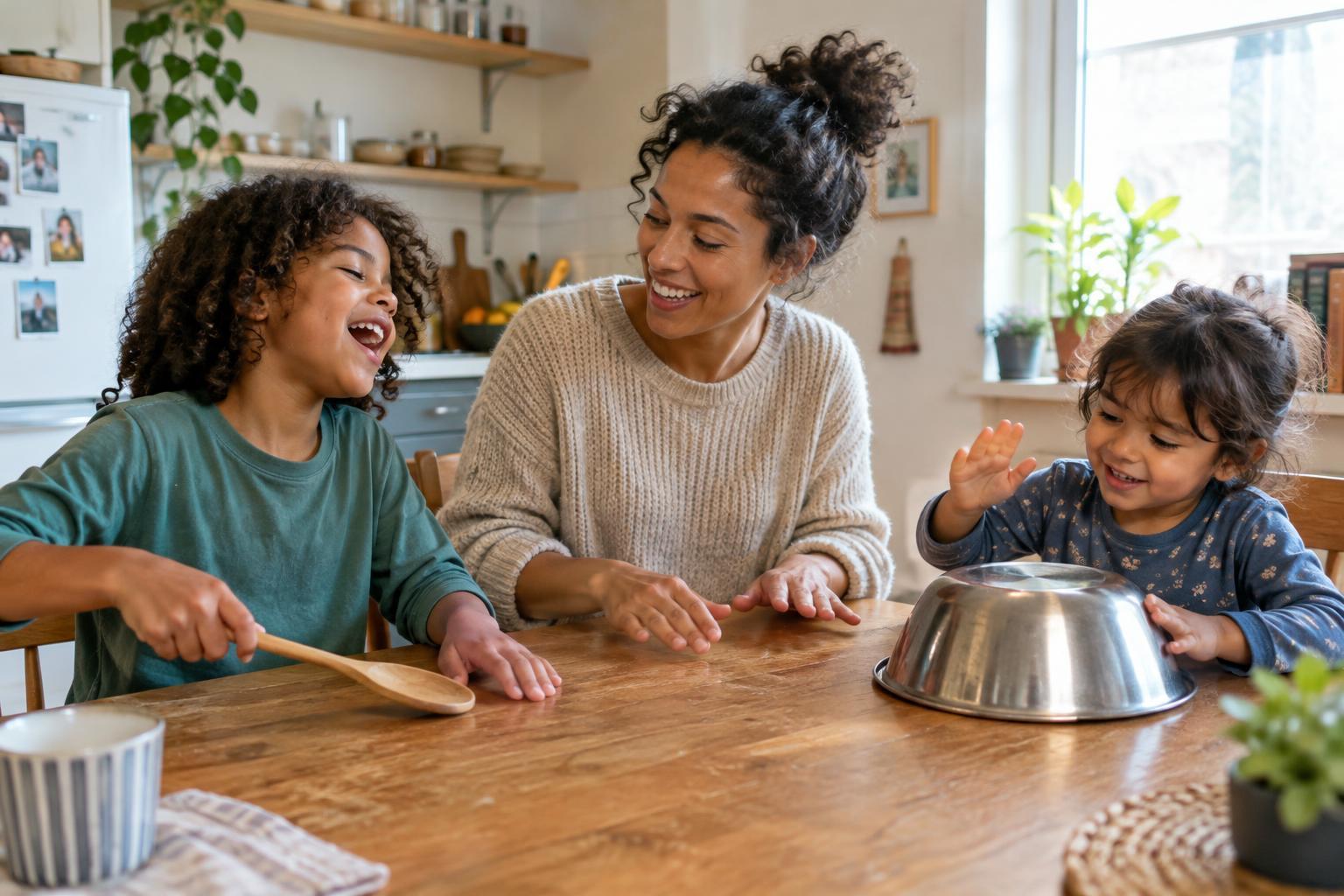
Read article · 4 min↗A kitchen table, a familiar song, and a few minutes together are enough to make music. Try these low-prep ideas for rhythm, singing, movement, and sound play at home.
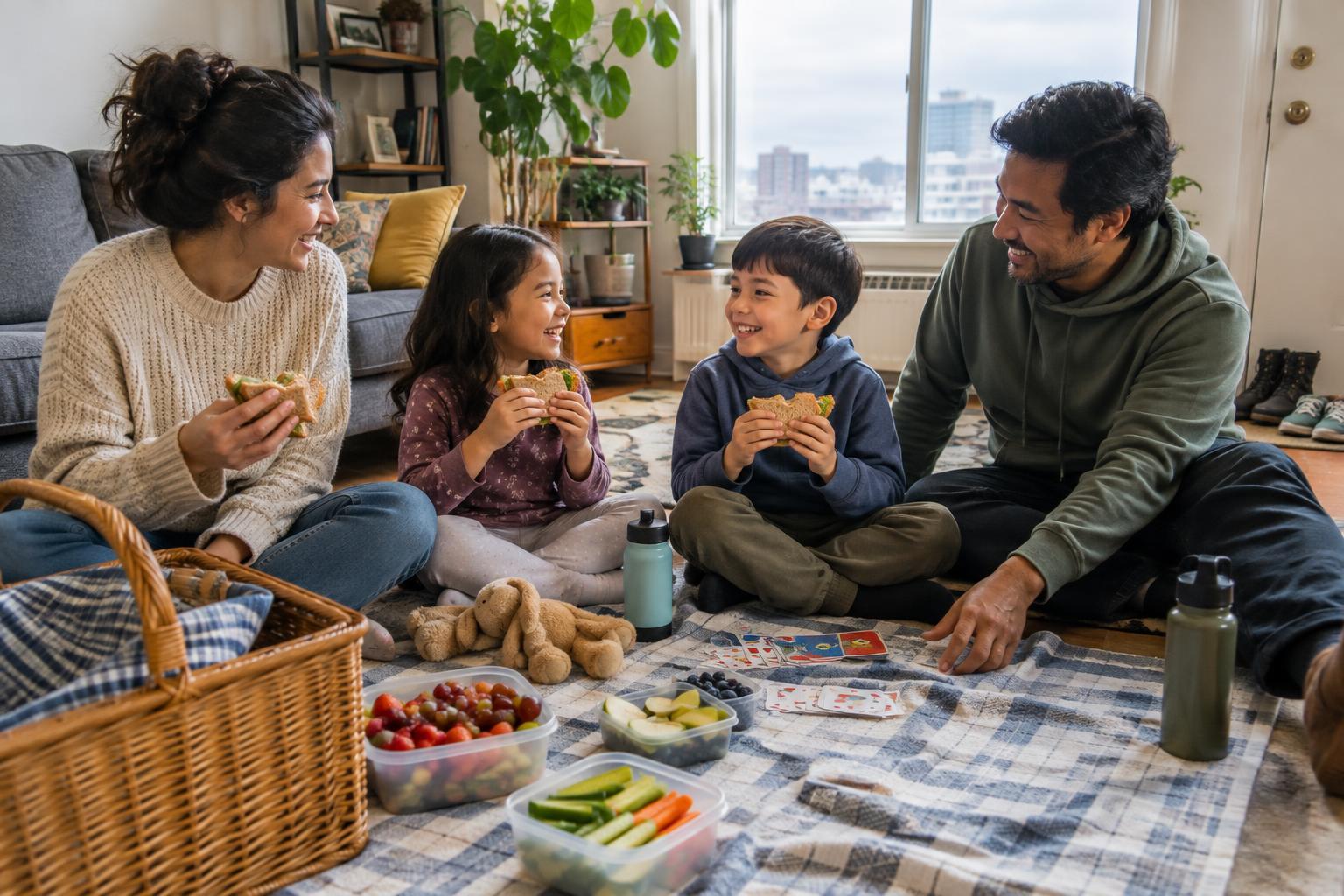
Read article · 4 min↗A picnic does not need a park. With a comfortable spot, simple food, and a few playful touches, families can turn an ordinary meal at home into an outing everyone can help create.
Read article · 4 min↗An indoor scavenger hunt can turn familiar rooms into a fresh family activity without special supplies. Choose a simple theme, write clues around safe household objects, and adjust the game for your space and the ages of the players.
Read article · 4 min↗A family read-aloud does not require every child to follow every word. Learn how to choose books with something for different ages, make room for movement and questions, and keep the ritual enjoyable without turning it into another task.
Read article · 3 min↗A family movie night can be more than pressing play. With a simple plan for choosing the film, sharing small jobs, making the room comfortable, and talking afterward, everyone can have a part in the evening.
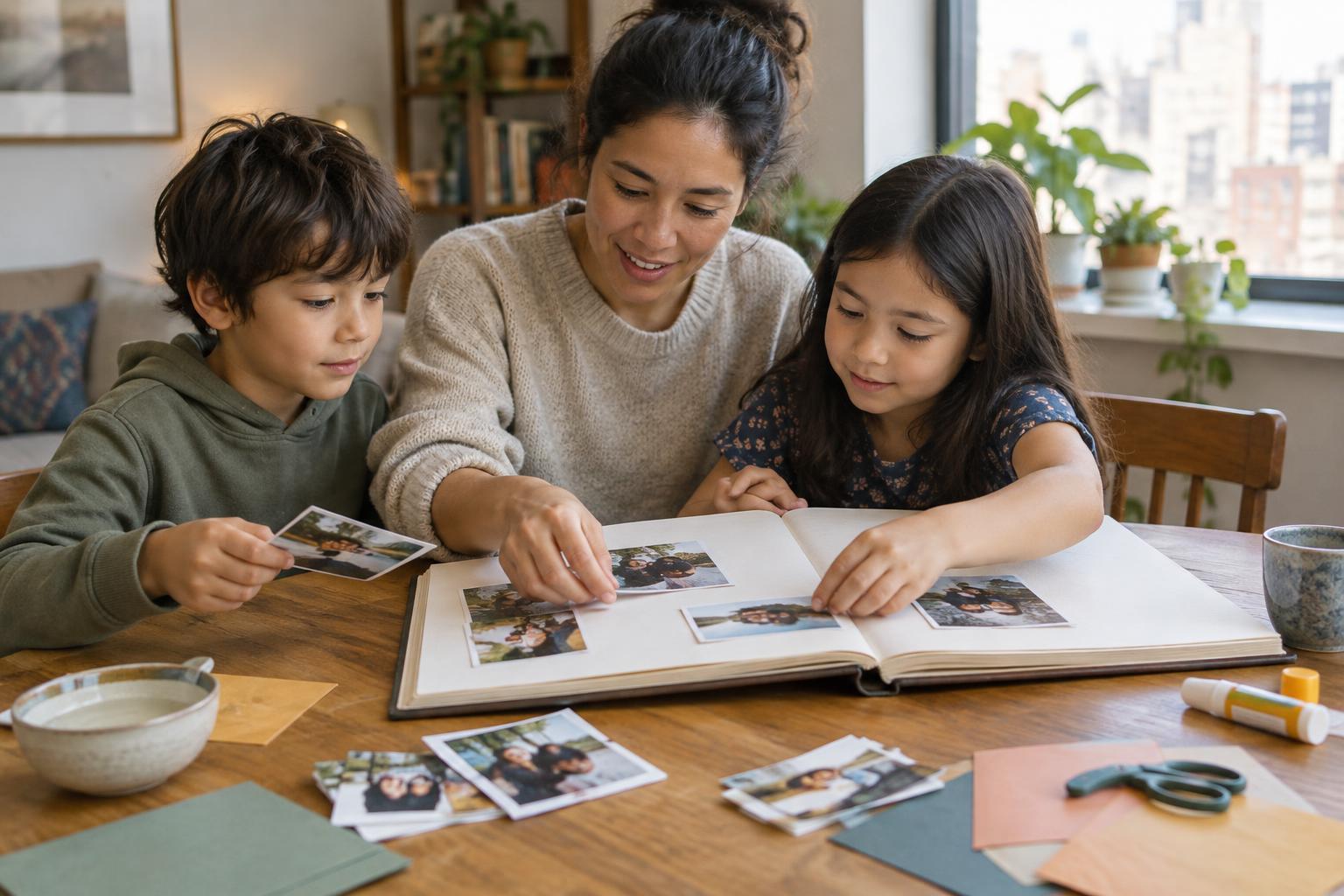
Read article · 4 min↗A family photo album can be a shared activity, not a project one adult has to finish alone. Start with a few pictures, invite children to help choose what matters, and build pages at a pace that fits your family.
Read article · 3 min↗Family stories do not need to be dramatic to be worth keeping. A familiar walk, a funny remark at dinner or a small act of kindness can become a story your family returns to. Here are simple ways to collect and share everyday memories without turning them into another chore.
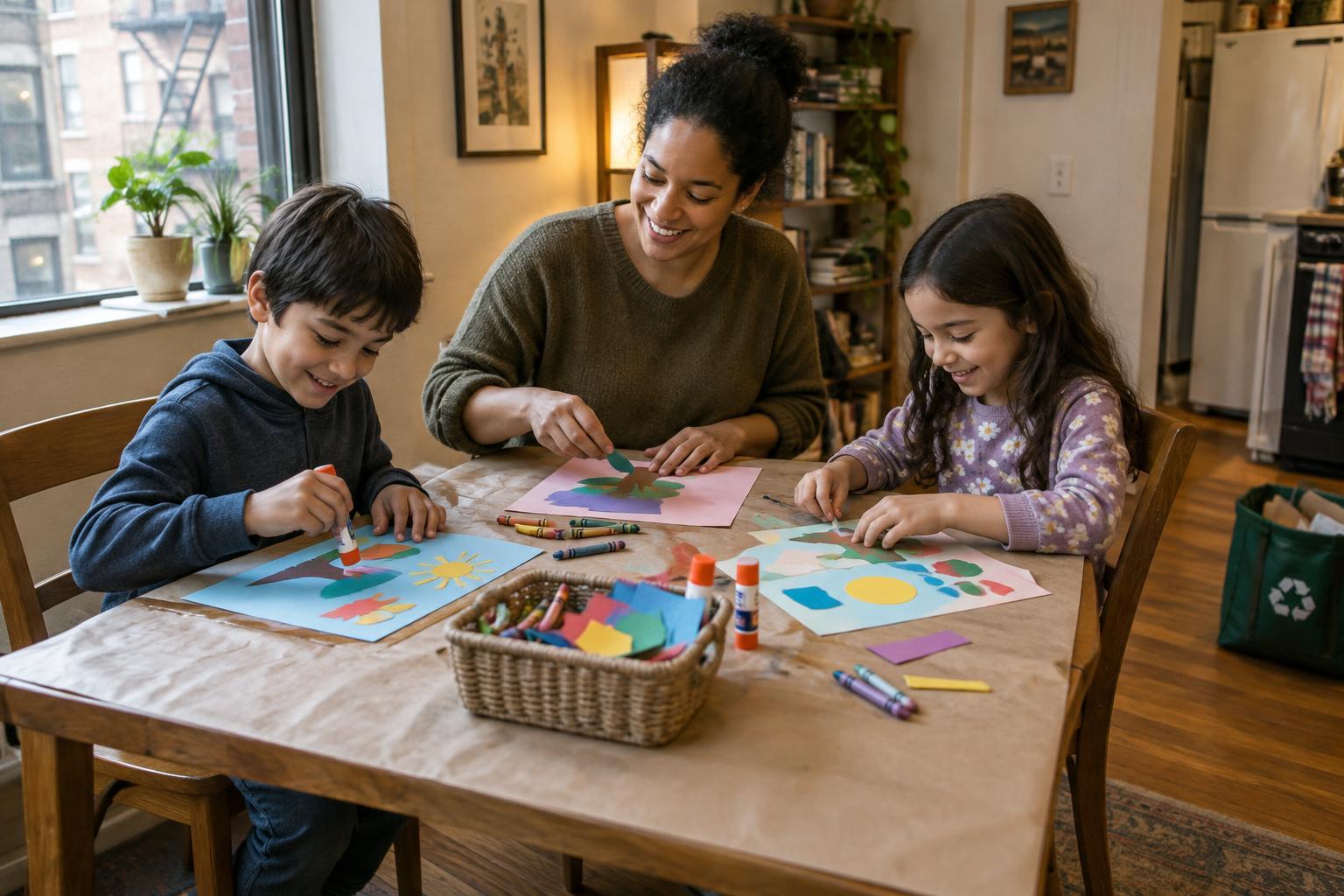
Read article · 3 min↗A family craft afternoon does not need a dedicated playroom. With one clear surface, a few versatile supplies, and a simple cleanup plan, you can make room for creativity without letting the project take over your apartment.
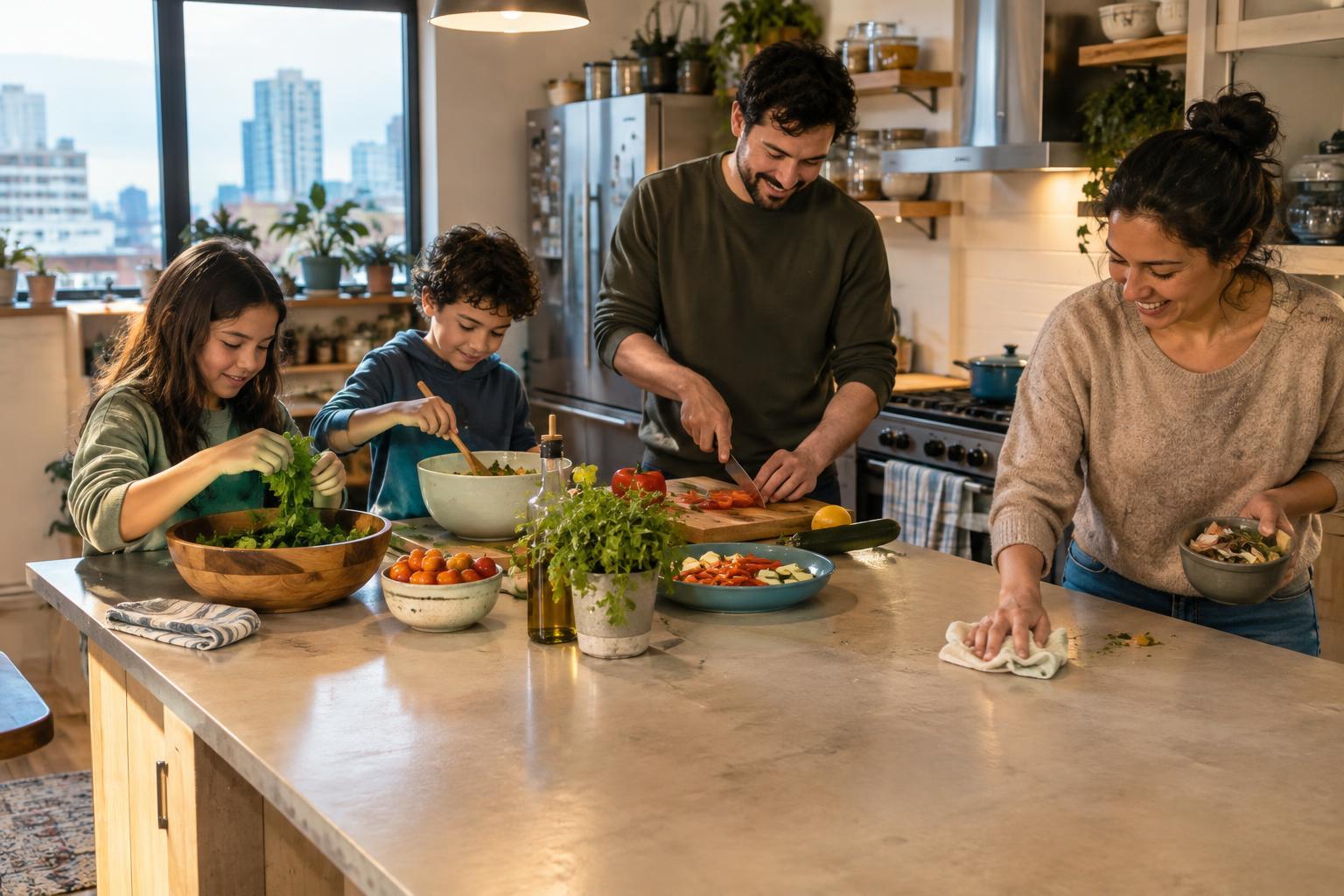
Read article · 4 min↗Family cooking can be an activity, not just a way to get dinner on the table. Choose a flexible recipe, offer children manageable jobs, and build cleanup into the routine so everyone can take part without making the evening harder.
Read article · 4 min↗A family dance party can fit into a city apartment with a little planning. Choose a considerate time, keep the music moderate, soften footfalls, and give kids playful ways to move without jumping.
Read article · 4 min↗A lively race to the finish and a shared mission can both make for a good family night. Here’s how to choose between competitive and cooperative games based on your time, space, players and mood.
Read article · 4 min↗An outing does not have to hold everyone’s attention in the same way to be a success. Use shared themes, flexible roles and realistic plans to make family activities more welcoming for toddlers, older kids and adults.
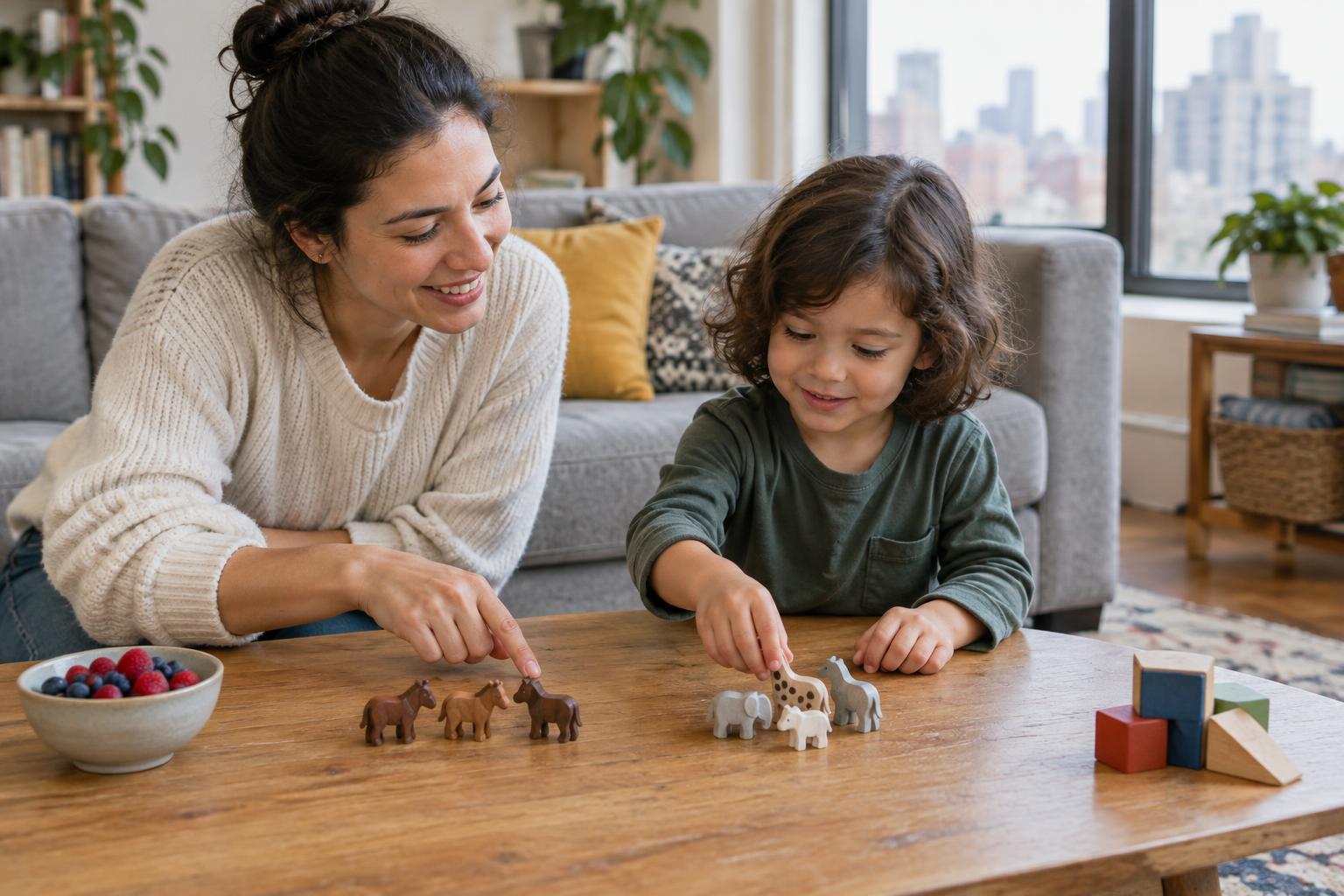
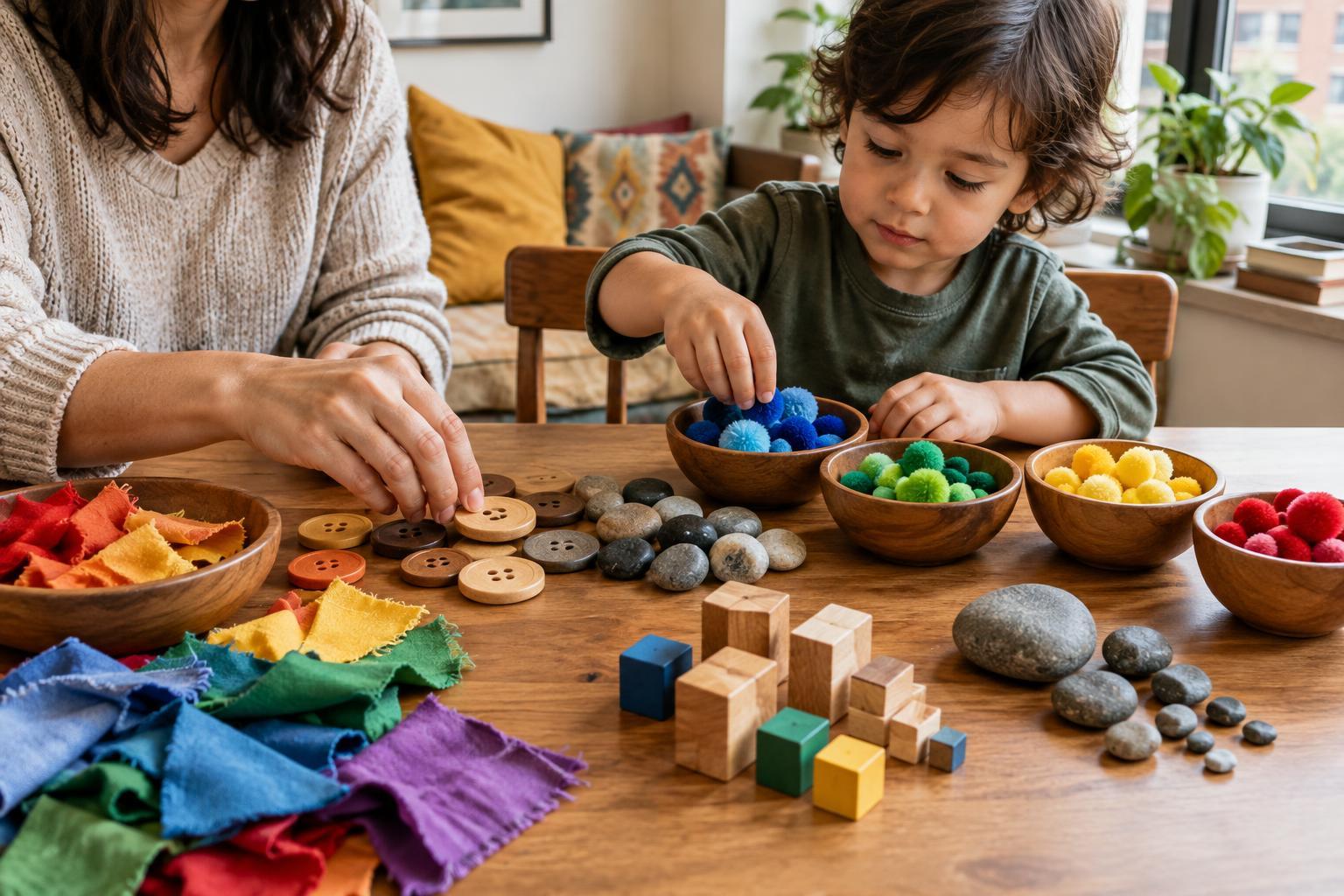
Read article · 4 min↗A family activity night does not need a perfect evening, a big budget, or an elaborate plan. Start with a realistic time window, keep a few easy activities ready, and make room for everyone to help shape the tradition.
Read article · 4 min↗A canceled event or delayed train does not have to end the day’s adventure. Build a simple backup plan around your family’s energy, travel limits and a few easy alternatives.
Read article · 4 min↗A good car-free outing is about more than a short train ride. Learn how to choose family destinations with manageable walks, useful amenities, flexible activities, and a simple plan for getting home.
Read article · 3 min↗A city day out can lose its appeal when the schedule leaves no room for travel, meals or a change of plans. Here are common planning mistakes and simple ways to make a multi-stop outing more enjoyable for the whole family.
Read article · 4 min↗Crowds and queues can turn a simple city outing into a tiring one. A little preparation, a flexible plan, and a few easy ways to make waiting feel manageable can help the whole family enjoy the trip.
Read article · 4 min↗A Queens waterfront outing can be simple: choose a park that fits your family’s energy, plan the trip there, and leave room to explore. These practical tips cover packing, waterside safety, play and an easy exit.
Read article · 4 min↗A farmers market can turn an ordinary errand into a city outing. With a short list, a flexible plan and a few simple jobs for kids, families can enjoy the sights and sounds without feeling they have to see or buy everything.
Read article · 4 min↗A museum visit with kids does not need to cover every gallery. Choose a few promising stops, build in breaks and leave room for curiosity so the outing works for your family.
Read article · 3 min↗A winter outing with kids does not need to fill the whole day. A short route, a flexible destination, and a simple plan for warming up can make city travel and outdoor time easier for everyone.
Read article · 4 min↗A city outing does not have to fill the whole day. Plan around shaded stops, easy access to drinking water and a route you can shorten when everyone has had enough.
Read article · 3 min↗A rainy day does not have to mean staying home. Compare libraries, museums, play spaces, community centers and low-key errands by cost, travel effort, energy level and the kind of break your family needs.
Read article · 3 min↗A city outing can fit around your family’s usual rhythm without becoming a minute-by-minute schedule. Choose a manageable destination, plan for food and rest, and leave room to change course.
Read article · 3 min↗A family walk can be easier when the route fits the people taking it. Learn how to compare quieter streets, choose manageable crossings, plan for pauses, and adjust when a sidewalk or intersection does not feel right.
Read article · 4 min↗A city outing is easier when the essentials are close at hand and the bag is light enough to carry all day. Use this simple packing approach for transit rides, playground stops and unexpected pauses.
Read article · 4 min↗A little restroom planning can make a city outing with kids feel more manageable. Learn how to check facilities before you leave, build a flexible route, and pack for the unexpected.
Read article · 4 min↗A family outing does not need an expensive ticket to feel special. Learn where to find free and low-cost activities, how to check the details before you leave, and how to keep a simple city trip manageable for everyone.
Read article · 4 min↗A Queens library visit can be a simple outing with room to read, browse, and follow a child’s curiosity. Here’s how to choose a branch, prepare for the trip, and keep the visit manageable for everyone.
Read article · 4 min↗The best playground for your family is not always the biggest one. Use this practical guide to compare play spaces by age, layout, comfort and travel time before heading out in Queens.
Read article · 4 min↗A stroller can make a city outing easier, but stairs, crowds and transfers can complicate the trip. A little planning helps you choose a manageable route, pack what you need and stay flexible if conditions change.
Read article · 4 min↗The quickest route on a map is not always the easiest trip with children. Compare walking, transfers, stops, weather and what you need to carry before choosing the subway or bus.
Read article · 3 min↗A first city outing with young kids does not need a packed itinerary. Choose one simple destination, build in time for breaks, and make a flexible plan for getting home. These practical steps can help the day feel manageable for everyone.
Read article · 3 min↗Recommended

A good accessory does not need a special occasion to earn its place by the door. It can make the school run feel a little more put together, travel easily to a family outing, and change the look of a familiar coat without asking anyone to rebuild a wardrobe. UniqueYou focuses on women’s scarves, shawls, wraps and square scarves, with silk, cashmere and wool categories to explore. For parents and caregivers whose days move between practical errands and moments of celebration, the most useful question is not simply what looks appealing in a picture. It is what you would reach for again with the clothes you already own.
Before choosing a scarf, look at the pieces that do the most work each week: the coat worn on chilly mornings, the jacket that travels to the office, the dress saved for gatherings, and the comfortable layers used for neighborhood walks. A scarf that relates to two or three of those outfits has a clearer role than one bought for an imagined future look. UniqueYou’s emphasis on elegant, accessible accessories makes this a sensible place to begin: choose something that joins an existing wardrobe rather than treating the accessory as the start of a complete makeover.
Try naming the gap in plain language. Perhaps your dark coat needs a lighter note near the face, or a patterned blouse calls for a quieter outer layer. Maybe you own plenty of warm winter pieces but nothing that works over a dress indoors. Keep a short list of colors you wear often and the settings in which you need the scarf. This small exercise helps distinguish a useful addition from an attractive piece that has no obvious partner at home.

A long scarf, a broader wrap and a small square do different jobs. A long scarf can sit with a coat and change how its neckline looks. A wrap or shawl offers more fabric to arrange over the shoulders, which may suit an event outfit or an extra layer for a cooler room. A square scarf takes up less visual space and can bring color to a simple top. None is automatically the best choice; the right shape depends on what you will wear with it and how much fabric you enjoy managing.

For a busy city day, imagine the accessory at each stop, not only when you first tie it. Will you be taking a coat on and off on public transit? Carrying a bag, helping a child with a zipper, or heading from an outdoor activity into a café? A styling idea is most useful when it survives ordinary movement. If a scarf needs constant adjustment in your usual routine, a different size or a simpler arrangement may be more comfortable.
UniqueYou has silk, cashmere and wool categories, but a category name is not a substitute for checking an individual product’s composition. Materials and blends can vary from piece to piece. Read the listing for the actual scarf you are considering, including its dimensions and care information where provided. That matters especially when buying for someone who has a strong preference about texture, weight or how an item must be cleaned.
Think about how the fabric will be used rather than ranking materials in the abstract. A silk-category square may appeal when you want a compact accent for a blouse or jacket. A wool-category scarf may be the sort of piece you picture with an outdoor coat. A cashmere-category wrap may fit an outfit that calls for a softer-looking drape. These are styling possibilities, not promises about every item in a category. Let the specific product details and your own preferences settle the choice.
The quickest way to make an accessory feel familiar is to connect it to something already in rotation. Hold the idea of a scarf against the color of your main coat, your most-used shoes or the bag you carry every day. It does not have to match exactly. A warm neutral can sit comfortably beside several colors; a brighter shade can act as the deliberate contrast in an otherwise quiet outfit. The goal is a relationship you like, not a rule that every item must belong to a matching set.
Patterns deserve the same practical test. Checks can add structure to plain outerwear, while an animal-inspired print can provide a stronger focal point. If your wardrobe already contains many prints, consider whether another pattern will be easy to combine with them. If most of your clothes are solid, a patterned scarf can do much of the visual work on its own. Taking a photograph of a few everyday outfits can make that decision easier than trying to remember their exact shades while browsing.
One scarf can look different depending on where its ends fall, how loosely it sits and what surrounds it. Try a long scarf hanging open over a coat before deciding it must be wrapped closely at the neck. Arrange a broader shawl over both shoulders for a gathering, then see whether a simpler fold works for a casual jacket. With a square scarf, experiment over a plain neckline and check the result while standing and moving, not only in a mirror pose.
Small adjustments are especially helpful when mornings are crowded. You need not learn an elaborate knot to enjoy an accessory. Choose a method you can repeat quickly, then notice whether the fabric stays where you want it during the day. If you are dressing for a family outing, leave yourself time for the practical details too: a bag strap, a coat collar and the weather may all affect how a scarf sits. Ease of wear is part of looking comfortable.
A scarf can be a thoughtful gift because it gives the recipient options, but those options are only helpful when they suit her life. Start with what you know: the coat she wears most, the colors she chooses herself, whether she likes visible patterns, and whether she tends to carry light layers. A person who enjoys a small finishing touch may appreciate a square scarf; someone who regularly wears dresses to gatherings may have more use for a wrap. Avoid treating one style as universally flattering.
If you are unsure, choose a direction rather than trying to guess every detail. A restrained color related to a familiar outfit may be easier to wear than a print selected solely because it looks striking on screen. Check product dimensions and composition before buying, particularly if the recipient has expressed preferences about fabric or care. A gift note can explain the simple thought behind the choice: you remembered a favorite coat, a color she loves, or an occasion on her calendar.
Family schedules rarely stay as neat as the calendar suggests. An ordinary day can include an early errand, a museum visit, a quick meal and a last-minute invitation. An accessory cannot solve the logistics, but it can help the same familiar outfit feel appropriate in more than one setting. A square scarf may lend interest to a straightforward top; a shawl may change the balance of an event dress; a scarf may make a well-used coat feel freshly styled.
Keep the choice proportionate to the day. For a crowded outing, something easy to carry and arrange may matter more than a dramatic silhouette. For a celebration, you may welcome a larger piece that can sit over your shoulders in photographs and at the table. Thinking in terms of actual transitions helps avoid buying an accessory for a single imagined moment while overlooking everything that happens before and after it.
A scarf is more likely to be worn when it is visible at the moment you need it. Give everyday pieces a simple place near coats or other getting-ready essentials, while keeping more delicate or occasional pieces where they will not be crushed beneath bags and winter gear. A small, consistent storage routine is often more useful than an elaborate system. It also makes it easier to see whether a new color or shape adds something genuinely different to your collection.
Care should follow the instructions for the individual item, not a blanket assumption about silk, wool or cashmere. Before a purchase, consider whether the stated care suits your household’s time and habits. When putting a scarf away after an outing, check whether it needs attention rather than automatically returning it to storage. A little awareness of how you actually maintain clothes can guide a better choice than choosing by appearance alone.
UniqueYou began in 2014 with scarves and clothing. Its history includes a pause and a return after the domain was recovered, so it would be misleading to describe it as trading continuously throughout that period. The original identity used a brown wordmark, a horse motif and the words “Since 2014”; a neutral taupe palette also belongs to the brand’s visual language. Those details offer context, but the most relevant question for a shopper remains whether a particular accessory fits her wardrobe.
The assortment described here centers on women’s scarves, shawls, wraps and square scarves. Rather than assume anything about where a piece was made, what every fiber blend contains or how it will perform, look at the individual item information. That straightforward approach suits the brand’s accessible positioning: an elegant accessory can be chosen for a real outfit and a real routine without needing a grand claim attached to it.
UniqueYou has 20 regional domains, 21 regional-language versions and 16 distinct languages. Those numbers differ because countries can share a language: German, Dutch and English, for example, each appear in more than one destination. The United Arab Emirates has two versions on one domain, with Arabic at the root and English at /en. Choosing a destination language first makes the regional guide below easier to use, especially when you are shopping for someone who lives elsewhere.
The guide identifies each country and destination language before pointing to relevant pages or categories. Foreign-language phrases are local terms for those destinations, not alternative names you need to learn before choosing a scarf. Use them to reach the appropriate browsing context, then compare the specific pieces you find by shape, composition, dimensions and how they would work with the intended wardrobe.
Start with the country and language you want to browse. Each entry offers a route into that regional version and, where relevant, a category to consider. A category can suggest a styling direction, but the details of a particular scarf still deserve a separate look.
For Poland, the destination language is Polish. Begin with the regional brand page — UniqueYou. If a coat-friendly wool option is on your list, the local term for elegant merino-wool scarves leads to that category — eleganckie szaliki z wełny merino. For a checked pattern that could enliven plain outerwear, explore the separate collection — UniqueYou.
For Germany, the destination language is German. The local phrase for a silk-scarf shop leads to the regional starting point — Shop für Seidentücher. If you are comparing broader layers to wear over an outfit, the brand’s stole collection offers another browsing direction — UniqueYou. Check the details of any piece that catches your eye.
For Czechia, the destination language is Czech. The local phrase for a scarf shop takes you to the regional entry point — obchod se šálami. For a smaller accent near the neckline, continue to the brand’s silk neck-scarf collection — UniqueYou. Compare its shapes with the jackets and tops you wear most often.
For Spain, the destination language is Spanish. The local phrase for a scarf shop leads to the regional starting page — tienda de pañuelos. If you want a noticeable pattern against a simple coat or dress, the brand’s leopard-print scarf collection is a possible next stop — UniqueYou. Let your existing colors guide the decision.
For France, the destination language is French. Start at the regional brand page — UniqueYou. The local term for a women’s cashmere scarf points toward one material category — écharpe femme cachemire, while the brand’s silk-scarf collection offers a different styling direction — UniqueYou. Read individual descriptions before deciding between them.
For Hungary, the destination language is Hungarian. The local phrase for an online silk-scarf shop leads to the regional entry page — selyemkendő webshop. If you have an occasion outfit in mind and want to compare larger shoulder layers, the brand’s stole collection is another place to browse — UniqueYou.
For Italy, the destination language is Italian. Begin at the regional brand page — UniqueYou. The local phrase for a large women’s scarf points to a scarf collection worth comparing by size — sciarpa donna grande. For a different scale and feel, explore the brand’s silk-scarf collection — UniqueYou.
For Romania, the destination language is Romanian. The regional brand page is a useful first stop — UniqueYou. The local phrase for a women’s wool scarf leads to a material category — fular dama lana. If you are dressing for a wedding or pairing a layer with a dress, the brand has a separate collection to consider — UniqueYou.
For Slovakia, the destination language is Slovak. The local phrase for a cashmere-scarf shop leads to the regional starting point — obchod s kašmírovými šálmi. If the intended outfit calls for a smaller, lighter-looking accent instead, browse the brand’s silk-scarf collection — UniqueYou and check the dimensions of specific pieces.
For Finland, the destination language is Finnish. Begin at the regional brand page — UniqueYou. The local phrase for large scarves leads to a collection where size may be the deciding factor — isot huivit. For a layer to consider with dresses or wedding outfits, explore the brand’s shoulder-wrap collection — UniqueYou.
For Sweden, the destination language is Swedish. Start at the regional brand page — UniqueYou. The local phrase for a merino-wool scarf points to one category — halsduk merinoull; the brand’s broader wool-scarf collection offers another comparison — UniqueYou. Look at each item’s stated composition rather than assuming the categories are interchangeable.
For Denmark, the destination language is Danish. The local phrase for women’s scarves takes you to the regional entry point — tørklæder til kvinder. If your usual coats are solid-colored and you would like a pattern, the brand’s checked-scarf collection offers a more focused place to look — UniqueYou.
For Belgium, the destination language is Dutch. Begin with the regional brand page — UniqueYou. The local phrase for a women’s wrap points toward a broader layer — omslagdoek dames, while the brand’s silk-scarf collection is worth a look if you prefer a smaller finishing touch — UniqueYou.
For Austria, the destination language is German. The local phrase for a scarf-and-shawl brand leads to the regional entry page — Marke für Schals und Tücher. For a cashmere-category scarf that might work with familiar outerwear, continue to the brand’s dedicated collection — UniqueYou and review the chosen item’s details.
For the Netherlands, the destination language is Dutch. The local phrase for a cashmere-scarf shop leads to the regional starting point — winkel voor kasjmieren sjaals. If a quiet shade would connect several outfits, the brand’s beige-scarf collection gives you a color-led route to browse — UniqueYou.
For the United States, the destination language is English. Start at the regional brand page — UniqueYou. If you want a broader layer, the category described as cashmere wraps for women is here — cashmere wraps for women. For an accent to try with a simple top or jacket, browse the brand’s silk-scarf collection — UniqueYou.
For the United Arab Emirates, this destination language is Arabic, served from the regional root. Begin at the brand page — UniqueYou. If a compact scarf suits your outfit better than a larger wrap, explore the brand’s small-scarf collection — UniqueYou. The English version has its own entry below.
For the United Arab Emirates, this destination language is English, reached through the /en version rather than the Arabic root. The phrase square scarf shop leads to that English-language starting point — square scarf shop. Use it if you want to browse in English before comparing particular shapes and product details.
For Ireland, the destination language is English. Begin at the regional brand page — UniqueYou. The phrase neckerchief ladies leads to a collection of smaller neck accents — neckerchief ladies. If the gap in your wardrobe is a scarf to consider with a coat, the brand’s wool-scarf collection offers another route — UniqueYou.
For the United Kingdom, the destination language is English. The phrase shawl and wrap shop leads to the regional starting point — shawl and wrap shop. If you would rather add a smaller touch to a familiar outfit, the brand’s neckerchief collection offers a more specific place to browse — UniqueYou.
For Portugal, the destination language is Portuguese. The local phrase for a scarves-and-wraps brand leads to the regional entry page — marca de lenços e cachecóis. If you are choosing a layer for a dress or a wedding outfit, explore the brand’s occasion-focused collection — UniqueYou and compare its pieces with the clothes you plan to wear.
The best scarf choice is the one you can picture in your own week: beside a familiar coat, with a favorite dress, or ready for the next family outing. Start there, check the individual product details, and let the accessory add to a wardrobe that already feels like yours.