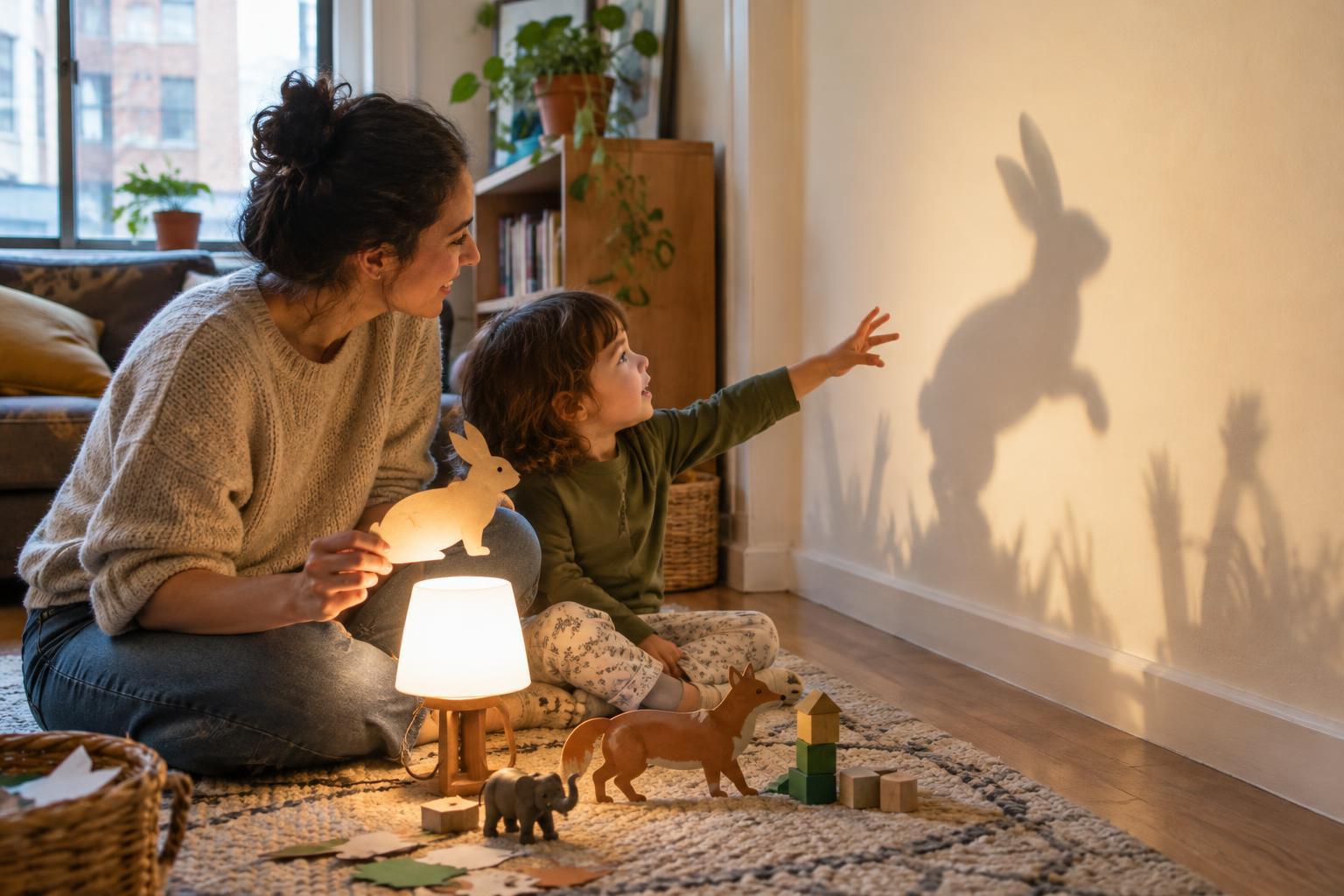
Learning Through PlayA wall, a light source and a few familiar objects can turn a small room into a place for playful discovery. Try simple shadow activities that invite children to notice, experiment and make up stories.
Read article · 3 min↗
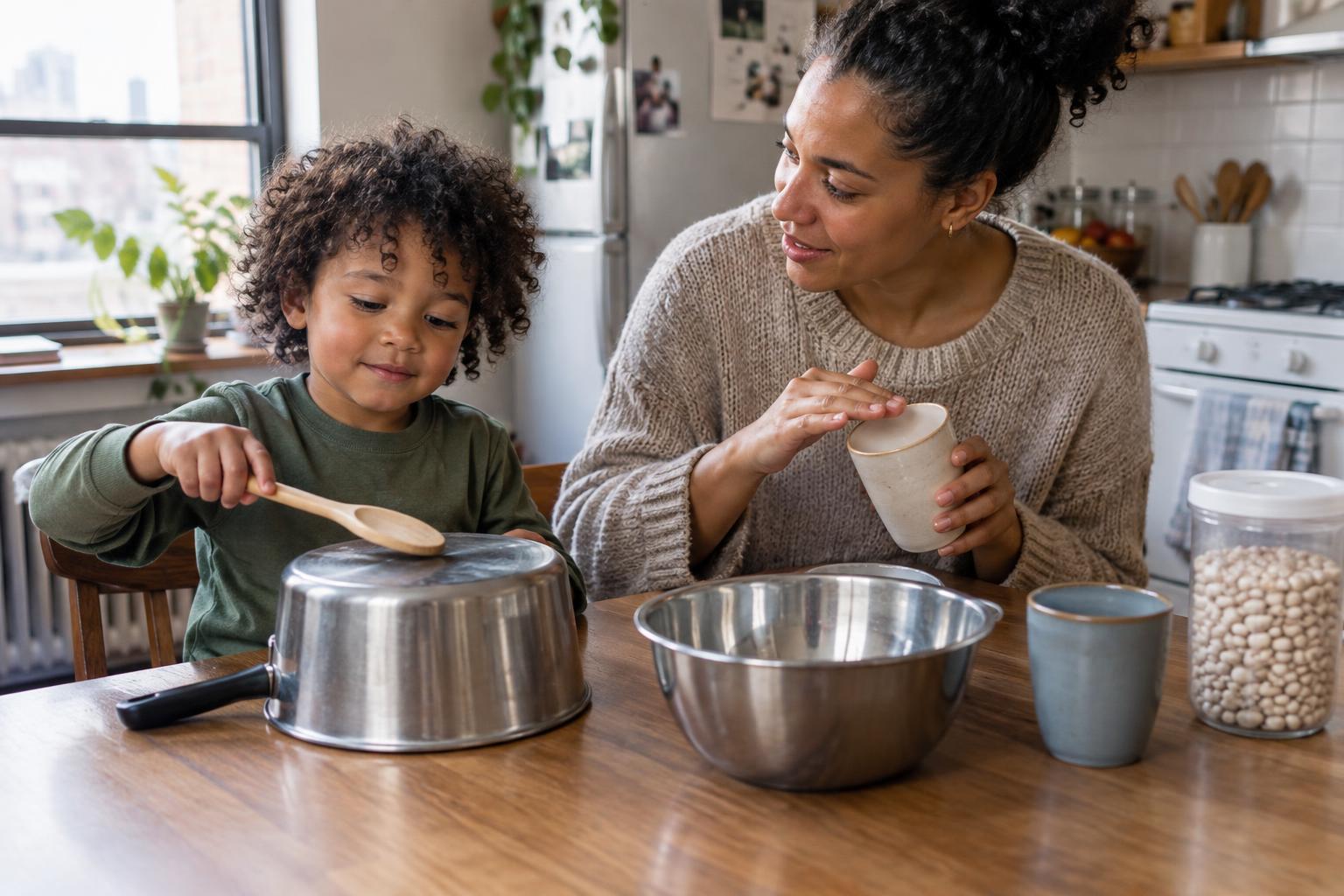
Learning Through PlayA few sturdy household items can become a playful way to notice sounds, try rhythms and invent musical patterns. Here’s how to set up a manageable sound activity that leaves room for children to experiment.
Read article · 4 min↗
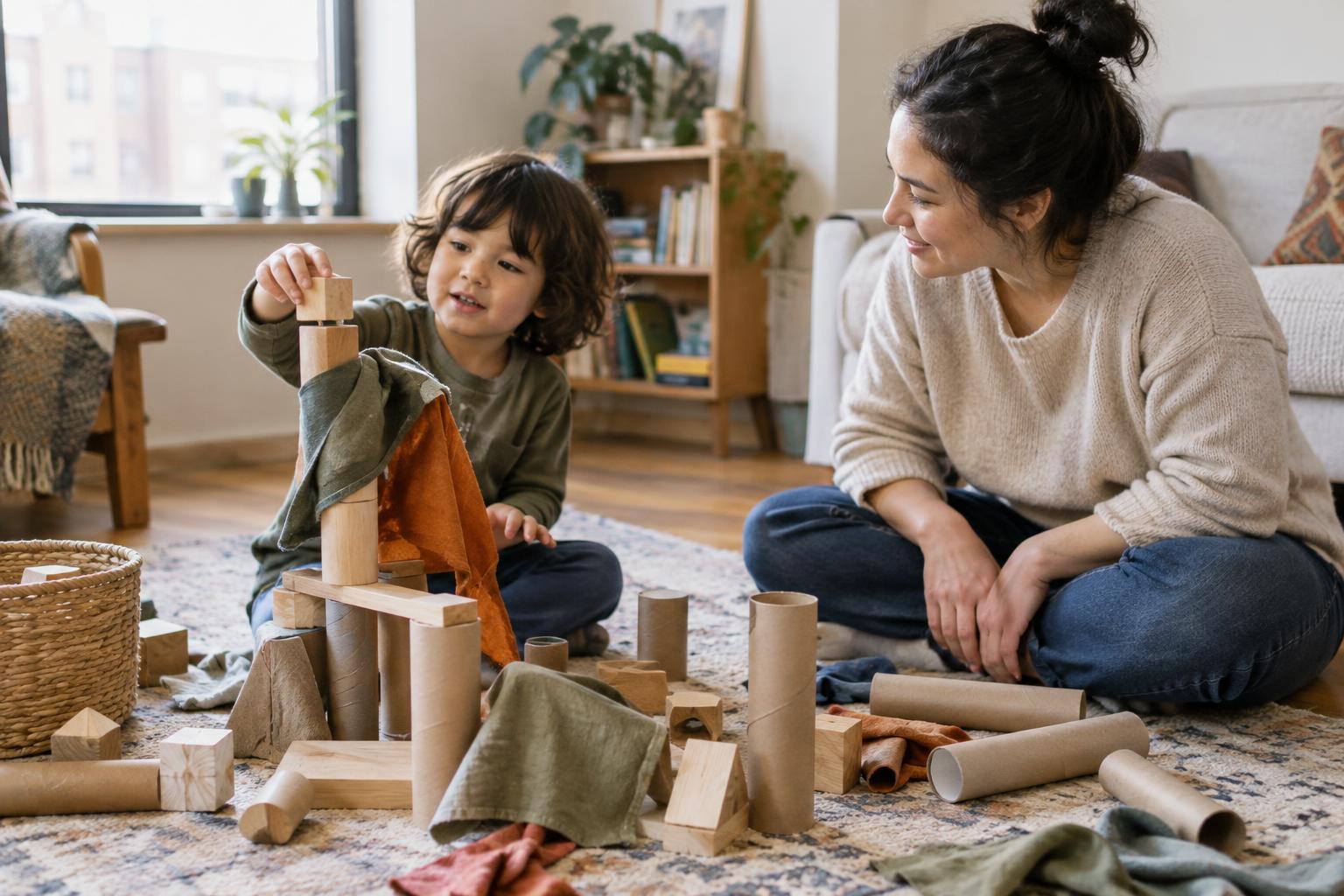
Learning Through PlayLearning through play does not require a plan, a worksheet, or a perfect outcome. Small shifts in how adults join in can leave more room for curiosity, conversation, and discovery.
Read article · 3 min↗
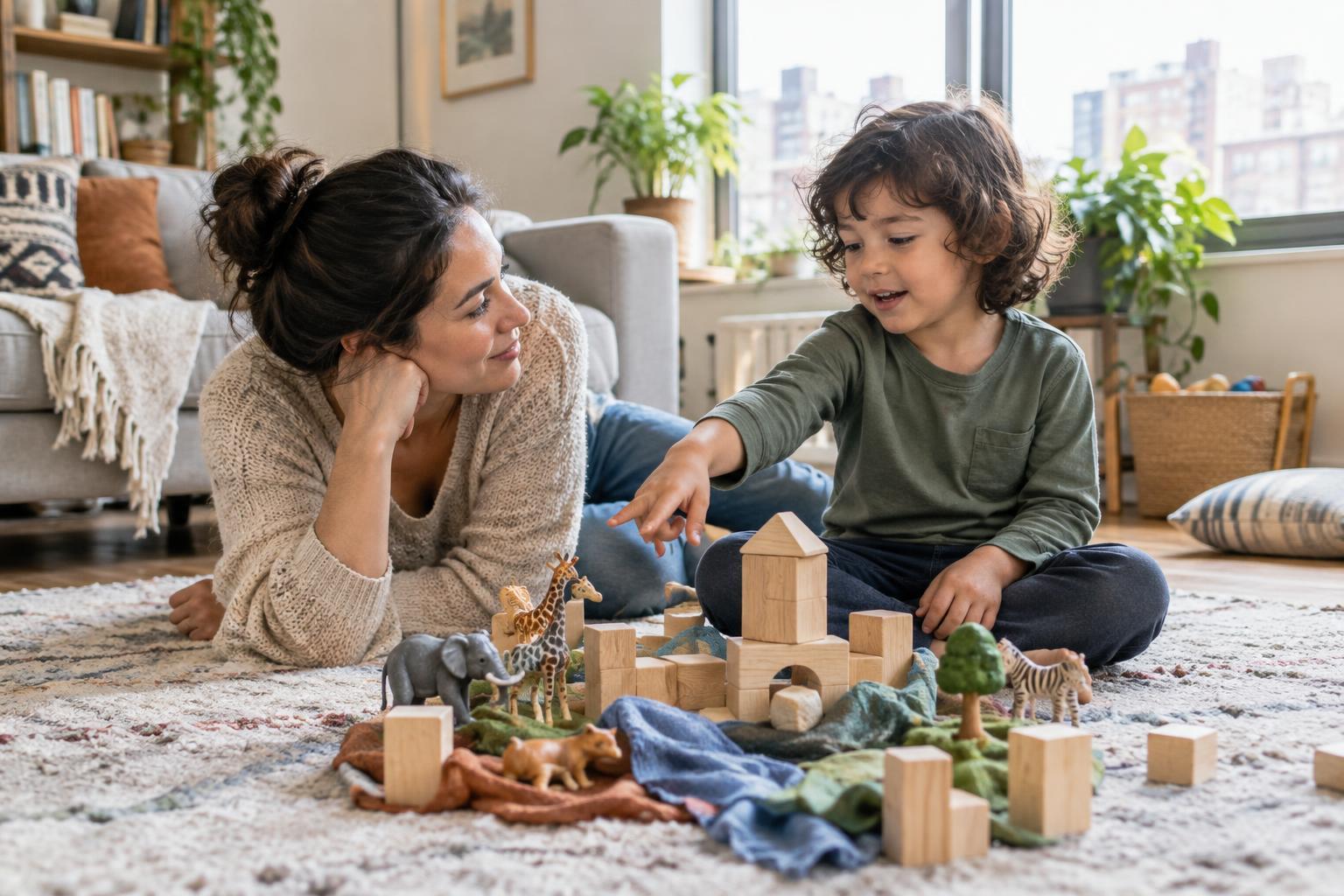
Learning Through PlayA good play question leaves room for a child’s ideas. Learn how to notice what interests them, ask open-ended questions, and keep the conversation playful rather than turning it into a test.
Read article · 3 min↗
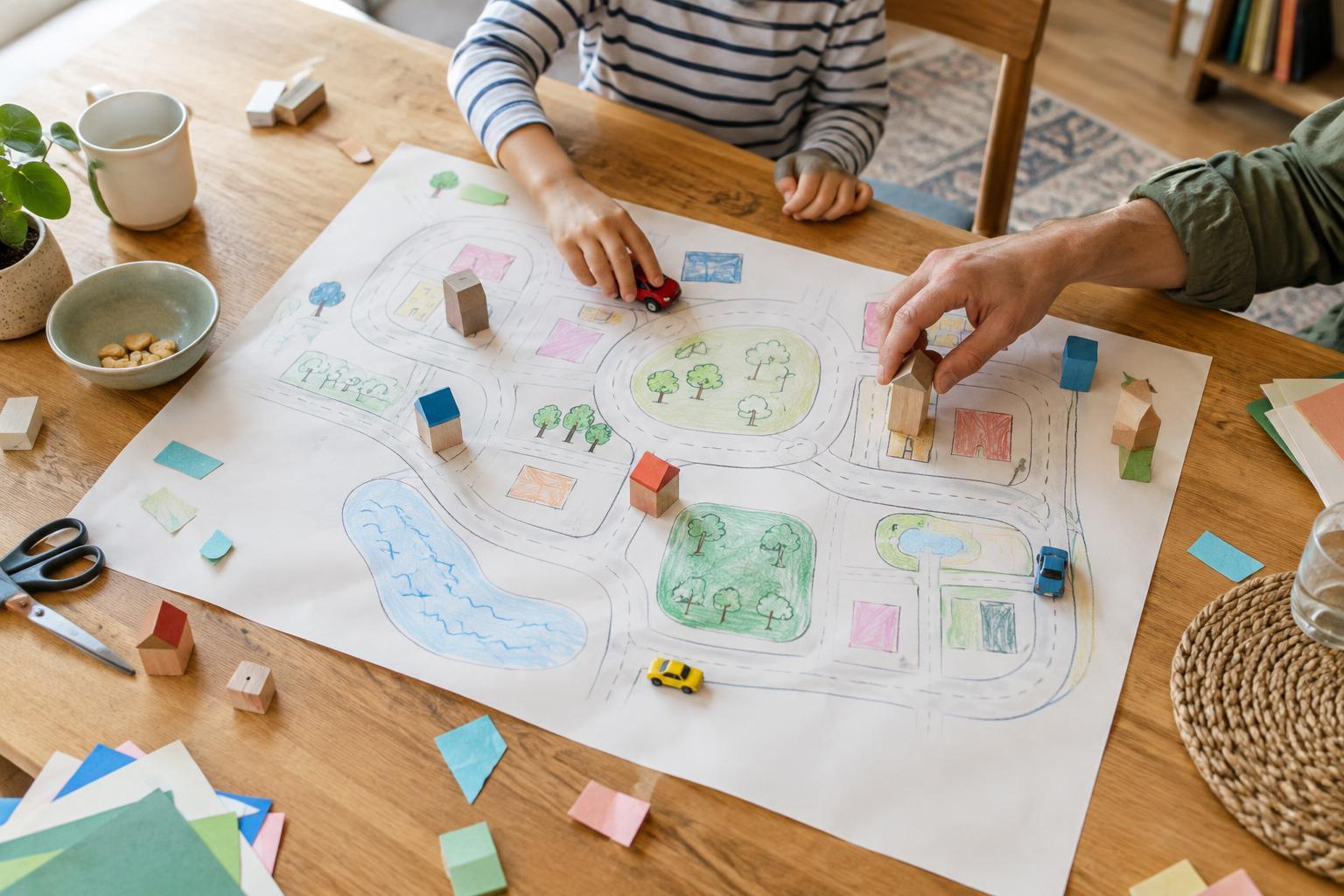
Learning Through PlayA pretend town map can turn blocks, toy cars, paper scraps and household objects into a shared story. Start with a few familiar places, let children decide what happens there, and change the map as the game grows.
Read article · 4 min↗
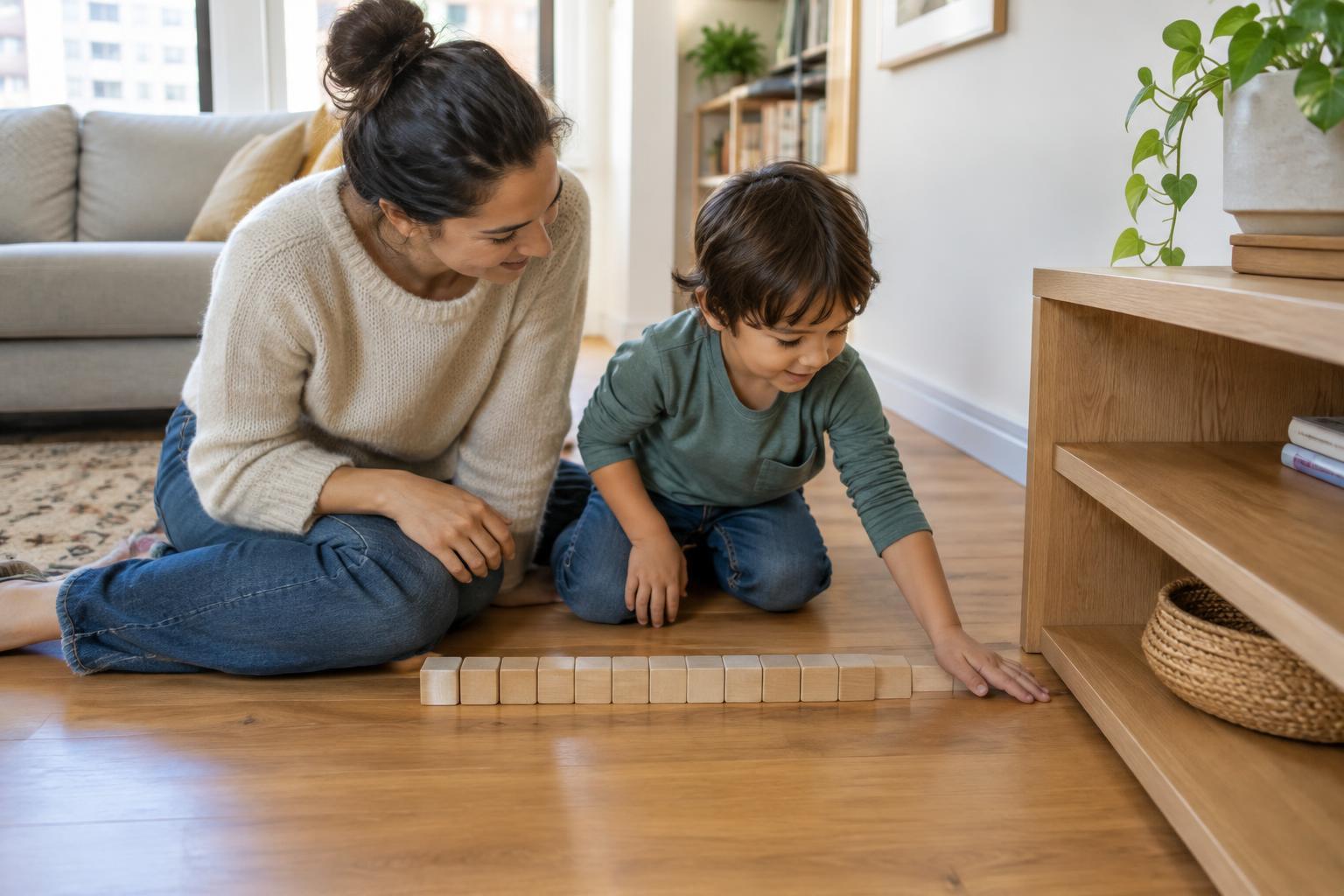
Learning Through PlayA ruler is not the only way to explore length. Hands, steps and blocks can turn everyday objects and spaces into playful measuring challenges that help children compare, count and ask good questions.
Read article · 4 min↗
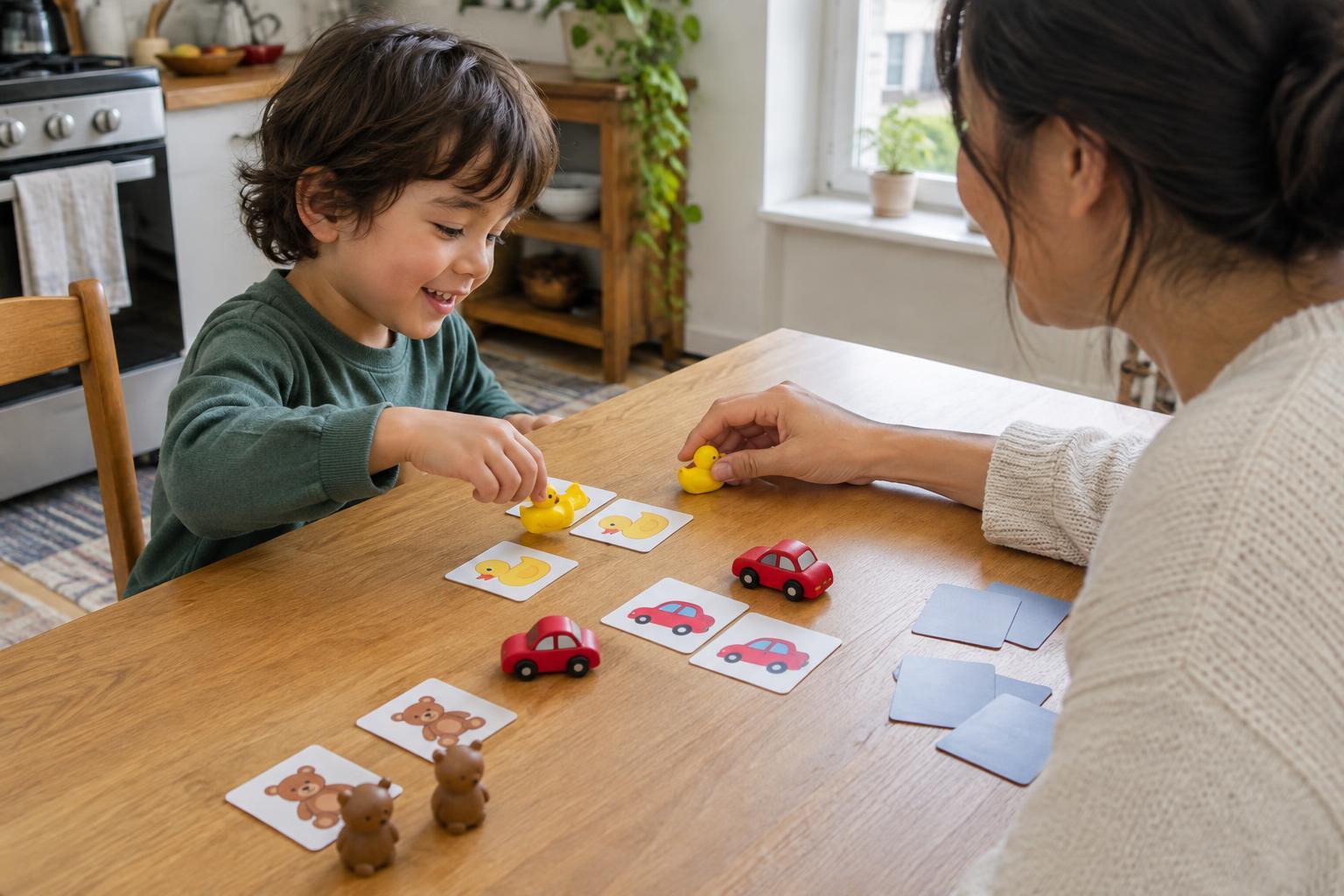
Learning Through PlayMatching games can fit into a few minutes at the kitchen table or on the living room floor. Learn when to use familiar objects, picture pairs or face-down memory cards, and how to keep the game playful rather than turning it into a test.
Read article · 4 min↗
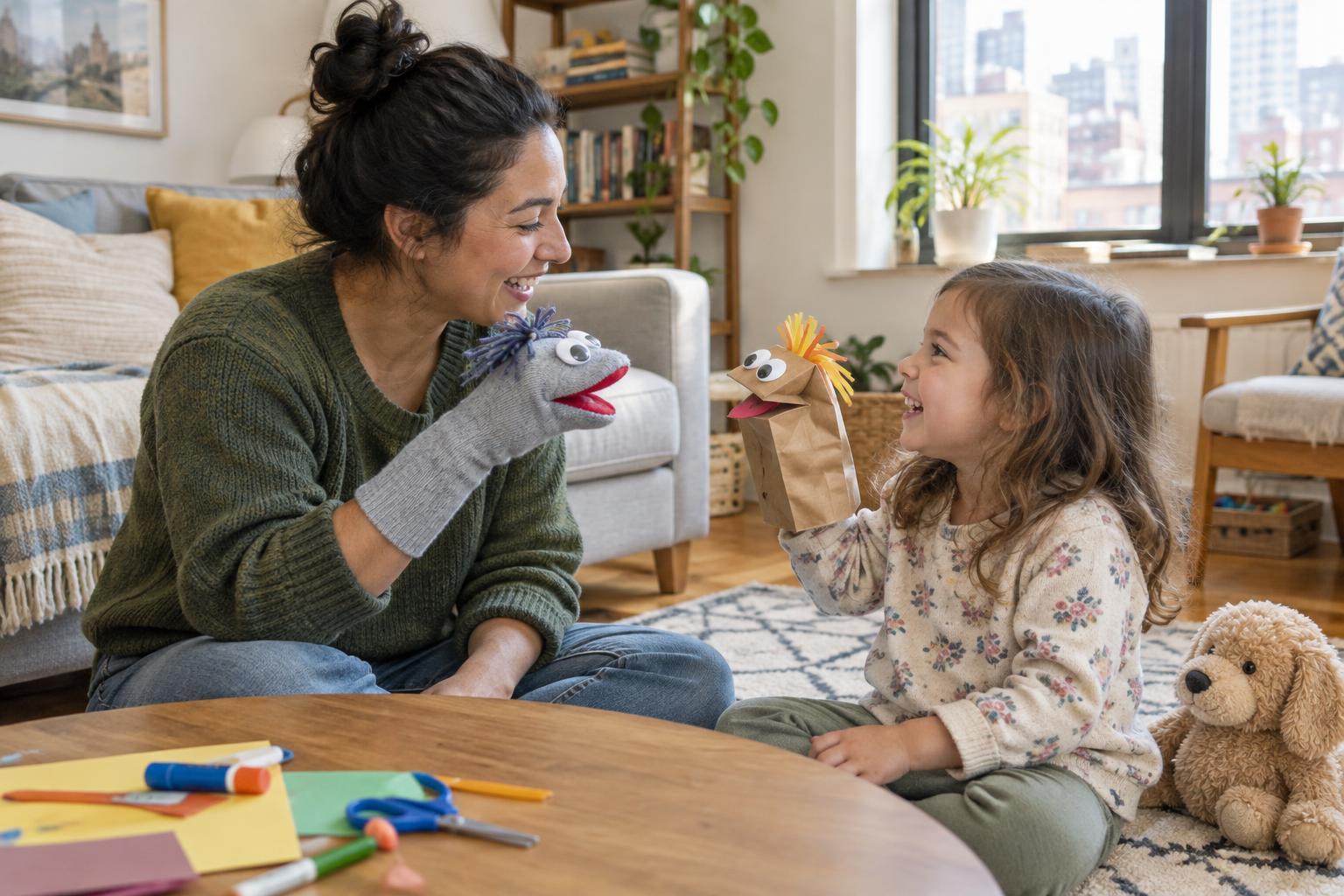
Learning Through PlayA sock, a paper bag, or a favorite toy can become a character with a story to tell. Try simple puppet games that make room for conversation, imagination, and connection in the middle of everyday family life.
Read article · 4 min↗
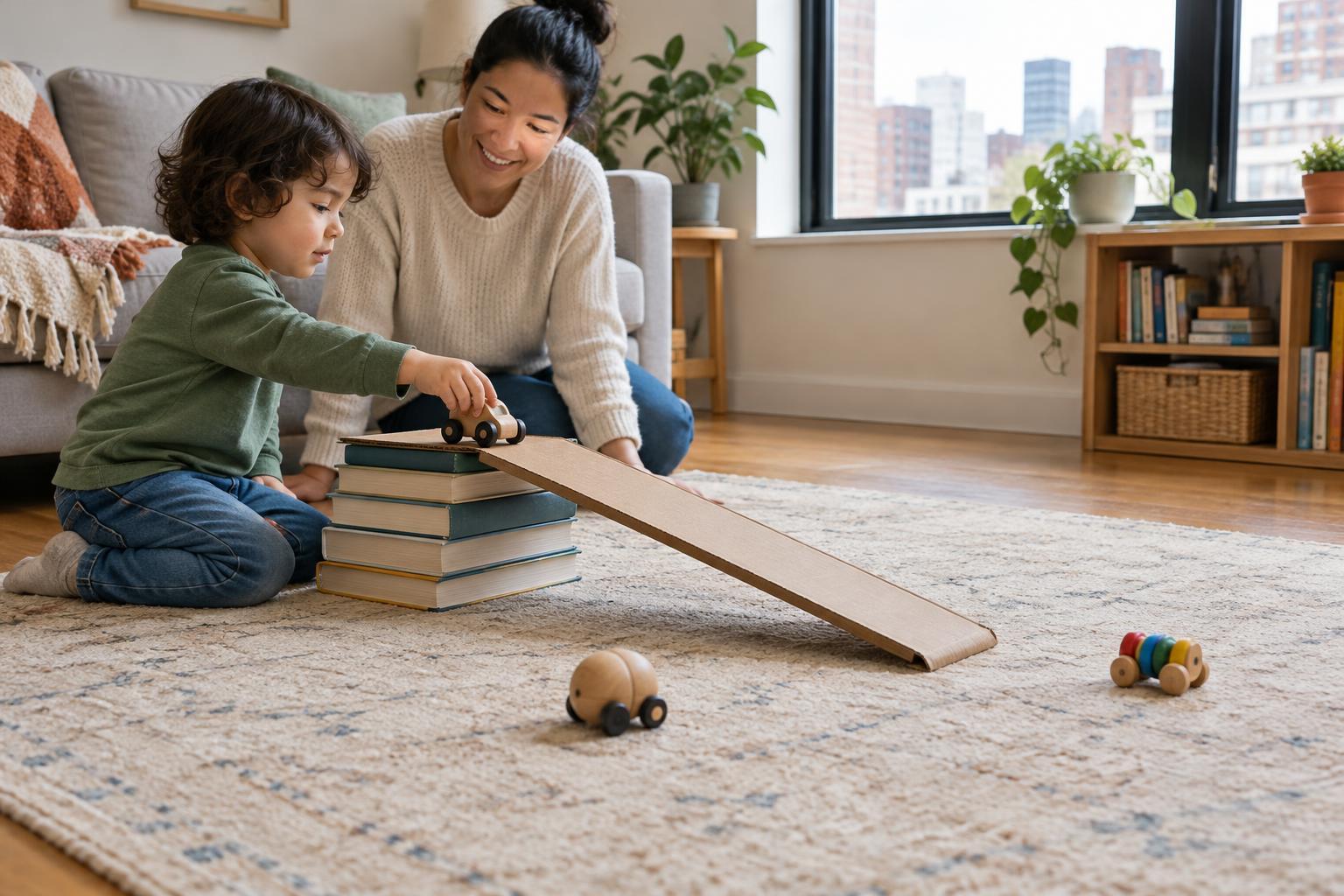
Learning Through PlayA cardboard ramp and a few rolling toys can turn a small space into a place to wonder, test ideas, and try again. Learn how to set up simple ramp play, ask useful questions, and keep the activity manageable at home.
Read article · 4 min↗
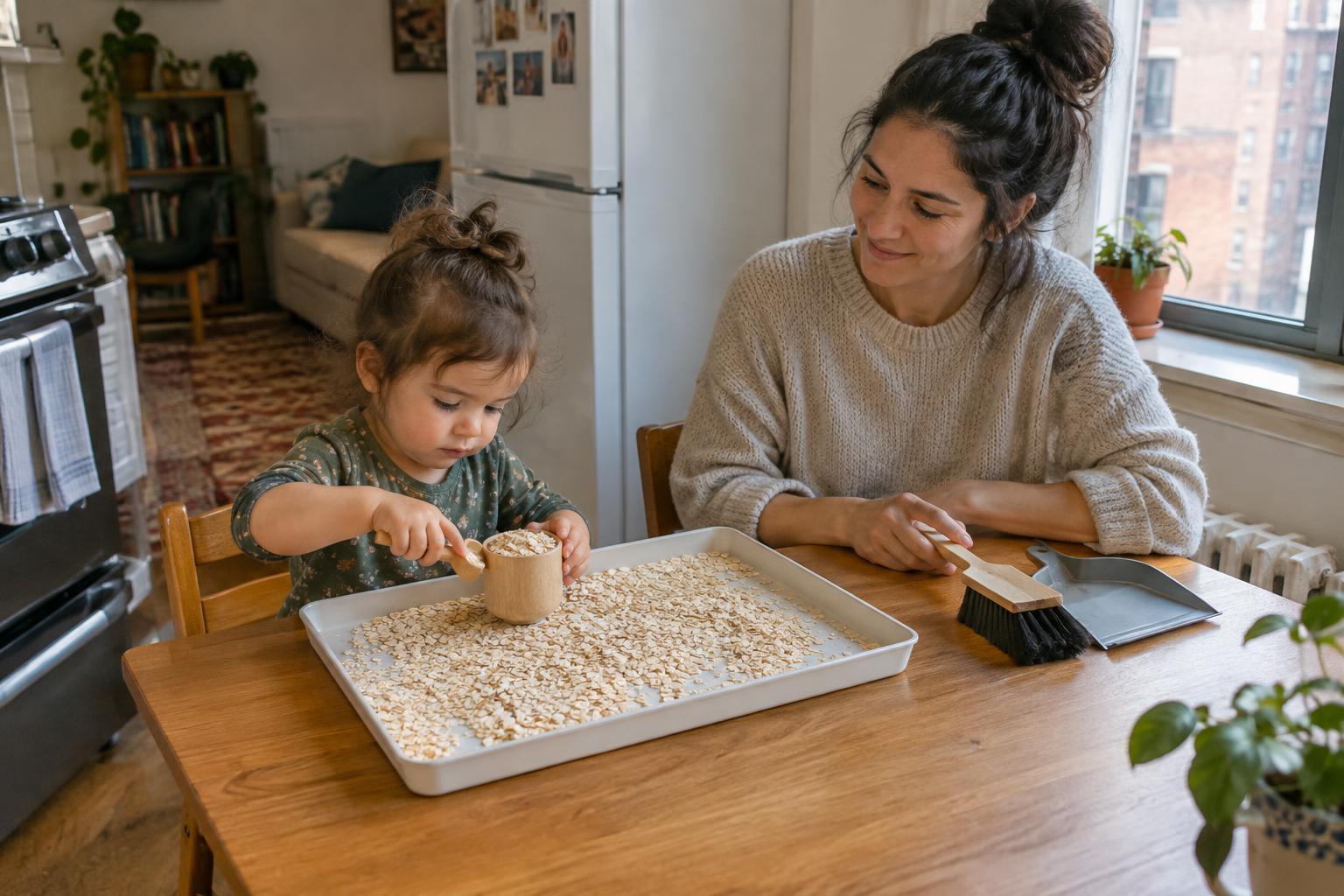
Learning Through PlaySensory play does not require a dedicated playroom or a cupboard full of supplies. A single material, a defined work area, and a simple cleanup routine can make hands-on exploration easier to enjoy in a small home.
Read article · 4 min↗
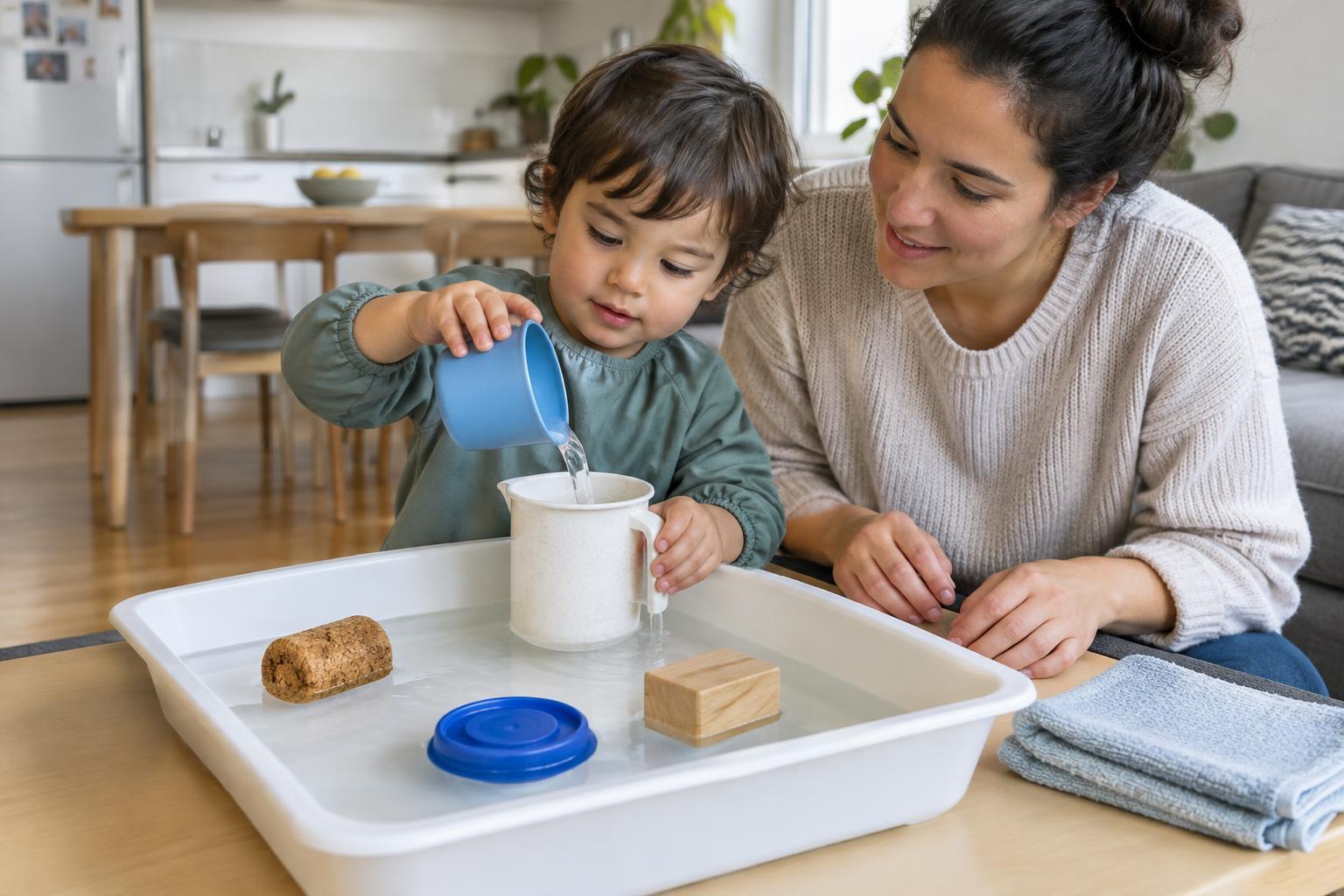
Learning Through PlayA shallow tray, a few household containers and a small collection of water-safe objects can turn an ordinary afternoon into hands-on play. Try simple pouring and floating activities while keeping an adult close, the setup manageable and cleanup easy.
Read article · 4 min↗
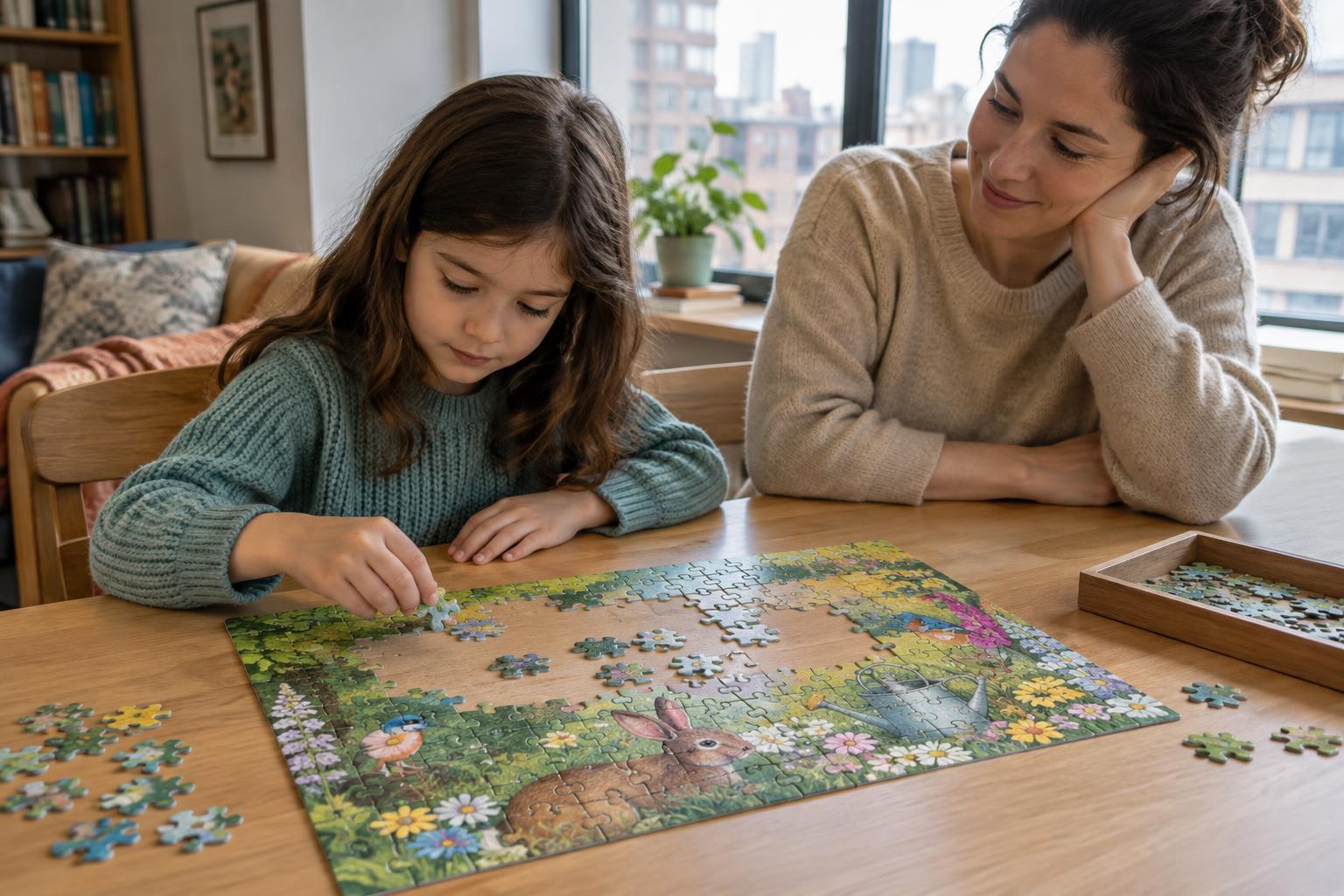
Learning Through PlayThe right jigsaw puzzle gives a child enough clues to get started and enough challenge to keep going. Learn how to choose by picture, piece design, size and setting—and how to help without taking over.
Read article · 3 min↗
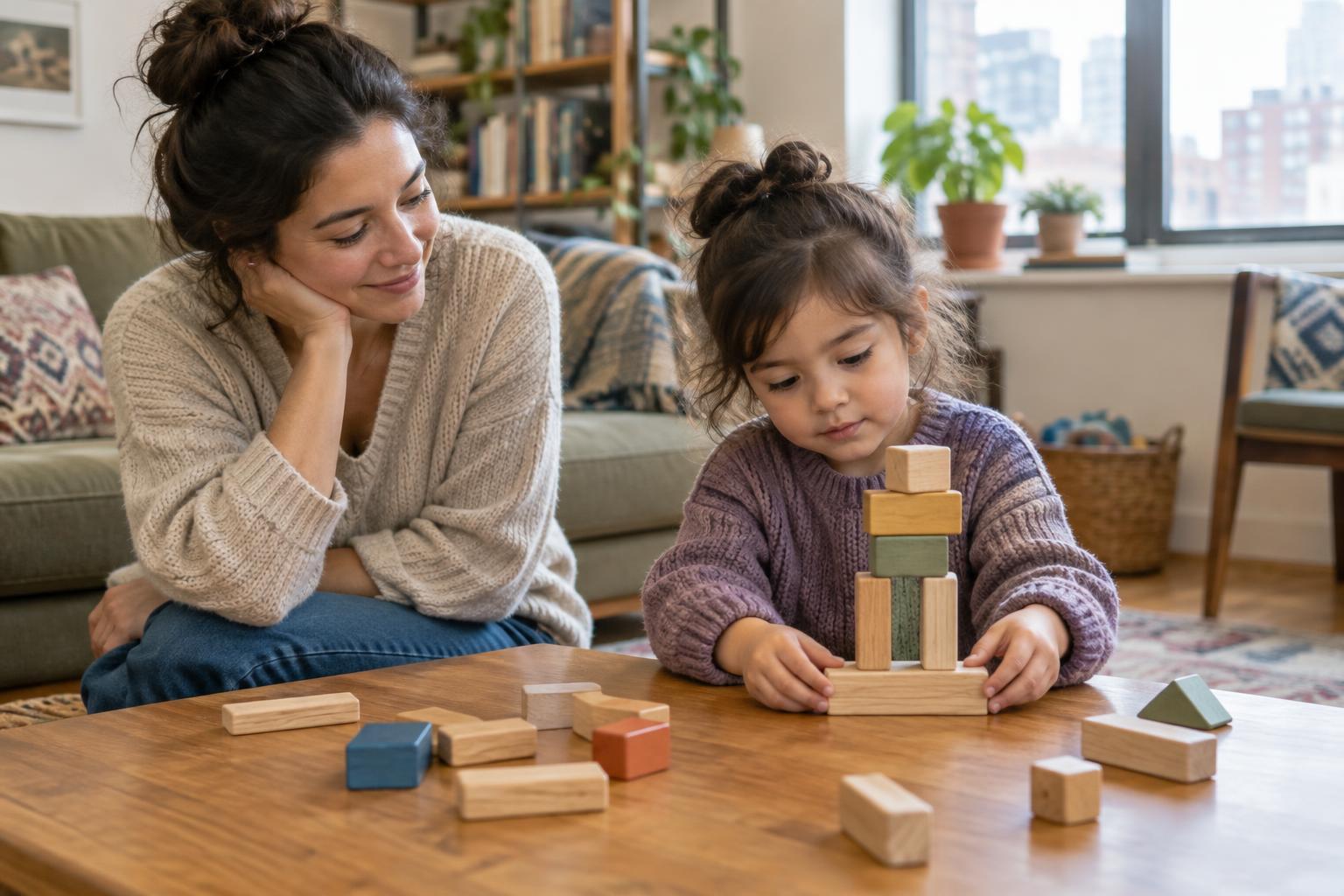
Learning Through PlayA block tower that tumbles can become an invitation to experiment. Try simple questions that help children notice what happened, test a new idea, and keep the play their own.
Read article · 3 min↗
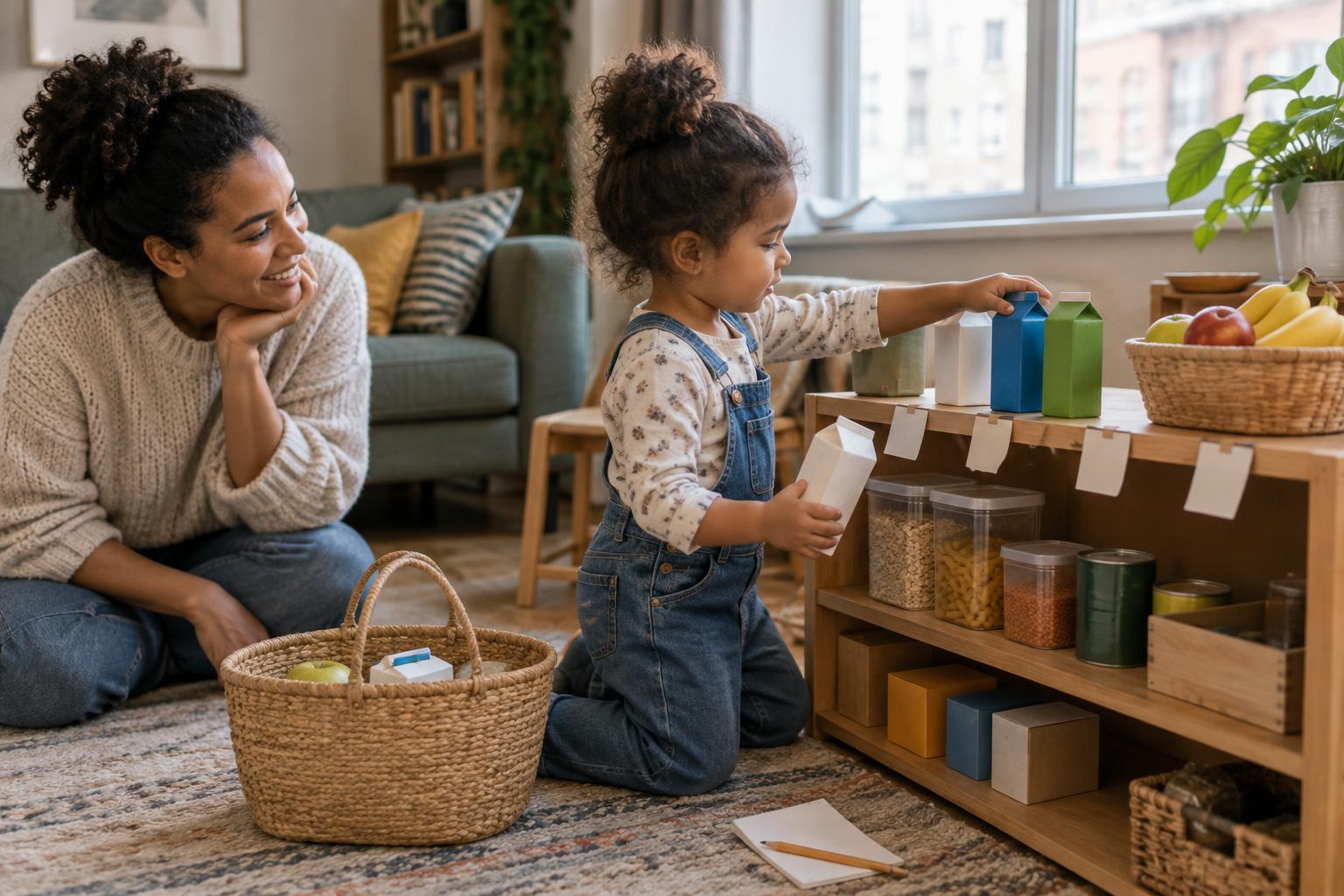
Learning Through PlayTurn a corner of the living room into a pretend grocery store with empty packages, paper price tags and a short shopping list. This flexible game invites children to sort, count, write and talk while leaving plenty of room for imagination.
Read article · 3 min↗
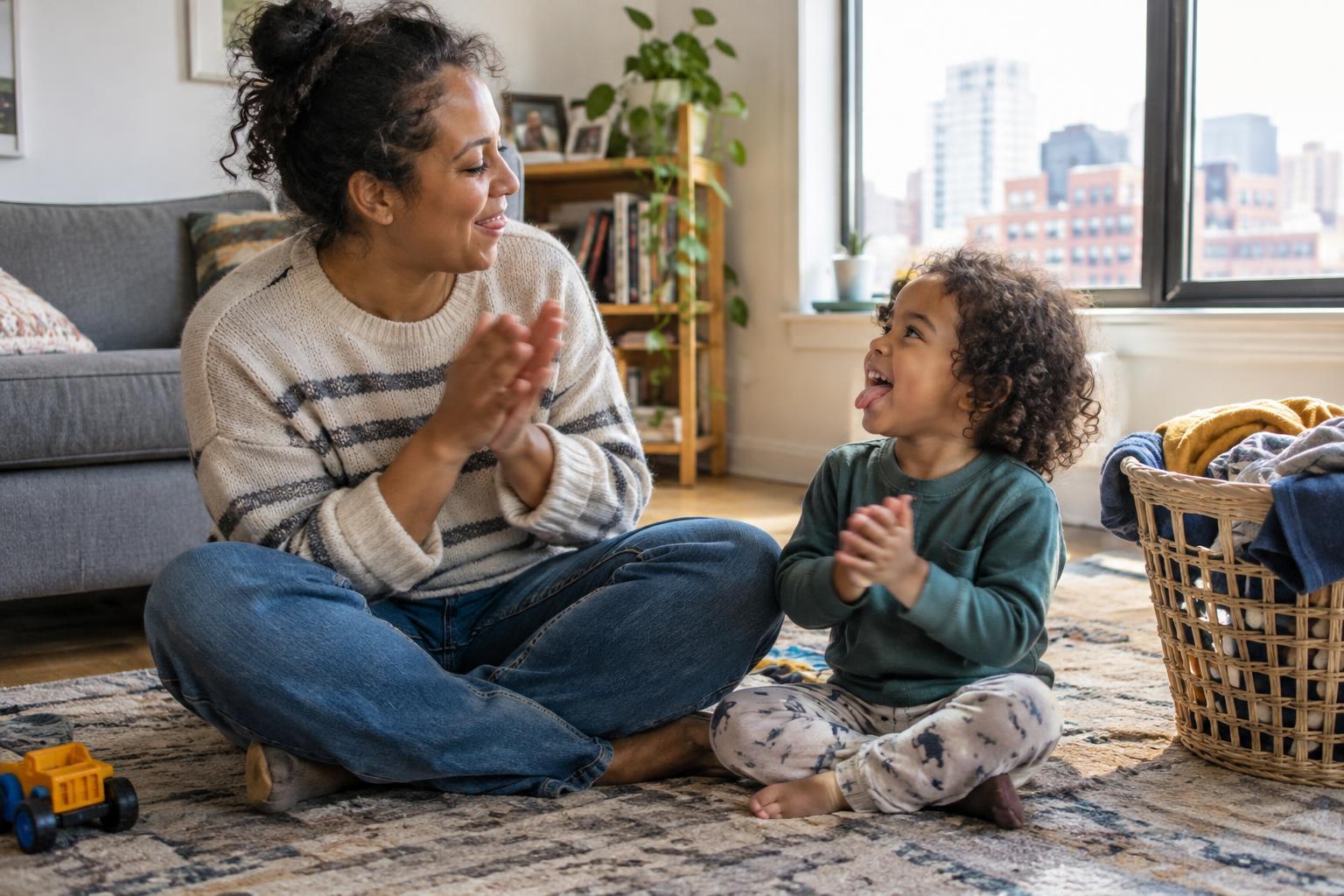
Learning Through PlayRhymes and syllables can fit into walks, chores, and quiet moments without flashcards or quizzes. Try playful word swaps, name beats, and silly sounds while letting your child decide when the game is over.
Read article · 4 min↗
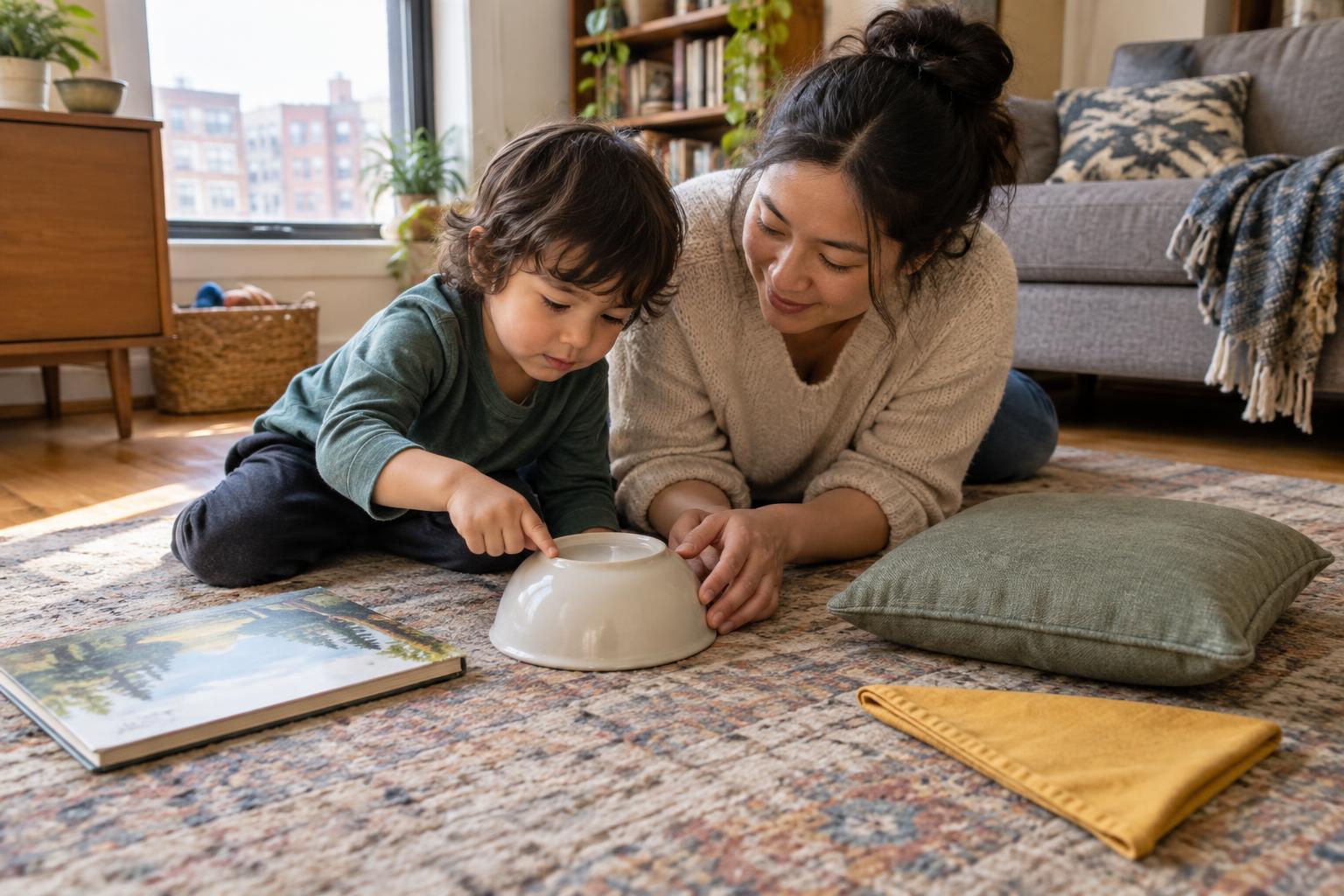
Learning Through PlayA shape hunt turns familiar household items into a playful search for circles, rectangles, triangles and more. Try these simple ways to help children look closely, describe what they see and keep the game going in a small space.
Read article · 4 min↗
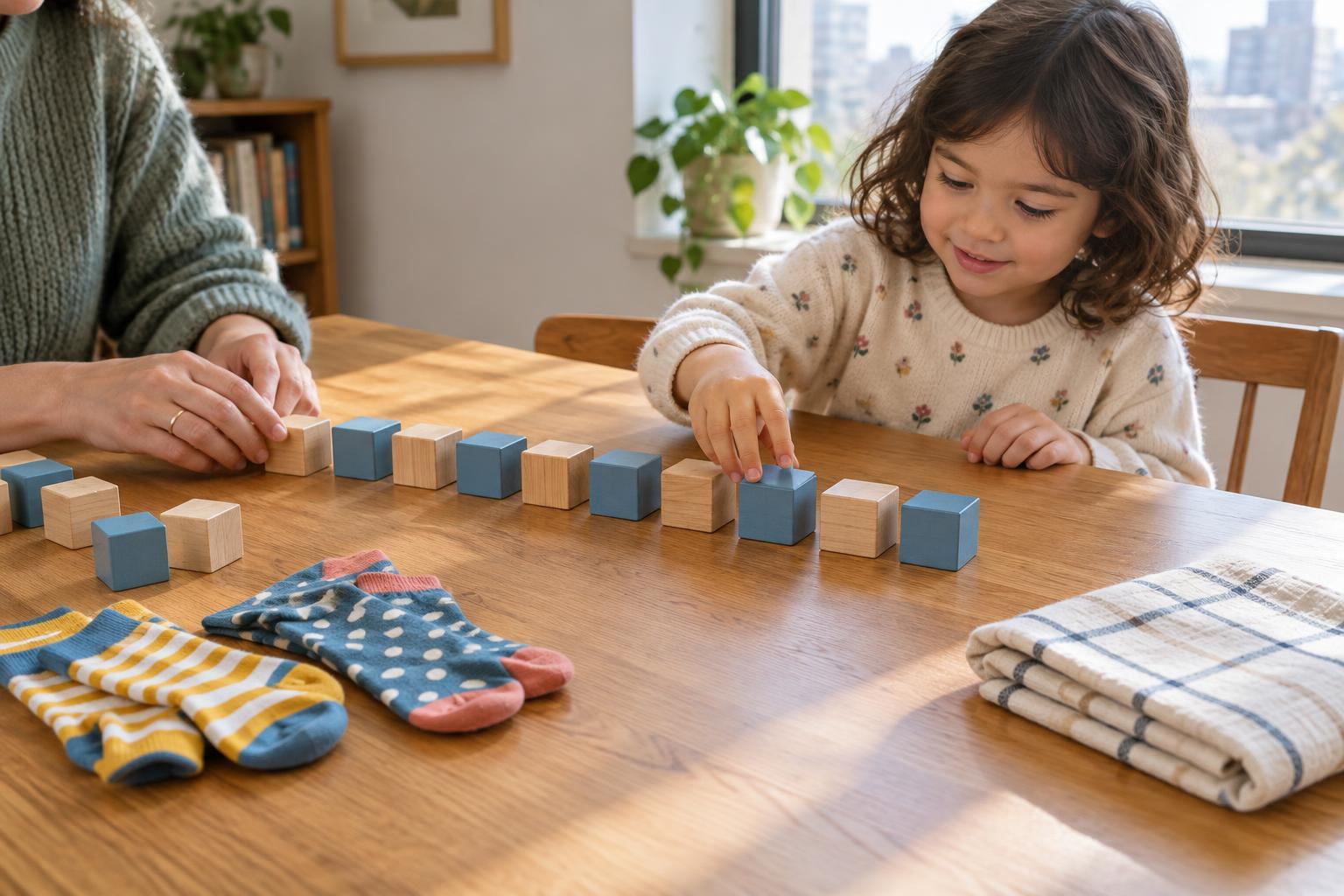
Learning Through PlayYou don’t need a special kit to explore patterns together. Blocks, socks, kitchen towels and simple movements can help children notice what repeats, predict what comes next and make up sequences of their own.
Read article · 4 min↗
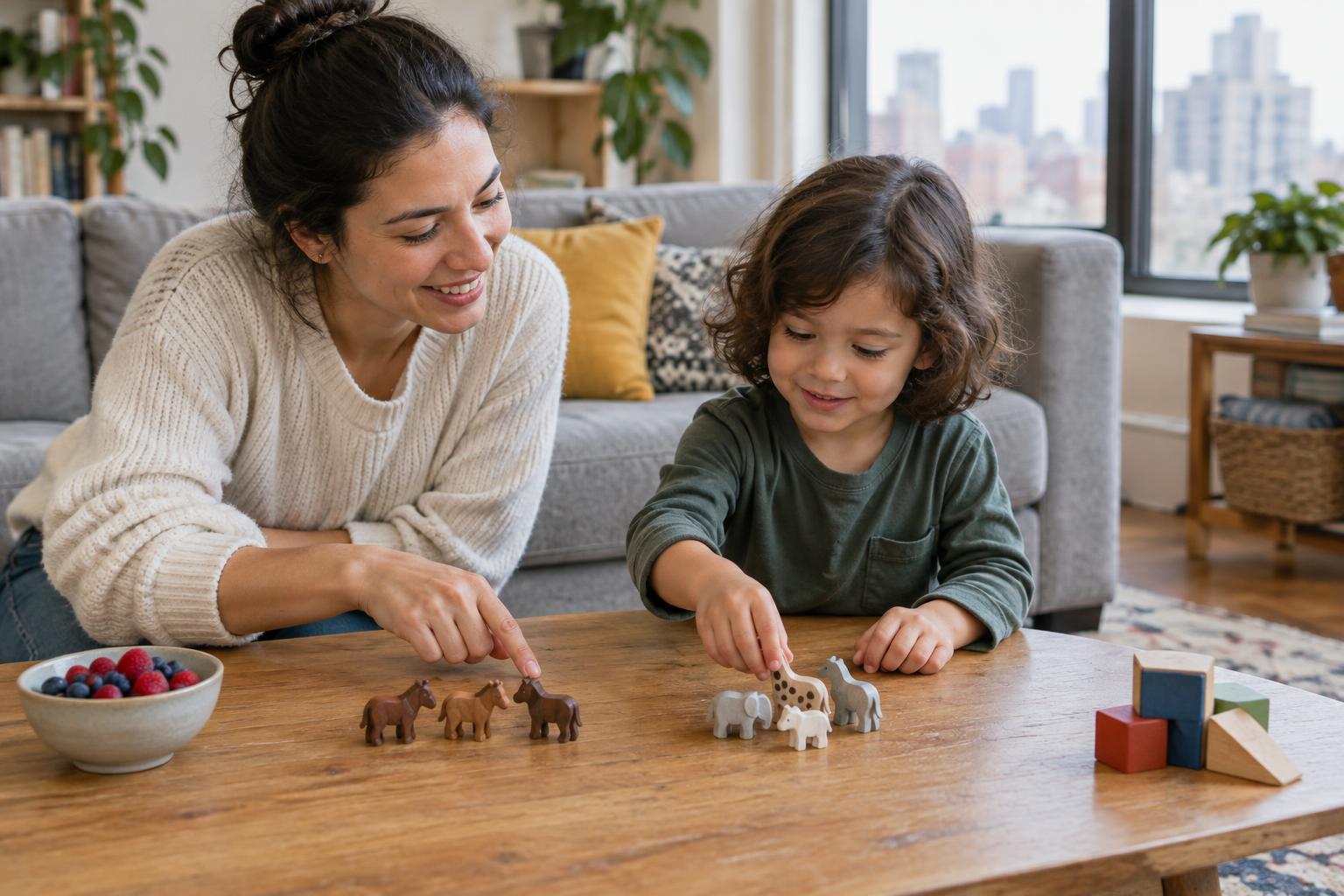
Learning Through PlaySaying numbers in order is only one part of counting. Everyday games with toys, snacks, steps, and pretend play can help children connect number words to real groups of things—without turning playtime into a lesson.
Read article · 4 min↗
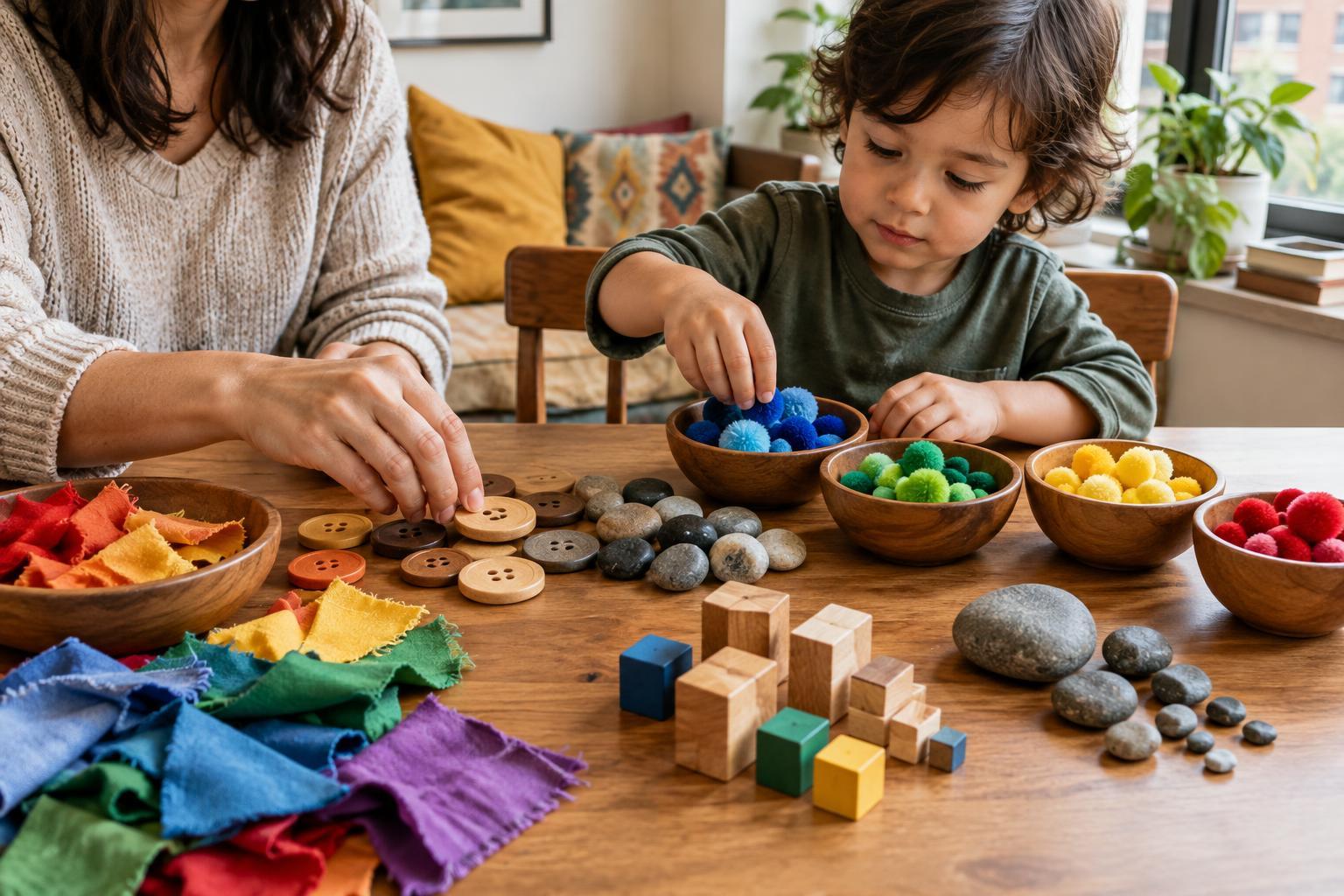
Learning Through PlayA few familiar objects can become an inviting sorting game. Try simple ways to explore color, size and texture at home, with easy variations for different interests and attention spans.
Read article · 4 min↗
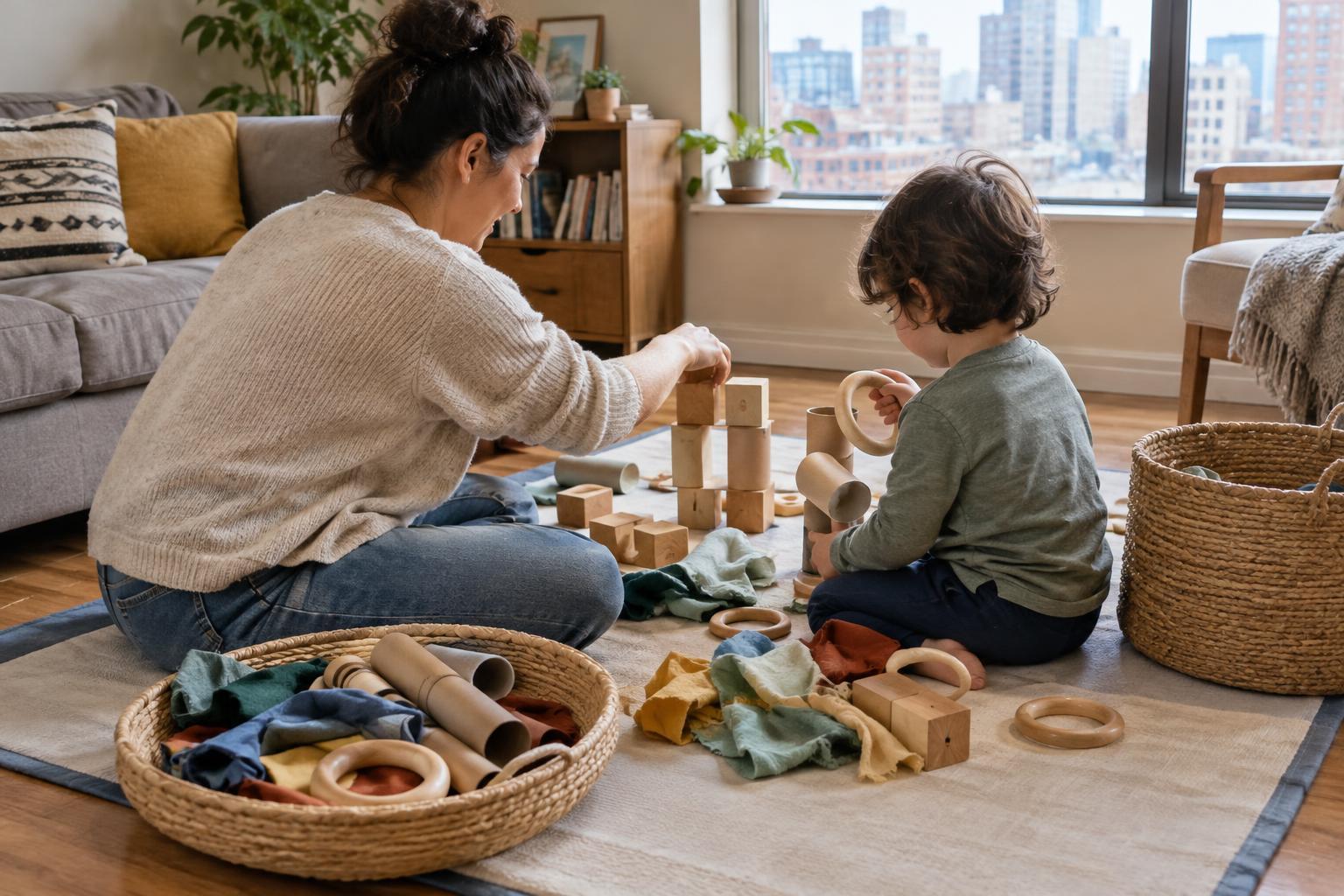
Learning Through PlayLoose-parts play invites children to build, sort, pretend, and experiment with everyday objects. Here’s how to choose a manageable set of materials, make room for open-ended ideas, and set boundaries that work in a city home.
Read article · 4 min↗
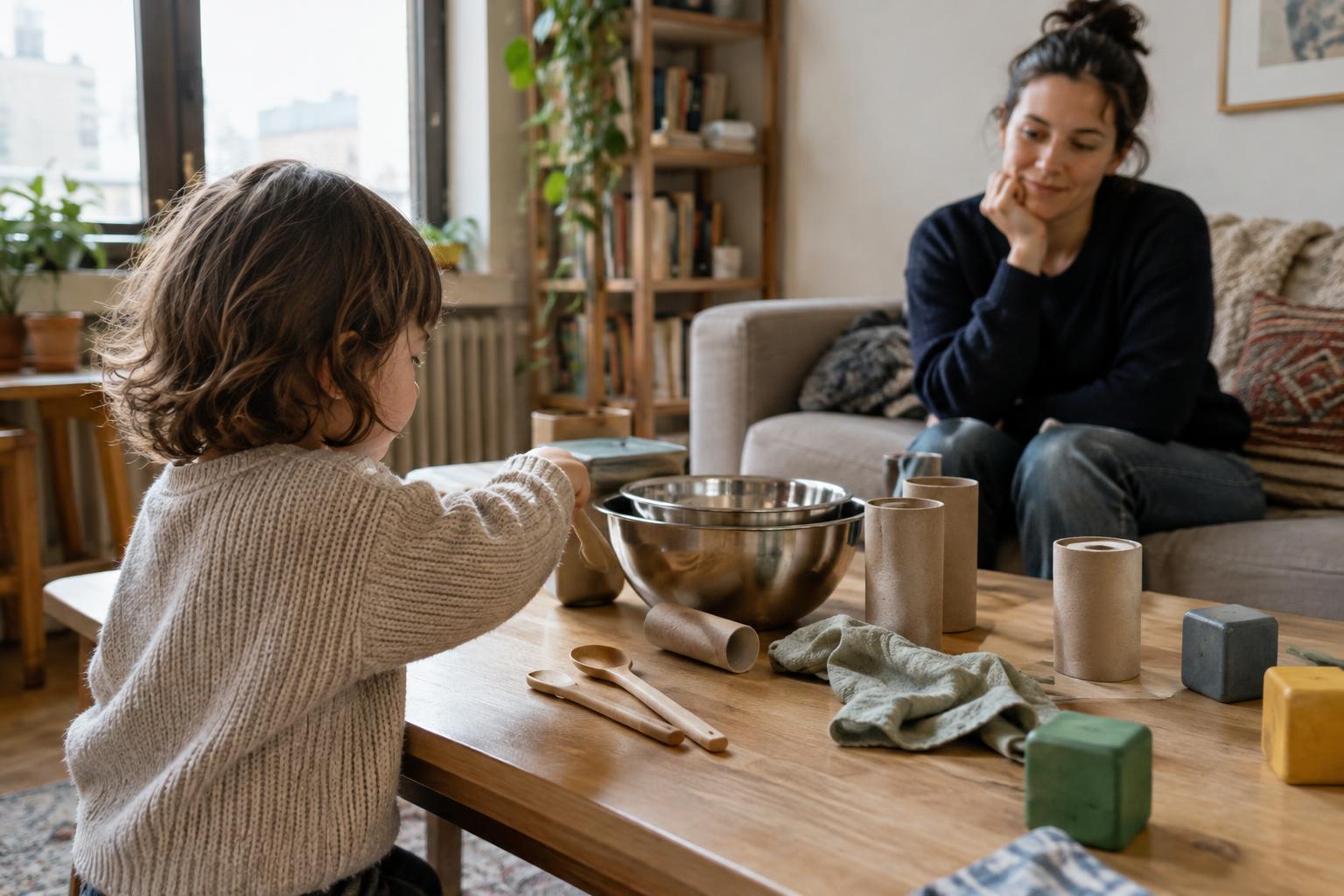
Learning Through PlayA play invitation is a small arrangement of materials that gives a child room to explore. Learn how to make one with household objects, keep setup manageable, and follow your child’s lead.
Read article · 4 min↗
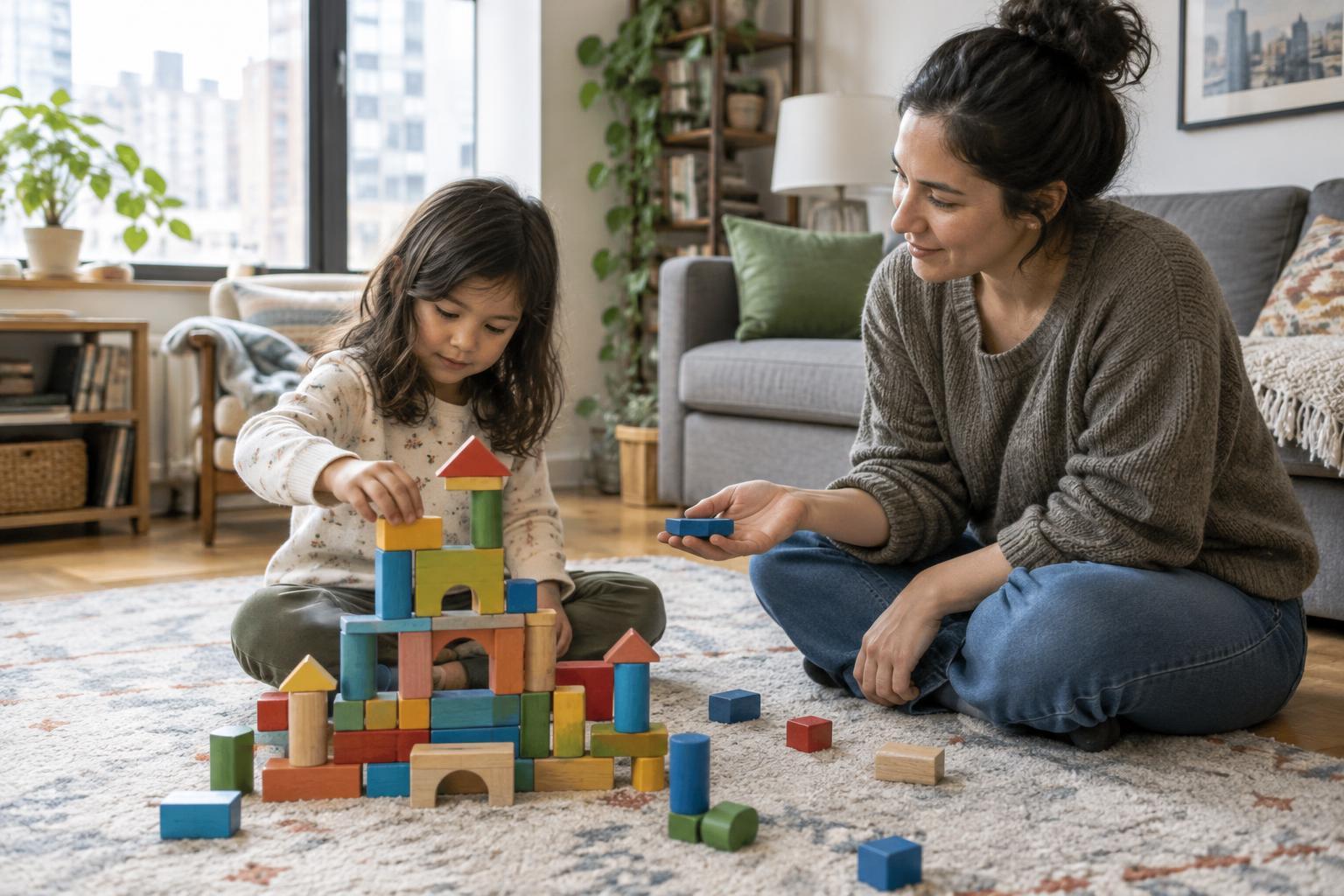
Learning Through PlayPlay does not have to be entirely child-led or carefully directed by an adult. Learn how to notice what a child is exploring, join without taking over, and offer a simple prompt when play could use a fresh start.
Read article · 4 min↗