Start with what you already have
Sorting is a way to make a game out of noticing. A child might put all the blue things together, line up containers from small to large, or gather objects that feel soft. There is no need for a special kit: a few familiar items and a clear spot on the floor or table are enough. In a small city home, a tray or baking sheet can define the play space and make cleanup easier.
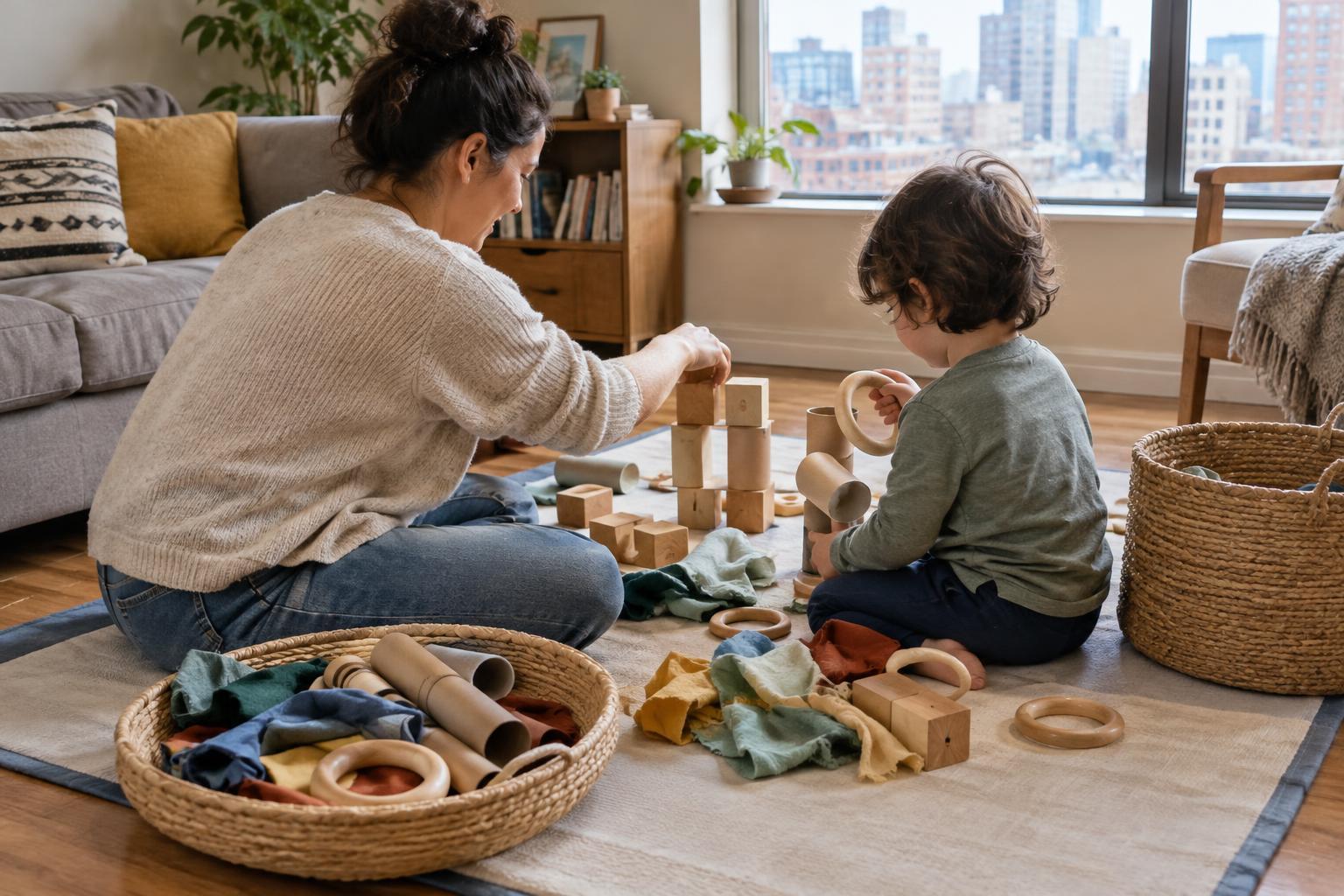
Choose objects that are sturdy, clean and suitable for the child handling them. Large fabric scraps, washcloths, plastic cups and smooth blocks offer different properties to explore. Skip anything sharp, breakable or small enough to pose a choking risk, especially when younger children are nearby. Stay with children while they play, and put the objects away afterward if they are not everyday toys.
Make a first sorting game easy to enter
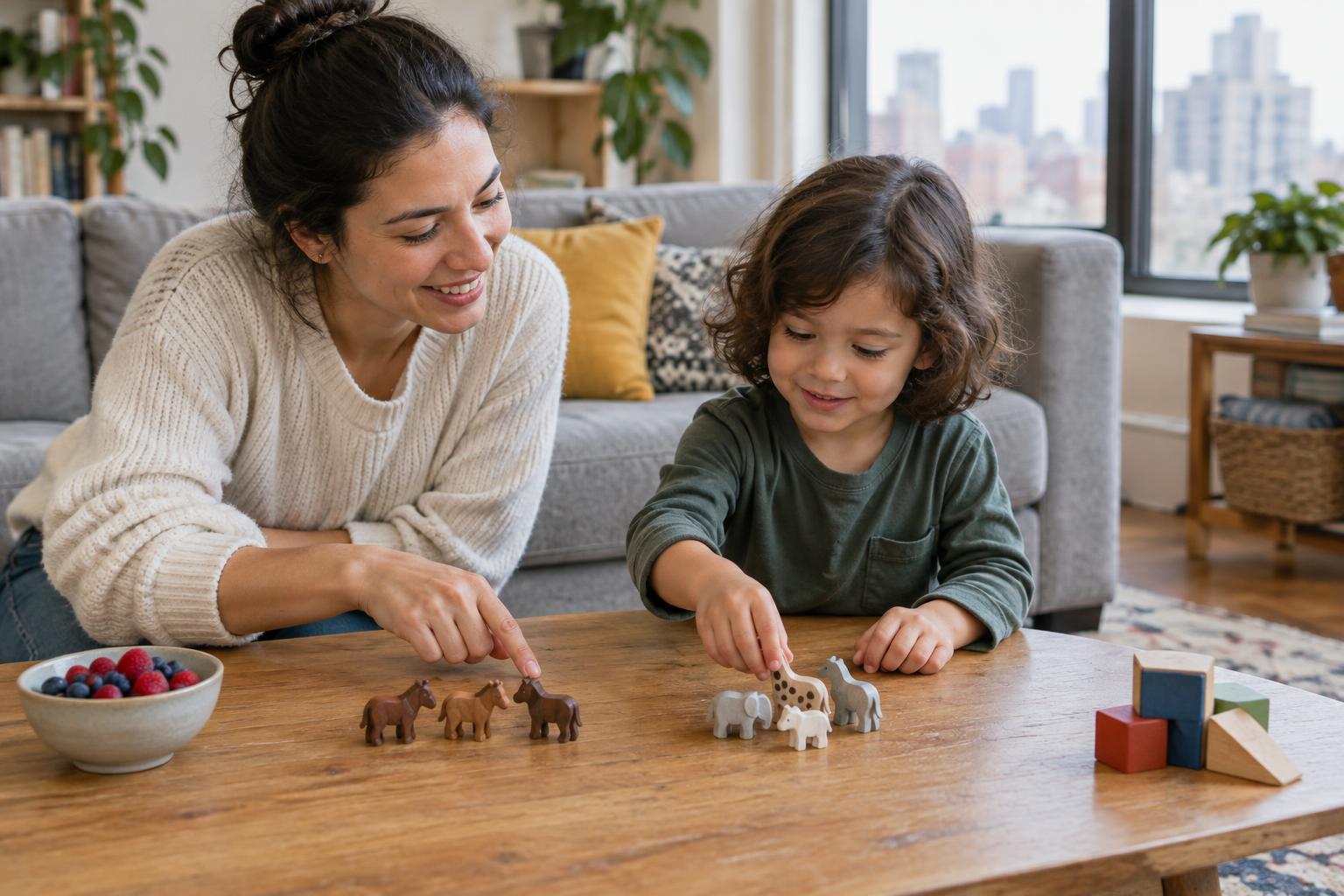
Begin with just two groups rather than a tableful of choices. Place two bowls or open containers beside a small collection of objects, then demonstrate one move: “I’m putting this soft cloth here.” Invite the child to choose where the next item goes. If they make a different choice, ask what they noticed. Their system may be based on something you overlooked, such as which objects roll or which ones belong in the kitchen.
Keep the pace playful. Some children enjoy repeating the same decision many times; others would rather pour everything out and begin again. You can take turns finding an object, carrying it to a container or naming a feature. If the game loses its appeal, stop while it still feels pleasant. The same materials can come back another day with a new question.
Explore color and size in more than one way
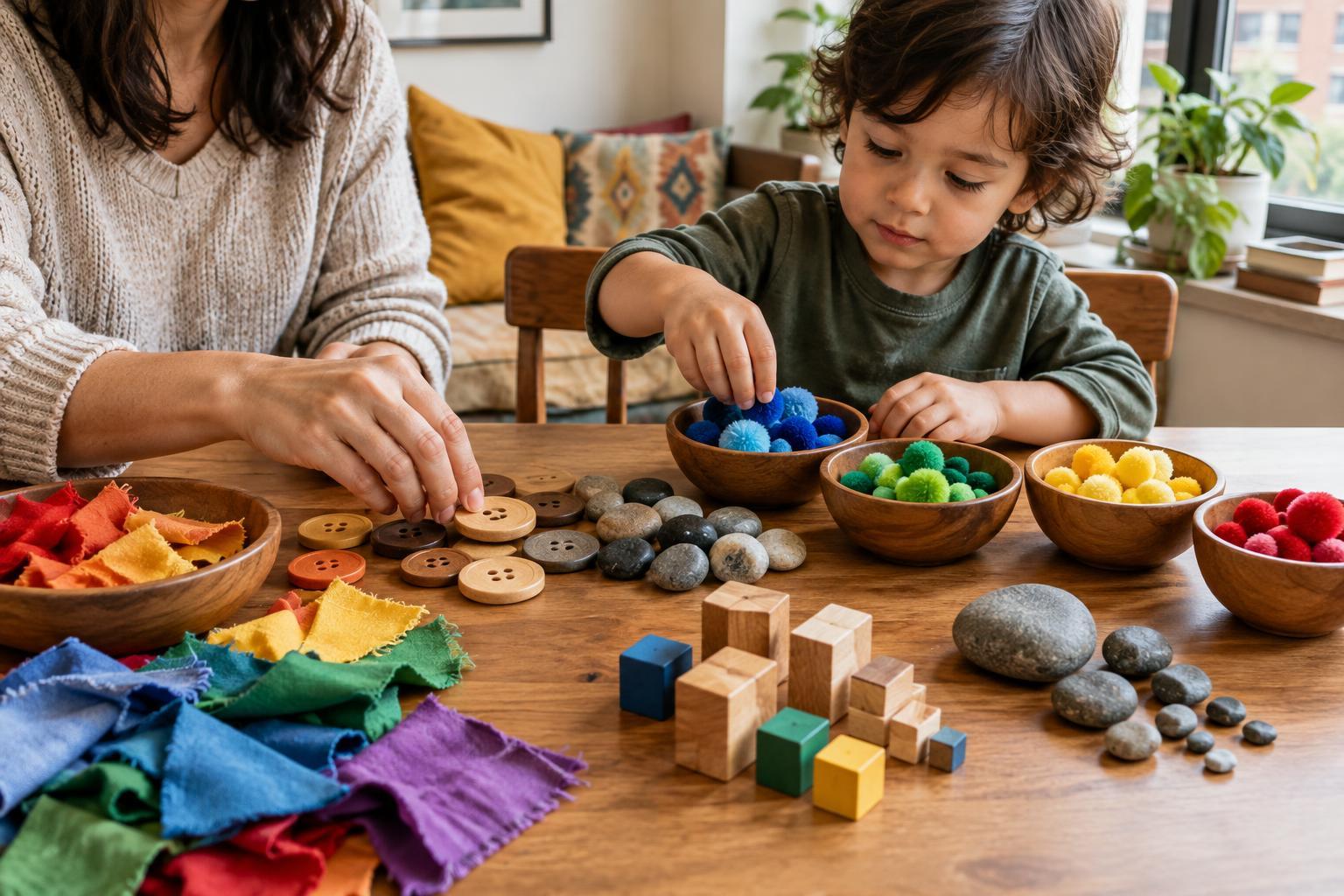
For color sorting, try pairing a few objects with colored paper or with items that clearly match, such as a blue cup and a blue washcloth. At first, use colors that look distinct. Later, add objects with patterns or more than one color and let the child decide where they belong. “Does this striped cloth go with the red things, the white things, or somewhere new?” makes room for an explanation instead of a single correct answer.
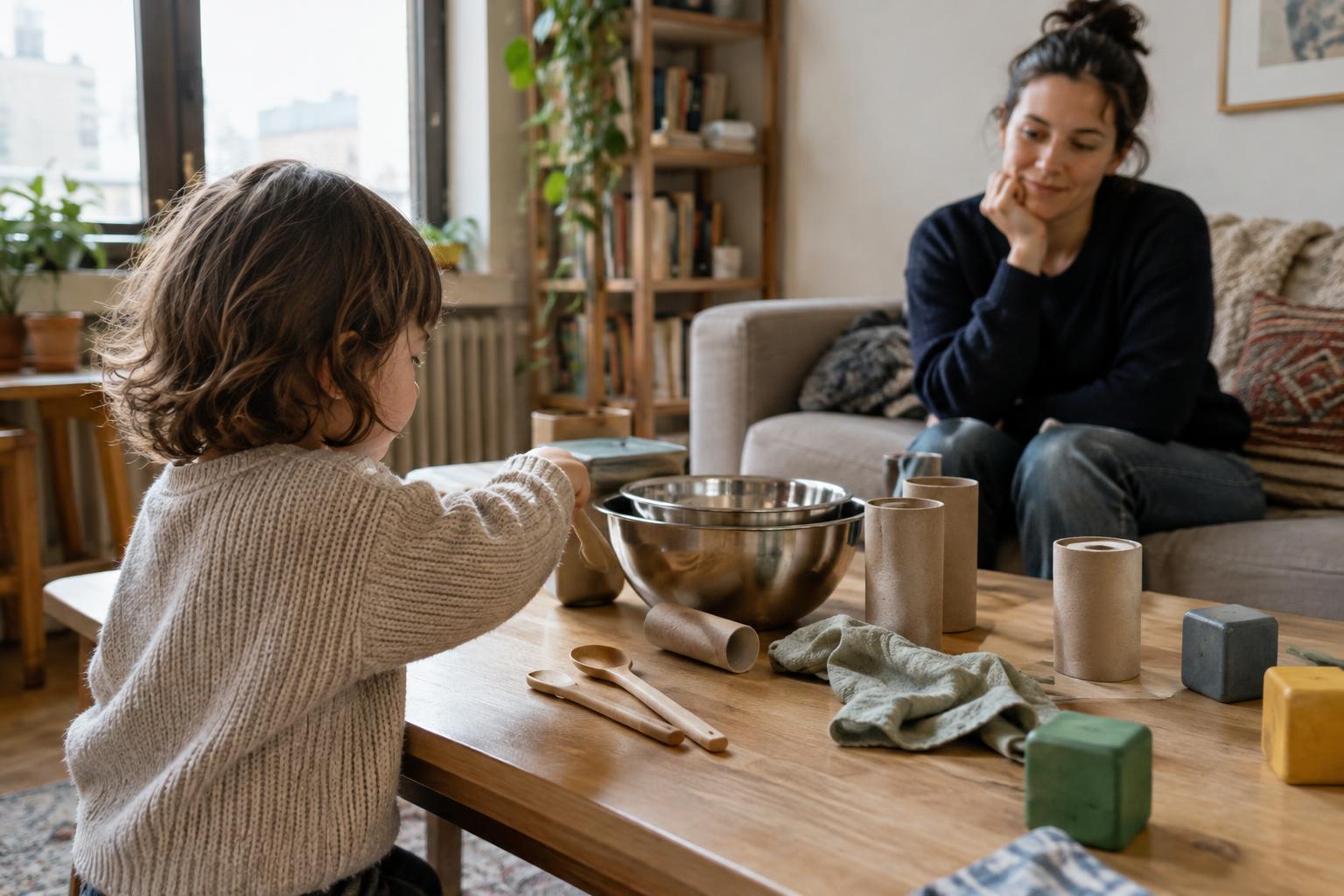
Size offers a different challenge because it can depend on what you compare. Stack nesting containers, arrange books from shortest to tallest, or find a lid that looks bigger than one cup but smaller than another. Words such as bigger, smaller, taller and wider become useful while you handle the objects together. If items do not line up neatly, that is part of the game: a long, thin spoon and a short, wide container invite a conversation about what “big” means.
Let texture lead to close observation
A texture sort can start with two contrasting groups, such as smooth and bumpy or soft and firm. Offer a washcloth, a silicone spatula, a smooth plastic container and a textured dish towel. Encourage children to feel each object with their hands and describe it in their own words. You might hear “scratchy,” “slippery” or “like my blanket.” Those descriptions are as valuable to the conversation as the categories you suggested.
Not everyone wants to touch every surface. A child can point, use a scoop to move an item, or simply watch you compare two objects. You can also sort by sound, shape or use if touching textures is not appealing that day. Keeping the invitation flexible lets children participate without making one particular sensation the goal.
Carry the game into everyday routines
Once the basic idea is familiar, try a brief sort during a routine you already share. Match socks by color while folding laundry, group reusable containers by size before putting them away, or separate soft and firm items as you unpack a tote. These moments work best as invitations, not chores that must be finished perfectly. An adult can complete the task when it is time to move on.
You can also change the rule halfway through: first sort by color, then mix everything up and sort by texture. Ask, “What else could go together?” and see what the child proposes. A playful answer might be “things for rainy days” or “things that make a noise.” Sorting household objects is less about producing tidy piles than about looking closely, trying an idea and discovering another way to see familiar things.