Start with a shop that fits your space
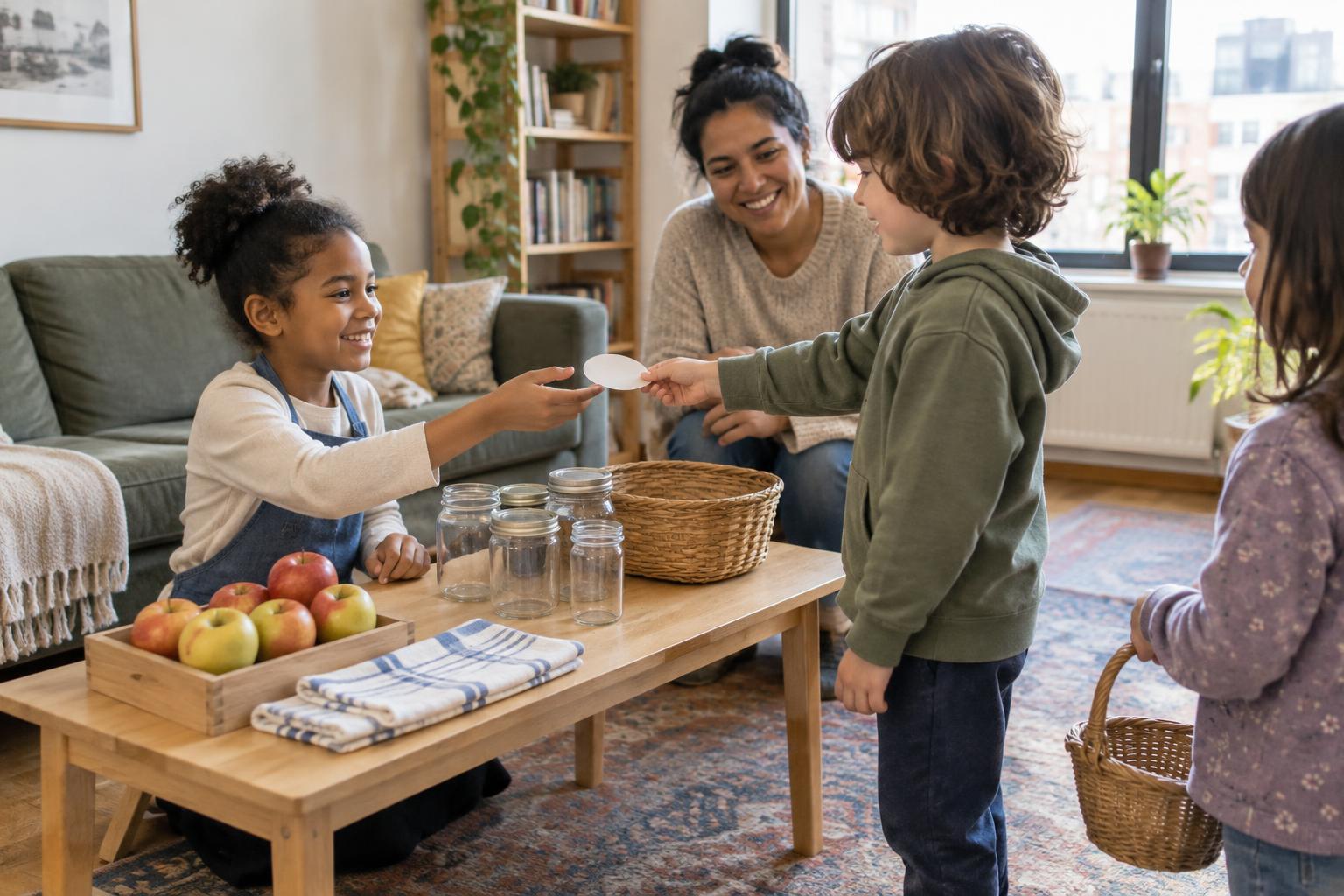
A pretend shop needs less room than you might think. Clear one end of a table or a small patch of floor for a counter, then choose five to ten items to put on display. Empty boxes, clean containers, books, toy food and folded paper all work. Keep anything breakable, sharp or important out of the play area. A bag or basket can hold the stock when the shop closes.
Let the family decide what kind of shop it is before arranging the goods. A bookshop might offer reading recommendations; a grocery shop could sell imaginary ingredients for an unusual dinner. If several people have ideas, combine them: a shop that sells both books and snacks is perfectly reasonable in pretend play. Give it a name on a scrap of paper if someone enjoys making signs, but skip the sign if everyone is ready to begin.
Give everyone a role, then switch
One person can run the counter while another shops, delivers goods or helps arrange the shelves. Younger children may prefer handing over items to following a detailed script. Older children and adults can add questions such as “What are you looking for today?” or “Would you like help choosing?” There is no need to insist on polite formulas or correct answers; the conversation can go wherever the players take it.
After a few minutes, invite people to swap roles. A child who has been making all the decisions as shopkeeper may enjoy becoming a customer with a tricky request. If someone does not want to speak, they can restock items or draw a receipt. Taking turns gives each person a way to contribute without making the activity feel like a performance.
Keep buying and selling simple
You can play without prices at all: customers ask for something, and the shopkeeper helps them find it. If your family wants to add numbers, write small prices on paper or use a handful of counters as pretend money. Keep the amounts easy for the players involved, and let anyone who wants help count alongside someone else. The goal is a shared game, not a test.
The best moments may come from unexpected requests. What if the shop has sold out of blue things? What could the shopkeeper suggest to a customer planning a picnic on the moon? Questions like these give everyone a reason to invent, negotiate and laugh together. Follow the ideas that catch on, even if the shop gradually turns into a delivery service or a café.
Close the shop and save an idea for next time
A clear ending makes cleanup part of the game. Announce a closing time, return borrowed objects to their usual places and put reusable signs or paper money in the basket. Before packing up, ask each person what the shop should sell next time. One answer is enough to give a future session a starting point, without committing the family to a regular schedule.
For another round, try a shop that offers services instead of objects: gift wrapping with reusable fabric, directions to imaginary places or custom drawings. Families curious about the customer-service side of a real business can browse Sprzedaż i obsługa · Własny Biznes w Praktyce; caregivers who want broader business reading can explore Własny Biznes w Praktyce. Neither is needed to play. The pretend shop works just as well when its only purpose is spending a little time making something up together.