Choose an errand with room to slow down
An ordinary errand can offer a useful reason to get outside together without organizing a separate destination. The key is to pick one task that can tolerate a little extra time. Returning a book, buying a few groceries or dropping off a package may work better than an appointment with a fixed arrival time. If the task is urgent, do it first and save any exploring for the walk home.
Keep the outing small enough that completing the errand still feels like a success. One destination and one optional stop are usually easier to manage than a long list of chores. Before leaving, tell children what needs to happen: “We’re going to buy bread, then we can look at the window displays on the way back.” A clear plan helps distinguish the nonnegotiable task from the part they can help shape.
Make the route part of the experience
Look for a route that offers a comfortable place to pause, whether that is a wide sidewalk, a bench or a quieter block. The shortest route is not always the easiest with children; a slightly longer walk may be more pleasant if it has fewer difficult crossings. Choose a turnaround point in advance so the outing does not keep expanding as everyone gets tired.
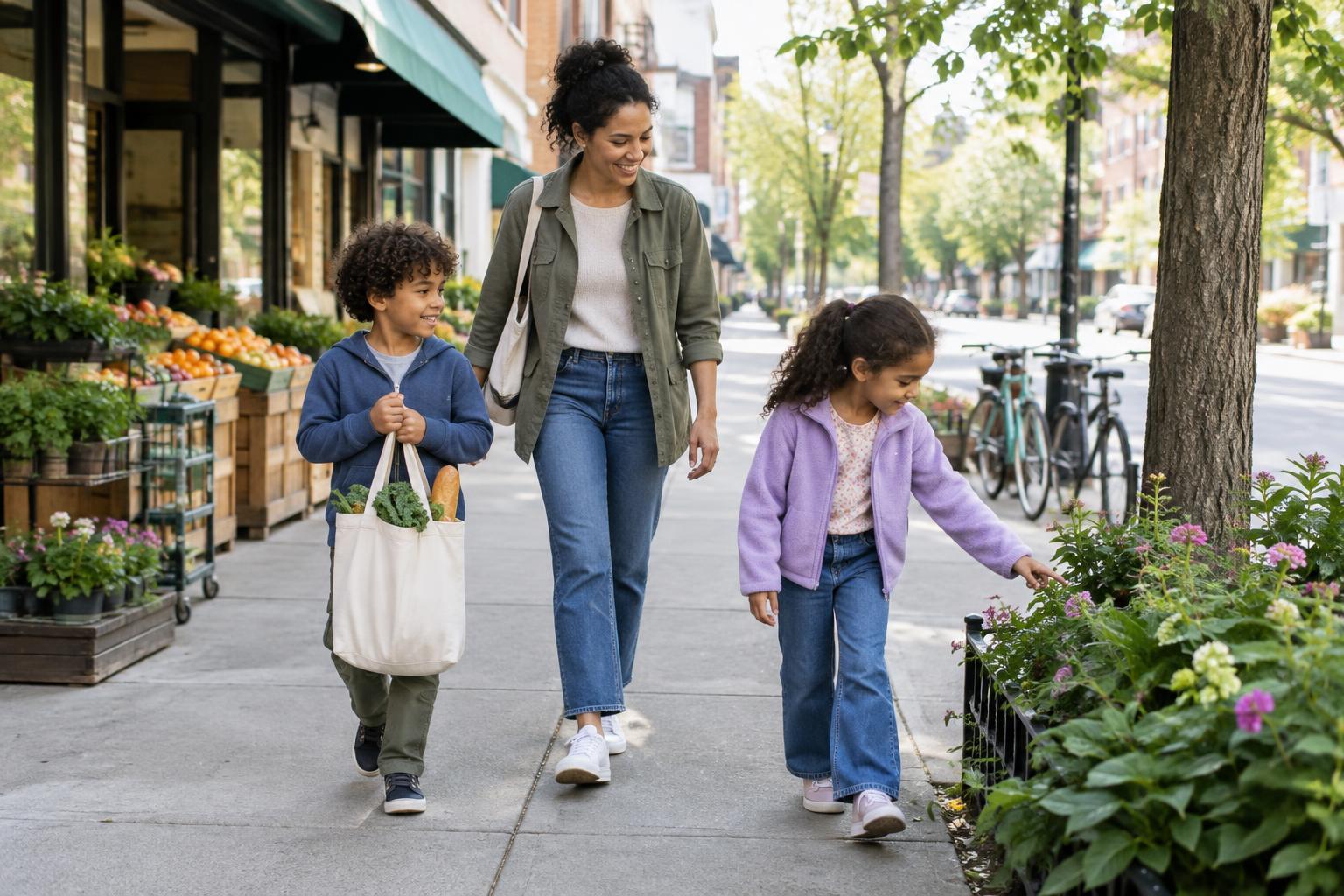
Give children something specific to notice along the way. They might look for different kinds of doors, count trees on one block or choose a favorite storefront color. Keep the activity loose rather than asking them to complete a list. If a child wants to talk about a delivery bicycle or a mural instead, that observation can become the game. At crossings and busy entrances, pause the game so everyone can focus on moving together.
Offer a small, useful role
Participation can make an errand feel less like waiting for an adult to finish. A child might carry a light reusable bag, help spot the correct building number or remind the group which item is on a short shopping list. Offer a role that fits the setting and is easy to hand back if the space becomes crowded. Children do not need to manage money, speak to a stranger or make a purchase for their contribution to count.
Inside a shop or other shared space, describe the next step before it happens: “We’ll find the bread, stand in line and then go outside.” If a line is longer than expected, a quiet observation game can help pass the time. Notice shapes on signs or guess which bag the purchase will fit in. For a young child, simply watching people and objects move through the space may be engaging enough.
Leave room for an easy ending
The optional part of the outing should be easy to skip. A family might plan to sit for a few minutes after the errand, then head straight home if someone is hungry, tired or uncomfortable. It helps to bring only what makes the trip easier, such as water, a small snack or a bag for purchases. Carrying too much can turn a short walk into extra work.
On the way home, invite each person to name one thing they noticed. A funny sign, a friendly dog seen from a distance or the sound of a train can be enough. There is no need to turn every errand into a lesson or a special event. The value is in giving a familiar trip a little space for shared attention while still getting everyone home.