Start with a small collection
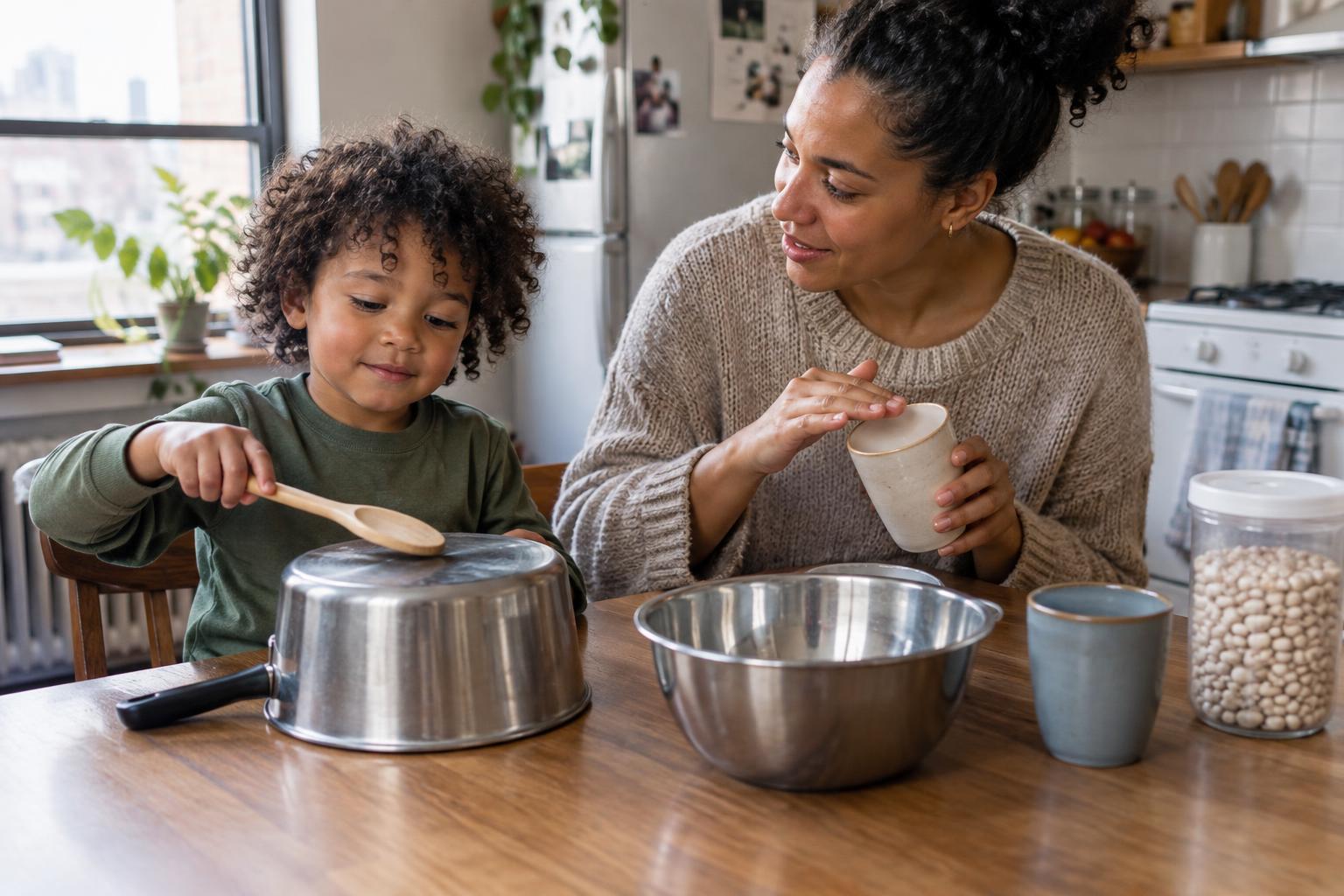
You do not need instruments to explore sound together. Choose three or four sturdy objects that make different noises when tapped or shaken: a plastic container with a lid, a wooden spoon, a metal mixing bowl and a sealed container holding a small amount of dry rice are possibilities. Set them on a towel at a table or on the floor. The towel gives each object a place to return to and may soften some of the tapping.
Check the materials before handing them over. Skip glass, sharp edges and anything that could spill small pieces. If you make a shaker, secure its lid and keep it with you, especially when younger children are present. Begin with one object at a time rather than presenting a pile. That makes it easier to hear what each object does and easier to put the activity away.
Listen before making a rhythm
Invite your child to try one gentle tap, then pause. What happens when they tap the center of a bowl instead of its side? How does a spoon sound against a plastic container compared with a metal one? You can describe what you hear in ordinary words such as quiet, ringing, dull or rattly. A child may choose entirely different words. The point is to notice and compare, not to find a correct answer.
Take turns making a sound while the other person looks away and guesses which object made it. If guessing feels too hard or simply unappealing, place two objects side by side and ask which sound your child wants to hear again. Listening closely is part of the game, but so is deciding when to make the next sound.
Build patterns by taking turns
Once the objects are familiar, try a short sequence: tap, tap, pause. Repeat it once and invite your child to copy it or change it. They might add a shake, make the taps faster or leave a longer silence. Follow their version for a round. Taking turns leading keeps the activity playful and gives everyone a chance to hear how a pattern changes.
You can also give the sounds a job in a pretend scene. A slow bowl tap might be footsteps for a giant; a soft shaker could be rain on the giant’s walk. There is no need to finish a story. A few sound effects can be enough to prompt an idea, and children who prefer experimenting can keep testing the objects without joining the pretend play.
Keep the volume comfortable
Sound play can grow loud quickly, particularly in a small home. Agree on a simple boundary before you begin, such as gentle taps indoors and no striking objects near someone’s ears. If the noise becomes uncomfortable, try playing on a folded towel, switching from a metal bowl to a plastic container or making a “tiny sounds” round. Whisper-quiet tapping can be a challenge of its own.
Notice how your child responds as well as how loud the objects seem to you. Someone may want to listen from farther away or stop after only a few minutes. That is a reasonable ending, not a failed activity. You can leave the objects in place for another turn later, or put them away and return to a quieter game.
Finish with a child-made performance
If your child wants a finale, invite them to choose two favorite sounds and arrange a brief beginning, middle and end. They could start with three soft shakes, add several taps and finish with one long pause. You might be the audience, or you might join in when they give you a signal. A performance can last ten seconds; it does not need to be polished or repeated.
When the play is over, ask your child to help return each item to its usual place. You can talk about which sound was surprising or which object they would choose next time. Those small conversations carry the exploration beyond the activity without turning it into a lesson. Another day, a different combination of familiar objects may lead to an entirely new rhythm.