Start with a wall and a little light
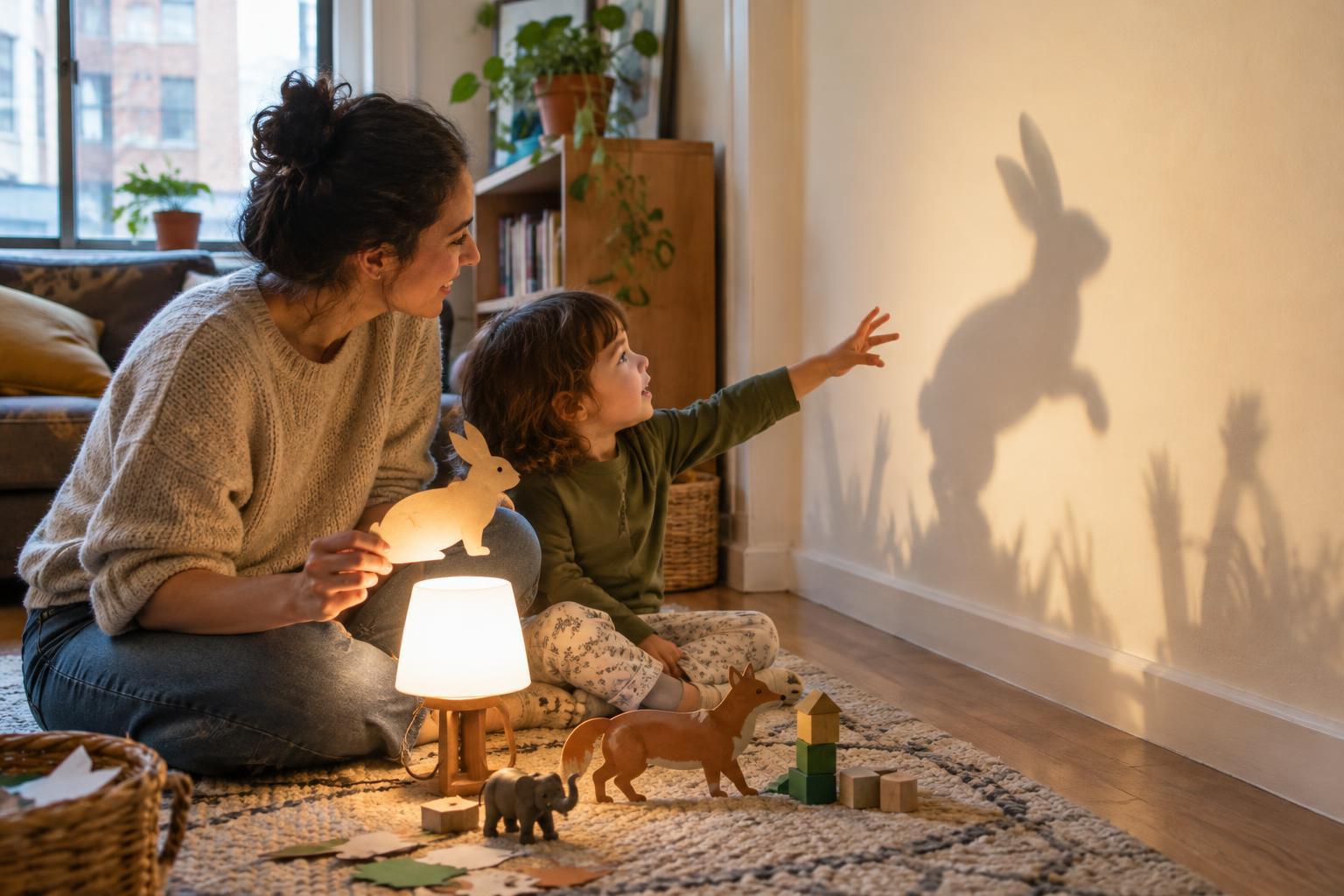
Shadow play needs very little setup. On a sunny day, look for a patch of light near a window. At another time, a flashlight aimed at a clear wall can make a simple play area. Dim the room enough to see the shadows, but leave enough light for everyone to move comfortably. Keep the light in an adult’s hands if that makes the activity easier to manage, and avoid shining it into anyone’s eyes.
Invite your child to hold up a hand or a familiar toy and notice what appears on the wall. You do not need to explain how shadows work before the play begins. A question such as “What happens if we move the toy closer to the wall?” gives your child something to try. If they would rather wave, dance or watch for a while, that is a useful way to begin too.
Change one thing at a time
Once your child has found a shadow they like, try moving the object slowly. Bring it nearer to the light, then nearer to the wall. Turn it sideways or hold it higher. The outline may grow, shrink or take on a surprising shape. Changing one thing at a time makes it easier to notice what happened, without turning the activity into a formal experiment.
Choose objects with noticeably different outlines, such as a spoon, a block and a small stuffed animal. Your child can guess which object made a shadow, then check by looking behind it. If guessing feels frustrating, skip that part and compare the objects side by side instead. The aim is shared curiosity, not a correct answer.
Make room for a shadow story
A shadow can become a character without looking like anything in particular. Ask your child what the shape might be doing: Is it looking for a place to sleep, carrying a message or meeting a friend? Two hands or toys can take turns entering the light. You might provide a simple opening, such as “One evening, a tiny shape appeared on the wall,” and let your child decide what happens next.
For a different approach, make a backdrop with ordinary items outside the beam of light. A cushion can be a mountain for the performers to stand behind; a blanket can mark the audience’s spot. Children can swap roles as storyteller, light holder and performer, depending on what they enjoy and can manage comfortably. A story that lasts a minute is just as complete as one that keeps going.
Try daylight shadows on an outing
Shadow play can continue outdoors when the light and setting allow it. On a walk, pause where you have room to stand safely and look for the shadows of a tree, a fence or your own feet. Notice which outlines are easy to recognize and which look different from the object casting them. Stay aware of other people using the space, and do not let the search for shadows distract from crossings or paths.
You could invite your child to step into and out of a large shadow, or stand still together and compare your outlines. If there is no strong sunlight, there is no need to force the activity. Looking for a comfortable place to play is part of planning a pleasant outing; the indoor version will still be there later.
End while the game is still enjoyable
Shadow play can be brief. A few minutes of moving an object and noticing its outline may be enough, especially if the room needs to return to its usual routine. Put the flashlight and toys back in their places together, or leave one easy-to-reach object ready for another day. There is no finished project to preserve and no set of facts your child needs to repeat.
The next time you play, follow whatever caught your child’s attention. If they loved the changing size of a shadow, revisit that. If they invented a character, bring it back for another scene. Repeating a familiar activity can give children space to try a new idea, while keeping the preparation manageable for the adults sharing the game.