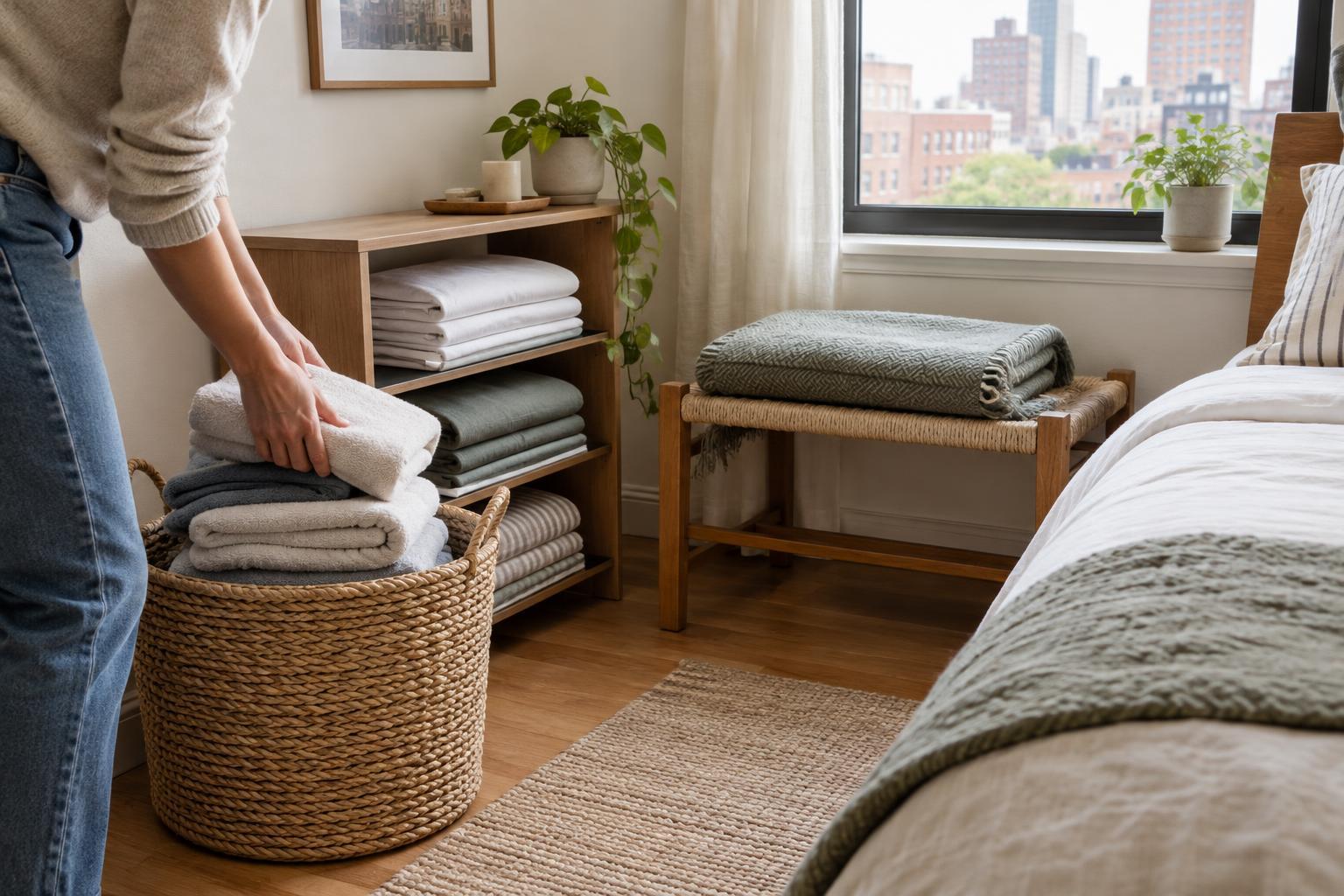
Start with the linens you actually use
A linen closet is convenient, but it is not the only way to keep household fabrics organized. In a small home, one large collection of towels, sheets, pillowcases and blankets can be harder to manage than several small groups stored near where they are used. Before choosing containers, bring the linens together and sort them by purpose. Set aside anything currently on beds or in the laundry so you can see what needs storage.
Look for duplicates that rarely leave the shelf, towels that no longer work well for bathing, and bedding that does not fit a bed in your home. You do not need a perfect matching set to have a useful system. The goal is to know what you have and make enough room to put clean laundry away without balancing it on top of an overflowing stack. Keep an accessible spare for the items your household reaches for most often; give less-used pieces a less prominent spot.
Give each category a nearby home
Store everyday towels as close to the bathroom as your space allows. A narrow shelf, a basket on a sturdy cabinet shelf or a drawer outside the bathroom may work better than carrying towels from a distant bedroom. Keep the towels needed for routine use within easy reach, and put extras together in one designated place. If several people share a bathroom, a small labeled basket or shelf area can make it clearer where clean towels belong.
Bedding is often easiest to manage near the beds it fits. A drawer, a lidded bin under a bed or a bedroom shelf can hold a spare set. If your home has beds of different sizes, separate their sheets so nobody has to unfold several fitted sheets to find the right one. Fold a set together or tuck its pieces inside one of its pillowcases. Exact folding technique matters less than being able to recognize the set and put it away quickly.
Use containers to set limits, not hide clutter
Choose storage after you have chosen a location. Measure the available height and depth, including the space needed to pull out a bin or open a drawer. An attractive basket is not helpful if it blocks a door or makes the contents difficult to reach. Open containers can make frequently used towels easy to grab; closed containers may suit spare bedding kept under a bed or on a high shelf. If you enjoy thinking about the design of everyday household objects, browse Materials and Making · Objects and Ideas for related ideas.
Let the container define a reasonable limit for each category. When the spare-sheet bin is full, check what is inside before adding another set. Leave a little breathing room so children or adults can return an item without rebuilding a stack. For bulky blankets, choose one predictable spot rather than filling every available gap. Keeping those blankets together also makes it easier to see what you have when the weather or your household’s needs change.
Make the laundry-to-storage step simple
A system works best when clean linens have an obvious destination. If towels are stored in one room and spare sheets in another, sort the finished laundry into those groups before putting it away. You might keep a small basket for each destination or carry one category at a time. This avoids creating a clean-laundry pile that everyone must search through later.
Keep labels brief if they help your household: “bath towels,” “twin sheets” or “spare blankets” is usually enough. Revisit the setup when beds change, storage space shifts or a basket becomes difficult to close. The right arrangement is not the one with the neatest photograph; it is the one that lets someone find a clean towel, change a bed and put the next load away without a long search.