Start with what you have
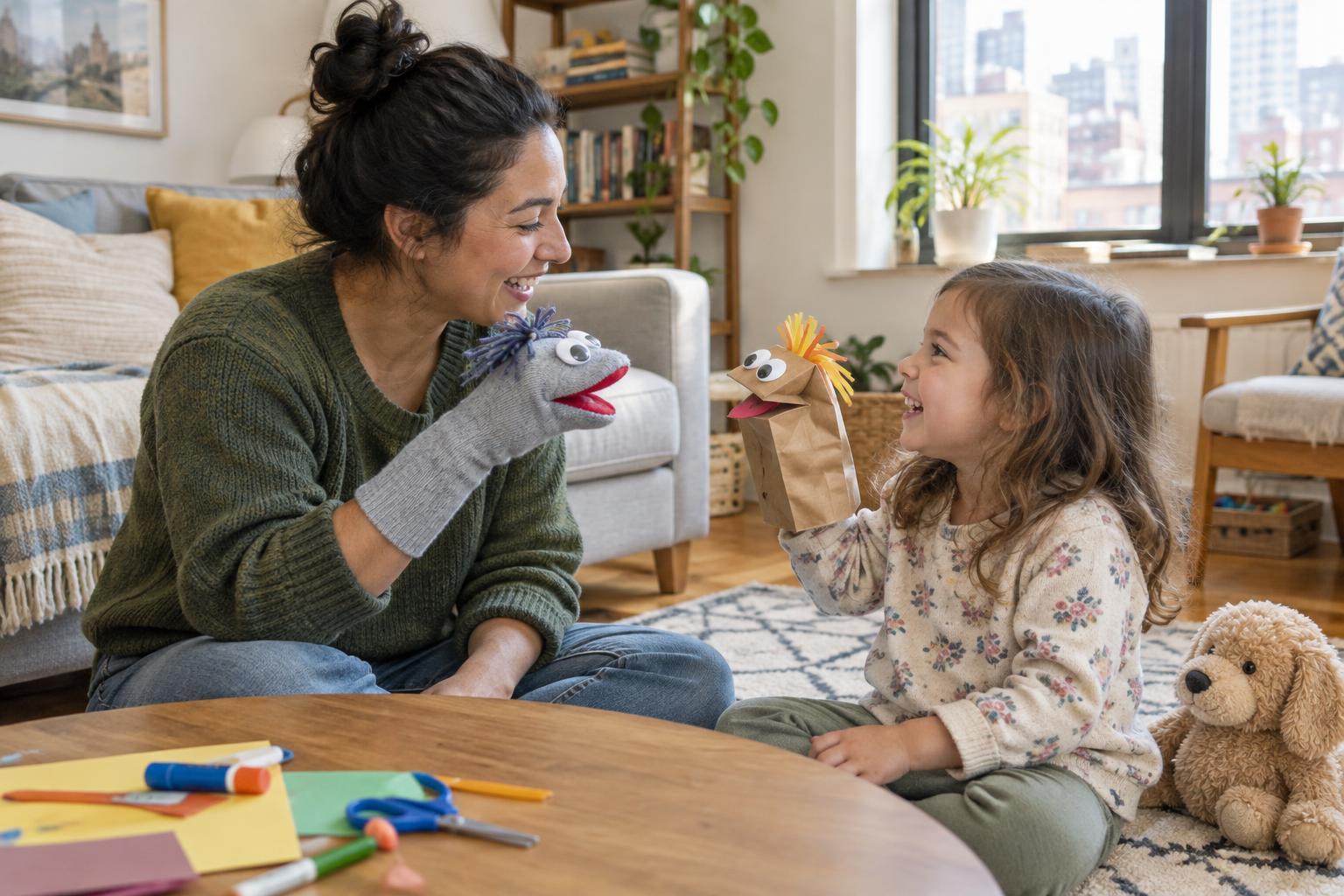
Puppet play does not need a stage or a set of matching characters. A sock slipped over a hand, a paper bag with a drawn face, or a stuffed animal peeking from behind a cushion is enough to begin. In a busy home, a few puppets can live in a basket or drawer, ready for a short game before dinner or during a quiet weekend morning.
Invite your child to decide who the puppet is. It might be a shy dragon who loves noodles or a bus driver headed to the moon. There is no need to finish the character’s backstory before playing. A name, a voice, or one surprising preference gives you something to respond to, and the rest can emerge as you go.
Let a character open the conversation
A puppet can ask small, specific questions that are easier to answer than “How was your day?” It might wonder, “What was the funniest thing you saw?” or “If we could build a playground for ants, what would it need?” Follow your child’s answer rather than working through a list of prompts. The aim is to enjoy an exchange, not to turn play into an interview.
Try giving the puppet a manageable problem: it has lost its pretend ticket, cannot choose a snack, or wants to invite a friend to its imaginary picnic. Ask what the character could say or do next. If your child prefers to speak through their own puppet, let the characters talk to each other. If they would rather watch, you can act out a brief scene and leave space for them to join when they want.
Build stories one turn at a time
For an easy storymaking game, begin with a familiar setting: a corner store, a kitchen, a library, or the walk to the train. Introduce one change, such as a puppet discovering a tiny door under the table. Then take turns adding a sentence or an action. You might ask, “What does the puppet notice?” and later, “Who comes through the door?” Questions like these keep the story moving without deciding its direction for your child.
Stories do not have to make perfect sense. A rabbit can drive a bus, and the bus can turn into a sandwich shop. When an idea surprises you, treat it as a gift rather than a mistake to fix. To bring a game to a natural close, let the characters reach a destination, solve one small problem, or announce that they need a rest. You can always return to the same world another day.
Make room for different ways to play
Some children enjoy performing, while others like arranging the audience, making sound effects, or choosing props. A child who does not want to provide a voice might move a puppet while you speak, point to what happens next, or draw a place for the character to visit. These contributions all count as part of the story. You can also keep your own performance simple; a nod or a whisper can be plenty.
If play stalls, offer two choices instead of a broad question: “Should the puppet look under the chair or ask the cat?” A small choice can restart the action while leaving your child in charge. Repetition is welcome, too. The same greeting, silly misunderstanding, or trip to the pretend shop may be the part your child most wants to revisit. Follow their interest before introducing a new twist.
Fit puppet play into ordinary routines
Puppets work well in short stretches because they require little setup. While you wait for laundry, a paper-bag character can tell a two-minute story about a missing sock. Before a city outing, two toys can imagine what they might see from the bus window. During cleanup, a puppet can ask where its cardboard home belongs. Keep the game light; it does not need to make every task entertaining.
When you are done, invite your child to save one detail for next time: the character’s name, a place it visited, or a question it still has. A scrap of paper with a quick drawing can help you remember, but memory is optional. The pleasure of puppet play often lies in starting again, changing the story, and discovering what your family invents together.