Mistake 1: Starting with a learning goal instead of an invitation
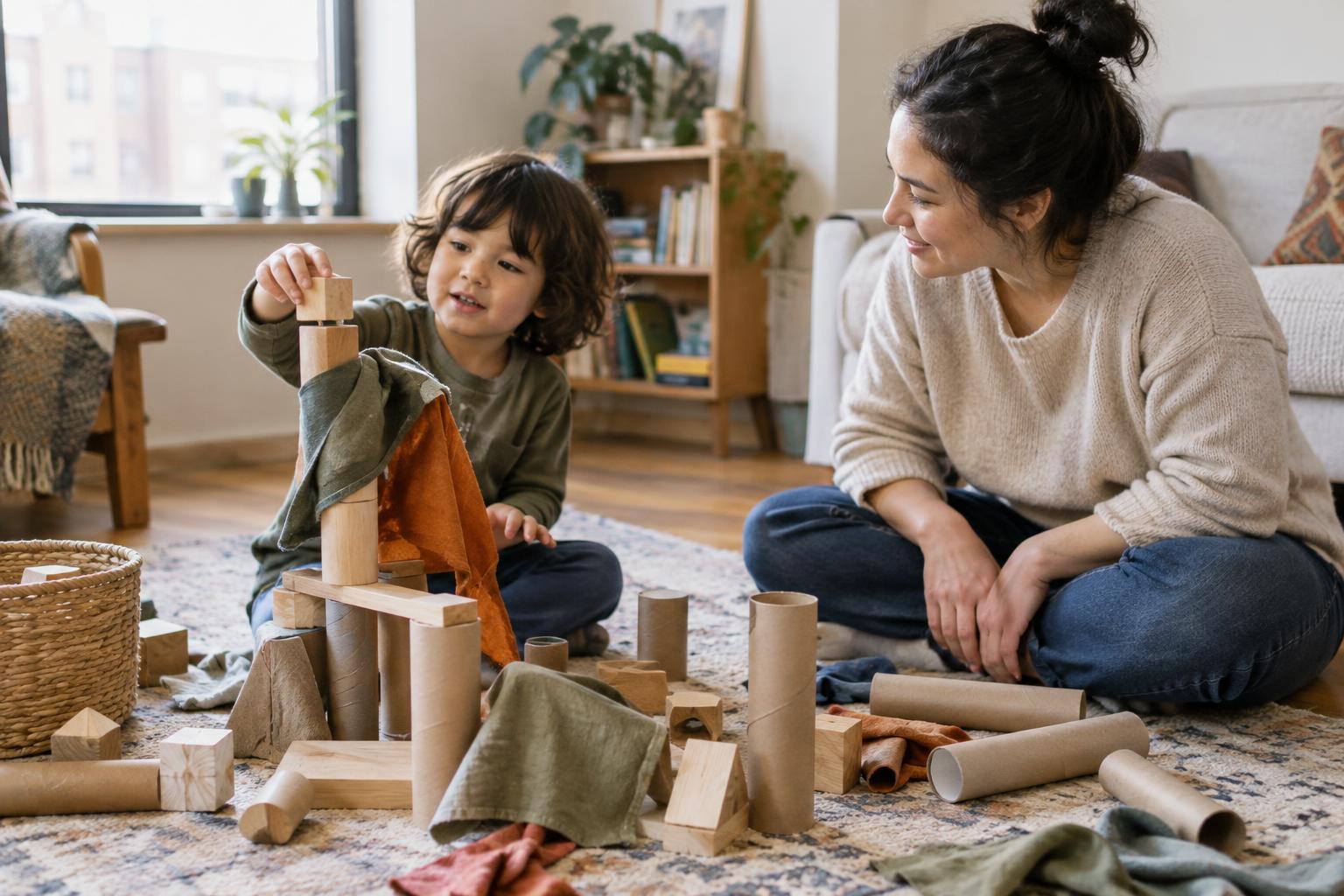
A caregiver may set out blocks hoping to practice counting, then spend the whole time asking, “How many are there?” Counting can be part of block play, but if it becomes the main event, building may lose its appeal. The child who wanted to make a tunnel is now being asked to complete an adult’s plan.
Try starting with materials and an open invitation: “What could we make?” Follow the idea that emerges, whether it is a garage, a tiny apartment, or a tower that keeps falling down. If numbers come up naturally, join in: “You used three blocks for that wall.” If they do not, the child still has room to experiment with balance, space, and storytelling.
Mistake 2: Asking so many questions that play becomes a quiz
Questions can show interest, but a stream of them can make a playful moment feel like a test. “What color is that? What shape? What does it start with?” may leave little space for a child to share what they are noticing. This is easy to do when adults want to make good use of limited time together.
Mix questions with observations, and allow pauses. At a pretend grocery store, you might say, “That basket looks full,” or “I’m looking for something crunchy.” The child can decide whether to sort the food, make up prices, or turn the store into a restaurant. One genuine question, such as “What happens next?” often opens more conversation than several questions with expected answers.
Mistake 3: Correcting the play before exploring the idea
A paper bridge that sags or a pretend bus that flies might tempt an adult to explain how things really work. There is a place for explanations, especially when a child asks for one. But correcting every unexpected choice can interrupt the very process of trying, imagining, and revising.
Instead, find out what the child has in mind. “Tell me about this bridge” might reveal that it is meant to be a drawbridge. If the child wants it to hold toy cars, you can wonder together what might make it sturdier. A flying bus in a story need not pass a reality check; it may be the beginning of a lively conversation about where its passengers are going.
Mistake 4: Taking over to make the result look right
It can be hard to watch paint mix into brown or a cardboard project lean to one side, especially after setting everything up. Stepping in to fix it may produce a neater object, but it can also shift ownership away from the child. Play often involves decisions that look inefficient or messy from an adult’s point of view.
Offer help as a choice rather than a rescue: “Would you like me to hold this while you tape it, or do you have another idea?” Keep safety and household limits clear, then let the child direct the project within them. A washable table covering, a small tray, or a few reusable materials can make it easier to tolerate an unpredictable result.
Mistake 5: Expecting every playful moment to last or produce something
Not every activity needs a finished craft, a photo, or a long stretch of focused attention. A child might spend four minutes arranging bottle caps, abandon them, and return later with a new purpose. Treating that shift as failure can create pressure for everyone, particularly in a busy home with meals, errands, and siblings to consider.
Look for small openings instead of trying to stage an ideal session. On the way to the laundromat, you might notice signs or invent a story about where a delivery truck is headed. While putting away groceries, a child can make a pretend shop with a few safe items. If interest fades, it is fine to stop. Leaving room for a child’s next idea helps play remain something they can make their own.