Start with what repeats
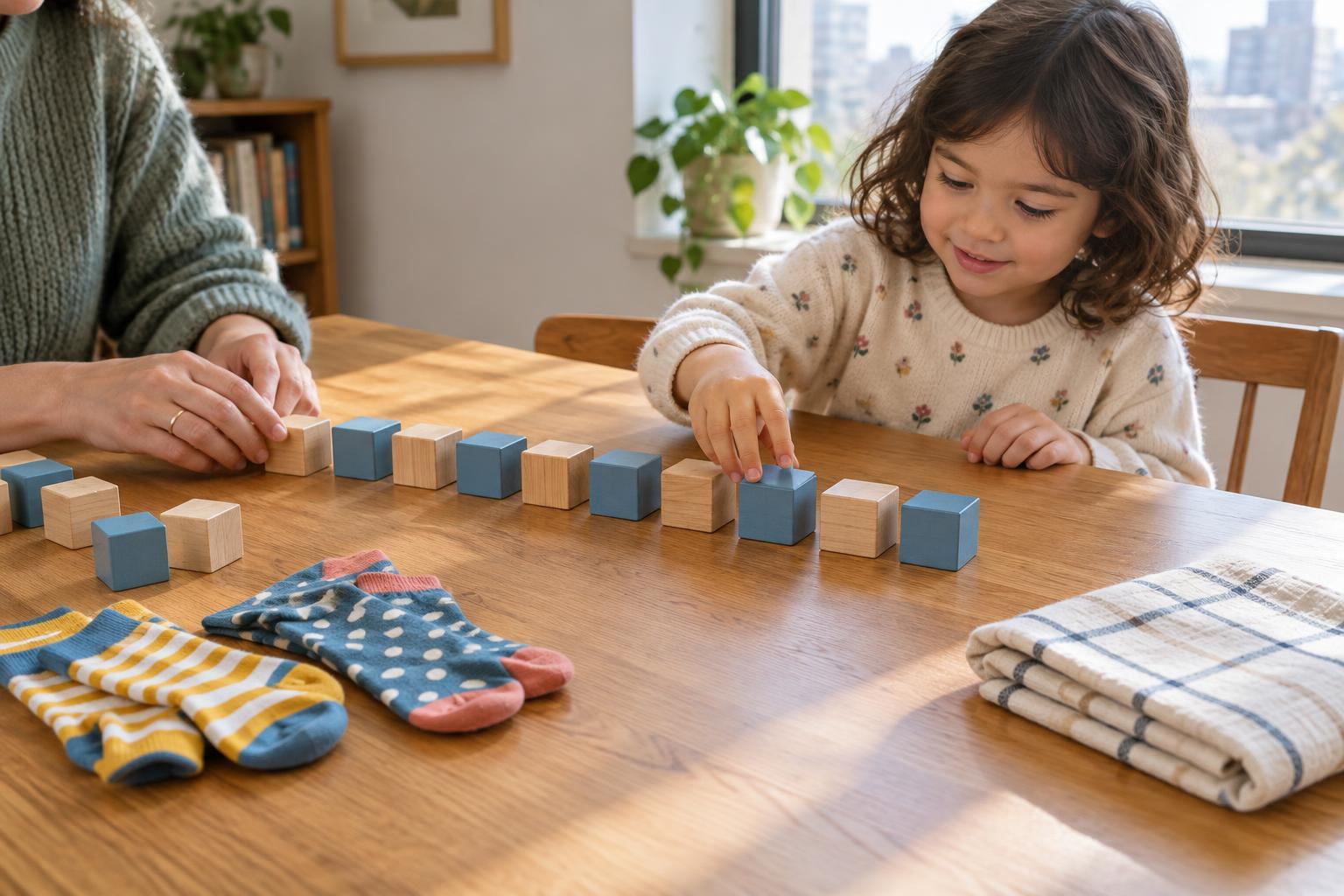
A pattern is something that follows a recognizable order. For a first hands-on example, place a blue block, then a yellow block, then another blue block and another yellow block. Point along the row and say the colors together: “Blue, yellow, blue, yellow.” Pause before placing the next block and invite your child to choose what comes next.
Keep the first pattern short and easy to see. Two contrasting colors or two clearly different objects work better than a pile of nearly identical pieces. If your child puts down a different block, there is no need to turn it into a test. You can ask, “What’s your plan for this row?” They may be making a new pattern—or enjoying the blocks in a different way.
Patterns do not have to be perfect to be worth exploring. The useful moment is often the conversation: noticing what is there, making a guess and checking it together.
Build a pattern with blocks
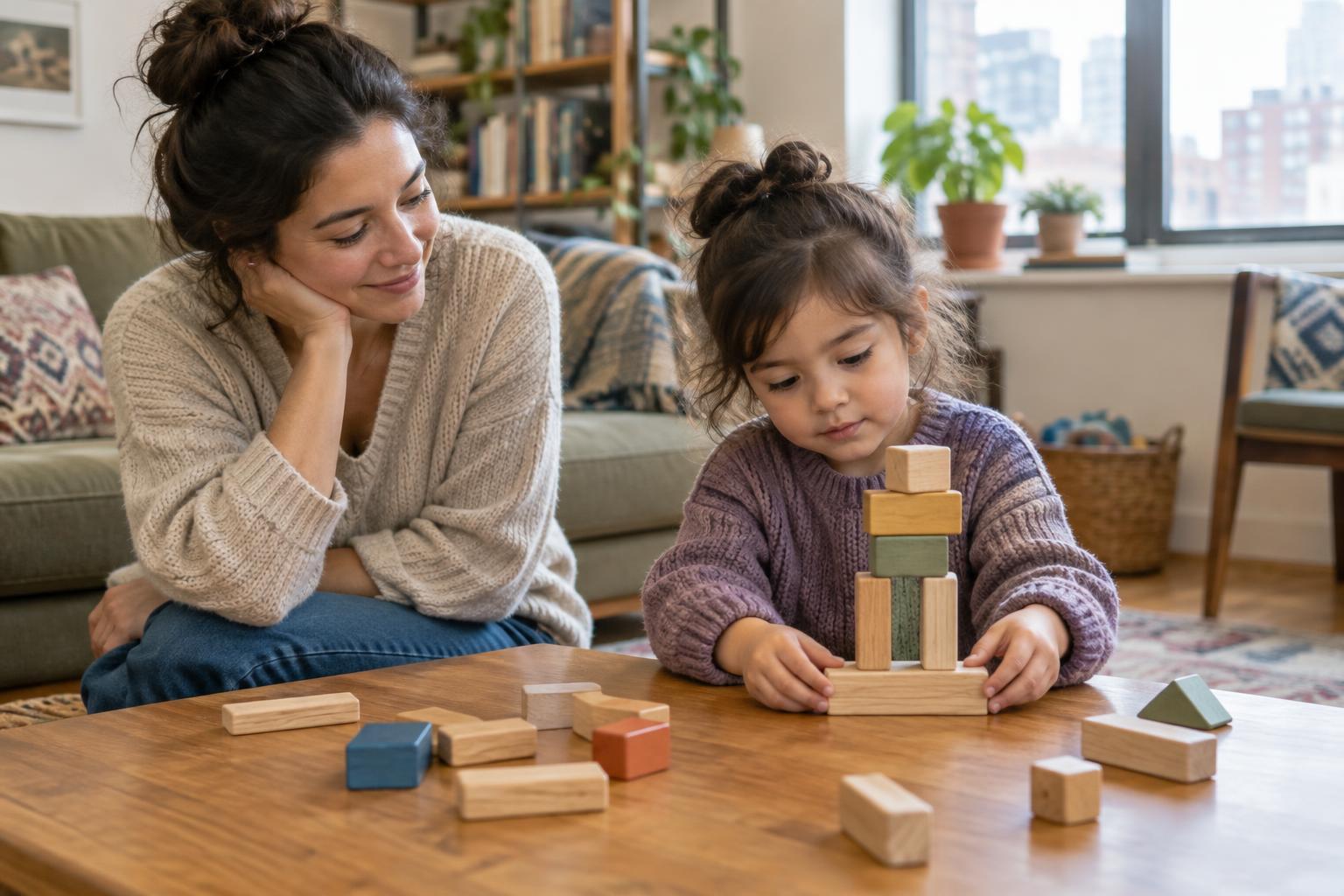
Blocks are easy to move, which makes them good for trying an idea and changing it. Begin a row with a simple two-part repeat, such as tall block, short block, tall block, short block. Let your child add a few pieces. Then switch roles: ask them to start a row that you can continue. Copying their choices shows that pattern-making can be their idea, not just an adult-led activity.
Once a two-part repeat feels familiar, try a different rhythm: red, red, green; red, red, green. Say each group aloud while you point to it. You can also use shape instead of color, such as square, triangle, square, triangle. Changing one feature at a time helps keep the repeating order visible.
If the row becomes a tower, a road or a pretend train, follow the play for a while. You can return to the pattern by asking which color carriage might come next or whether the tower has any repeating layers. The goal is to make noticing patterns part of play, not to finish a worksheet made of blocks.
Bring socks and household objects into the game
Laundry offers a ready-made collection of colors and textures. Set out a few clean socks and make a row of plain sock, striped sock, plain sock, striped sock. A child can continue the row, or you can each choose socks to create a new one. Matching pairs is a separate, useful challenge; for pattern play, focus on the order the socks make when laid side by side.
Other familiar objects work too. Try alternating two kinds of reusable napkin, or arranging large toy animals and blocks in a repeating row. Use objects that are appropriate for your child to handle, and supervise play with any items that could be mouthed or easily broken. There is no need to buy supplies or gather a large collection; a handful of distinct objects is enough.
When you are done, putting the objects away can become part of the game. Your child might hand you one sock, then one block, then one sock. If sorting everything back into its usual place is the more appealing task, that is fine too.
Try patterns you can hear and do
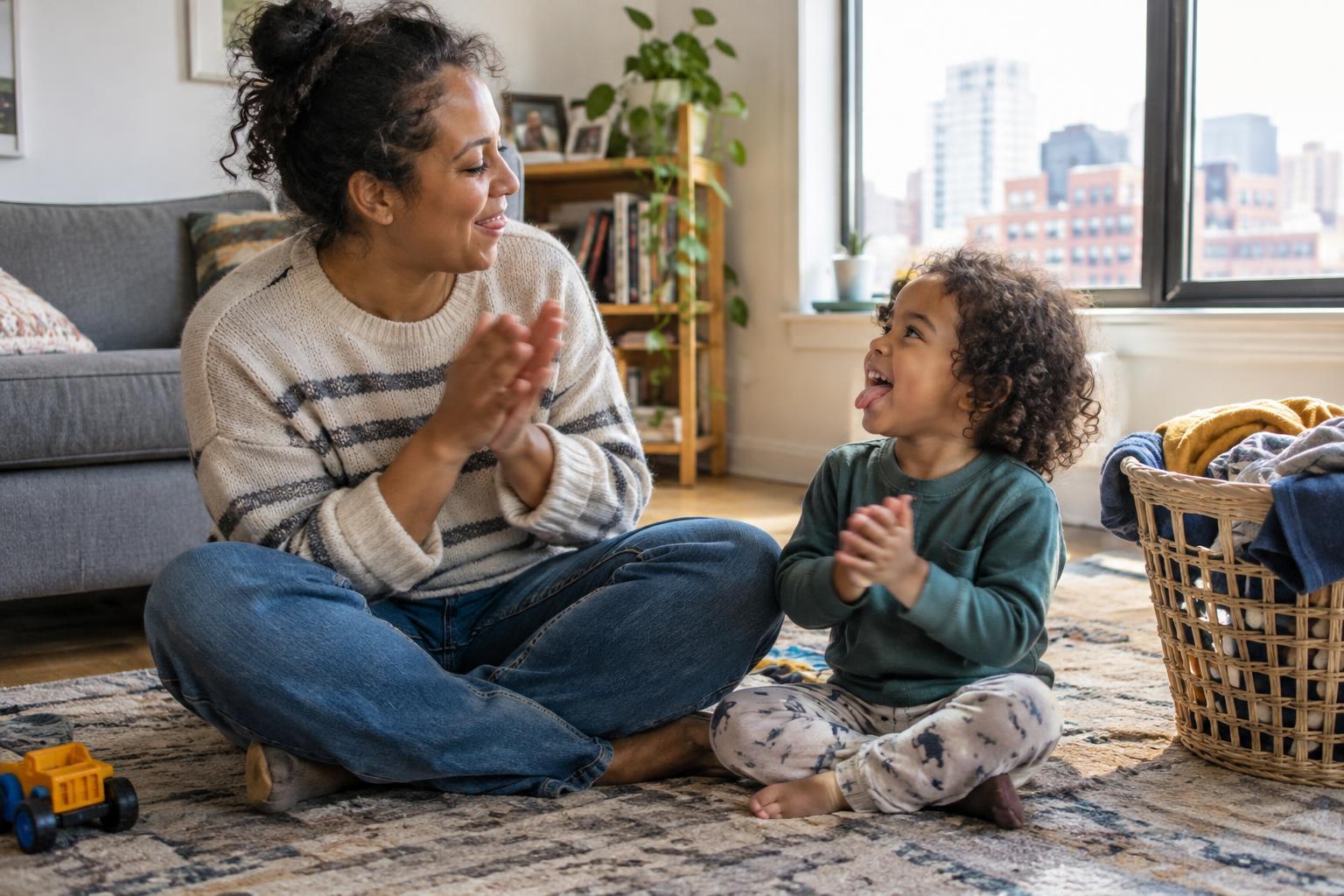
An object row is only one way to show a repeat. Clap, tap your knees, clap, tap your knees, then pause. Ask, “What sound comes next?” You can make a movement pattern on the living-room floor: step, step, turn; step, step, turn. Keep enough space clear for everyone to move comfortably.
These patterns are useful when you have no materials at hand, such as while waiting for a lift or taking a break from tidying up. Let your child invent a sequence for you to copy, even if it is silly or changes halfway through. Repeating it back can help them hear or see their own idea. If they want to change the rules, you can say, “Let’s start a new pattern,” and try again.
Notice patterns in ordinary routines
Once you have played with a few rows and rhythms, look for repeats that are already around you: alternating colors on a rug, a design on a bag or the order of pictures in a favorite book. Ask open questions such as “What do you notice?” or “Does anything happen again?” There may be more than one reasonable answer, especially in a busy design.
A brief pattern game can fit into folding laundry or packing toys away. You might lay out two objects, invite one more choice and stop there. On another day, your child may want to build a long row and explain every part of it. Let their interest set the pace. The simple habit of looking, predicting and making something together is what turns familiar objects into playful learning materials.