Start with a small, open-ended idea
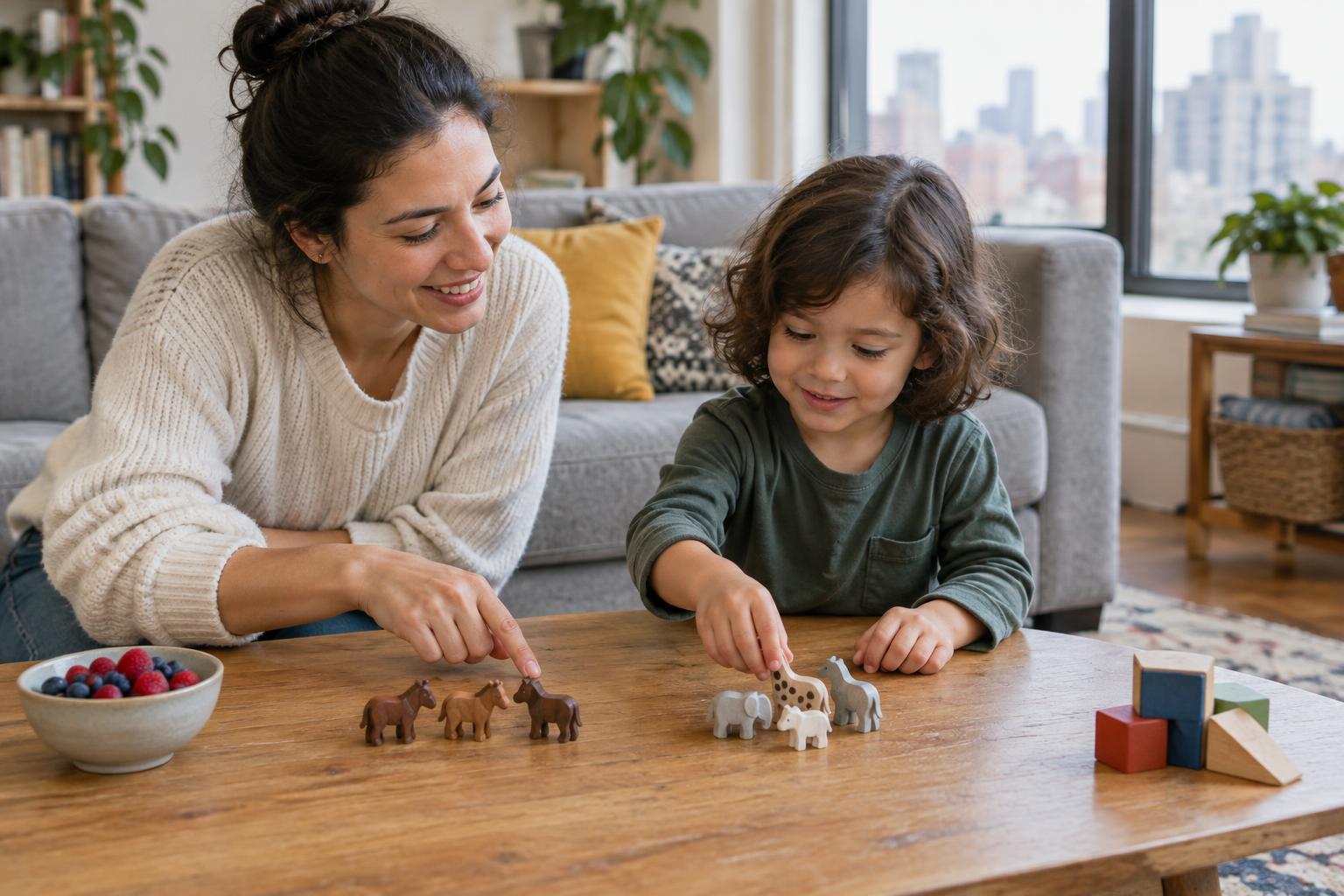
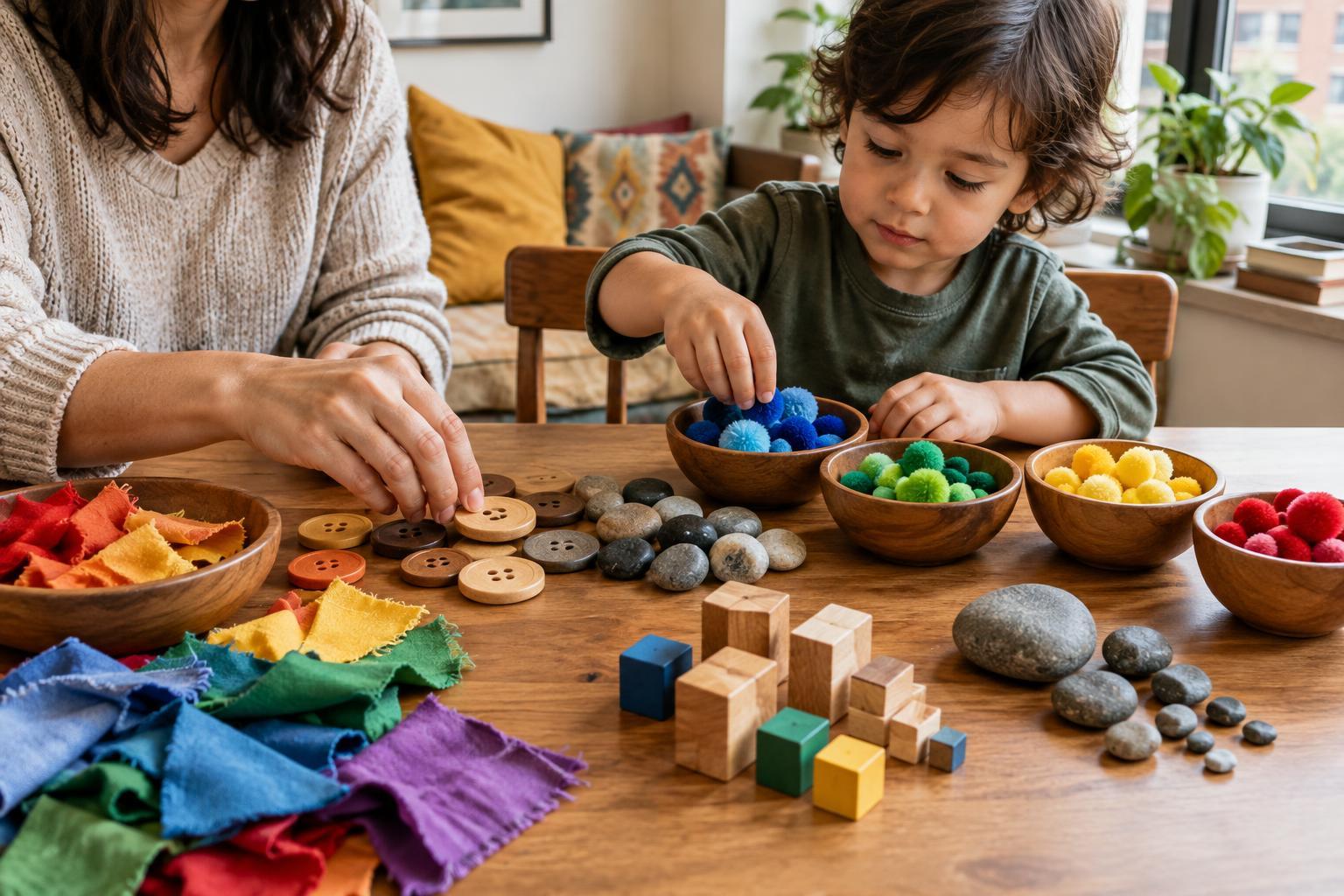
A play invitation is simply a few materials set out where a child can notice and explore them. It does not need a theme, a craft outcome, or instructions for the “right” way to play. A bowl beside a stack of washcloths might become a laundry game, a sorting project, or a place to tuck in a toy. The point is to make it easy to begin, then leave room for the child’s own ideas.
Choose one everyday action as your starting point: filling, stacking, matching, wrapping, or moving things from one place to another. This gives the setup some focus without deciding what the child must do. In a busy home, a tray, placemat, or clear patch of floor can define the play space. A compact invitation is also easier to put aside when it is time for dinner, homework, or another part of the day.
Gather a few objects you already own
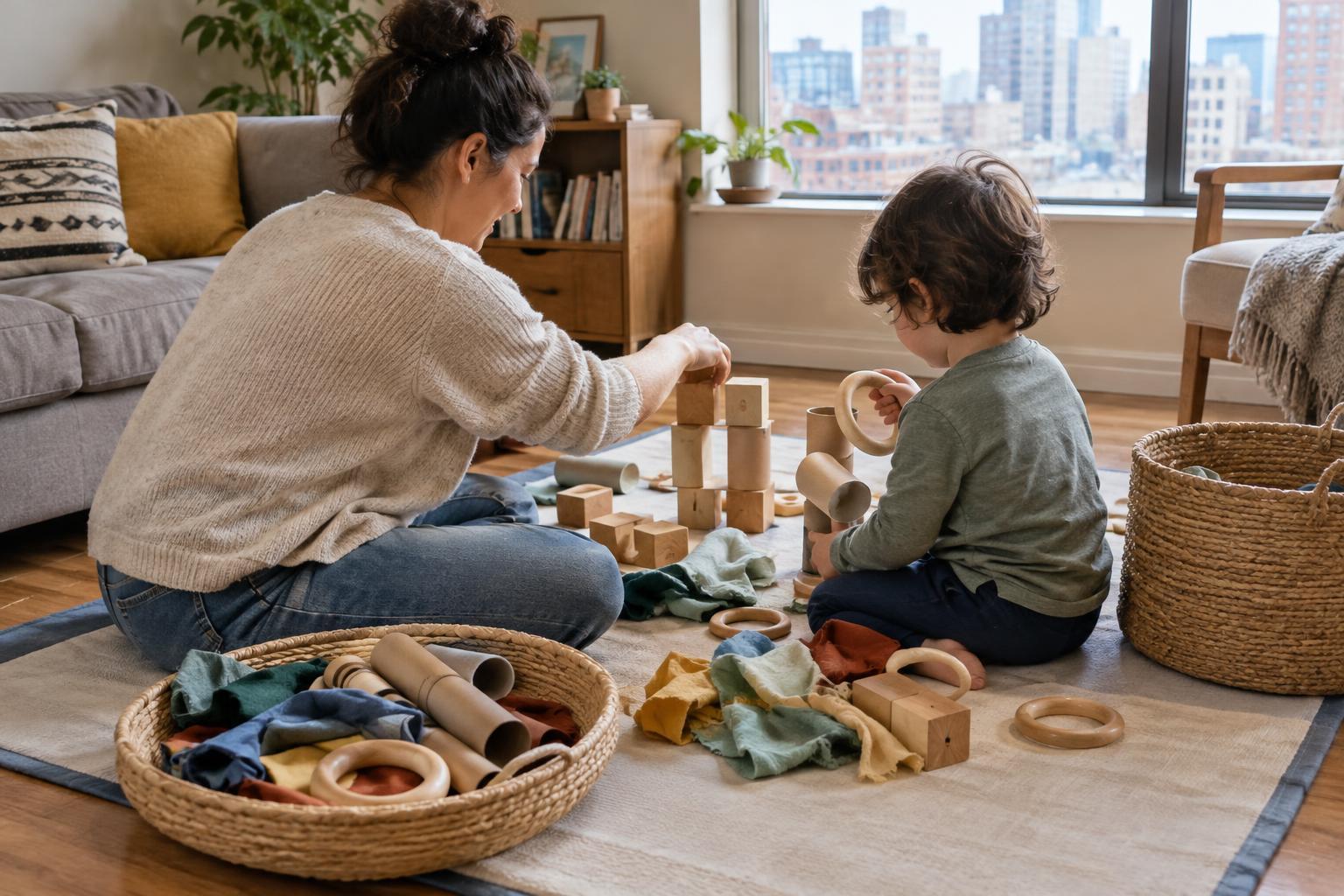
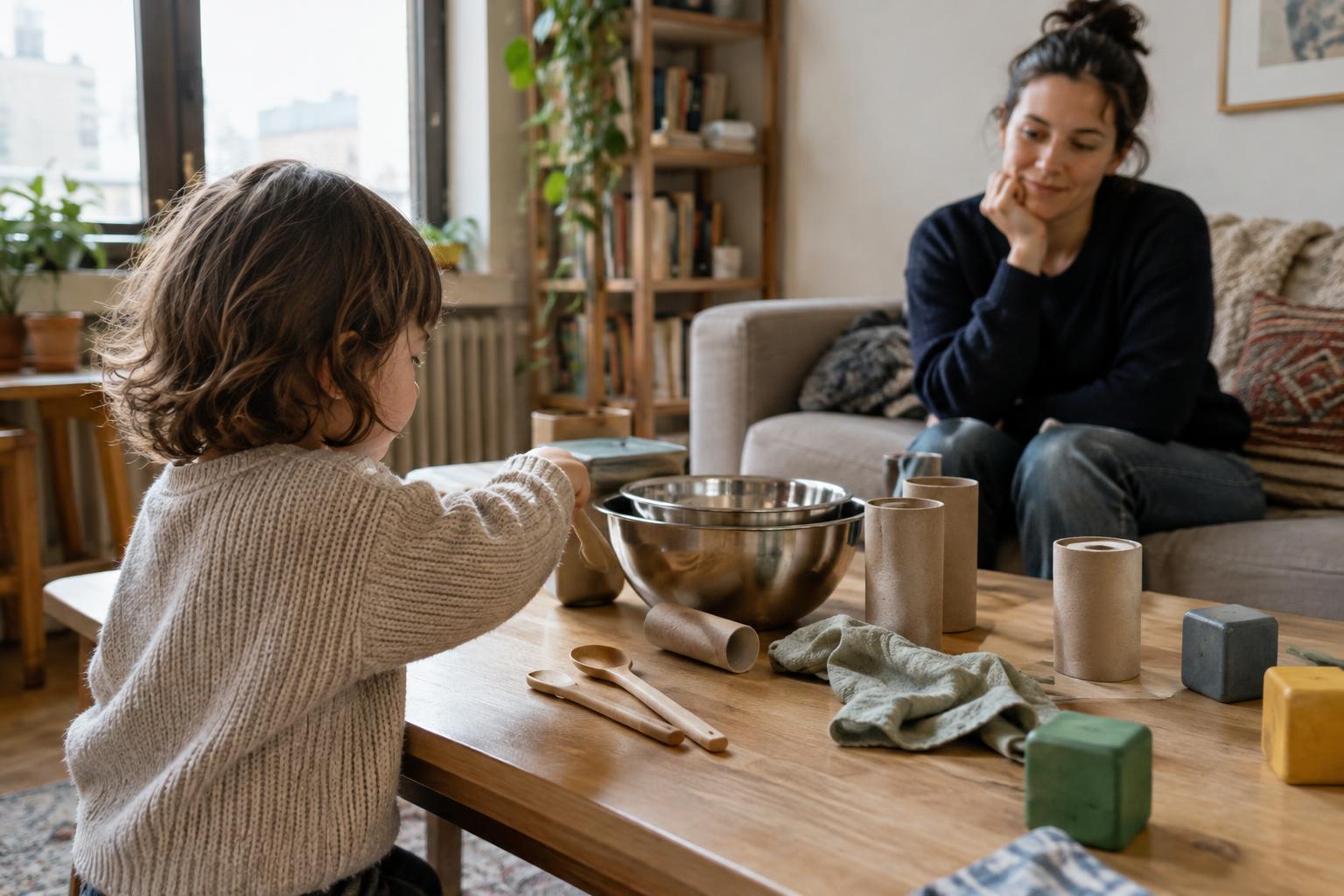
Look for sturdy, clean items that are suitable for your child to handle: measuring cups, large spoons, empty containers, scarves, washcloths, or cardboard boxes. Two or three kinds of objects are usually enough. For example, place several large containers next to a pile of washcloths and see whether your child packs, covers, stacks, or rearranges them. Adding more materials later is easier than sorting through a crowded setup at the start.
Check each object before offering it. Skip anything sharp, breakable, heavy enough to hurt if dropped, or small enough to be a choking concern for a child who mouths objects. Keep plastic bags, long cords, and containers with risky lids out of play. Stay nearby and adjust the materials to your child’s age, habits, and level of supervision. An object that works well for one child may not be a good choice for another.
Arrange the space so play can begin easily
Put the materials where your child can reach them without pulling down a shelf or asking for help. You might place a bowl and a few large spoons on a kitchen-floor mat, or line up empty boxes beside a basket of soft toys. Leave some clear space around the objects so your child can spread out. If you are setting up on a table, choose a surface that can handle ordinary bumps and spills.
You can offer a simple opening such as, “I put these here for you to try,” and then pause. There is no need to demonstrate every possible use. Some children jump in; others watch first or carry one object somewhere unexpected. If your child seems uninterested, it is fine to put the materials away and try a different combination another day. A play invitation is an option, not a task to complete.
Follow the play instead of directing it
Once your child begins, notice what holds their attention. If they are repeatedly putting a washcloth into a box and pulling it out, that repetition may be the whole activity. You can describe what you see—“You filled the box”—without turning it into a quiz. If they invite you in, join their version of the game. If they prefer to work alone while you stay close, that is fine too.
When interest starts to fade, a small change can refresh the setup: move a container to the other side of the mat, offer a larger box, or add one more cloth. Avoid changing several things at once, since it can be harder to tell what caught your child’s attention. You also do not have to extend every play session. Five engaged minutes can fit more comfortably into a family routine than a complicated activity that everyone feels obliged to finish.
Make cleanup part of a repeatable routine
Before starting, decide where the objects will go afterward. A single bin or basket makes it easier to reset a shared room, especially when floor space is limited. If the materials belong elsewhere in the home, return them together so a useful measuring cup or towel does not vanish into a toy pile. Invite your child to help with one clear job, such as placing the cloths in the basket, while you handle the rest.
You can reuse the same objects in a different arrangement next time. Boxes that held soft toys might become a pretend delivery station; containers that were stacked might become places to sort large, safe items. There is no need to create a new activity every day. A small collection of familiar household objects, offered with enough space and time to explore, can support many rounds of play without adding more clutter to your home.