What counts as a loose part?
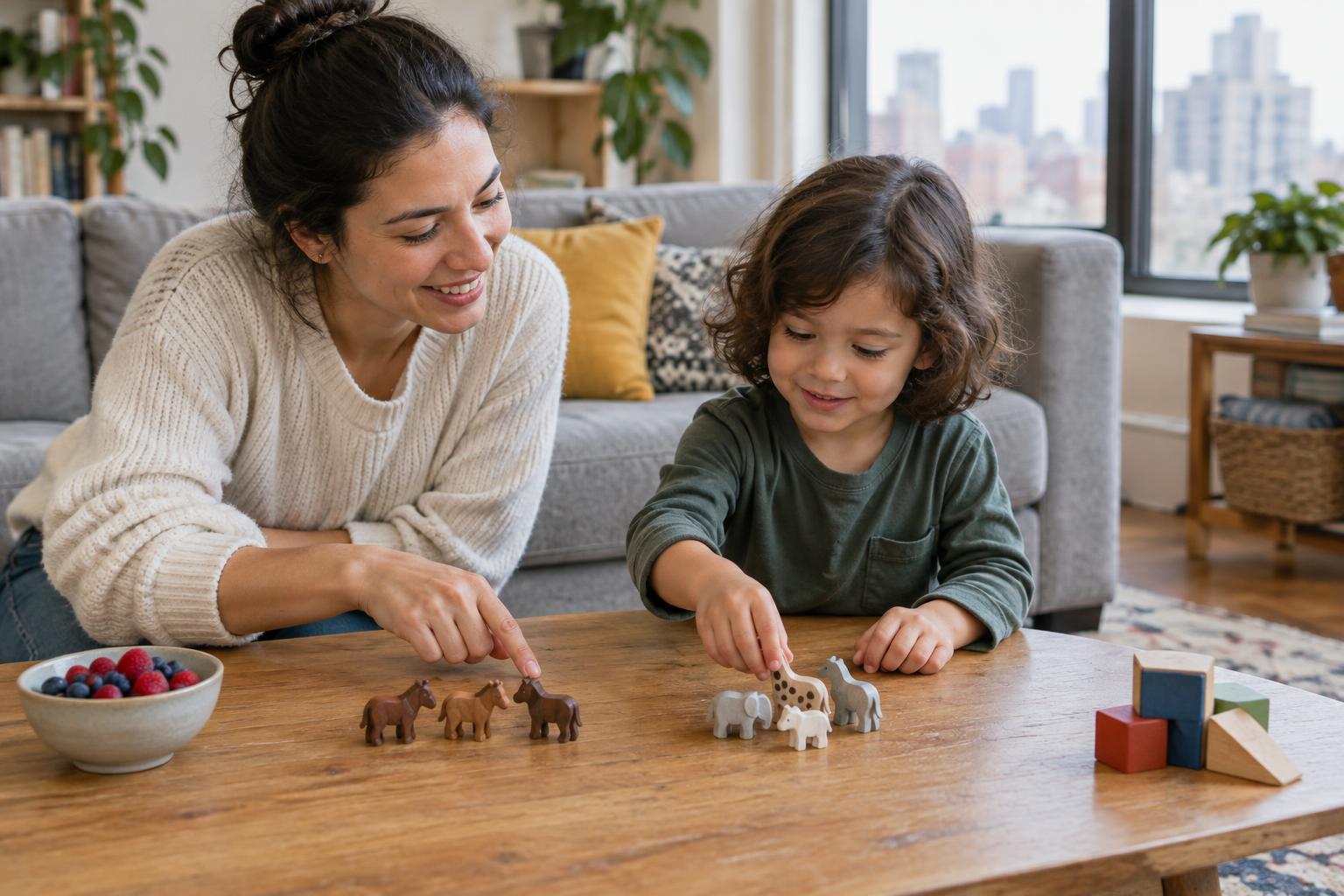
Loose parts are objects children can move, combine, rearrange, and use in more than one way. A cardboard tube might become a tunnel, a telescope, or a ramp support. A scarf can be a river one minute and a picnic blanket the next. Unlike a toy with a fixed purpose, these materials leave more of the decisions to the player.
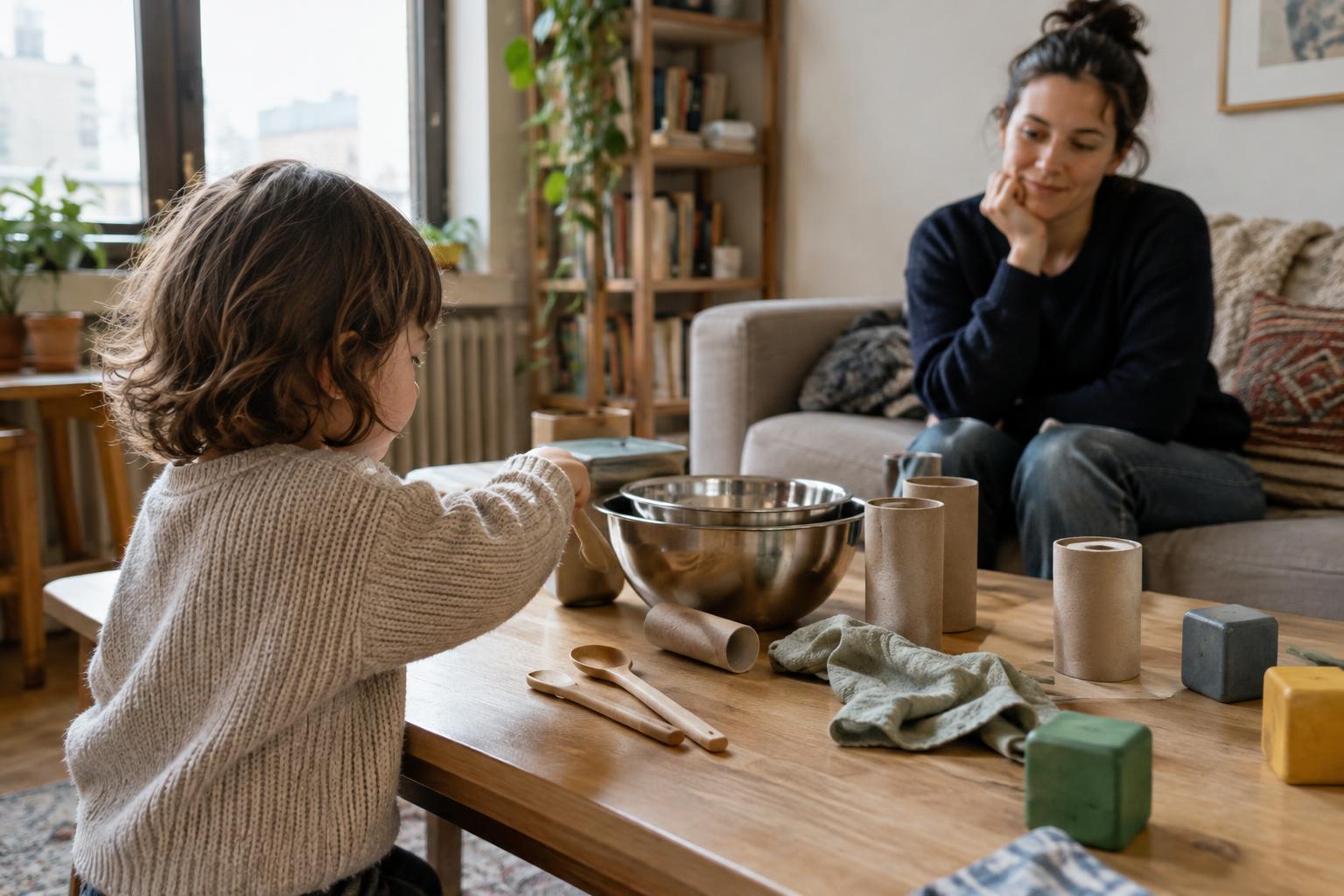
You do not need a carefully curated collection to begin. Try offering a few objects you already have, such as fabric scraps, sturdy boxes, large blocks, paper, and washable containers. The goal is not to produce a particular craft or teach a specific lesson. It is to give children room to test an idea, change it, and decide what to try next. Even a brief session at the kitchen table can make space for that kind of play.
Choose materials for the children and space you have
Start with a small set that suits your child’s age, habits, and level of supervision. For a mixed-age household, choose items that are safe for the youngest child who can reach the play area. Skip small objects if a child may put them in their mouth. Check found materials for sharp edges, loose fasteners, splinters, breakage, and anything difficult to clean. Keep plastic bags, long cords, and heavy objects out of the play set.
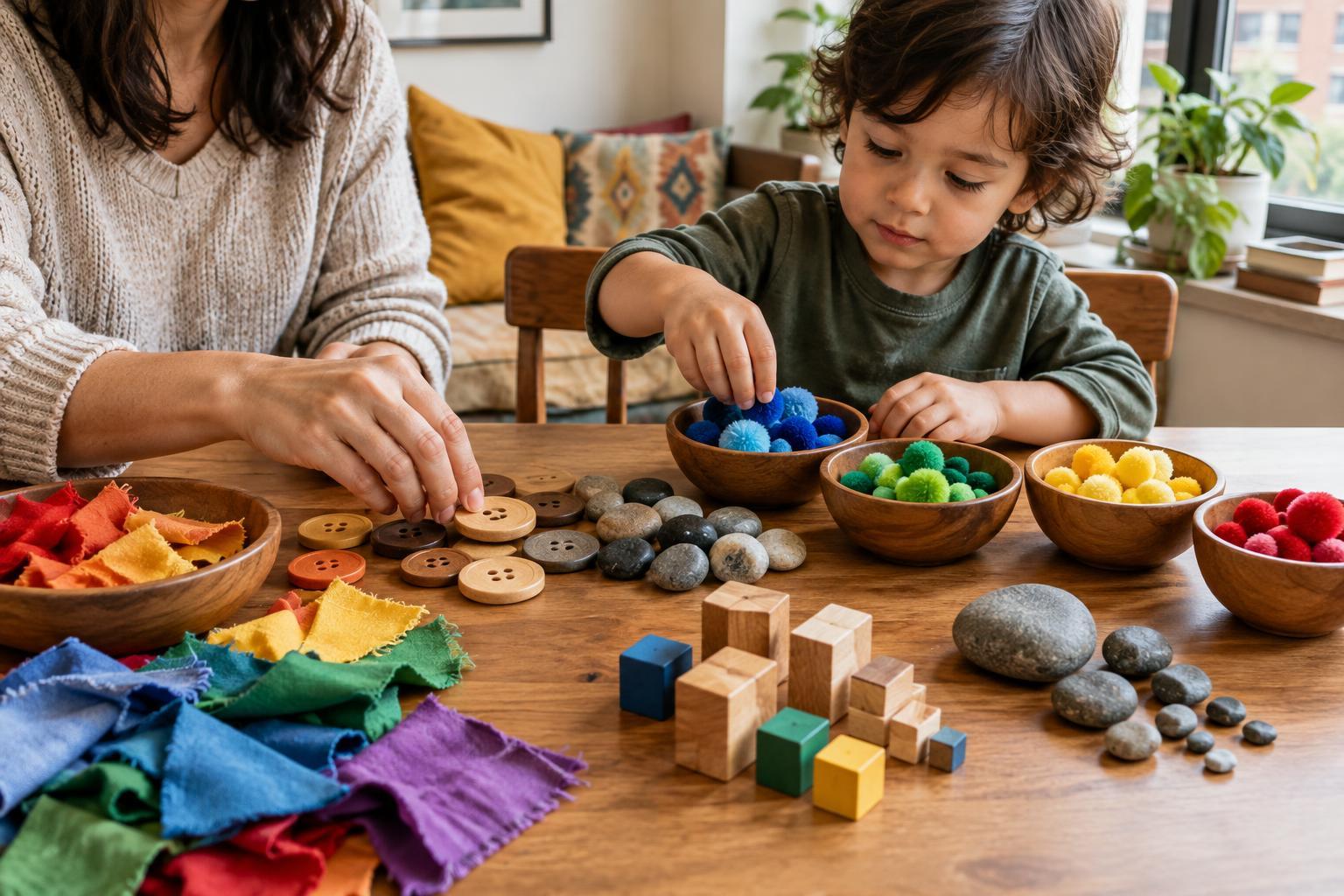
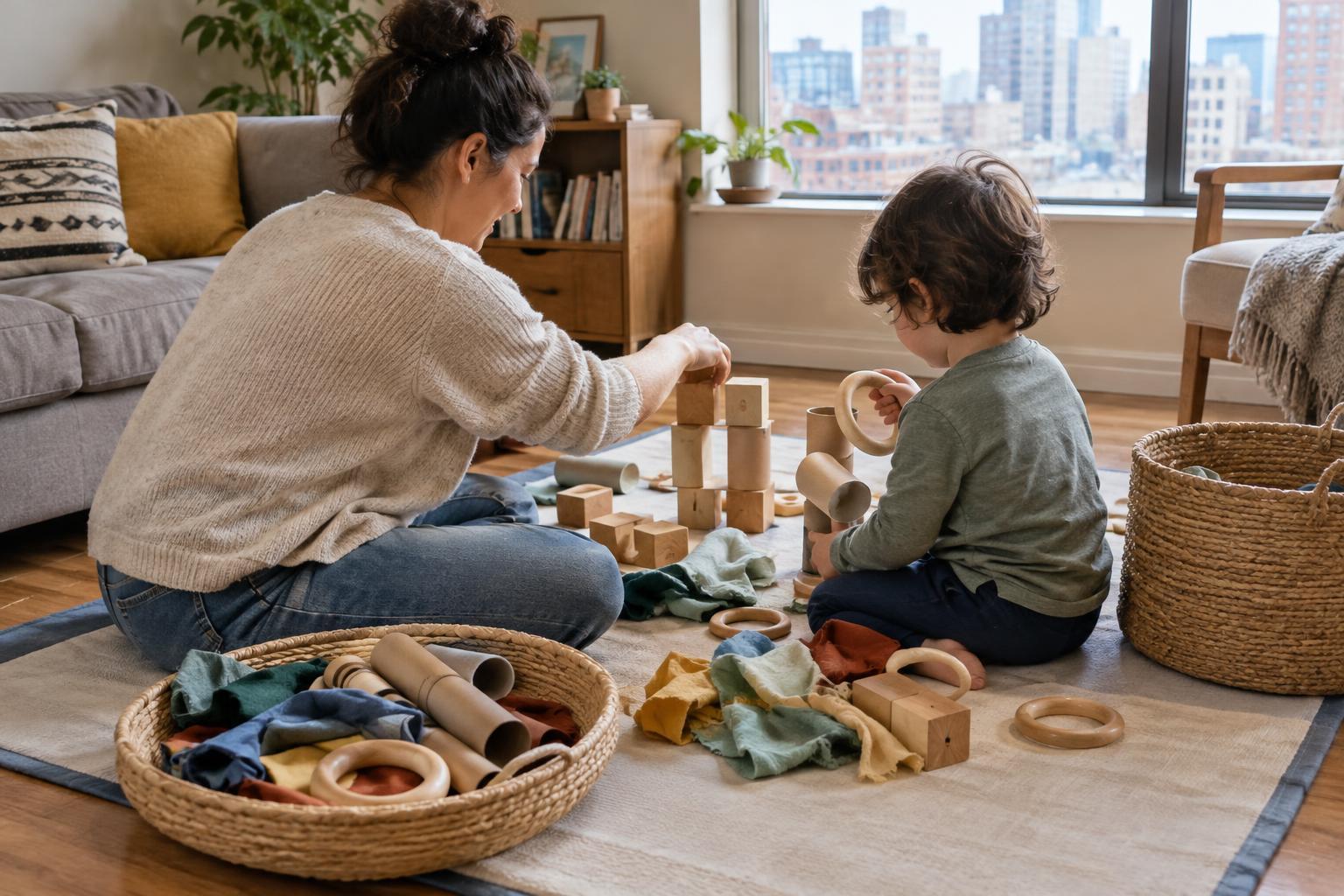
Simple categories can make choosing easier: something to stack, something to drape, something to contain, and something to connect. For example, large cardboard pieces, short fabric squares, lightweight bowls, and big interlocking blocks offer plenty of combinations. Use washable, durable items if play will happen on a rug or near everyday furniture. A small collection is often easier to explore than a crowded bin, and you can swap pieces later without buying anything new.
Set up a play zone without taking over the room
In a small home, a defined play zone helps everyone know where materials belong. A tray on a table, a mat on the floor, or a cleared corner can serve as the workspace. Put out only what fits there comfortably, and keep the rest stored away. If you want to offer a material that needs closer attention, such as water, bring it out separately when you can stay nearby.
Give children a short invitation rather than a model to copy: “What could you make with these?” or “How could these pieces fit together?” Then allow time for experimentation. A child may spend the whole session filling and emptying a box, or may build something and immediately take it apart. Both can be part of the play. If they ask for help, try describing what you notice or asking what they want to try before supplying a solution.
Make boundaries clear and easy to repeat
Open-ended play still needs limits. Choose a few rules that protect people, belongings, and shared space: materials stay in the play zone, objects are not thrown at people, and furniture is not climbed or moved without permission. Say what children can do as well as what they cannot. “You can build on the mat” is more useful than a long list of forbidden places.
Set expectations before the materials come out, especially if an item is usually used for something else. A kitchen bowl can be available for play today without making every kitchen cabinet part of the game. Stay close enough to notice when a setup becomes unsafe or frustrating, and adjust the materials or space as needed. Boundaries may change with the setting: a quiet apartment morning, a visit with friends, and an outdoor afternoon do not have to share the same rules.
Leave room for cleanup and another try
Plan for cleanup as part of the activity rather than an abrupt ending. A few minutes’ notice gives children a chance to finish an idea, and a container for each type of material makes putting things away simpler. If a creation matters to your child but cannot stay on the floor, consider placing it on a shelf, taking a photo, or asking which piece they want to save for next time.
After a session, notice what held their interest and what was hard to manage. You might offer fewer pieces, replace a noisy item, or move play to a surface that is easier to wipe. Loose-parts play does not need to look impressive to be worthwhile. A repeatable setup that fits your home and leaves everyone willing to try again is a strong place to start.