Start by joining the play
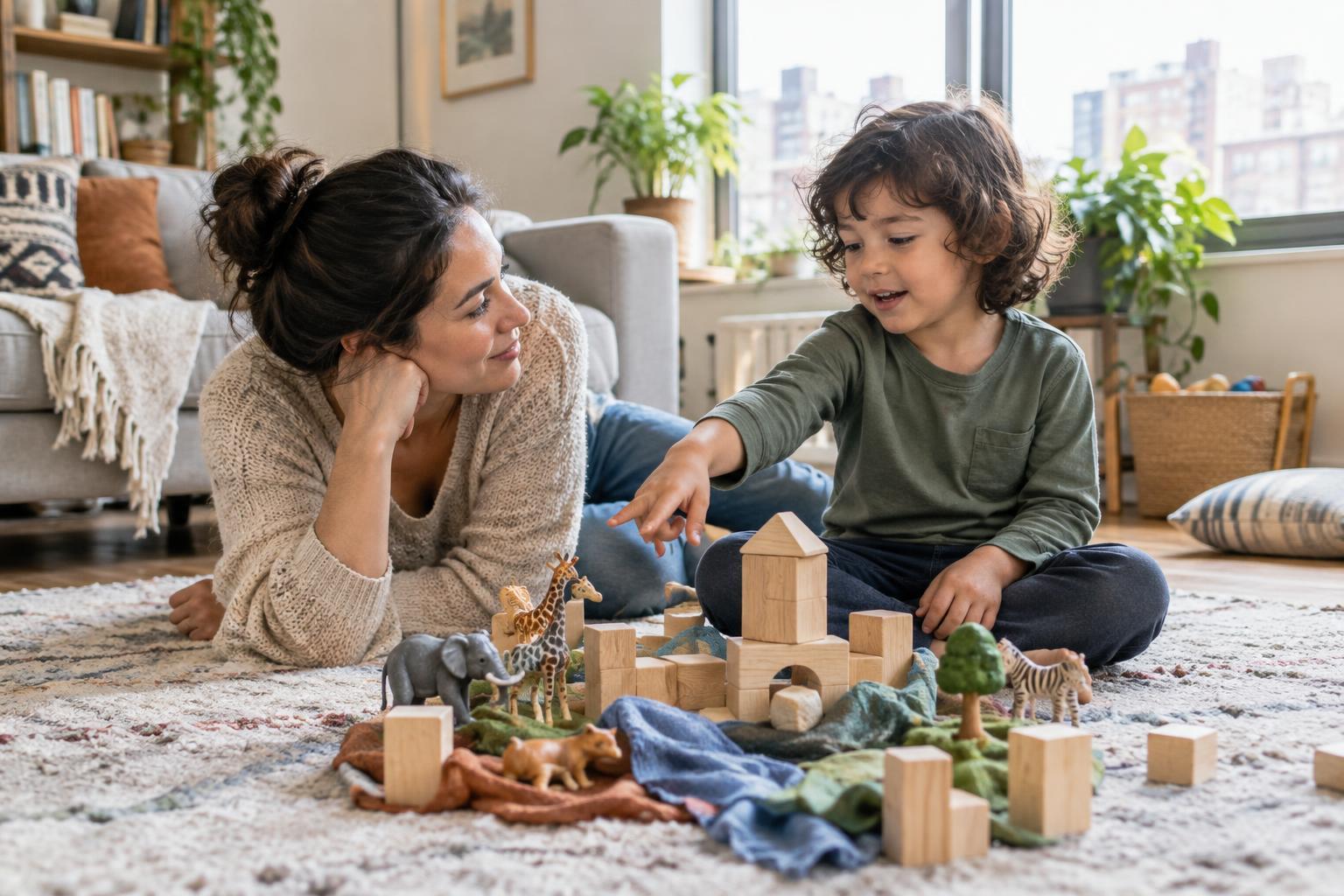
A child stacking cushions into a fort may be working out where the doorway goes, deciding who lives inside, or simply enjoying the tumble when it falls. Before asking anything, watch for a moment. What are they trying, repeating, or changing? A question connected to that choice is more inviting than one that interrupts it.
You can begin with an observation: “You moved the big cushion to the bottom.” Then pause. If the child wants to talk, try “What made you put it there?” or “What do you want to add next?” If they keep building without answering, you can keep them company. Play does not need a running commentary to be worthwhile.
Ask questions with more than one possible answer
Quiz-like questions often have an answer the adult already knows: “What color is this?” or “How many blocks are there?” Those questions can have a place, but a string of them may make play feel like a performance. To invite thinking, ask about possibilities, choices, and the child’s own ideas. “What could we use for a bridge?” gives a builder room to experiment. “Where should the train go after this stop?” lets a story grow.
Try prompts such as “What do you notice?”, “What else might work?”, or “How could we find out?” Keep the wording simple enough for the moment. A younger child may respond by pointing, moving a toy, or making a sound rather than explaining in words. That response is still part of the conversation; you can follow it instead of asking for a fuller answer.
Use the materials and stories already at hand
You do not need a special activity to ask thoughtful questions. While drawing, try “Tell me about this part” rather than guessing what the picture is. With pretend food, ask “Who’s coming to dinner?” or “What does our café need?” During a puzzle, “Which piece do you want to try next?” keeps the child in charge of the attempt.
Everyday city sights can become play prompts, too. Looking at a bus from the sidewalk, you might wonder, “Where do you imagine it’s going?” On a walk, a puddle might prompt “What do you think will happen if we drop a leaf in?” These are invitations to imagine or test an idea, not requests for a correct explanation. Follow ordinary safety boundaries and let the child’s interest decide whether to linger or move on.
Make room for guesses, surprises, and silence
After asking a question, wait. Adults often fill a quiet moment quickly, but a child may be deciding what to do or searching for words. If they offer an unexpected answer, resist rushing to correct it when accuracy is not essential. “Oh, a dragon lives under the table. What does it do there?” can keep a pretend world open.
When something does not work, curiosity can be gentler than an immediate fix. If a cardboard ramp collapses, try “What changed?” or “Want to try a different way?” You can offer help when it is wanted: “Should I hold this while you move that piece?” The aim is not to make every frustration into a lesson. Sometimes the best response is to acknowledge the disappointment and let the child choose whether to try again.
Let conversation go both ways
Children may ask you questions, assign you a role, or change the subject entirely. Answer what you can, admit when you are unsure, and share your own ideas without taking over: “I wonder if this box could be a garage. What do you think?” A playful exchange can include disagreeing, revising a plan, and laughing when a pretend delivery ends up at the wrong house.
A useful check is whether your questions leave the child with more room to play. If they seem absorbed, one thoughtful prompt may be enough. If they are eager to chat, follow their lead with another. The goal is not to collect answers. It is to show that their ideas are worth noticing, then give them space to see where those ideas go.