Start with sound, not a right answer
A rhyme game can begin with something as small as a child noticing that “cat” and “hat” sound alike. Syllable play is a little different: it is about hearing the beats in a word, like the two parts of “piz-za.” Neither needs a worksheet. When you treat sounds as toys to try out, a bus ride, a walk to the store, or a few minutes before dinner can become a chance to play.
You do not have to ask your child to identify every rhyme or count every beat. Try saying two words with an exaggerated bounce and see what they do. They may echo you, offer a new word, laugh at the sound, or move on. Following that response keeps the moment closer to a game than a test.
Make room for wonderfully silly rhymes
Pick an object you can both see and invite a rhyme: “We found a sock. What else sounds like sock?” “Rock” works, but so does an invented word such as “zock” if you are playing with sounds rather than making a vocabulary list. Add the words to a tiny story: “The sock and the rock went for a walk.” A silly turn often gives the game somewhere to go without asking anyone to perform.
If a child offers a word that does not rhyme, you can keep the conversation moving instead of correcting it. You might say, “I like that word! I’m hearing sock and rock sound alike. What could the rock do next?” This models the sound you are playing with while leaving room for their idea. For younger children, choosing the rhymes yourself and pausing before a familiar ending may be plenty of participation.
Find syllable beats in names and everyday objects
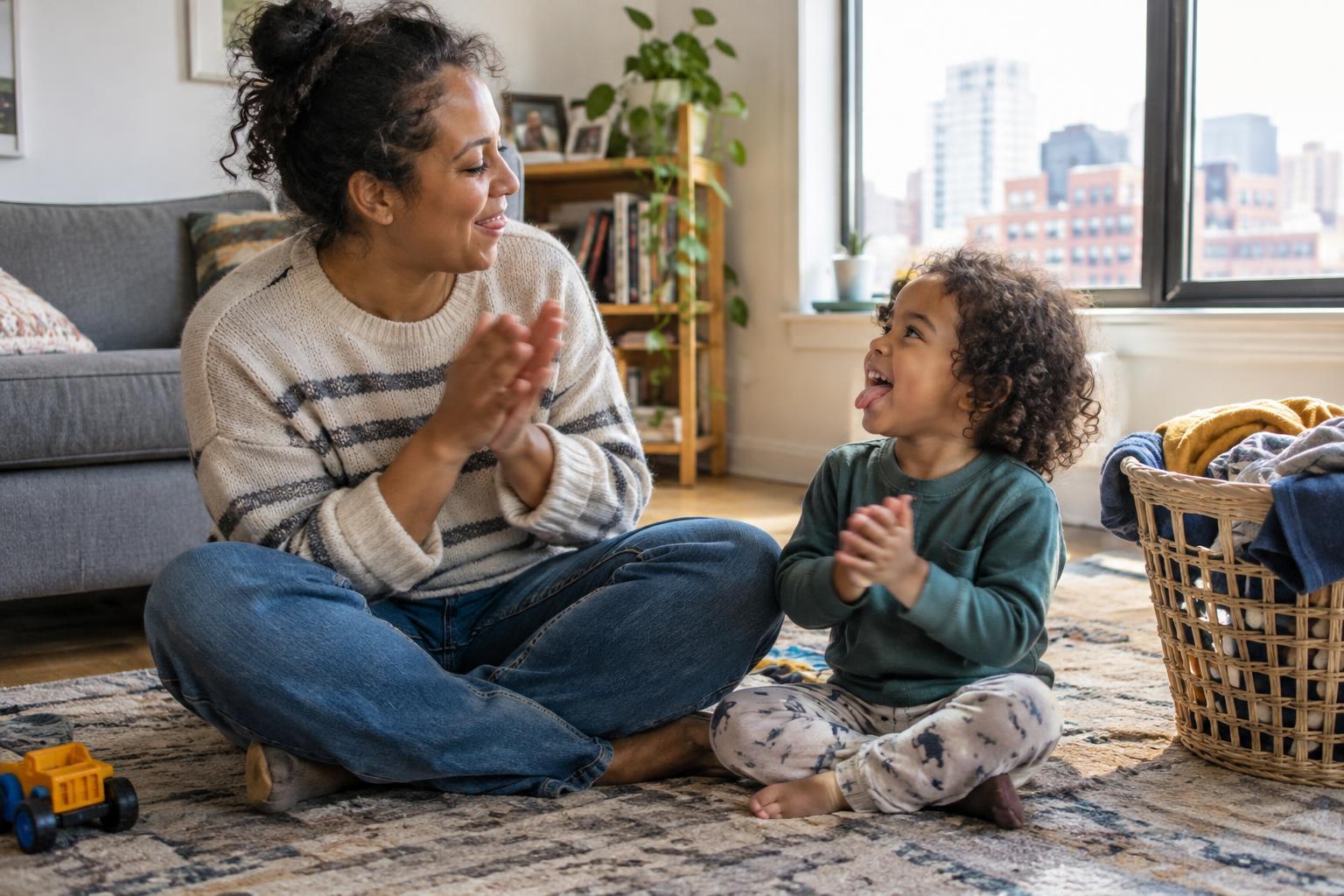
Names are easy words to start with because they matter to the people saying them. Speak a family member’s name slowly and tap once for each part you hear. Try the same with a favorite snack, a toy, or something on the street. You can tap knees while waiting for an elevator, pat the table while setting out plates, or take a step for each beat on a stretch of sidewalk.
Keep the counting flexible, especially when people say a word differently. The pleasure is in listening and moving together, not settling every pronunciation. If clapping feels too loud for a shared space, use tiny finger taps. If everyone wants to get louder at home, turn the words into a brief drum parade using hands and cushions, then let the parade end before it wears out its welcome.
Let routines supply the prompts
You do not need a set of special words. During cleanup, put away a “bear” and wonder what rhymes with it. While getting dressed, stretch out “swea-ter” or “rain-coat” as you reach for each item. At snack time, invent a two-line chant about what is on the plate. A short game tied to something already happening is easier to revisit than an activity you have to prepare.
On a city outing, signs, storefront items, and vehicles can offer fresh words. You could quietly collect things with one beat, then things with two, or give a passing truck a ridiculous rhyming nickname. Keep your attention on where you are going and save longer games for places where you can pause. The word play should make the trip more enjoyable, not compete with crossing streets or keeping track of one another.
Know when to stop—and when to join in again
Children may want to repeat the same rhyme many times, change the rules, or ignore the game entirely. All three are workable outcomes. If your child starts correcting your silly words or making up a chant of their own, let them lead. If they are tired or focused on something else, drop the prompt. You can always bring it back another day without announcing a lesson.
Families also use different languages and ways of speaking. A rhyme that works in one language may not work in another, while a family name may have beats that sound different depending on who says it. Those variations can be part of the fun. The goal is a shared moment of noticing and playing with sound, not a perfect answer or a daily target to meet.