Start with what is already in the room
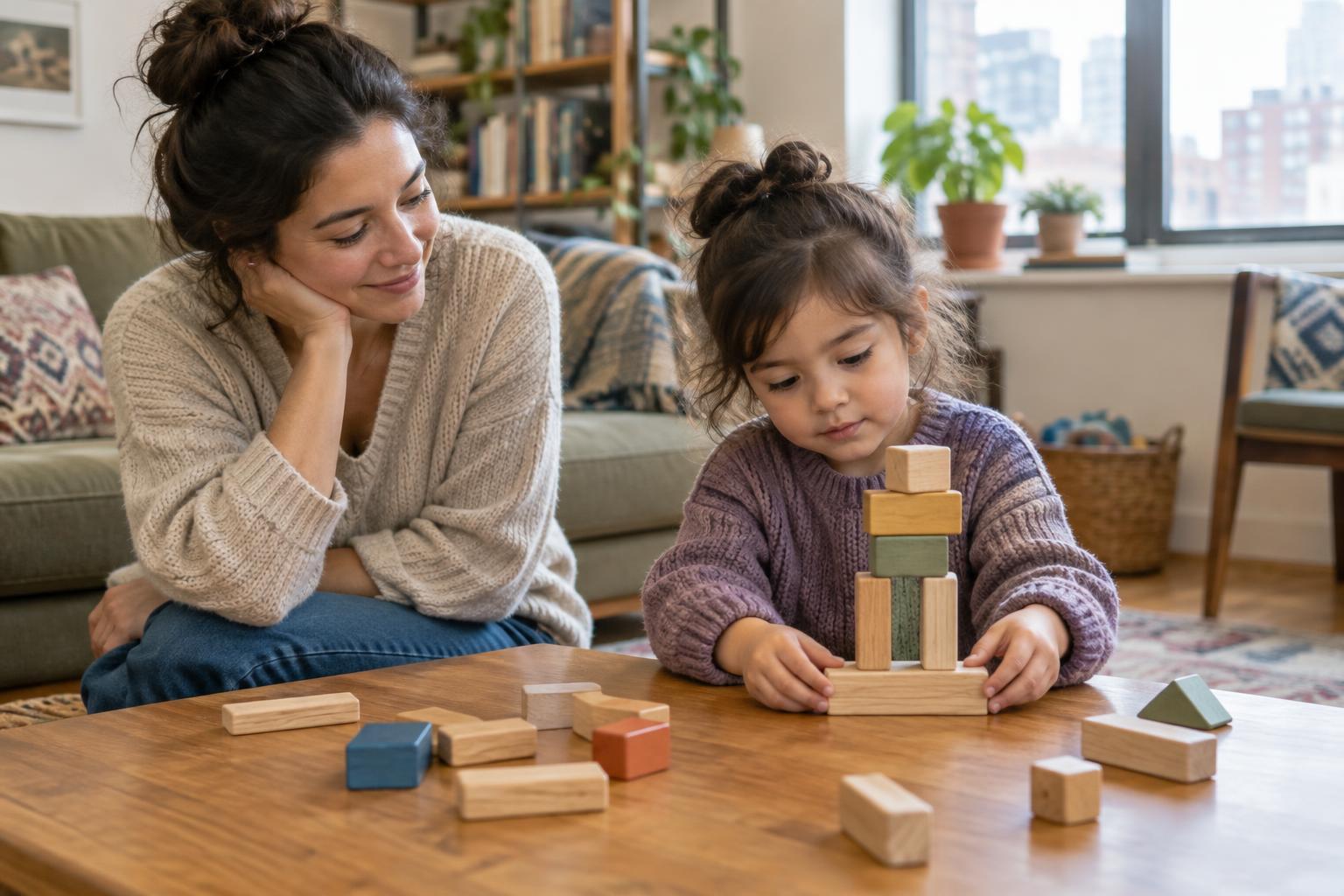
A shape hunt needs little preparation. Choose one room and invite your child to find a circle, a rectangle or another shape they recognize. A plate, a book cover and a picture frame can be enough to begin. Point to one example, then give them time to look around. The goal is not to collect as many answers as possible; it is to notice details in familiar surroundings.
For younger children, start with one shape and search together. You might say, “This plate looks round. Can you spot something else that looks round?” Older children may enjoy finding two shapes at once or explaining why an object fits. If a child chooses something unexpected, ask what they noticed before offering a correction. A curved handle, for example, might remind them of part of a circle.
Follow the edges, not just the object names
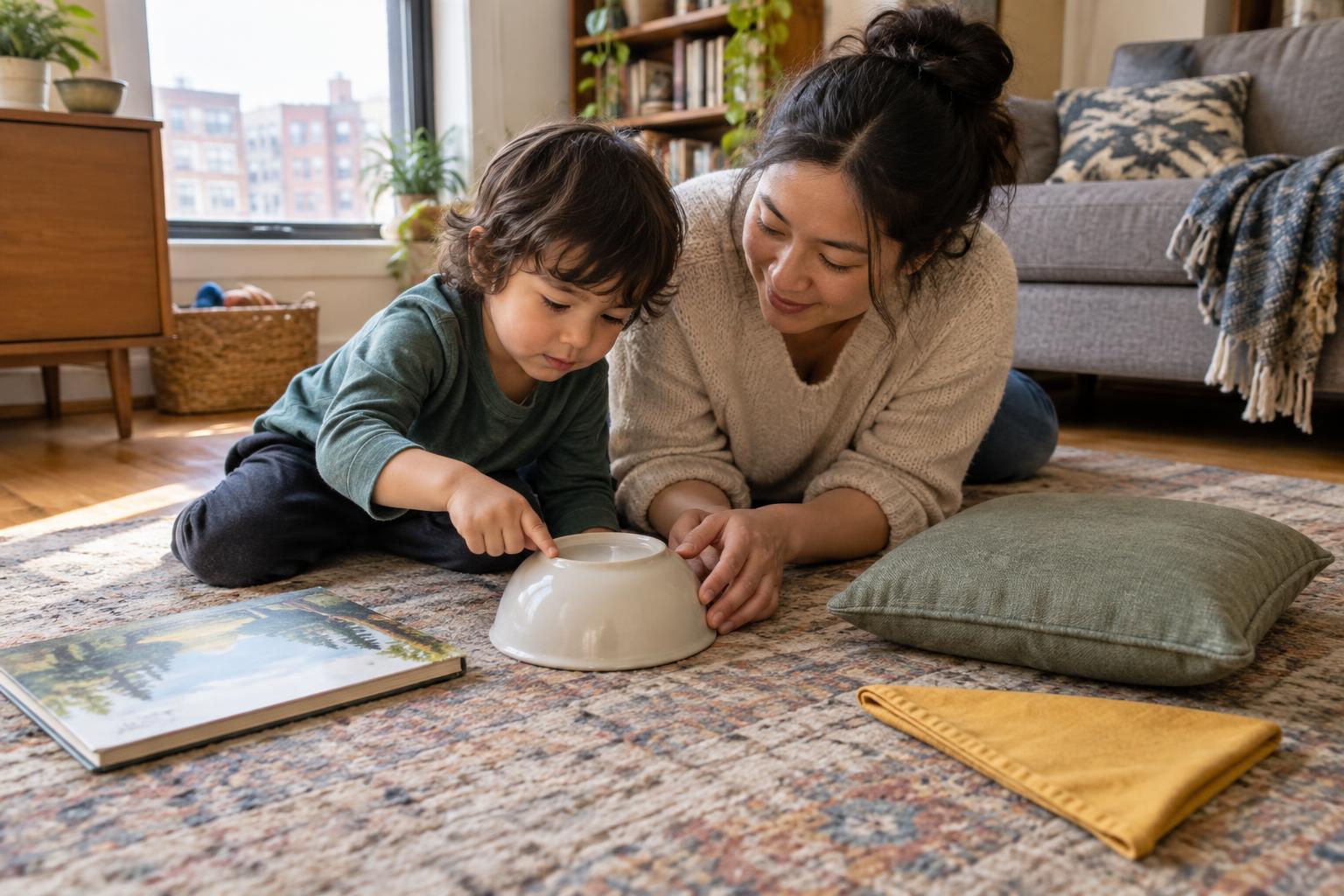
Children often know an object’s name before they think about its outline. Help them shift their attention by tracing an edge with a finger or drawing its shape in the air. A closed book may look like a rectangle from above, while its spine is a long, narrow strip. A mug’s opening looks circular even though the whole mug is not a circle. Looking from different angles makes the conversation more interesting than a simple right-or-wrong quiz.
Use everyday words alongside shape names: round, straight, curved, pointed, long and short. Try questions such as “How many corners can you see?” or “What changes if we turn it?” A square napkin can look different when rotated, but it still has four equal sides. You do not need to explain every property at once. Let the child’s observations guide how much to discuss.
Make a small-space hunt feel like an adventure
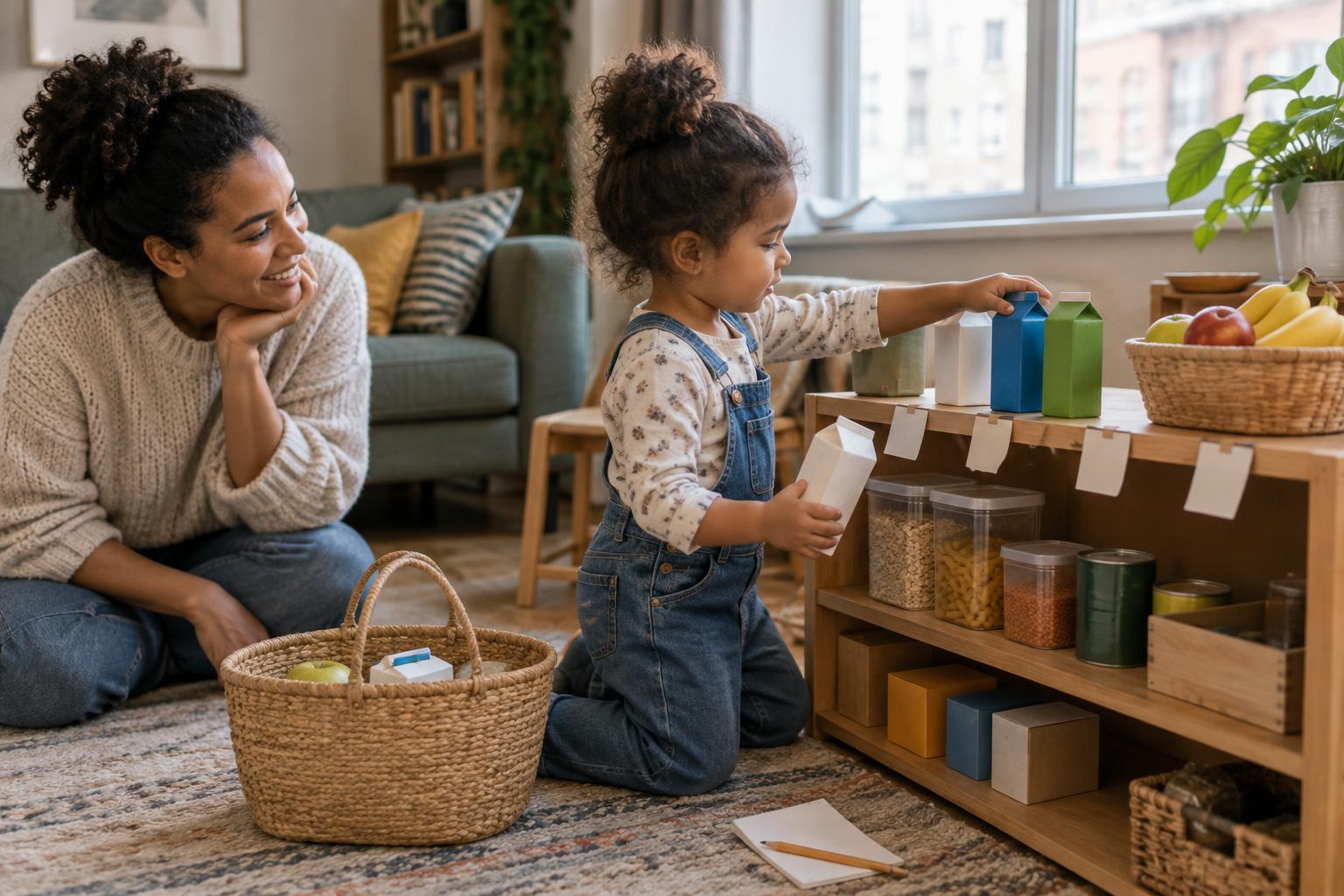
A city apartment offers plenty to explore without turning the whole home upside down. Set a boundary, such as the kitchen table or one shelf, and look for shapes within it. You could use a paper bag as a pretend explorer’s kit for larger, sturdy finds, or leave everything in place and point as you go. Keeping the search contained makes it easier to play for a few minutes between other parts of the day.
For a fresh round, change the mission rather than the room. Hunt for shapes that can roll, shapes with corners or shapes made by empty space, such as the opening of a basket. You can also take turns giving clues: “I see a rectangle we use to read,” or “I see a circle near the sink.” Children get to practice describing an object without immediately naming it, and caregivers get a glimpse of what catches their eye.
Sort, build and draw what you find
After the hunt, choose a few safe items or make quick sketches of them. Sort the drawings into groups and talk about any tricky choices. Does a rectangular box belong with rectangles even though it is not flat? It is fine to say that one side looks rectangular while the box itself has depth. This keeps the activity honest and helps children notice that everyday objects can show several shapes.
If your child wants to keep playing, build pictures from cut paper shapes: a rectangle for a door, circles for wheels or triangles for a roof. Scraps of paper are enough, and the picture does not have to represent a real building. Another option is to draw a simple map of the room and mark where each shape was spotted. These follow-up activities give children a way to revisit their discoveries without requiring special toys.
Keep it playful and easy to repeat
A good shape hunt can last three minutes or twenty. Stop while it still feels enjoyable, especially if it began as a way to fill a short wait. Avoid fragile objects, sharp edges and small loose pieces that are unsuitable for the child playing. When pointing out items near a stove, window or high shelf, let an adult do the reaching and keep the child’s search at a comfortable level.
The next hunt might happen while setting the table, putting away laundry or waiting to leave home. Ask your child to show you a shape you missed, or let them choose the day’s shape. Repeating a familiar game with different objects gives them more chances to look closely, compare and put their ideas into words. The best discovery may be a shape neither of you expected to notice.