Two approaches, one shared goal
Child-led play begins with a child’s choice. They decide that the couch cushions are a bus, the blocks are a bakery, or the same toy car needs to travel across the rug again and again. An adult may watch, join, or help gather materials, but the child’s idea sets the direction.
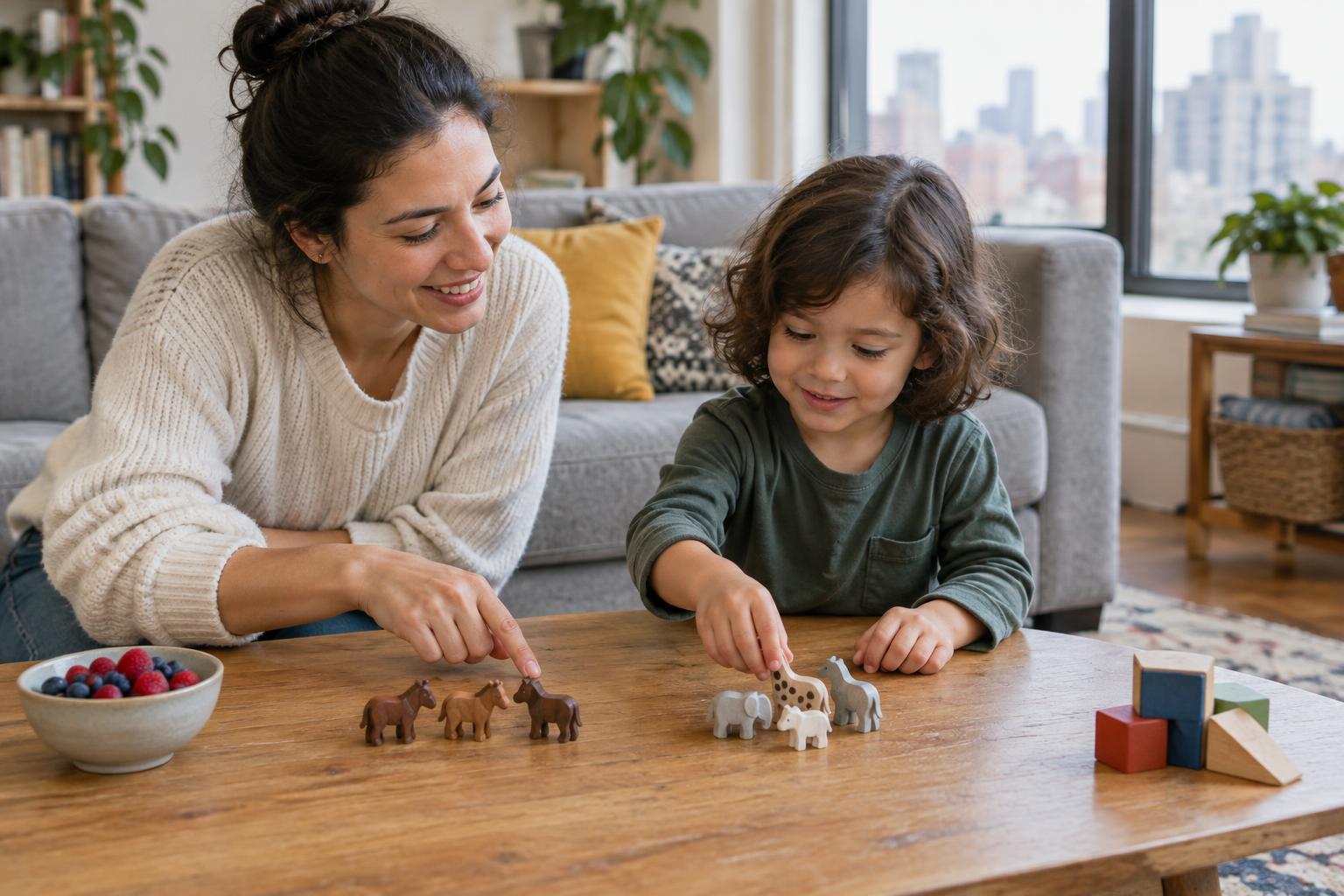
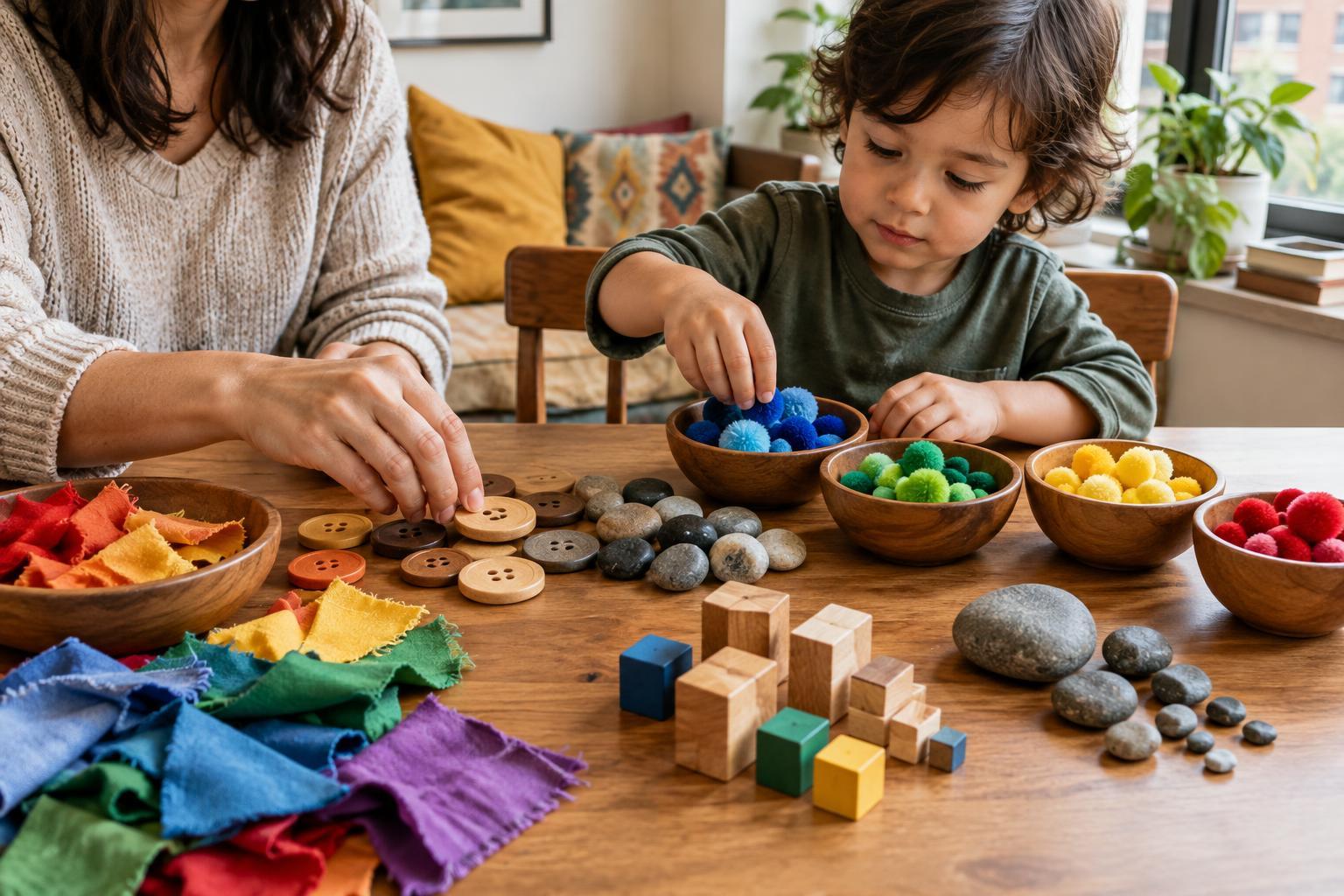
Adult-guided play starts with a little more structure: an invitation to sort buttons by color, build a bridge for a toy animal, or act out a story together. The adult offers a starting point and may help keep the activity going. Neither approach has to fill an entire afternoon. A few minutes of following can turn into a helpful suggestion, and a suggested activity can become something entirely different once a child takes hold of it.
The useful question is not which approach is better, but what would make play feel possible right now. A child may be absorbed in an idea, looking for company, unsure how to begin, or tired of the materials at hand. Paying attention to those cues can help you choose your role.
When to follow the child’s lead
If a child is already engaged, try watching before adding anything. Notice what they repeat, change, or seem pleased to show you. You might say, “That train keeps stopping at the pillow,” or ask, “Where is it going next?” These comments show interest without turning the game into a quiz or assigning it a new goal.
Following also means allowing an idea to be unusual. A child might line up pretend groceries instead of shopping for them, or use a cardboard box as a parking garage when you imagined a house. Unless safety or another person’s needs call for a boundary, you can let the child’s version stand. If you join, ask for a role: “Should I be a customer or the cashier?” Then accept the answer, even if your job is simply to sit nearby and hold a paper ticket.
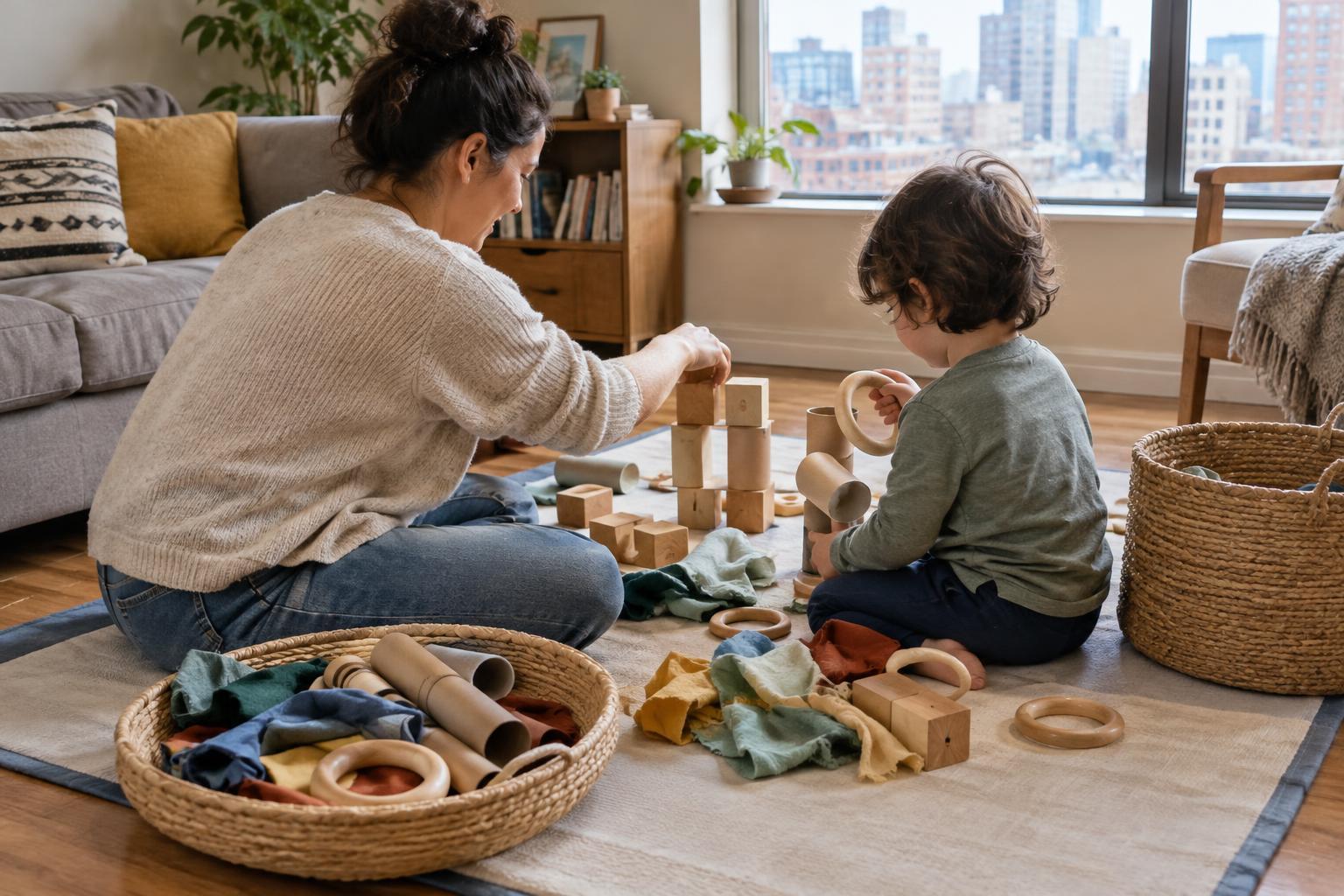
Child-led play can be especially convenient during a busy day because it does not require a prepared activity. A scarf, a few cups, or a view from an apartment window may be enough to spark a game. Your contribution can be steady attention rather than a constant stream of ideas.
When a prompt can help
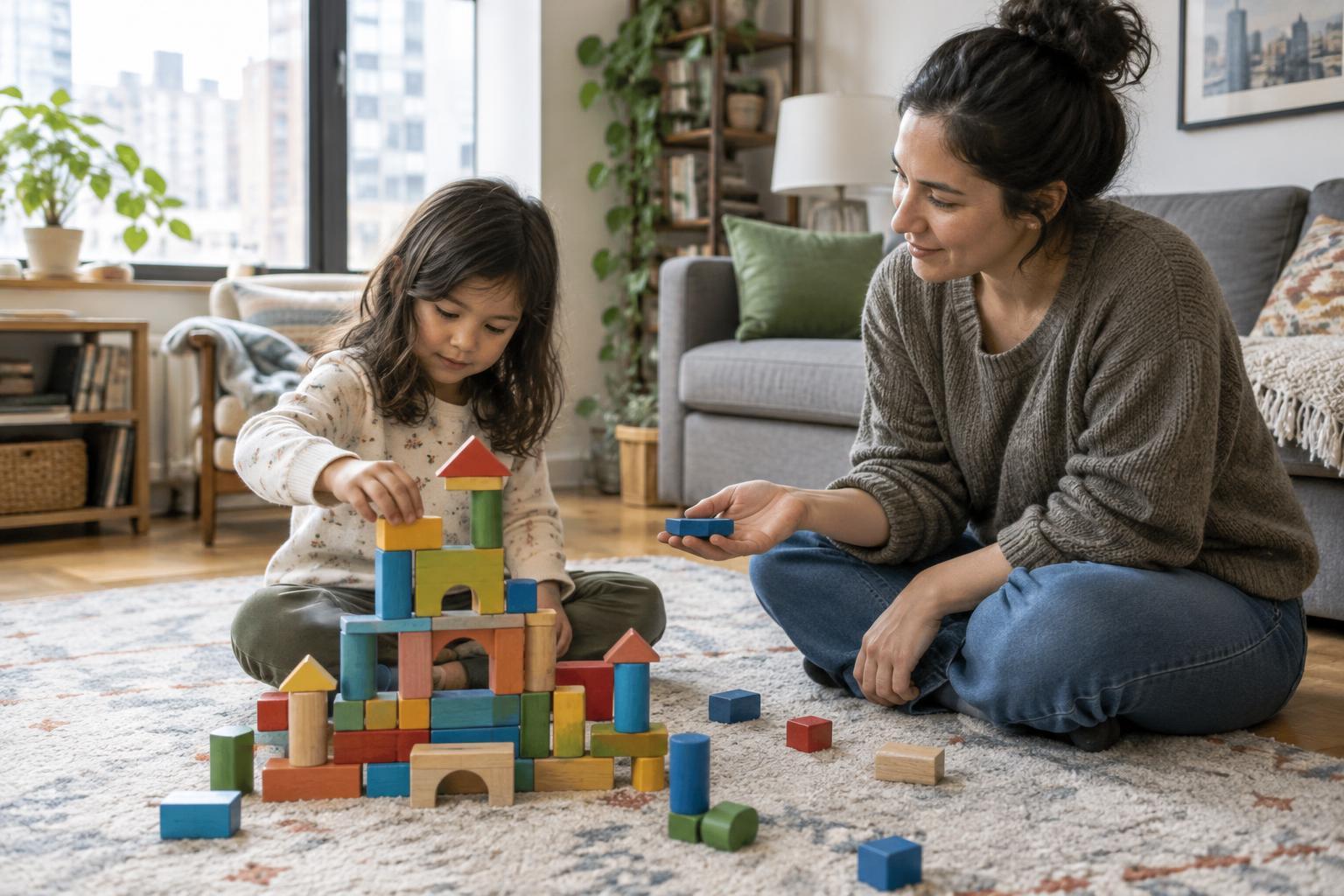
A prompt can be useful when a child wants to play but cannot quite get started, asks you what to do, or keeps returning to an activity that has become frustrating. Instead of planning the whole game, offer one small invitation: “Could this box become a boat?” “What could we use for a ramp?” or “Should we make a place for the stuffed animals to sleep?” The child can accept, change, or decline it.
Adult guidance can also make limited space and time easier to manage. If dinner is approaching, you might suggest a game that fits at the table and can be put away quickly: building a tiny neighborhood from scrap paper, making patterns with bottle caps, or drawing a map of a familiar walk. State the practical limit plainly, then leave room for choice within it: “We have a little time before dinner. Would you rather make a map or build with the cups?”
Prompts work best as openings, not tests. There is no need to insist on a correct-looking tower or a complete story. If your suggestion leads somewhere unexpected, that is still play.
How to shift roles without taking over
Try a simple rhythm: notice, join, offer, and pause. First observe what the child is doing. Then join at their level, perhaps by taking a role they assign or using a similar material. If the play slows down, offer one idea and wait. A pause gives the child a chance to decide whether to use it. Asking several questions in a row can make play feel like a task, even when each question is well meant.
You can also step back after helping. If you set out paper for a pretend restaurant, the child might take over the menu, the seating, and the prices. Letting them revise your suggestion keeps the activity shared rather than managed. If they prefer that you remain involved, you can follow along without needing to improve the game.
Keep the balance flexible
Different days call for different amounts of adult involvement. On a quiet morning, there may be room to see where a child’s long-running pretend story goes. On a crowded afternoon, a short invitation with clear boundaries may be more workable for everyone. Independent play, side-by-side play, and shared play can all have a place in family routines.
When you are unsure what to do, start small. Watch for a moment, name what you notice, and offer help only if it seems welcome. If the child waves you into their game, follow their directions. If they seem stuck, try one prompt. The aim is not to manage every minute of play; it is to make space for the child’s ideas while being available when a little support helps.