Start with the space, not the supplies
In a small home, the best sensory activity is often the one you can set up and put away without moving furniture. Choose a spot where a child can sit comfortably and you can reach the edges of the play area. A kitchen table, a cleared section of floor, or a washable tray on a low surface may be enough. Think about where stray pieces would land and whether the material will be easy to remove from that surface.
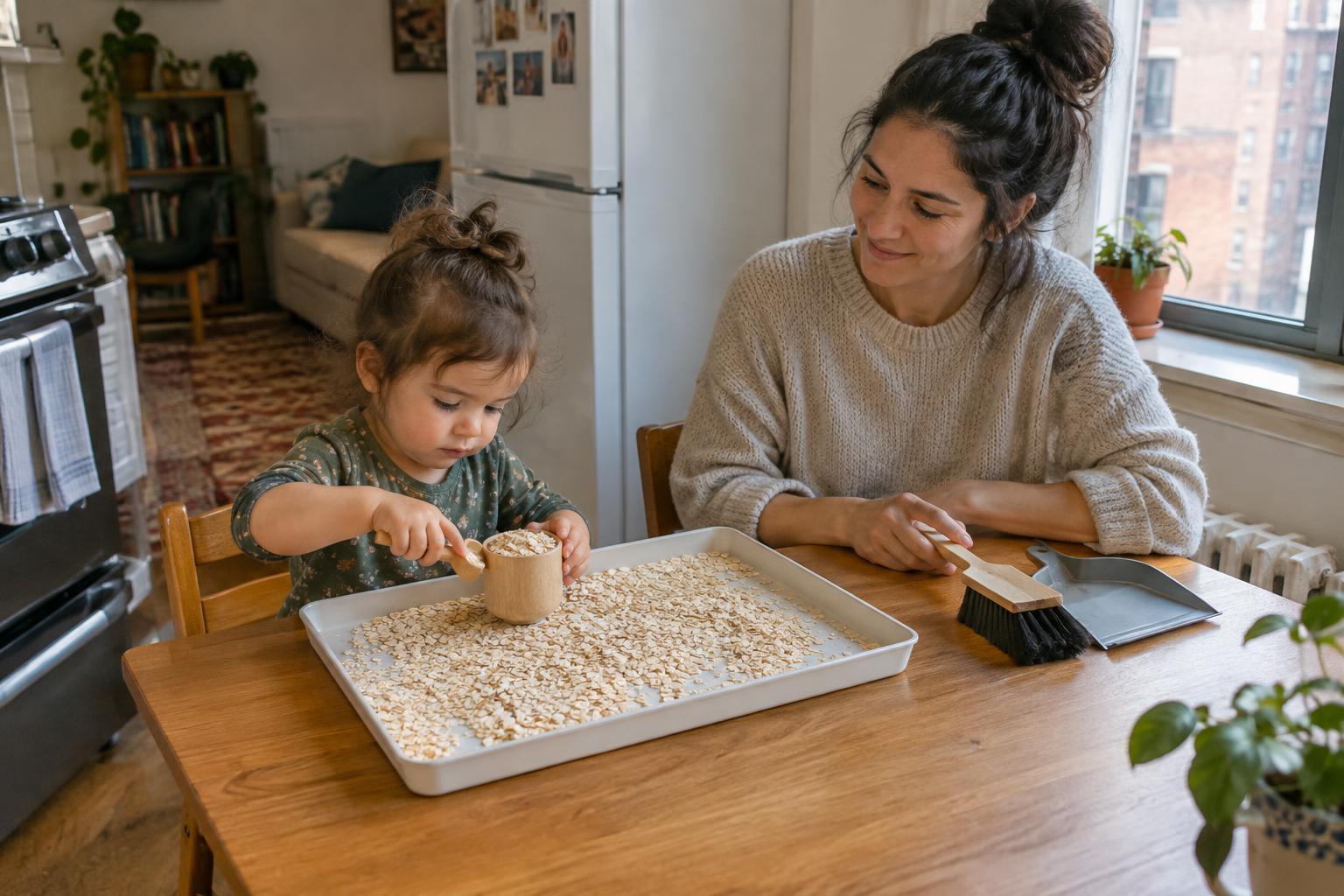
Set a boundary before bringing out any supplies. A rimmed baking sheet, shallow storage bin, or large tray gives the activity a visible edge. For floor play, place the container on a washable mat or old towel. These layers will not catch everything, but they make it clearer where the material belongs and give you a quick way to gather it when play ends.
Pick one material that suits the day
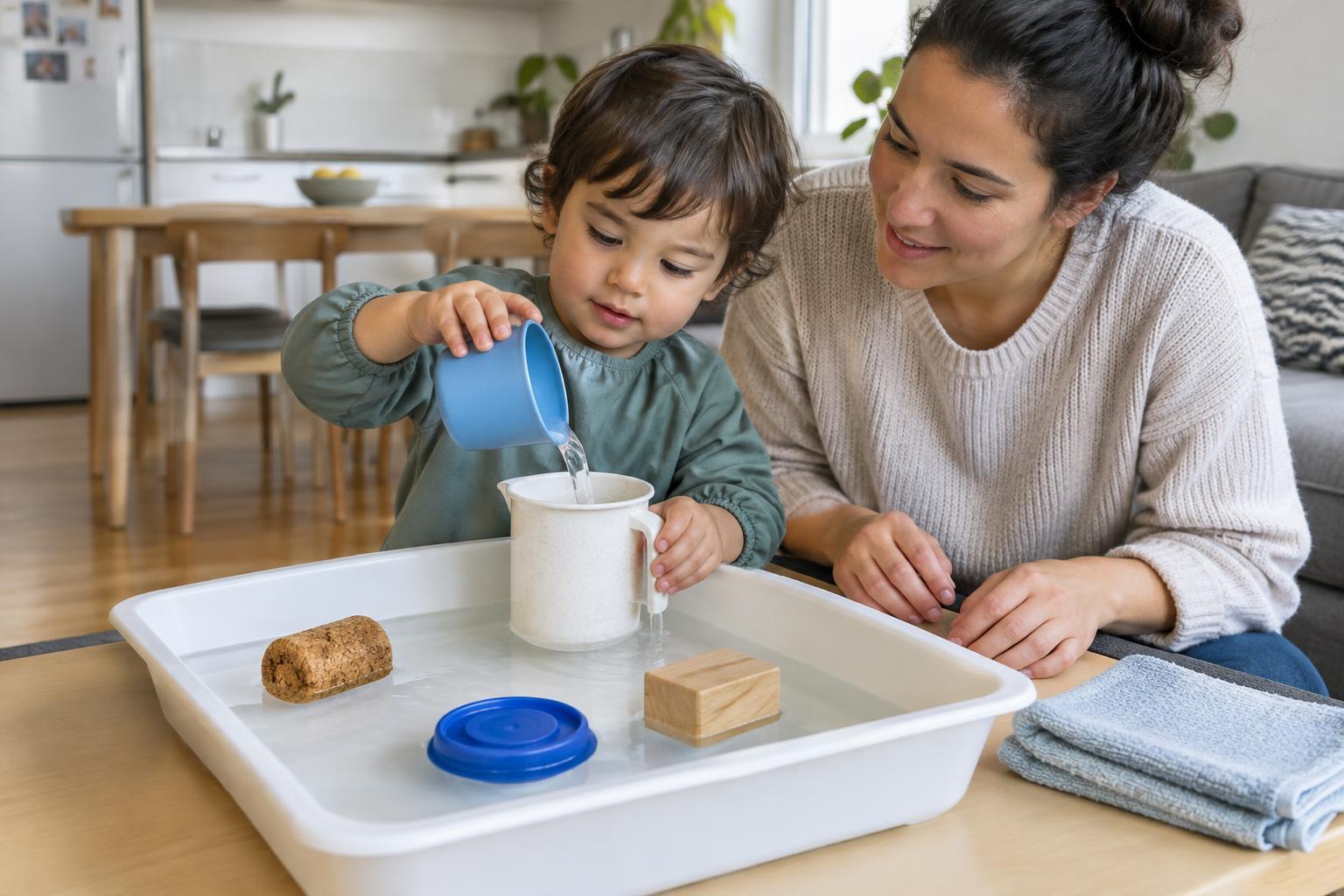
Sensory play can be as simple as exploring how one material feels, moves, or sounds. Water offers pouring and scooping with little preparation, though it calls for towels and close supervision. Dry oats can be scooped and transferred, but they may scatter. Play dough tends to stay in one place and invites pressing, rolling, and shaping. A collection of fabric scraps offers soft textures without pouring or sweeping.
Choose with your available time, the surface, and your child’s habits in mind. If cleanup needs to take two minutes, fabric or play dough may be a better fit than a bin of loose grains. If a child is likely to put materials in their mouth, avoid small pieces and choose an activity you can supervise closely. Check that tools and materials are appropriate for the child’s age and abilities, and put supplies away when you cannot watch the play.
Offer a few tools, then let the play develop
One material and two or three tools provide plenty to investigate. With water, try a cup, a spoon, and an empty container. With play dough, offer a rolling pin or a sturdy lid for making impressions. With fabric, add a basket for filling and emptying. Too many objects can crowd a small tray and create more sorting than playing.
You can begin by showing one action, such as scooping, squeezing, or folding, then pause. A child might repeat it, invent another use for a tool, or simply watch. There is no need to turn the activity into a lesson or ask for a finished product. If conversation feels natural, describe what is happening: “That cup is full,” or “The dough flattened when you pressed it.” This gives children words to connect with what they notice without directing every move.
Make containment part of the game
A boundary works best when it is easy for a child to understand. You might say, “The oats stay in the tray,” and keep a small brush or cloth nearby for spills. If the material repeatedly leaves the play area, reduce the amount rather than adding more reminders. A shallow layer can still be scooped, stirred, or touched, and it is faster to collect afterward.
Clothing and timing matter too. Roll up sleeves before water or dough play, and choose a moment when you have enough time to finish without rushing. If your child dislikes touching a texture, offer a spoon or container instead of insisting on bare hands. Watching, using a tool, or choosing a different material are all reasonable ways to participate.
End with a reset you can repeat
Keep the ending predictable: announce that play is nearly done, invite your child to help return tools to the bin, then remove the material. A small bowl for used tools and a cloth within reach can make the transition smoother. Depending on the material, you might save it in a suitable container for another session or dispose of it and wash the tray.
Notice which part of the setup made the activity easy or difficult. Perhaps the tray needs higher sides, the towel needs to be larger, or one less tool would leave more room to play. A workable sensory-play routine does not have to be elaborate. When the material, space, and cleanup plan fit your home, it becomes easier to offer hands-on exploration again.