Start with what you already have
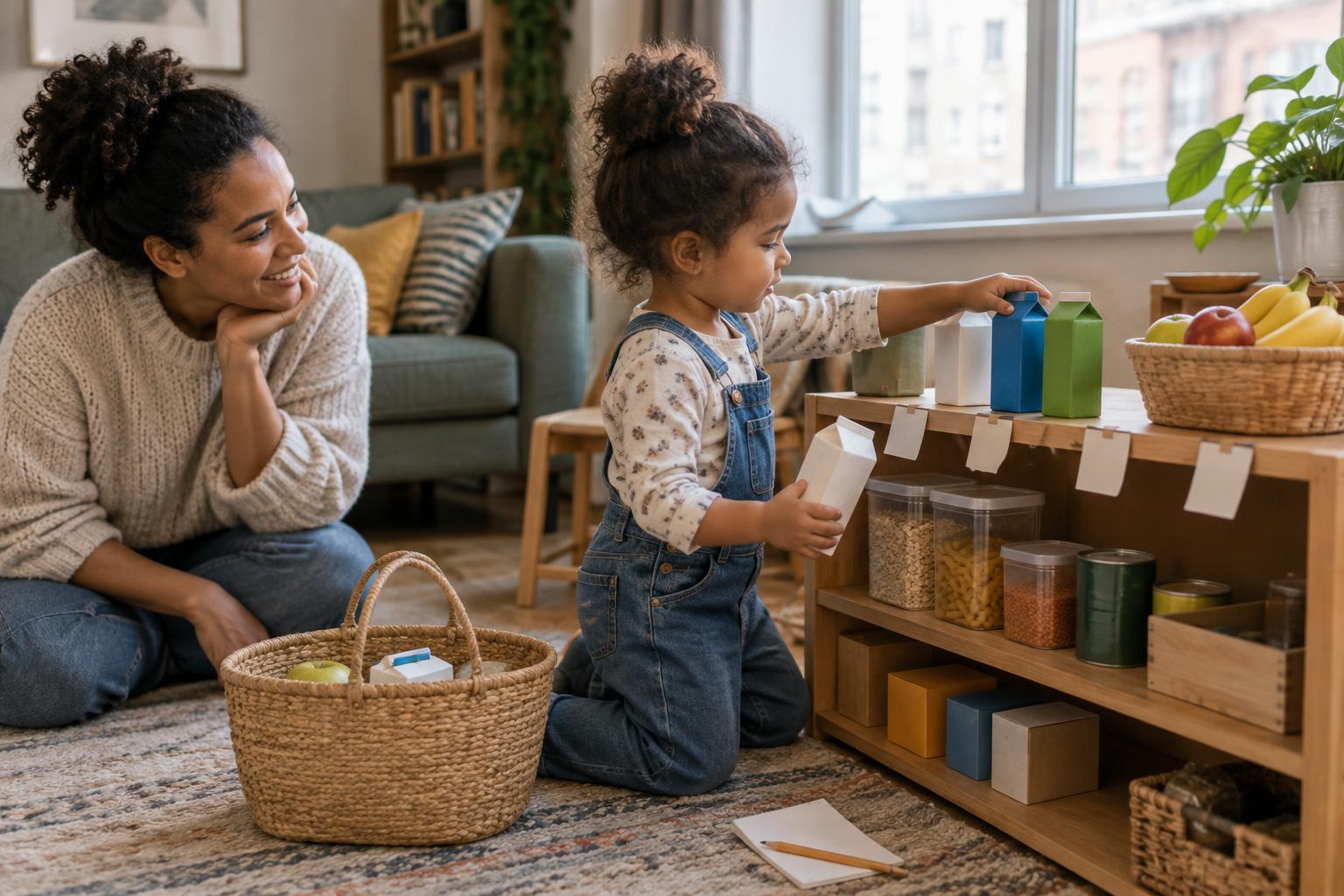
A pretend grocery store does not need a toy register or a large playroom. Clear a small shelf, a corner of the table or a patch of floor. Add clean, empty food boxes, reusable bags, a few play foods or drawings of favorite groceries. A basket or shoebox can hold the items between play sessions, making the store easy to put away in a busy home.
Invite your child to help arrange the shelves. They might group foods by color, type or what they would put together for a meal. There is no need to correct every choice: a shelf labeled “things for a picnic” can be just as useful for play as one labeled “fruit.” If you use household packaging, check it for sharp edges or small detachable pieces before handing it over.
Make lists that fit the player
A shopping list gives the customer a reason to visit the store. For a child who enjoys pictures, draw three simple items together. Another child might dictate a list while you write, copy familiar words from packages or make their own marks on paper. You can be the shopper first and say what you are looking for: “I need something crunchy for lunch. What do you have?”
Keep the list short enough that finding things feels manageable. Once the first round is done, switch roles and let your child write or draw a list for you. A forgotten item can become part of the story rather than a mistake: the shopper can return to the store, ask a question or choose a substitute.
Use prices as playful labels
Fold scraps of paper into price tags and let your child decide what goes on them. They might choose simple whole numbers, dots to count or made-up symbols. For a counting game, give each item a price of one, two or three pretend coins. The goal is not to teach a perfect checkout routine; it is to give players something to notice, compare and talk about.
Try asking open questions as you shop: “Which one has the smaller number?” or “I have three coins. What could I choose?” If counting interrupts the story, let it go and follow the imaginative play instead. A child might announce that bananas cost one moon rock today. You can accept the new currency and ask how many moon rocks you need.
Let conversation drive the game
The store can have a greeter, a shopper, a stocker or a cashier, with one person playing several roles. Familiar phrases such as “Can I help you?” and “Where can I find the rice?” offer an easy starting point. From there, follow your child’s lead. Perhaps the store is closing soon, a delivery has arrived or a customer is planning a birthday dinner.
Role play creates natural chances to practice taking turns and explaining ideas without turning the game into a lesson. A shopper can ask for an item that is sold out, and the storekeeper can suggest another. If a child would rather silently arrange products, that is play too. You can describe what you notice or offer to be a customer when they are ready.
Keep it fresh without adding clutter
When the basic store begins to feel familiar, change one small detail. Make a produce stand with paper fruit, add a delivery bag or create a tiny café counter beside the shelves. A short walk to a neighborhood grocery can also give children details to bring back into the game, such as signs, baskets or the way people ask where to find something.
There is no need to keep every package you collect. Choose a few sturdy pieces, flatten recyclable boxes when play is over and save the lists and tags in an envelope. The best version of the store is one your family can set up easily, adapt to the space you have and enjoy together for as long as the story holds your interest.