Start with the space you already have
A kitchen table, coffee table, or cleared patch of floor can be enough for a craft afternoon. Choose the spot that is easiest to reach and clean, rather than the one that looks most like a craft station. Before anyone starts, move mail, dishes, and other everyday items to their usual homes. You do not need to reorganize the whole apartment; the goal is to make one workable surface.
Think about how people will move around the space. Keep the path to the bathroom, kitchen, and front door open, and give each person a place to sit or kneel comfortably. If your table is also where you eat, decide when the craft session will end so there is time to reset it before the next meal. A clear stopping point makes a small space feel easier to share.
Put together a small, flexible supply kit
You can make plenty of projects with paper, washable markers, crayons, glue sticks, child-friendly scissors, and a few reusable extras such as stickers or scraps of ribbon. Store them in one basket, shoebox, or lidded container. A compact kit is easier to bring out and put away than a collection spread across several closets.
Before the afternoon, check which supplies are suitable for the children taking part and set aside anything that needs close supervision. Offer a smaller selection at the table instead of emptying the entire kit. This leaves room to work and makes choices less overwhelming. Keep a bag or bowl nearby for paper scraps, and set out a damp cloth for sticky fingers and small spills. If you plan to reuse packaging, make sure it is clean and has no sharp edges.
Choose a project with room for different ideas
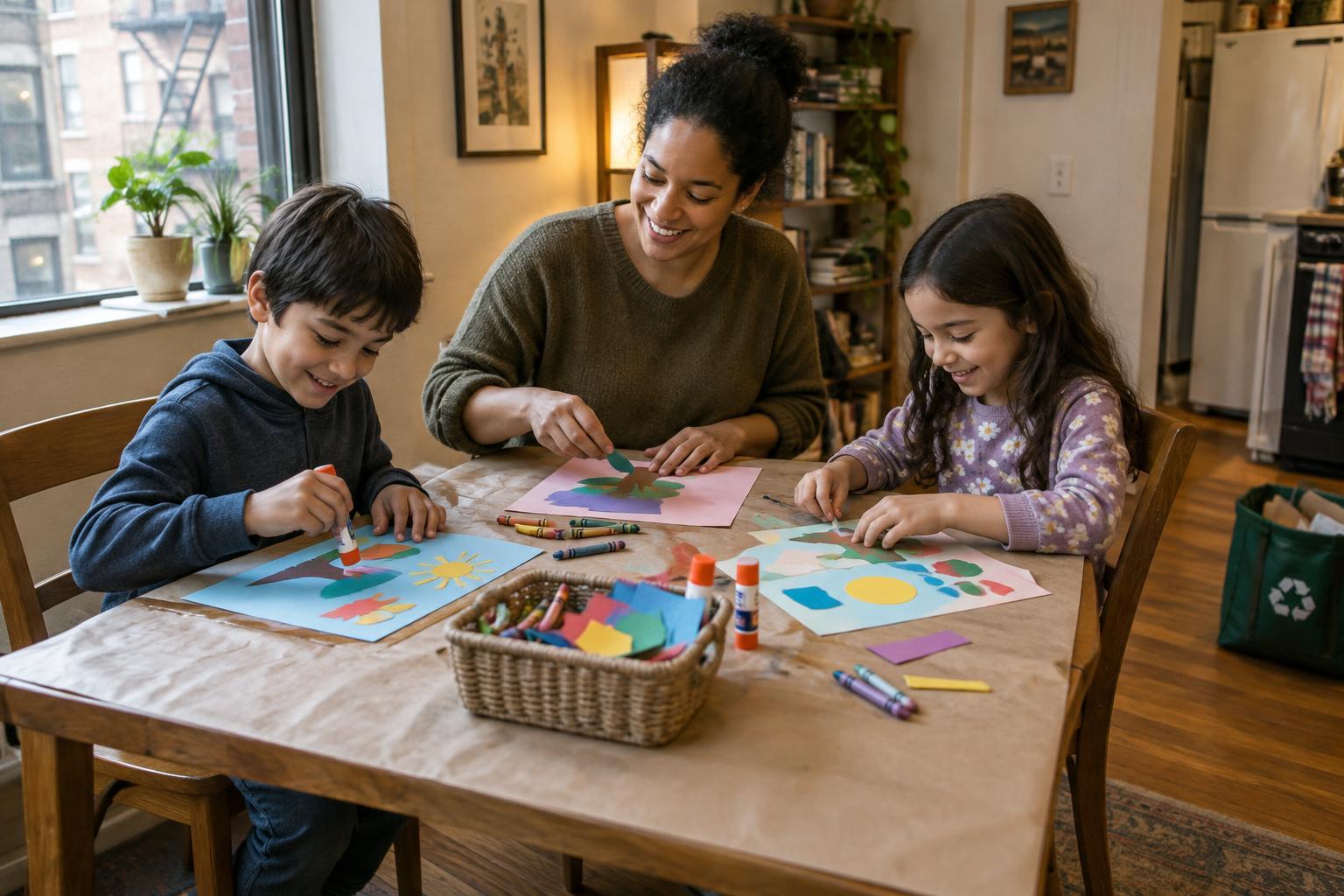
An open-ended prompt often works better than a craft with one required result. Try making a paper neighborhood, designing cards for people you know, or building imaginary creatures from cut-out shapes. Everyone can work from the same basic materials while making something different. Younger participants might arrange large shapes or add color, while others write signs, cut details, or invent stories about what they have made.
Keep the first project modest enough to finish or pause within your available time. A large construction with drying time may be fun, but it can become awkward when the table has to turn back into a dining area. For a low-fuss option, give each person one sheet of paper as a base and invite them to draw, layer, and glue within its edges. Finished sheets can be displayed, mailed, or slipped into a folder without needing much storage.
Make the afternoon a shared activity
Craft time can be more enjoyable when adults participate instead of only managing supplies. You might make your own card or paper creature, ask what a child is creating, or offer to hold a piece while glue is applied. There is no need to correct every unexpected color or crooked edge. If someone wants help, ask which part they would like help with before changing their work.
A simple rhythm can keep the session moving: set up together, make things, take a short look at everyone’s creations, then clean up together. Let participants choose small jobs, such as collecting markers or stacking unused paper. Anyone who loses interest can switch to a nearby quiet activity while the others finish. The aim is time spent making things together, not a perfect set of matching crafts.
Plan for cleanup before the first mark
In a small apartment, cleanup is part of the activity rather than an afterthought. Protect the work surface with a reusable mat or a few sheets of scrap paper if needed, and keep drinks and snacks off the craft surface. Put caps back on markers as you go. Near the end, give a brief heads-up so no one is surprised when it is time to stop.
Sort finished work before storing supplies. Each person can choose one piece to display and decide whether the rest should be saved, shared, or recycled. If you want to keep more, use a single folder or envelope that fits on a shelf. Return the supply kit to its usual spot, wipe the surface, and restore the chairs. A familiar closing routine lets the apartment become your everyday space again while leaving the good part of the afternoon intact.