Start with what needs to happen
A daily routine has two parts: what needs to happen and how your family gets there. Children may not get to decide whether everyone leaves for school on time or whether teeth are brushed before bed. They can often help decide which task comes first, where supplies belong, or what makes a transition easier. Keeping those parts separate lets a child contribute without asking them to manage the whole day.
Pick one routine that regularly feels rushed, such as getting out the door or settling in after an outing. Name the essentials in plain language: “We need to eat, get dressed, and pack our bags before we leave.” Then ask what your child would like to help plan. A short, specific conversation is easier to use than a broad question like “How should mornings work?”
Offer choices that are genuinely available
A choice works best when either answer is acceptable to the adult. “Do you want to put on your shoes before or after your coat?” gives a child room to act while keeping the departure on track. “Do you want to get ready?” sounds like a choice, but it is frustrating if “no” is not possible. It is fine to be direct about a requirement and offer flexibility somewhere else.
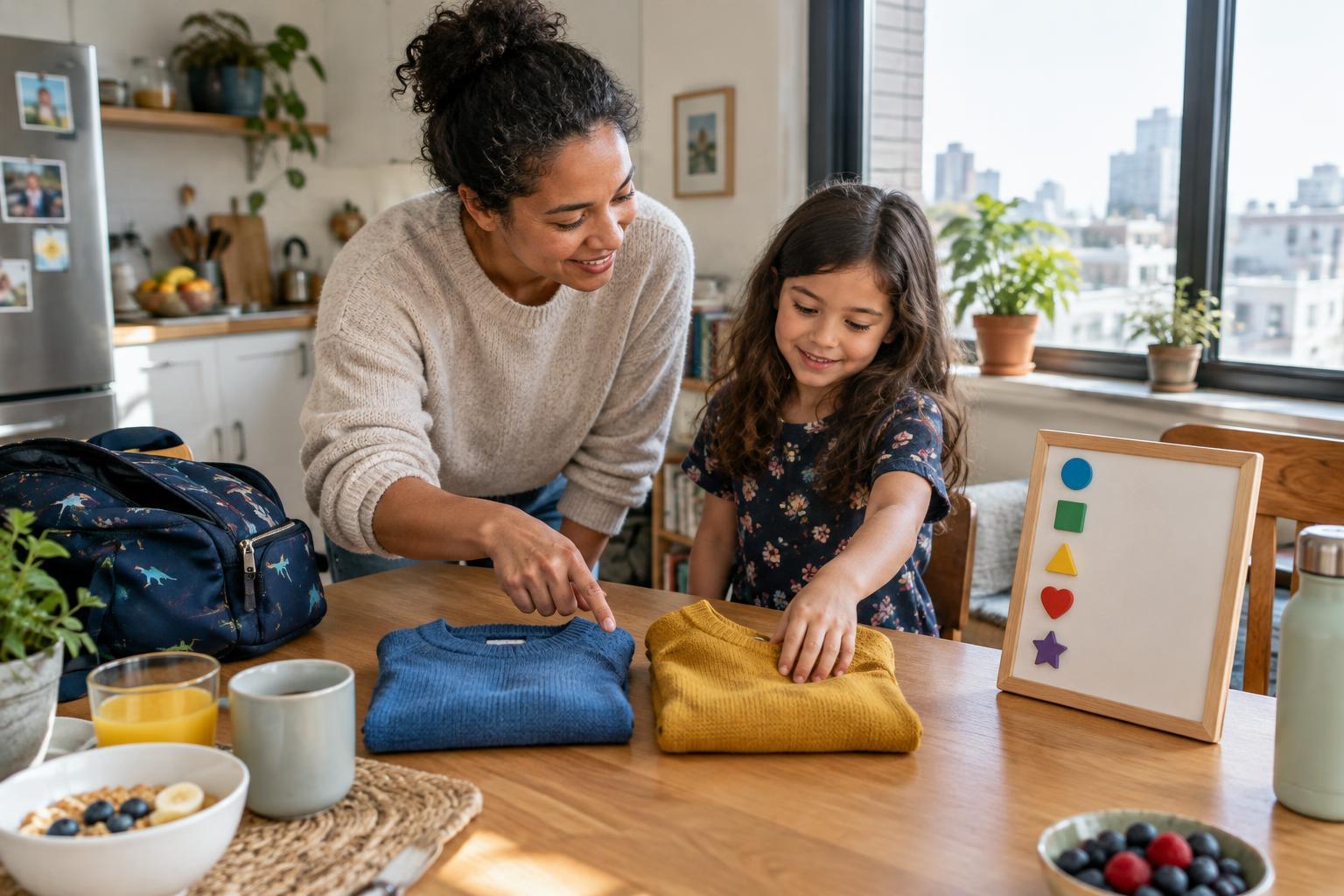
Keep the number of options manageable. A younger child may find two concrete choices easier to handle than an open-ended menu. An older child might help draft a short checklist or suggest an order for afternoon tasks. You can also let children choose a small detail that makes a routine feel like theirs: the song played while tidying up, the book read after pajamas, or the spot where tomorrow’s bag waits.
Make the plan visible and easy to repeat
Once you have agreed on a plan, put it where the routine happens. A few words on a note by the door, drawings near the bathroom sink, or a simple list on the fridge can reduce repeated reminders. The plan does not need to be decorative or permanent. Its job is to help everyone remember the next step when the morning is busy or the evening feels long.
Invite your child to help set up the space as well as the sequence. They might choose a reachable place for shoes, set out a basket for items that travel each day, or decide where to put books when reading time ends. Adults still decide whether the arrangement is practical and safe, but children are more likely to understand a routine they helped build. Try the plan for a few days before changing it; one difficult morning does not necessarily mean it needs replacing.
Leave room for city-life changes
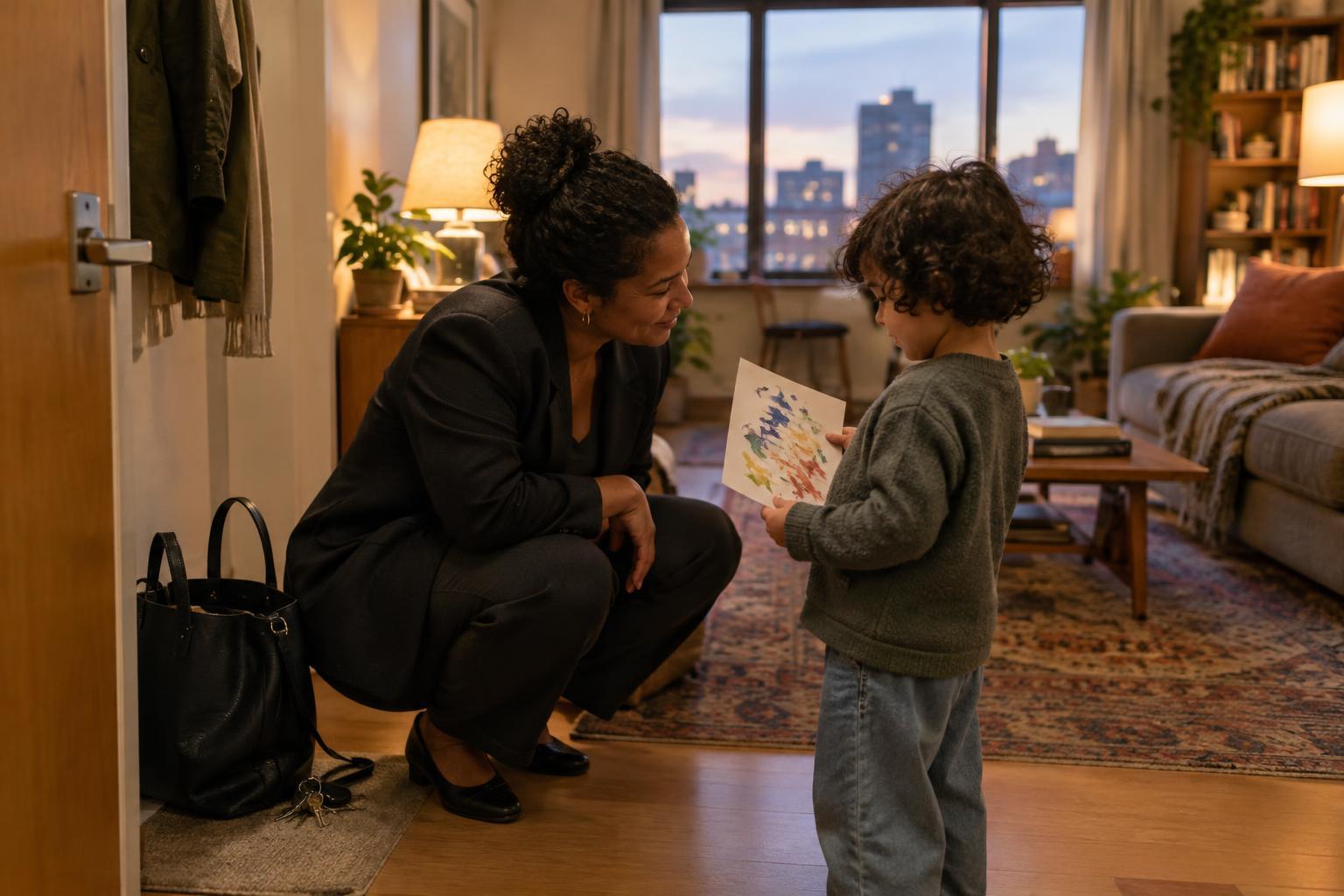
Family schedules do not always follow the same route. A late train, wet weather, a long errand, or a crowded afternoon can shrink the time available for a familiar routine. It helps to agree on a shorter version in advance. You might keep the same essential bedtime steps but choose one book instead of two, or move a household task to the next day while keeping bags ready for the morning.
When plans change, explain which part is fixed and which part can move: “We still need to leave now. You can choose the music when we get home.” This respects a child’s preferences without promising control over traffic, timing, or other people. If a child is upset about a changed plan, you can acknowledge the disappointment and still follow through. Collaboration includes listening; it does not require reopening every decision.
Review together without making it a daily debate
Set aside a calm moment now and then to ask what is working. Keep the questions concrete: “Is the shoe spot helping?” or “Which part of bedtime feels hardest to remember?” A child may notice a small obstacle adults have overlooked, such as a bag hook that is hard to reach. You can thank them for the idea even when you cannot use it, and explain briefly what needs to stay the same.
The aim is not a perfectly smooth day or a vote on every task. It is a routine that gives children some ownership while leaving adults responsible for the boundaries. Start with one meaningful choice, repeat the plan long enough to see how it works, and adjust it together when family needs change.