Choose a spot you already pass
A family calendar station works best when it sits along a route your household already uses. Look for a patch of wall near the entry, a side of the refrigerator or a narrow area beside the kitchen counter. You do not need a dedicated desk. The goal is to make plans easy to see when someone is getting ready to leave or putting things away.
Before adding anything, notice how the spot is used now. A refrigerator door may be visible but crowded with artwork; an entryway may be convenient but too narrow for a hanging pocket. Choose a location that people can reach without blocking a doorway or taking over a surface needed for meals, homework or keys.
Give the station just three jobs
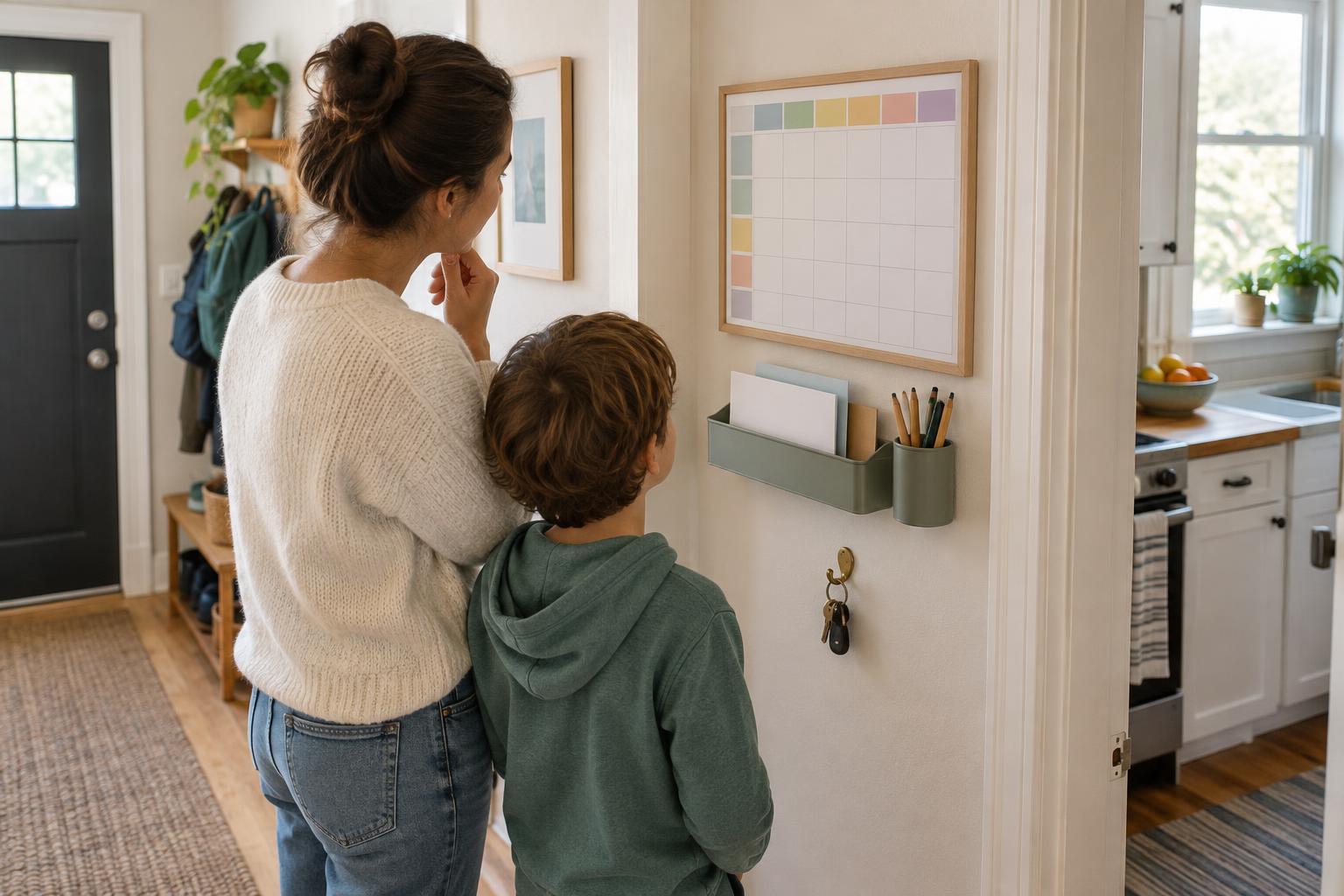
In a small space, it helps to limit the station to a calendar, a place for papers that need attention and a place for a few items needed on the way out. A magnetic calendar, wall planner or simple sheet of paper can handle the schedule. A slim folder or wall pocket can hold permission slips and other forms. A small hook or tray can hold an item that must leave the house soon.
Avoid turning the station into storage for every school notice and piece of mail. Give older papers another home, whether that is a file folder, a drawer or a digital copy you can find later. If you rent or prefer not to make holes, consider a surface that already accepts magnets or use removable mounting products according to their instructions.
Make the calendar easy to read at a glance
Pick a calendar format based on the questions your family asks most often. A weekly view is useful for seeing who needs to be where each day. A monthly view gives more room to notice upcoming appointments, school closures and celebrations. If your household already uses a shared digital calendar, the station can be a brief paper snapshot of the current week rather than a second detailed record.
Write only the information someone needs to act: the event, the time and any preparation that is easy to forget. “Library books in bag” may be more helpful than a long description of library day. Consistent labels or colors can help distinguish family members, but they are optional. A readable calendar that gets updated is more useful than an elaborate system that takes too much time to maintain.
Create a clear path for incoming papers
Paper often arrives when everyone is focused on something else. Set up one clearly marked “to review” pocket for notices, forms and invitations. Keep a pen nearby if the station has room, but leave space to write and sort. When a paper calls for a calendar entry, add the date first. Then decide whether the paper needs to be returned, saved or recycled.
If several people bring papers home, agree on where they go and show everyone the spot. Younger children may need a reminder to empty their bags there; older children can help add their own activities to the calendar. Keep the process simple enough that a tired person can follow it at the end of the day.
Keep it useful with a short weekly reset
Choose a regular moment to look at the next seven days together or on your own. Check for schedule changes, add anything still sitting in the paper pocket and note what needs to be packed or prepared. A few minutes of review can also reveal crowded days when a simpler dinner or an earlier bag-packing session would make the routine easier.
During the reset, clear expired notes and return stray objects to their homes. If the station keeps overflowing, remove a category rather than buying a bigger organizer right away. A small calendar station succeeds by making the next step visible, not by holding every detail of family life.