Start with the path your laundry already takes
Before buying bins, notice where clothes and linens collect. Is there a hamper in each bedroom, a pile by the bathroom, or a basket that travels between rooms? A sorting station works best when it fits that existing path rather than requiring everyone to make a special trip across the home.
Choose a spot near the washer if you have one at home. If you use a shared laundry room or laundromat, choose a place near the door or wherever you pack laundry for the trip. A closet corner, a strip of hallway, or the space beside a dresser may be enough. Leave room to open doors and walk past comfortably; a station that blocks daily traffic is unlikely to stay in use.
Keep the sorting categories simple
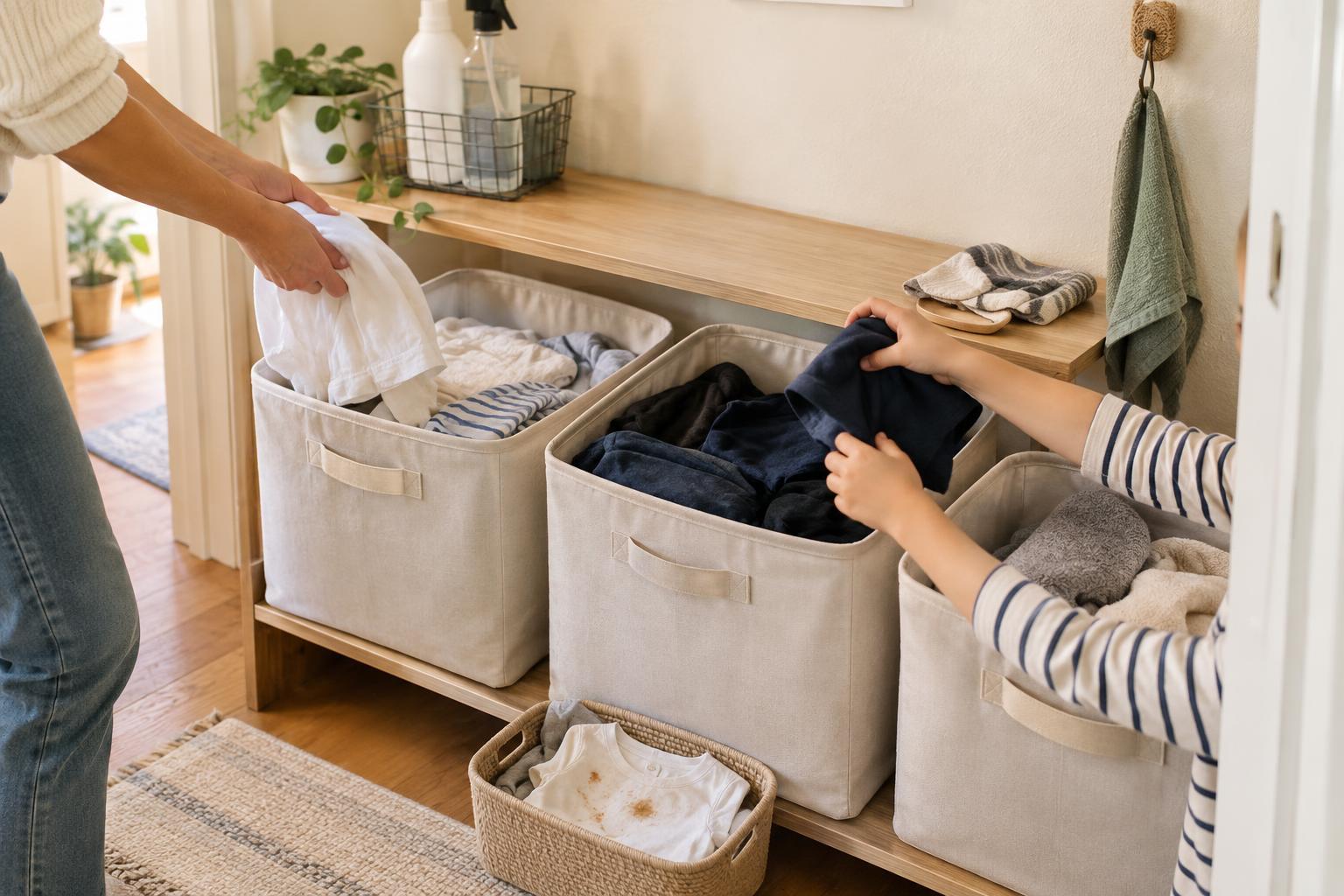
Begin with two or three containers, not a bin for every possible wash cycle. One practical setup is everyday clothes, towels and bedding, and items needing extra attention. If your household routinely separates light and dark loads, make those the main categories instead. Match the labels to how you actually wash, not to a system you hope to adopt someday.
Use sturdy hampers, bags, or baskets that are easy to carry when full. In a tight space, narrow bins or hanging laundry bags can keep the floor clear. A label with both words and a simple picture can help family members find the right container quickly. Check that younger children can reach the bins you expect them to use, while keeping anything hazardous well out of their reach.
Do not worry about sorting every sock perfectly at the moment it comes off. The goal is to reduce the large sorting job before a wash, not to create a new daily chore. If one category fills much faster than the others, adjust the setup rather than letting an overflowing bin become part of the furniture.
Give problem items a separate place
A small, clearly marked spot for clothes that need attention can prevent surprises when it is time to wash. This might hold a shirt with a stain, a garment that needs a care-label check, or something with a pocket that must be emptied. A shallow tray or washable bag is often sufficient. Check this spot before starting a load so its contents do not disappear into the regular wash by accident.
Keep wet items from sitting in a closed hamper, where they can develop an unpleasant smell. Hang them to dry in an appropriate place before adding them to laundry. Store detergent, pods, stain-removal products, and other laundry supplies securely away from children and pets; they do not need to live at the sorting station. The station is for gathering clothes, not for leaving cleaning products within easy reach.
Make it easy for everyone to participate
Give each person one manageable task. A young child might put clothes in a designated hamper with help. An older child might check pockets or pair socks after a load is dry. Adults can handle care labels, products, and decisions about what needs a separate wash. Clear tasks make the station a shared household tool rather than one person’s project to maintain.
Place a small reminder near the bins if it helps: empty pockets, separate towels, and put wet clothes aside to dry. Keep it short enough to read at a glance. If family members repeatedly choose the wrong bin, consider whether the labels are confusing or the containers are too close together. Changing the system is often more useful than repeating the reminder.
Build a routine around full bins
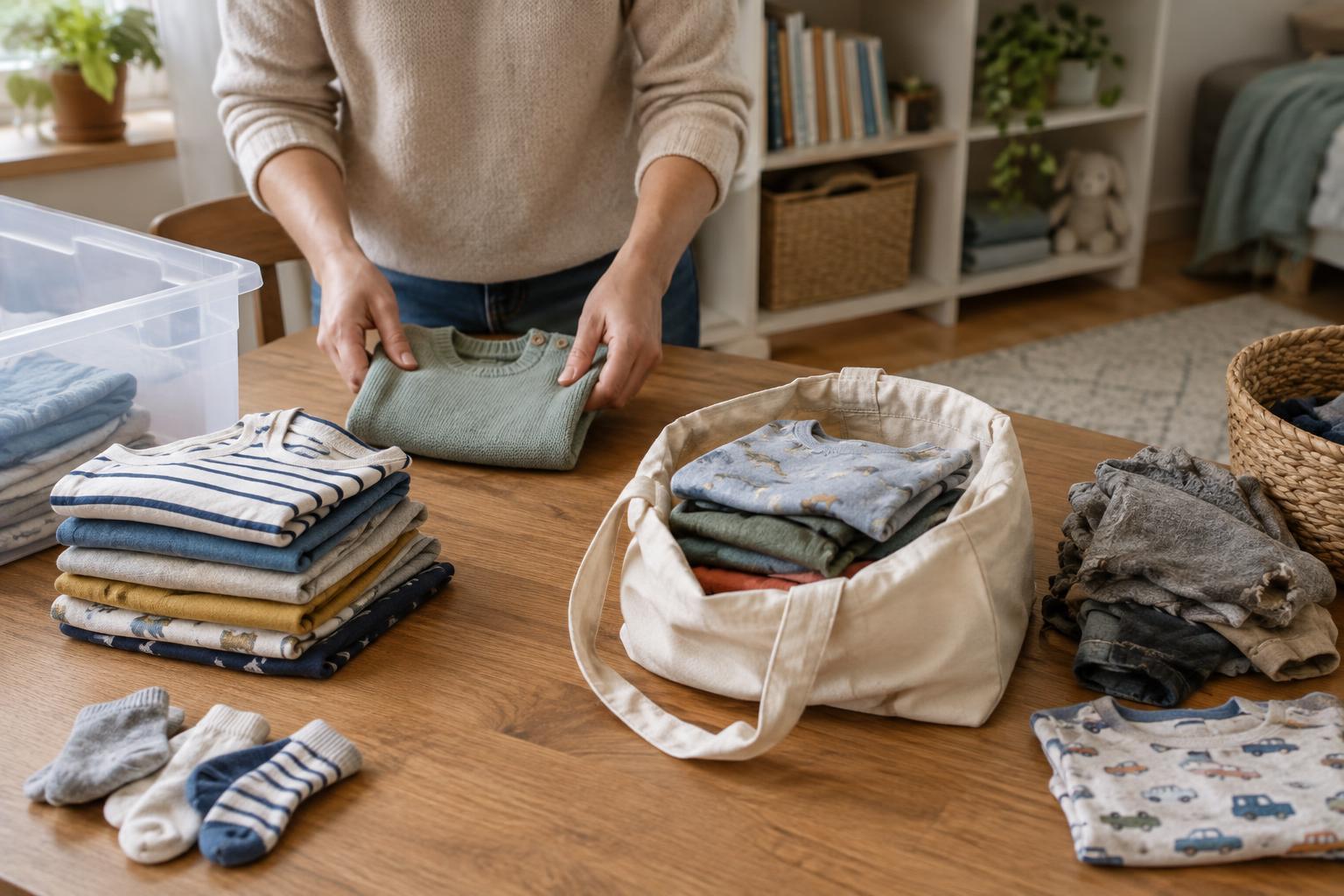
A sorting station is most helpful when it connects to a predictable next step. Decide what signals that a load should be done: a bin reaching a marked level, a regular laundry day, or enough clothes to justify a trip to the laundromat. If laundry happens outside the home, keep a transport bag nearby and check that you have what you need before leaving.
After washing, return the empty hamper or bag to its assigned place. That small reset keeps clean clothes from mixing with the next pile of dirty laundry. Every few weeks, notice what is working. You may need fewer categories, a larger towel bin, or a station closer to where clothes actually land. The best setup is the one your household can use on an ordinary busy day.