Start with the whole trip, not just the ride
When you are traveling with children, a route that looks fast on a map can feel slow in practice. The walk to a station, a flight of stairs, a long wait or a transfer can matter as much as the time spent on the vehicle. Before choosing between subway and bus, picture the trip from your front door to the place you are going. Where will everyone wait? How far will you walk after getting off?
Consider the return trip, too. An easy outbound journey may feel different when children are tired or you are carrying lunch containers, jackets or library books. If you have two workable routes, you do not have to use the same one both ways. Choosing the simpler ride home can be worth a slightly longer journey.
When the subway may feel easier
The subway can be a good choice when a station is close to both ends of the trip and you can stay on one train for most of the journey. Fewer street crossings and a direct ride may make it easier to keep the group together. For children who enjoy watching stops go by, a simple station count can also give them a sense of how much of the trip remains.
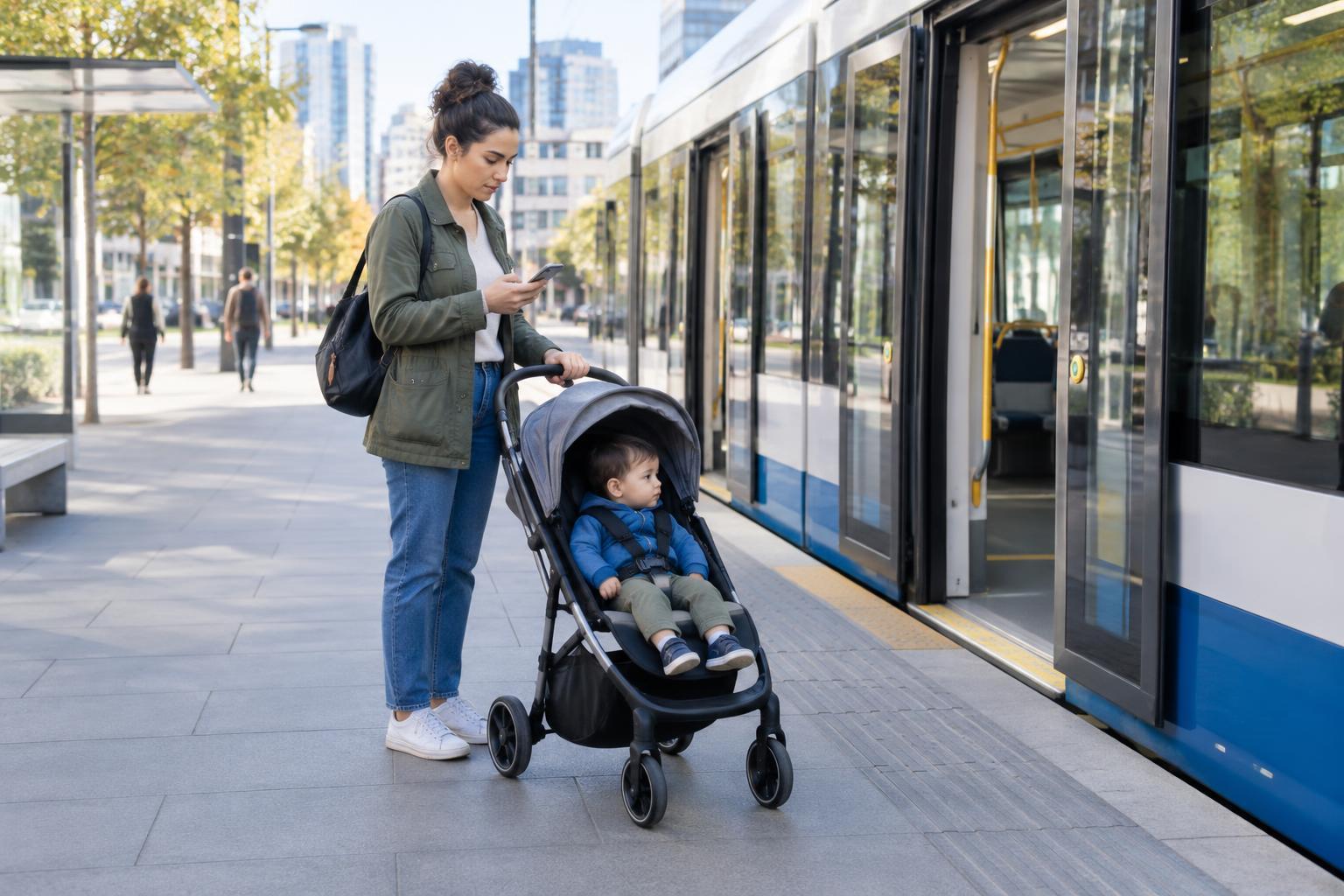
Look beyond the train portion before deciding. Think about stairs, platforms, station exits and any transfers you would need to make. If you are bringing a stroller or traveling with someone who needs a step-free path, check the accessibility details for the stations you plan to use rather than assuming every entrance will work. Even without a stroller, an unfamiliar transfer can be harder than a longer ride on one train.
When a bus may be the gentler option
A bus may be easier when its stop is close to your door or destination, especially if the subway alternative adds a long walk. Staying at street level can make a route feel more straightforward, and looking out the window can help children follow along. A direct bus may also spare you a station transfer, even if the ride itself takes more time.
Buses have their own trade-offs. Traffic can affect how long the ride feels, and a busy vehicle can be difficult to board with bags or a stroller. Think about how many stops you will ride and where you can wait comfortably. If the bus requires a long exposed wait in unpleasant weather, a subway route with more sheltered portions may be the easier choice that day.
Match the route to your group
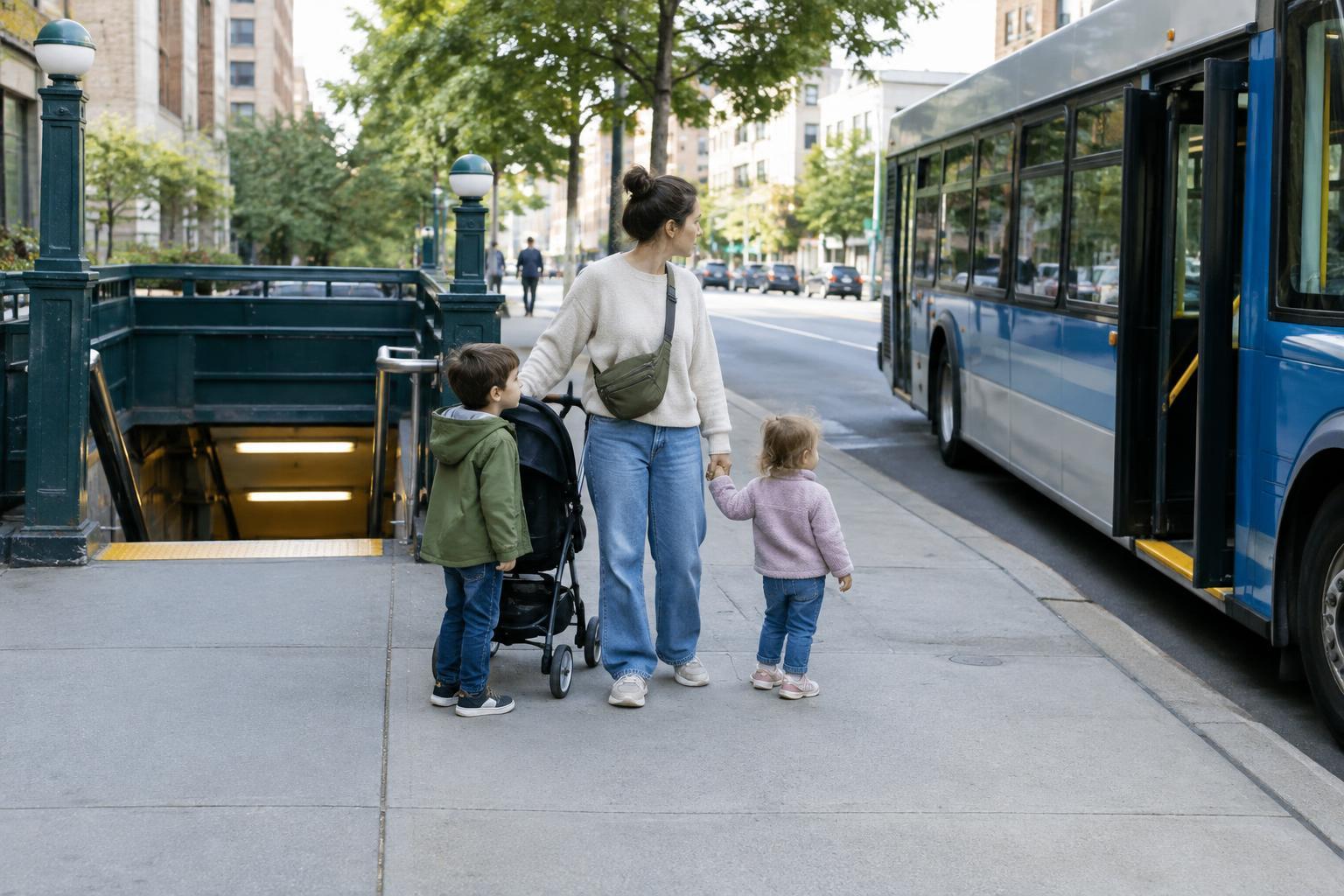
Ask what will be hardest for your particular outing. With a walking child, the distance between stops and your destination may matter most. With a stroller, entrances, boarding and space to maneuver deserve more attention. If you are traveling with more than one child, count how many moments require everyone to move quickly together, such as crossing a street, changing platforms or getting off at a crowded stop.
Build in a little flexibility rather than planning around a perfect trip. A small snack, a familiar activity or a simple job such as watching for a named stop can make waiting easier. Keep anything you will need during the ride within reach, and avoid packing so much that carrying your bags becomes the hardest part of the outing.
Use a simple tie-breaker
When two routes seem close, compare them using four questions: Which has fewer transfers? Which has the shorter or simpler walk? Which offers a more manageable place to wait? Which will be easier on the way home? You do not need to calculate every minute. The route with fewer points of friction is often the one that feels better with kids.
Check your route shortly before leaving, since service conditions and accessibility can change. Then give yourself permission to adjust. If a bus stop looks crowded or a station entrance does not suit your group, taking the other option is not a planning failure. A successful city outing is not necessarily the fastest one; it is a trip your family can manage with enough energy left to enjoy the destination.