Start with the path through your home
In a small home, the best storage spot is not always the one that looks tidiest in a photo. It is the one that lets everyone come in, put gear away and move through the space without stepping around wheels. Before buying a rack or basket, notice where the stroller and scooters land after a typical outing. Measure the available floor and wall space, then check that the front door, closets and any path out of the home can open and remain clear.
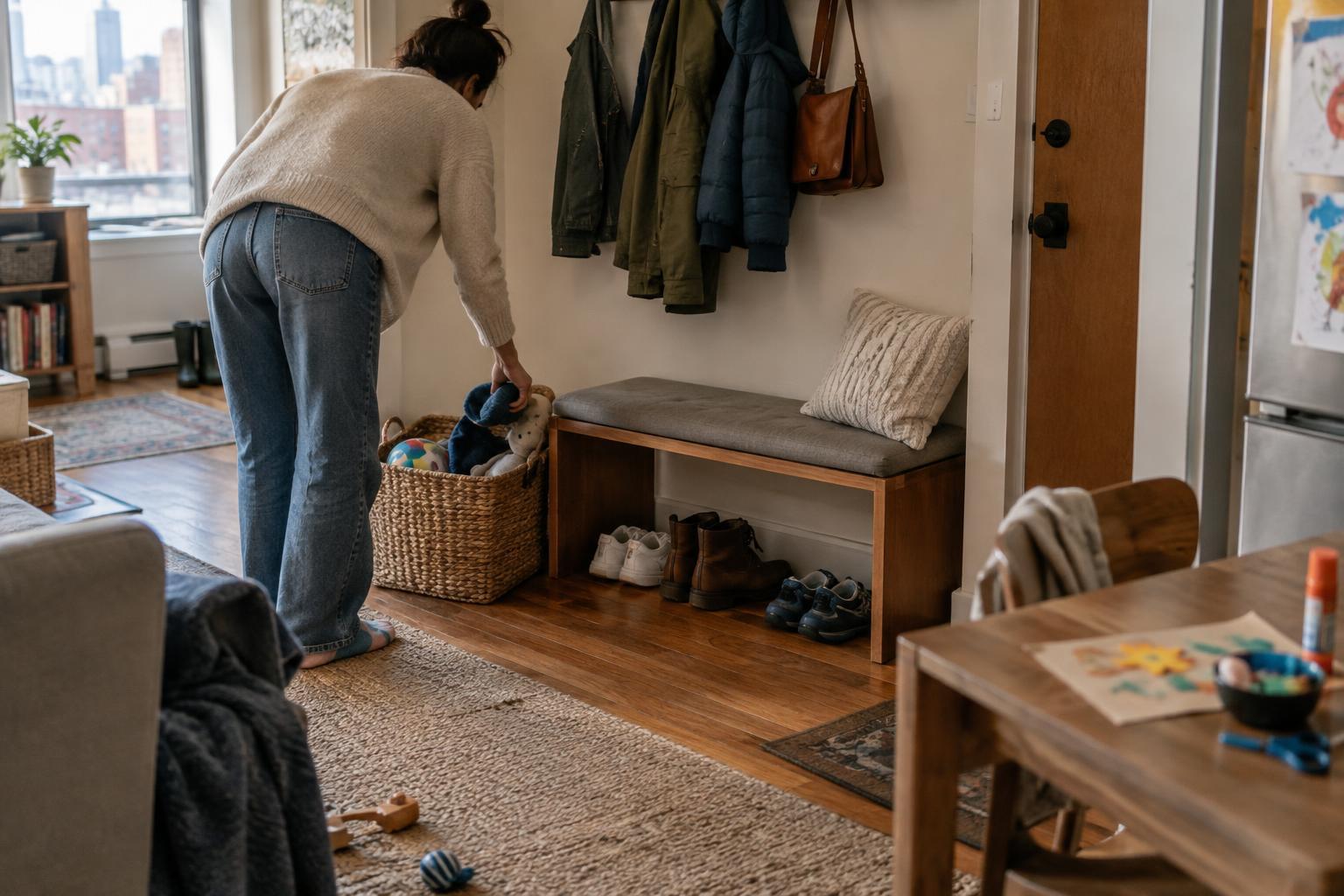
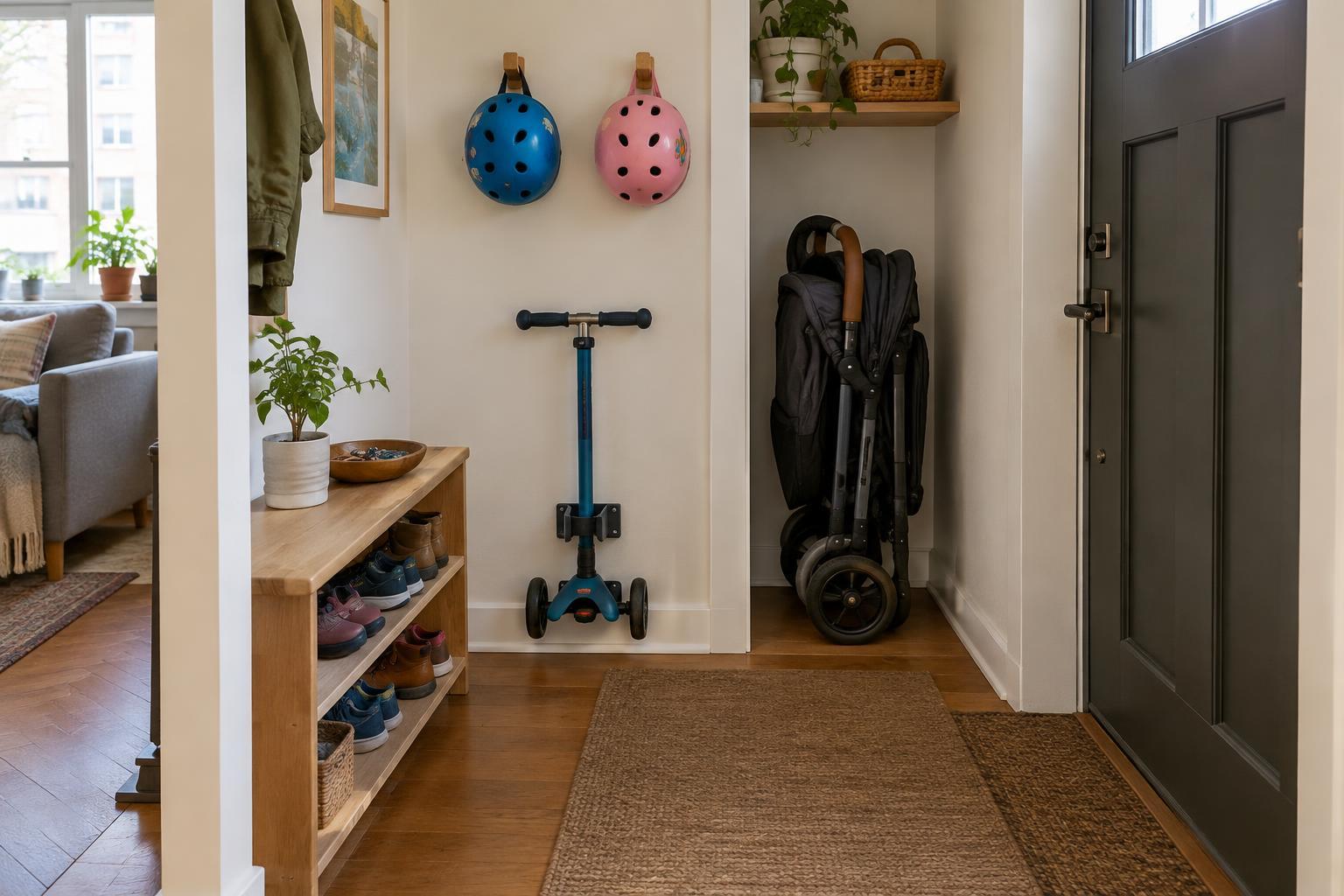
Aim for one gear zone near the entrance if space allows. It might be a corner beside a coat closet, the end of a hallway or a section of wall above a narrow mat. If the entryway is too tight, choose a nearby spot that is easy to reach. A storage plan that requires carrying a muddy scooter across the whole home may be hard to keep up.
Give the stroller a predictable parking place
A stroller usually takes the most space, so position it first. Try parking it in the spot you have chosen both open and folded, if it folds. Some strollers are compact when closed but awkward to fold while holding bags or supervising a child. If you use yours daily, leaving it open in a clear corner may be more practical than folding it after every trip. If it stands when folded, check that it stays steady where you plan to keep it.
A washable mat beneath the wheels can catch dirt and make the parking spot feel intentional. Keep loose bags off the handles when the stroller is parked, since added weight can make some models less stable. Follow the stroller maker’s instructions for folding and storage, and keep it away from doors and routes everyone needs to use. If you have more than one stroller, consider whether the less-used one could live in a closet instead of the daily gear zone.
Store scooters where they will not fall or roll
Scooters tend to slide into whatever narrow gap is available, then fall out when someone reaches for a coat. Give them a dedicated position. A low, open bin can hold a small child’s scooter alongside outdoor toys, provided the bin stays easy to lift and does not spill into the walkway. For larger scooters, a floor stand or wall-mounted holder may free up space. Check dimensions and weight limits before buying hardware, and use mounting methods suited to your wall and housing rules.
If wall storage is not an option, look for a floor-level gap beside a sturdy cabinet or behind an entryway bench. Keep the scooter’s wheels contained so it cannot roll into the path. Children who are old enough to put away their own gear may find a simple visual cue helpful: a mat edge, a marked spot or a bin that is clearly theirs. The fewer steps involved, the more likely the scooter is to make it back to its place.
Keep helmets visible, dry and easy to match
Helmets are small enough to disappear under coats but bulky enough to clutter a shelf. A row of hooks, open cubbies or a basket near the scooter spot can make them easy to find. Leave enough room that helmets are not crushed beneath heavier gear, and let damp straps and padding dry before tucking them into a closed container. Avoid using a helmet as a catchall for keys, snacks or other items that can make it harder to grab on the way out.
If several people use helmets, assign each one a spot. A name label on a cubby or hook can settle the question of whose helmet is whose without adding another task to departure time. When putting gear away, take a moment to notice any visible damage and follow the helmet maker’s guidance on care and replacement. Storage cannot prevent every forgotten item, but keeping helmets beside the scooters makes the connection easy to see.
Make the system work on busy days
A gear zone needs a little breathing room. Reserve a small tray or basket for the things that travel with the equipment, such as a stroller rain cover or scooter lights. Keep unrelated mail, shoes and shopping bags from taking over that space. If the entryway gets crowded, move seasonal or rarely used items elsewhere rather than expanding the everyday pile.
Finally, test the setup during a real outing. Can you put everything away with one hand free? Can a child reach the spot they are expected to use? Is there room to open the door when everyone comes home at once? Adjust what does not work. In a small home, the goal is not to hide every wheel. It is to make departures, returns and the space between them a little easier.