Aim for a familiar rhythm, not a fixed clock
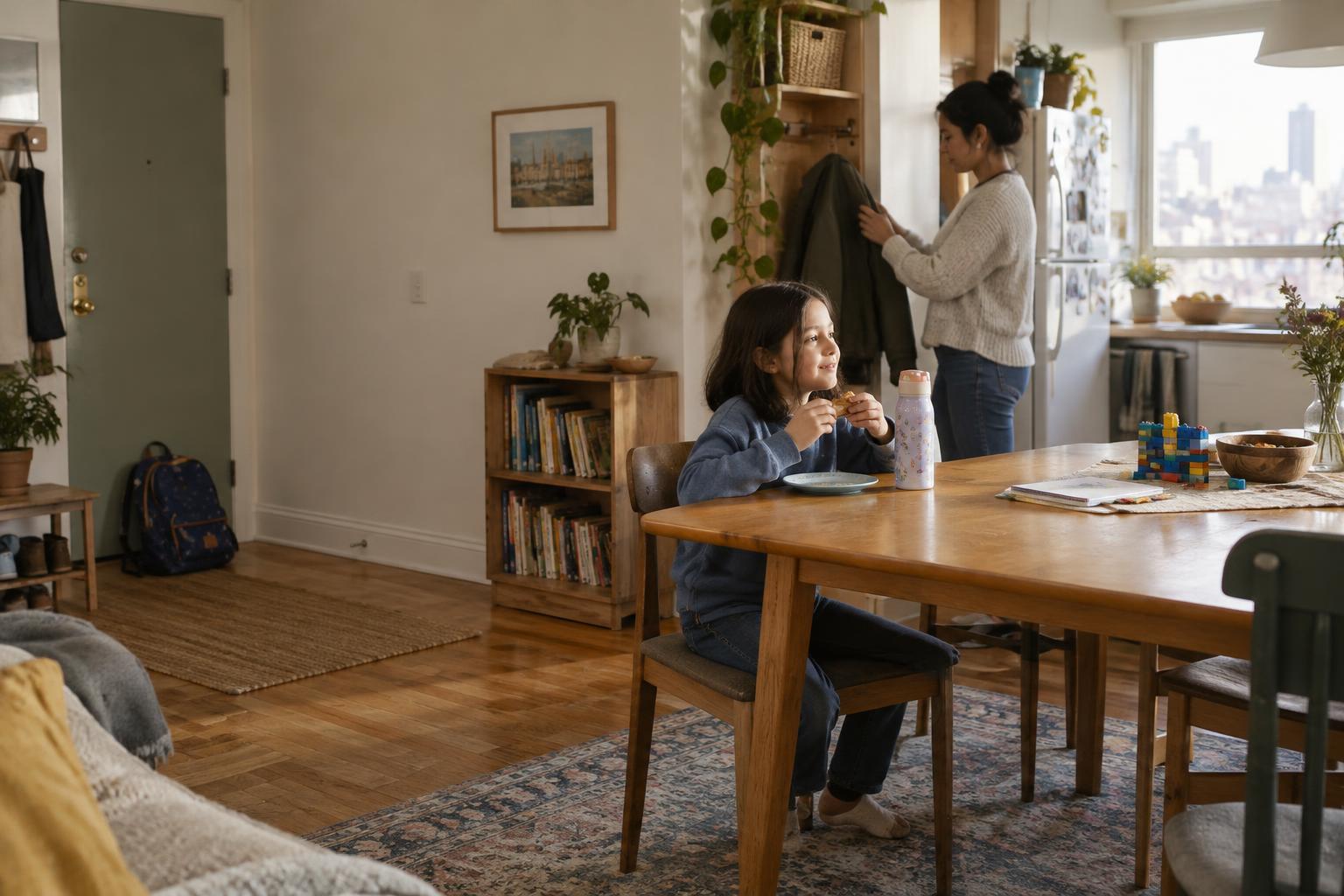
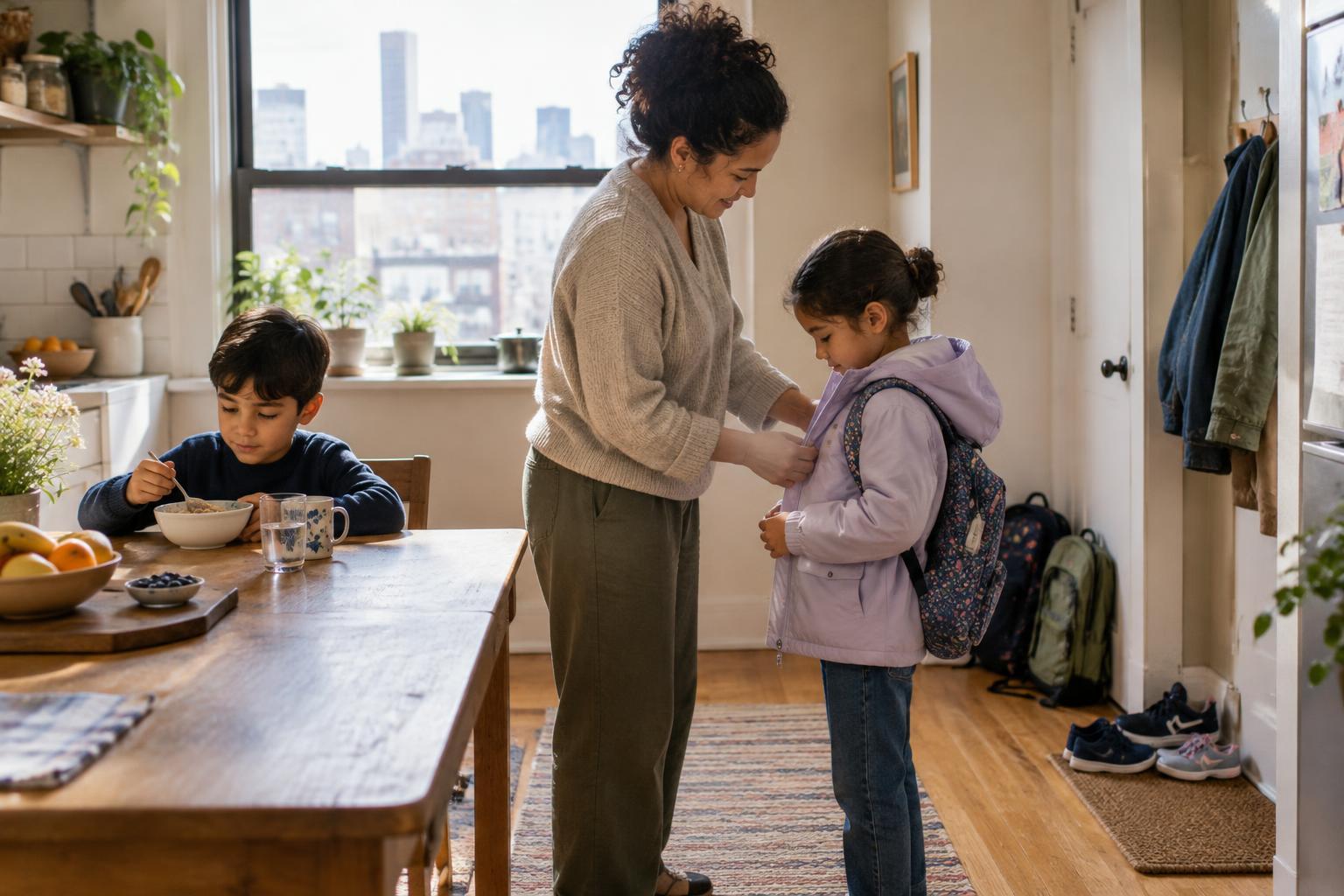
Family schedules rarely line up perfectly. A caregiver may get home later than expected, an outing may run long, or a child may be hungry before dinner is ready. Predictability can still come from the order of events rather than an exact mealtime. For example, the family might put away bags, wash hands, help with one small table task, and then eat. Those steps give everyone a sense of what comes next, whether dinner starts early or late.
Choose a realistic time window instead of a deadline. You might usually begin dinner sometime after everyone is home and has had a chance to settle. On busy days, keep the same short opening routine even if the meal itself changes. A two-minute transition is often easier to repeat than a detailed plan that depends on everything going smoothly.
Make the next meal easy to anticipate
Children and adults alike can find it easier to shift activities when they know a meal is approaching. Give a simple heads-up before cleanup: “We’ll wash up and eat after we put these toys away.” If your family uses a visual calendar or a note on the refrigerator, you can add a broad plan such as “dinner at home” or “picnic after the park.” The goal is not to promise a precise menu or time. It is to make the next step clear.
A repeated cue can help when the day has been unpredictable. Putting water on the table, inviting someone to choose napkins, or playing the same short song while everyone washes hands can signal that the meal is beginning. Pick cues that require little preparation. If a routine only works when the kitchen is tidy and everyone is cheerful, it may be too demanding for an ordinary weeknight.
Keep a backup plan for the days that change
A flexible mealtime routine works best when there is a simple version for late arrivals, tired evenings, and plans that fall through. Think of a few meals your household can assemble without much decision-making. They might combine familiar pantry or freezer items with whatever fresh food is available. Keeping a short list where caregivers can see it means no one has to invent dinner from scratch at the end of a long day.
The backup plan can also cover where and how you eat. If a sit-down meal is not workable, you might share a quick supper at the counter or pack food to eat during an outing. Try to preserve one familiar element, such as washing hands together or checking in about the day. That small point of continuity can make a changed plan feel like a variation on the routine, not a failure of it.
If family members eat at different times, connection does not have to depend on everyone finishing the same meal together. A caregiver can sit nearby for a few minutes, or the family can gather later for fruit or tea. A brief, comfortable moment may be more useful than asking everyone to wait until a shared meal becomes stressful.
Give everyone a manageable part to play
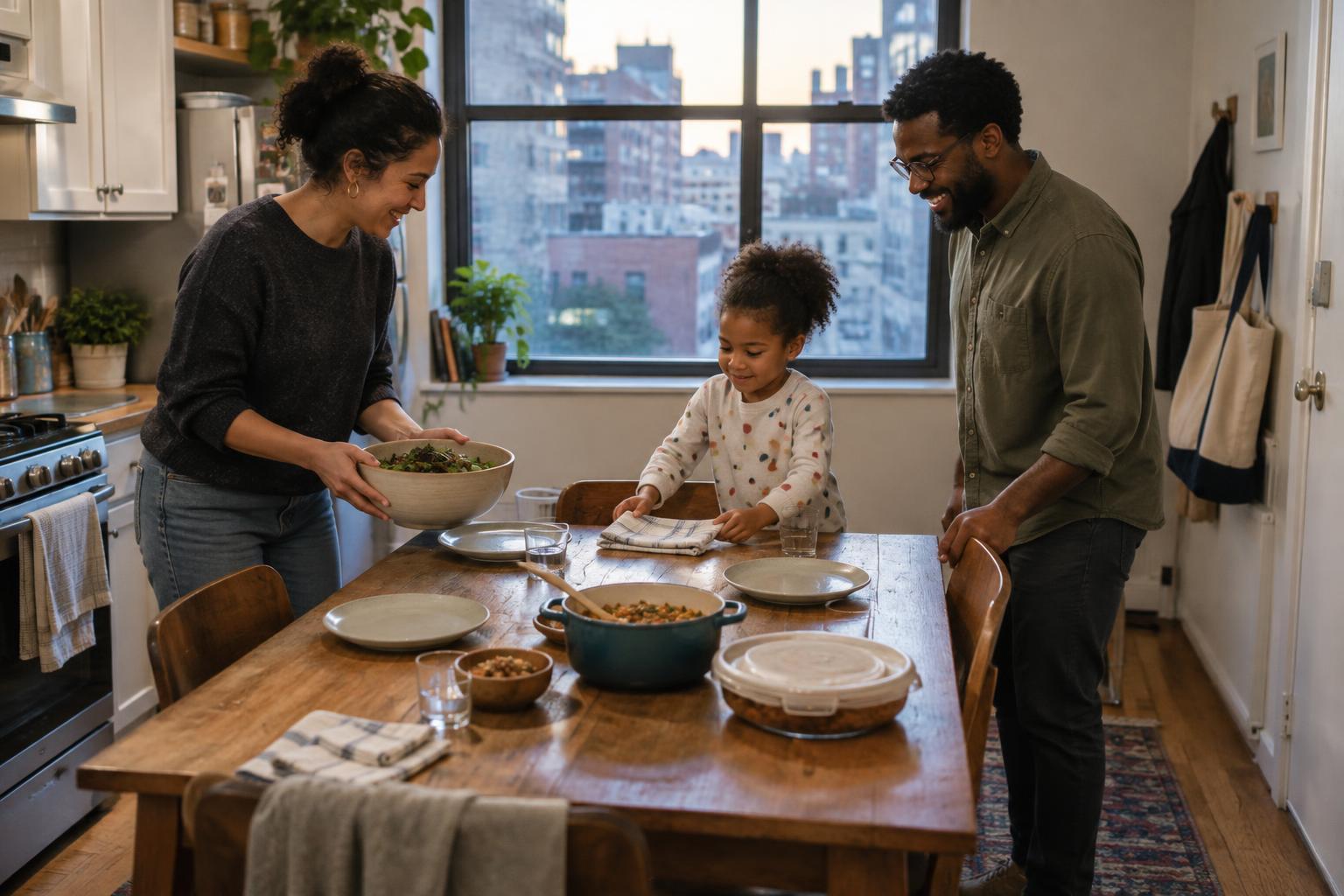
Predictability grows when people know what they can do. A young child might carry napkins, an older child might fill water cups, and an adult might clear a space to eat. Keep tasks small enough that they do not delay the meal. Responsibilities can rotate, but it helps to explain changes before everyone is already hungry.
Mealtime conversation can have a loose routine, too. You could invite each person to share one thing they noticed that day, ask a playful question, or simply enjoy a quiet few minutes. No one has to perform a cheerful recap. Leaving room for silence, especially after a crowded commute or busy afternoon, can make the table feel more welcoming.
Adjust the routine to the day you actually have
Notice which parts of your routine reduce friction and which parts create it. If setting the table together helps everyone shift gears, keep it. If waiting for the last person home regularly leaves others frustrated, consider an earlier meal with a later chance to connect. A routine should serve the household rather than become another rule to enforce.
Changes in work hours, school activities, or caregiving arrangements may call for a new version of the plan. Tell family members what will stay familiar and what will be different: “We’re eating earlier today, but we’ll still clean up together.” With a few dependable cues and permission to adapt, family mealtimes can feel steady without needing to look the same every day.