Choose a route for the whole family, not just the distance
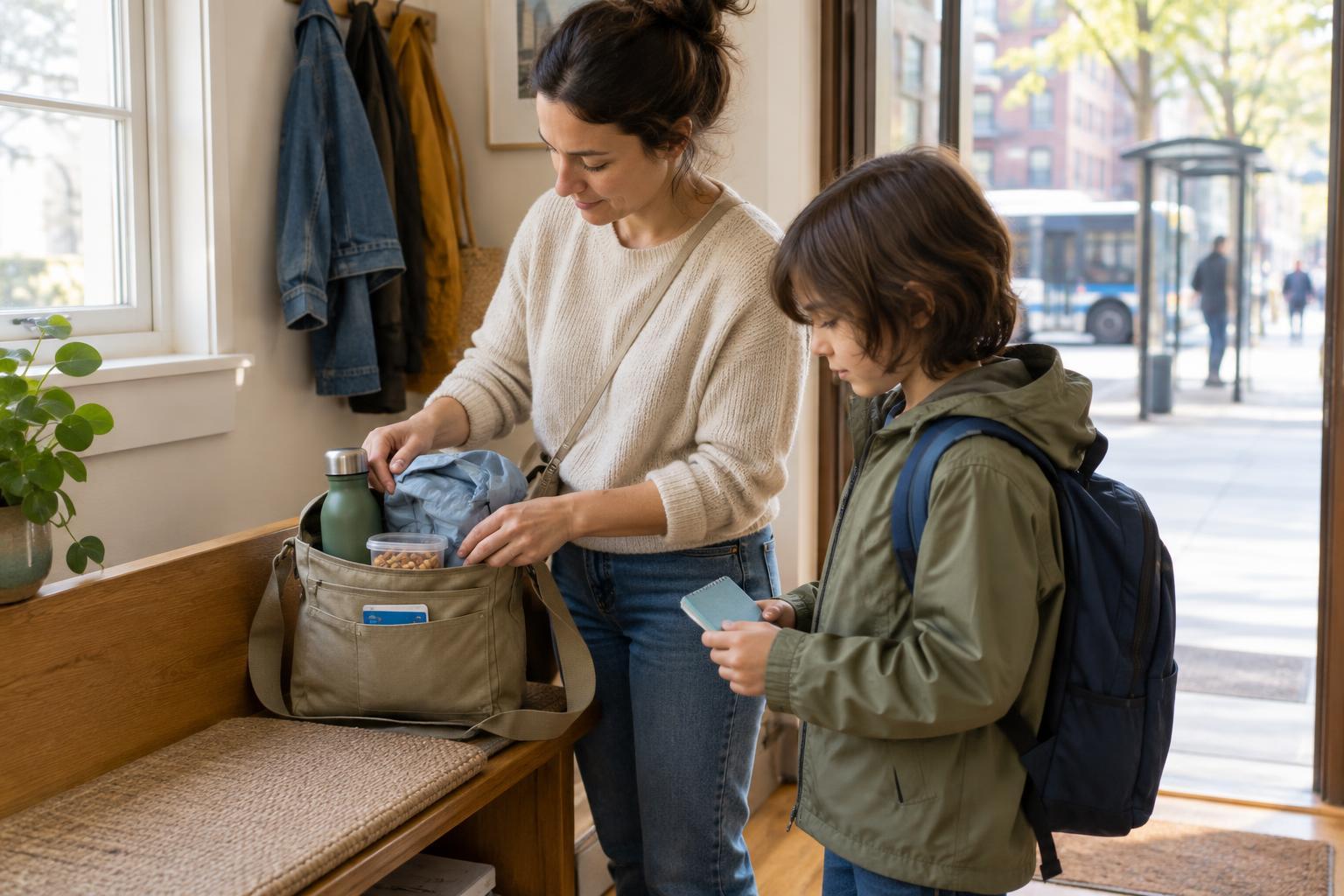
The shortest route across a neighborhood is not always the easiest one to walk with children. A slightly longer trip may feel more manageable if it has wider sidewalks, fewer driveways, less traffic noise, and places to pause. Before leaving, think about who is coming: a child walking at their own pace, a toddler in a stroller, or several children with different amounts of energy. The best route is one the group can follow without feeling rushed.
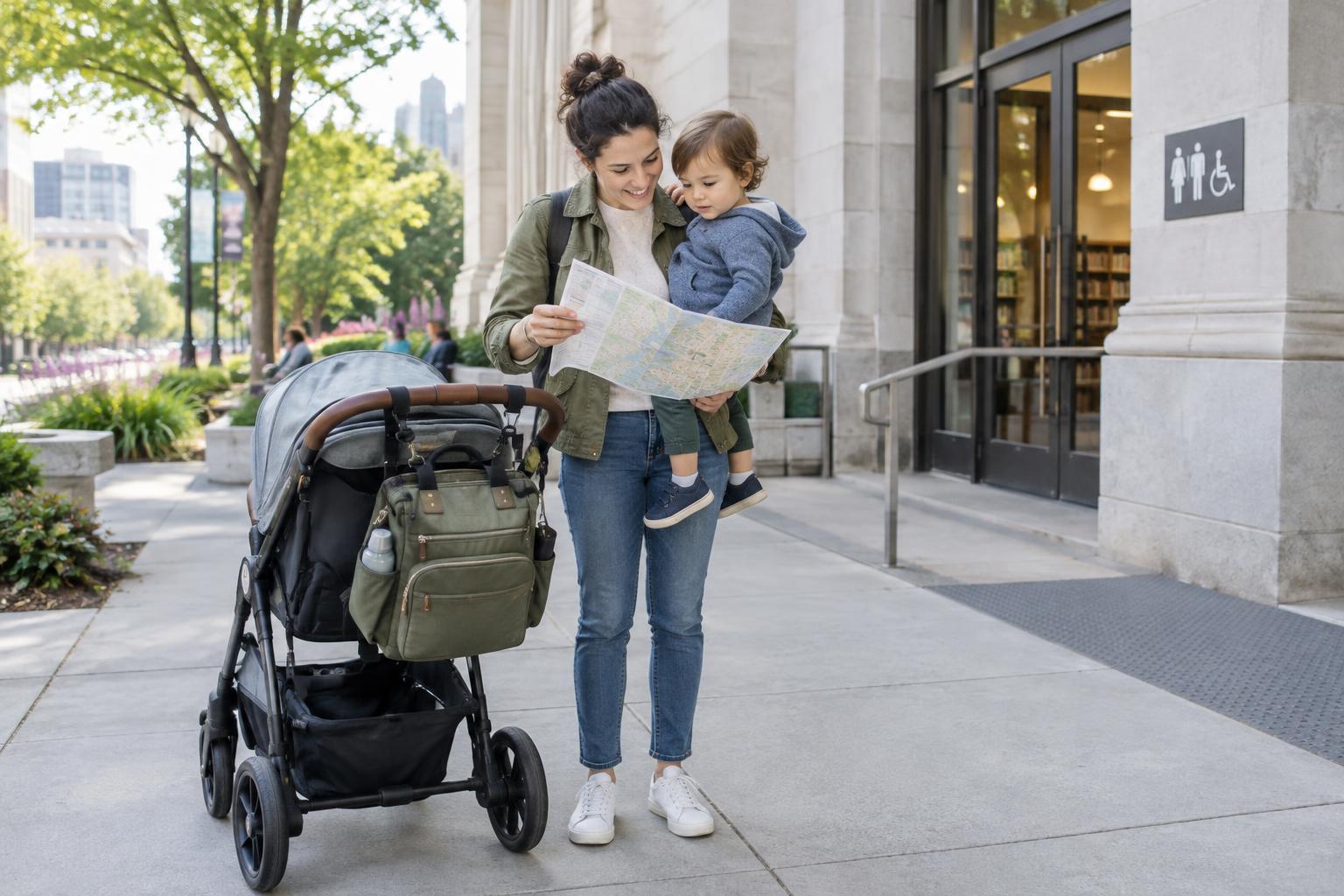
If you know the area, picture the walk one block at a time. Where might a delivery truck block the sidewalk? Which corners tend to be crowded? Is there a spot to stop without standing at the curb? For an unfamiliar destination, leave extra time to look around and change course. A route is a plan, not a commitment to keep going down a street that feels uncomfortable.
Compare quieter streets with their crossings in mind
A quieter side street can make conversation easier and give children more room to notice their surroundings. But low traffic does not make every crossing simple. Drivers may still turn quickly or enter from a driveway, and parked vehicles can make it harder for people to see one another. When comparing routes, count the crossings as well as the blocks. One calm-looking street with many awkward intersections may be less appealing than a busier street with sidewalks and crossings that are easier to understand.
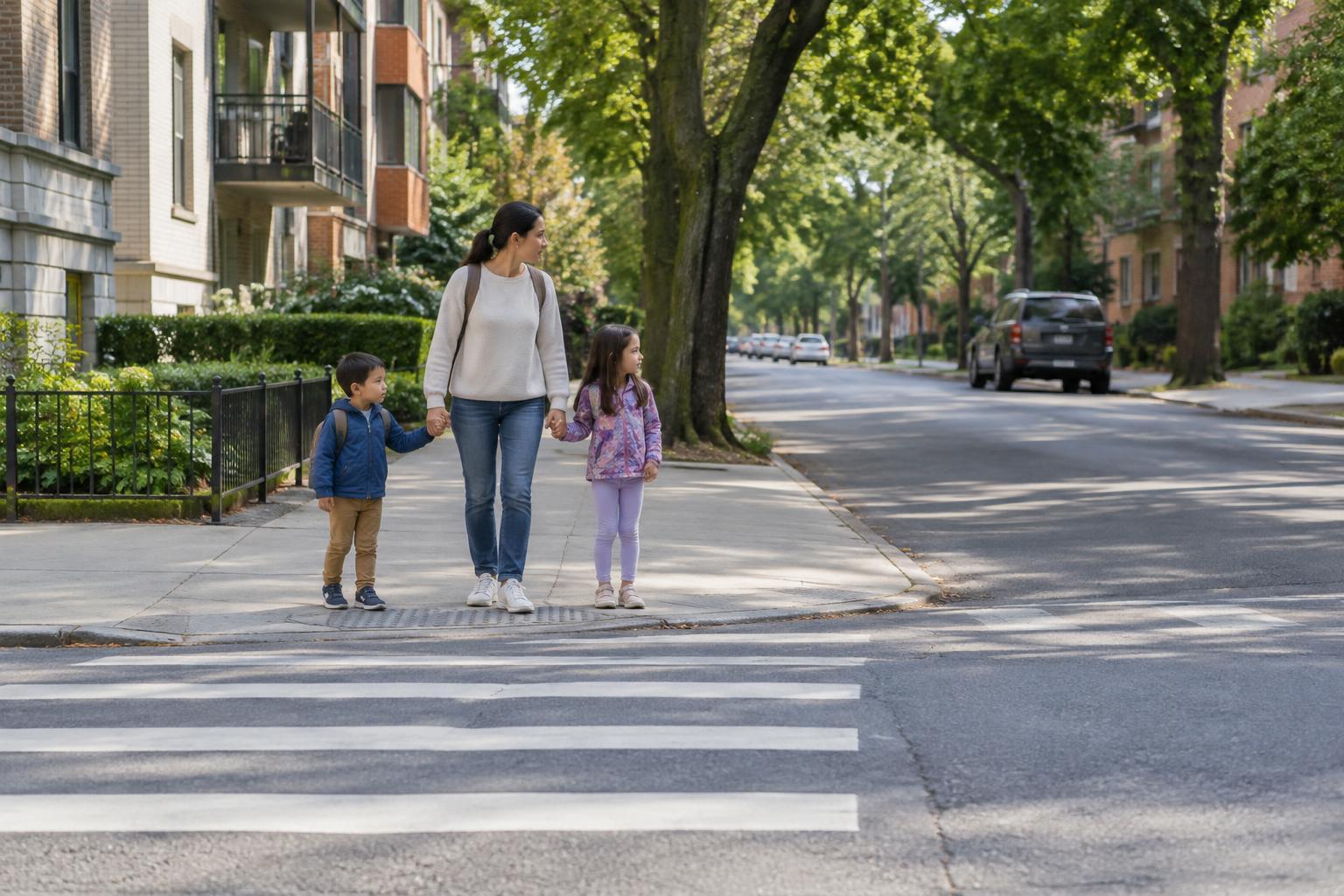
Look for crossings where you can clearly see approaching traffic and where drivers have a clear view of your group. Marked crosswalks and pedestrian signals can help make a crossing more predictable, though they do not replace checking for vehicles. If a corner has a blocked view, complicated turns, or a sidewalk that is hard to use with your group, consider crossing at a different intersection rather than trying to squeeze through.
Make each crossing a deliberate pause
Build a simple crossing routine before you reach the curb. Bring the group together, keep young children close, and pause far enough back that everyone has space to wait. Check the signal if there is one, then look for traffic from all directions, including vehicles that may turn across your path. Wait until there is enough time and space for the whole group to cross together. Do not rely on a driver seeming to notice you.
Children can take part without being responsible for the decision. You might ask what they can see, point out a turning vehicle, or explain why you are waiting even when the street looks empty. Keep the explanation brief enough to use on an ordinary walk. Repeating the same routine helps make the stop at each curb familiar, while the adult remains in charge of deciding when to cross.
Leave room for slowdowns and surprises
City walks change from block to block. Construction, trash pickup, outdoor dining, and crowded corners can narrow a sidewalk. Before stepping around an obstacle, check whether your group can stay on the sidewalk or whether another block offers a better option. Avoid assuming that a temporary gap will be easy for a stroller or a child who needs more time. Turning back to the last comfortable crossing is a reasonable choice.
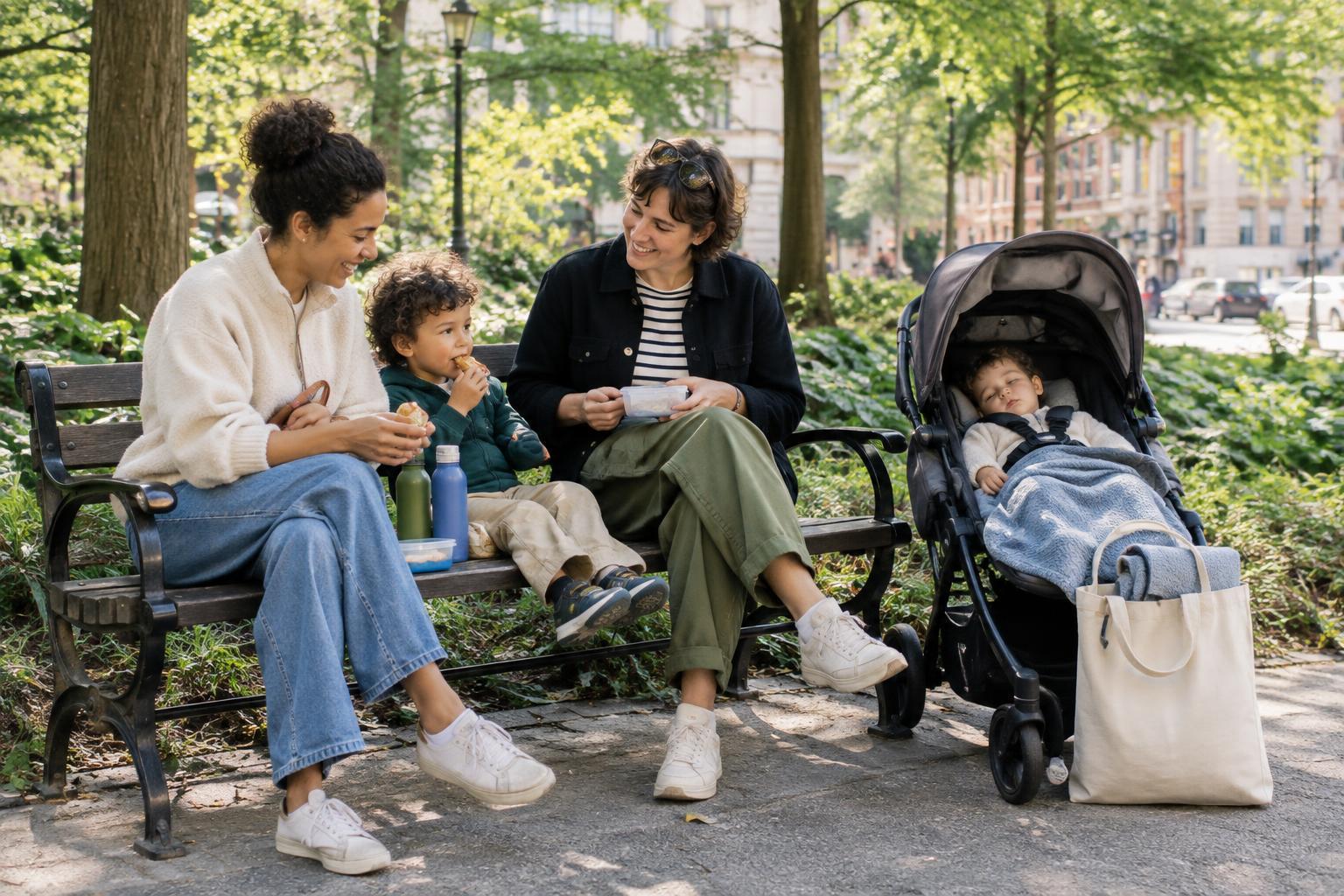
Plan a pause that has nothing to do with traffic, too. A bench, a small plaza, or a quiet stretch near the destination can give everyone a chance to regroup. If the walk includes errands, decide which stop matters most so you can shorten the outing if needed. Water, a snack, and an extra few minutes may make delays less frustrating, but the most useful thing to bring is permission to go at your family’s pace.
Let the route become part of the outing
A familiar walk can offer small moments of discovery without becoming a lesson or a race. Invite children to notice a painted gate, listen for different street sounds, or count the trees on one block. Save those games for stretches where you can walk comfortably; at crossings and busy corners, bring attention back to moving together. A child who wants to stop and look may need a reminder to wait until there is a place away from the curb.
After the trip, remember which parts worked well. Perhaps one street felt calm in the morning but crowded later, or a particular corner was difficult with a stroller. Next time, you can adjust a block or two instead of planning from scratch. The goal is not to find a perfectly quiet route. It is to choose a walk that gives your family enough visibility, time, and flexibility to enjoy getting there.