Choose a small outing, not a packed itinerary
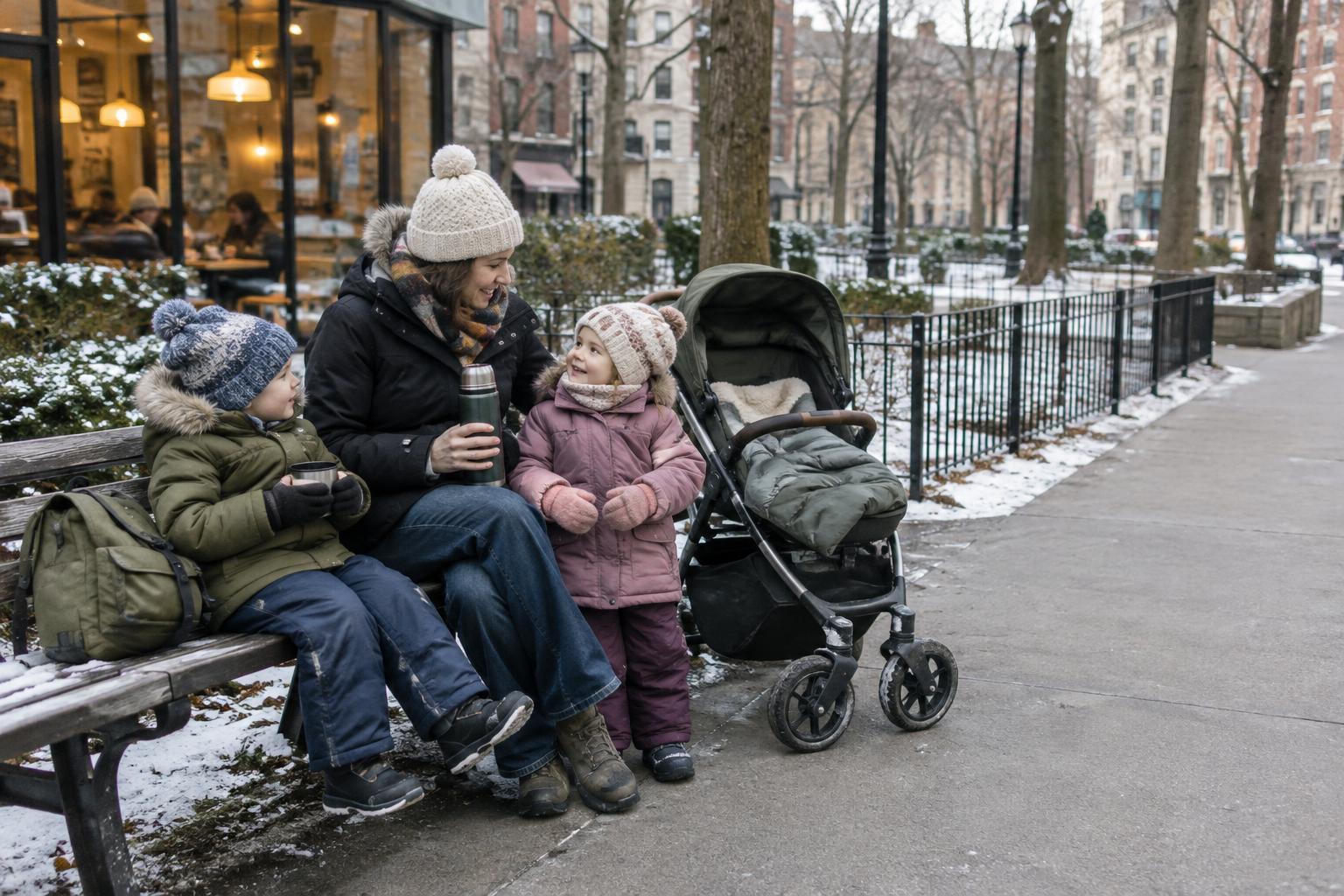
Cold weather can make familiar city trips feel more complicated. Coats take time to put on, sidewalks may be messy, and a missed bus can turn a short wait into a long one. Instead of planning several stops, choose one main reason to leave home: a playground visit, a library trip, or a walk to pick up a snack. If everyone still has energy afterward, an extra stop can be a bonus rather than an obligation.
Think about the trip as a whole, not just the destination. A nearby place with an easy route may be more enjoyable than a bigger attraction that requires multiple transfers. Before leaving, decide what would make the outing feel worthwhile even if you head home early. Ten minutes watching birds in a park, for example, can be a complete outing on a chilly day.
Plan the route around pauses
Map out the parts of the journey that may require standing still: transit platforms, crossings, ticket lines, and the walk back. When you can, choose a route with fewer transfers or a place to step inside along the way. A library, community space, or other welcoming indoor stop can give the group a chance to regroup. Check opening hours and access details before relying on a particular stop.
Leave more time than you think the trip will take. Children may want to examine a patch of ice, move slowly in bulky clothes, or stop to adjust a mitten. Extra time helps keep those ordinary delays from becoming stressful. If you are using a stroller, consider whether slush, stairs, or crowded transit will make your chosen route difficult, and have a simpler alternative in mind.
Pack for easy adjustments
Layers are useful because the temperature can feel different on a windy street, inside a heated train, and during active play. Choose clothing that is comfortable to walk in and reasonably easy to remove when you go indoors. Keep commonly needed items, such as mittens and a hat, near the top of a bag rather than buried beneath everything else. A spare pair of socks or gloves can be handy if something gets wet.
Aim for a bag you can carry comfortably while helping a child across a street or onto transit. Water, a simple snack, tissues, and a small bag for damp items may be enough for a short trip. If you are bringing a stroller, keep essentials where you can reach them without unpacking the whole basket. The goal is not to prepare for every possibility; it is to make likely transitions easier.
Give outdoor stops a clear shape
An outdoor stop often goes better when it has a loose purpose. You might look for different shapes in bare tree branches, count colorful doors on a block, or visit one favorite piece of playground equipment. These small activities give children something to do without requiring you to carry supplies. They also make it easier to wrap up: once you have found a few interesting things, you have a natural point to move on.
Watch how the group is doing rather than trying to meet a set number of minutes outside. Wet clothing, tired legs, or a child who has stopped enjoying the activity can be good reasons to change plans. A warm indoor break or an early trip home is not a failed outing. Keeping the experience pleasant may make the next invitation to go out easier.
Make the return trip part of the plan
It is tempting to think only about getting to the destination, but the ride or walk home can be the hardest part. Before setting out, consider when everyone is likely to need food, a rest, or a bathroom. If possible, begin the return before the group is completely worn out. For an outing with several caregivers, agree on a meeting point and a simple way to communicate if plans change.
Once home, give the outing a quick reset: hang damp gear where it can dry, return reusable items to the bag, and note anything you wished you had brought or left behind. Next time, you can adjust one thing rather than redesigning the whole trip. Manageable winter outings are built from small choices, and a short, comfortable excursion can be just as satisfying as a full day out.