Start with one small sorting session
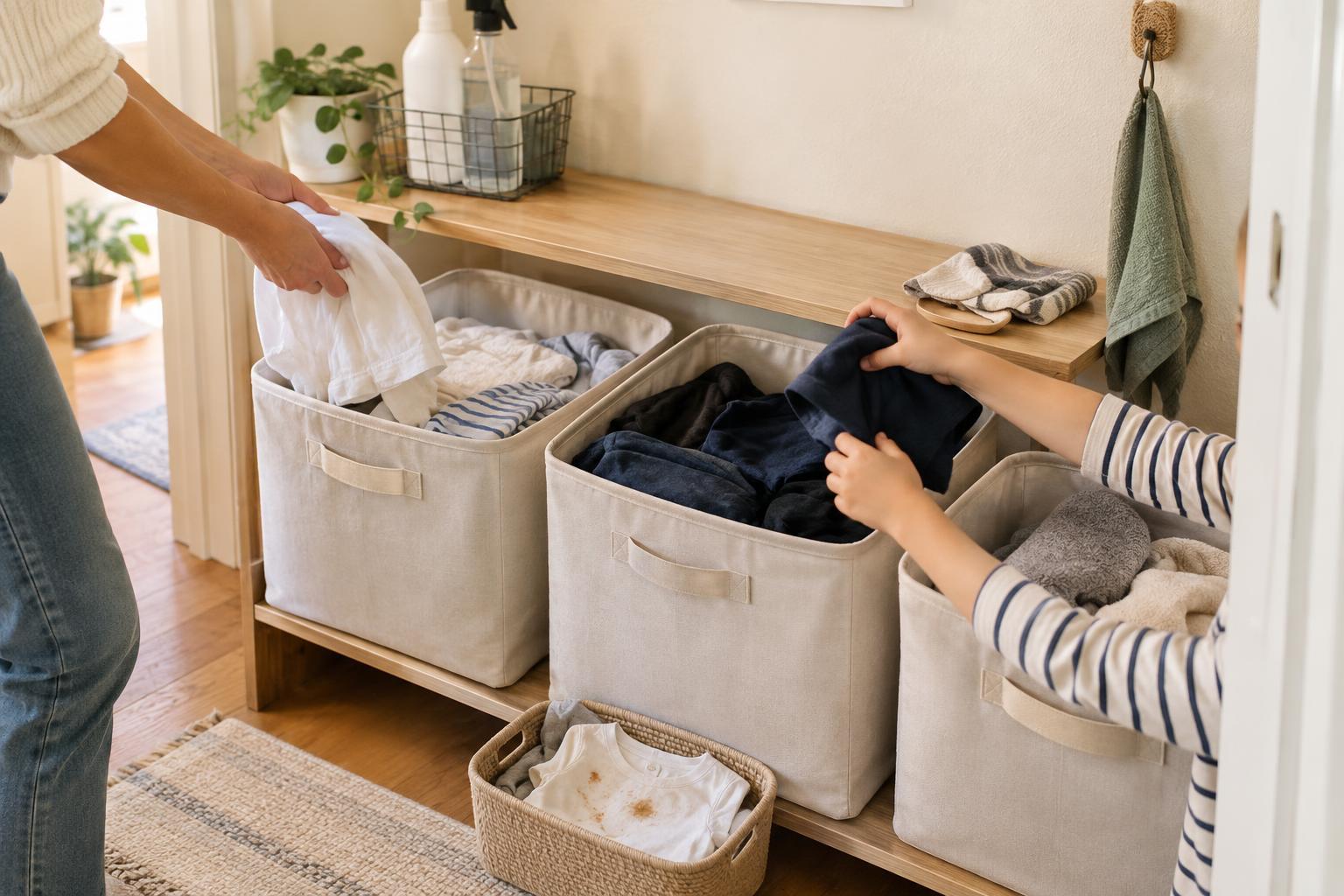
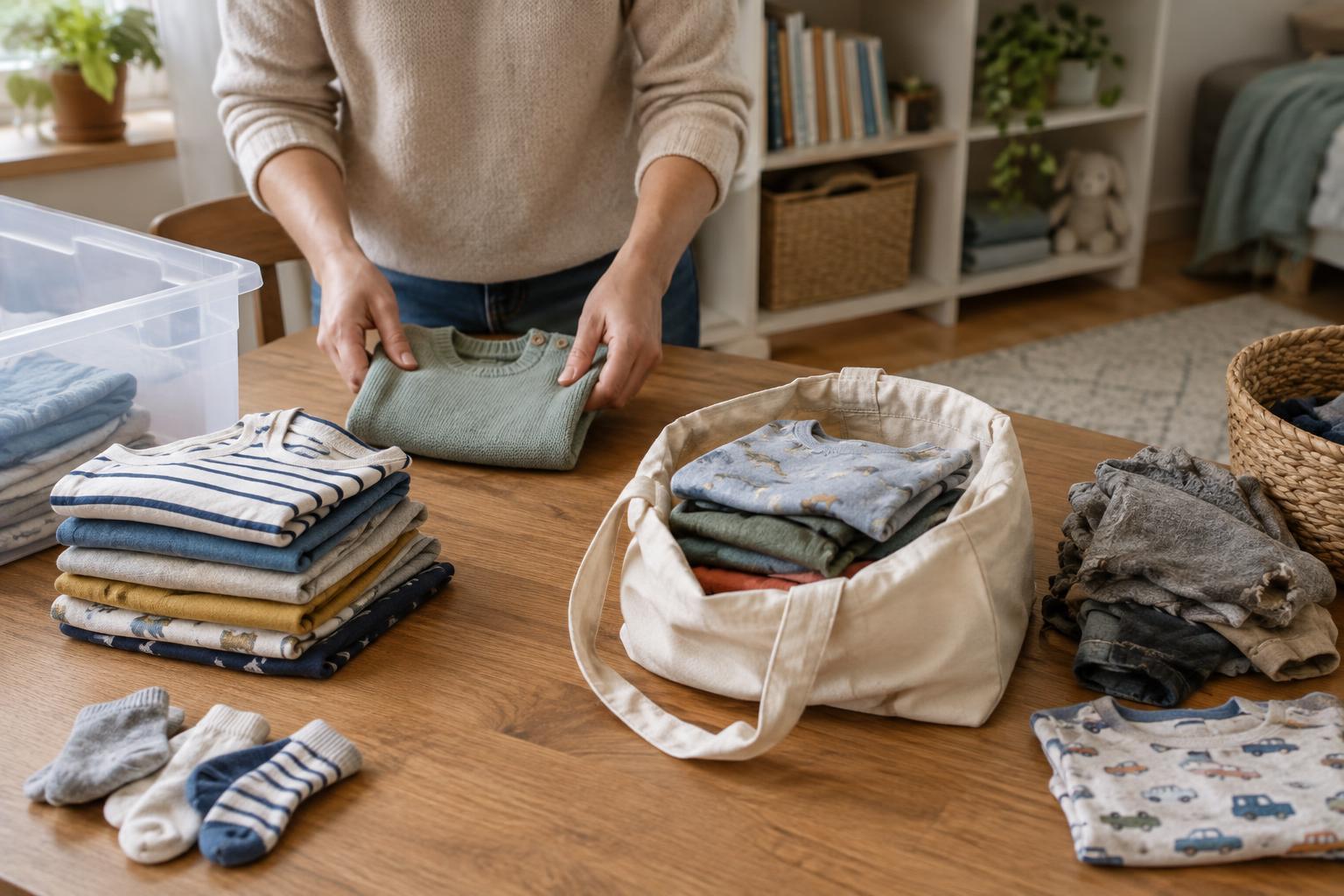
A full closet overhaul can feel daunting when children’s clothes are mixed across drawers, laundry baskets, and coat hooks. Start with one category, such as pajamas or shirts, rather than pulling out everything at once. Bring together the clothes your child has clearly outgrown, then set out three bags or piles: keep, pass along, and let go. If an item still fits and gets worn, return it to the drawer. There is no need to decide its future today.
Keep the first session short enough to finish, including putting the sorted items where they belong. A half-filled bag ready to leave the apartment is more useful than several carefully arranged piles left on the floor. Once the system is familiar, you can repeat it whenever a drawer becomes hard to close or a new season calls for different clothes.
Give each item a clear destination
The keep pile is for clothes you have a realistic reason to store: a likely hand-me-down, a useful backup in the next size, or a small number of meaningful keepsakes. The pass-along pile is for clean, wearable items that another family might use. The let-go pile is for clothes too worn or damaged to pass on. If textile collection is available in your area, check what it accepts rather than assuming every fabric item can go there.
It helps to make separate decisions about everyday clothes and sentimental pieces. A favorite baby outfit may deserve a place in a memory box even if it would never be worn again. But a memory box has limits, and choosing a few pieces can make those memories easier to revisit. For ordinary hand-me-downs, ask whether you would be glad to find the item later. If the answer is no, it probably does not need storage space.
Prepare clothes before packing them
Before storing anything, check pockets, wash clothes as appropriate, and let them dry completely. Set aside pieces with missing buttons, broken fasteners, or stains you want to address. You can decide whether a repair is worth doing now; a vague plan to fix something later often turns it into a surprise problem when the next child needs it.
Sort the clothes you are keeping by size and, if helpful, by season. Labels such as “2T, warm weather” or “size 5, winter layers” are easier to use than labels based only on the child who wore them. Children may need different sizes at different times of year, so treat labels as a guide, not a promise. If an item runs unusually small or large, a quick note on the label can save another round of searching.
Choose storage that fits your space
You do not need matching bins to make this work. A sturdy box, zippered storage bag, or lidded container can be useful if it fits the shelf or closet you actually have. Choose a spot that stays reasonably dry and is easy enough to reach when you need the next size. Avoid packing containers so tightly that you cannot see what is inside or lift them comfortably.
Label the outside on more than one side if containers may be stacked. For a small home, an inventory note on your phone can be enough: “size 4 coats and sweaters, top closet shelf.” Keep everyday next-size clothes more accessible than sizes that are years away. If storage is especially tight, set a fixed limit, such as one container per size. That boundary makes future decisions easier without requiring you to predict every clothing need.
Make passing clothes along part of the routine
The pass-along bag needs a next step, not just a label. Choose a place for it near the door or another spot you will notice, and decide whether the clothes are going to someone you know, a local exchange, or a donation point that accepts them. Check any recipient’s preferences before dropping off bags. Clean clothes grouped loosely by size are easier for someone else to use than an unsorted mix.
Revisit stored clothes when you open a new size, not only when you run out of space. Some items may no longer suit your family’s needs, while others can move straight into a drawer. Then reuse the empty container for the next round of outgrown clothes. The goal is not a perfect archive. It is a manageable flow: notice what no longer fits, give it a destination, and leave enough room for the clothes your family uses now.