Give every paper a first stop
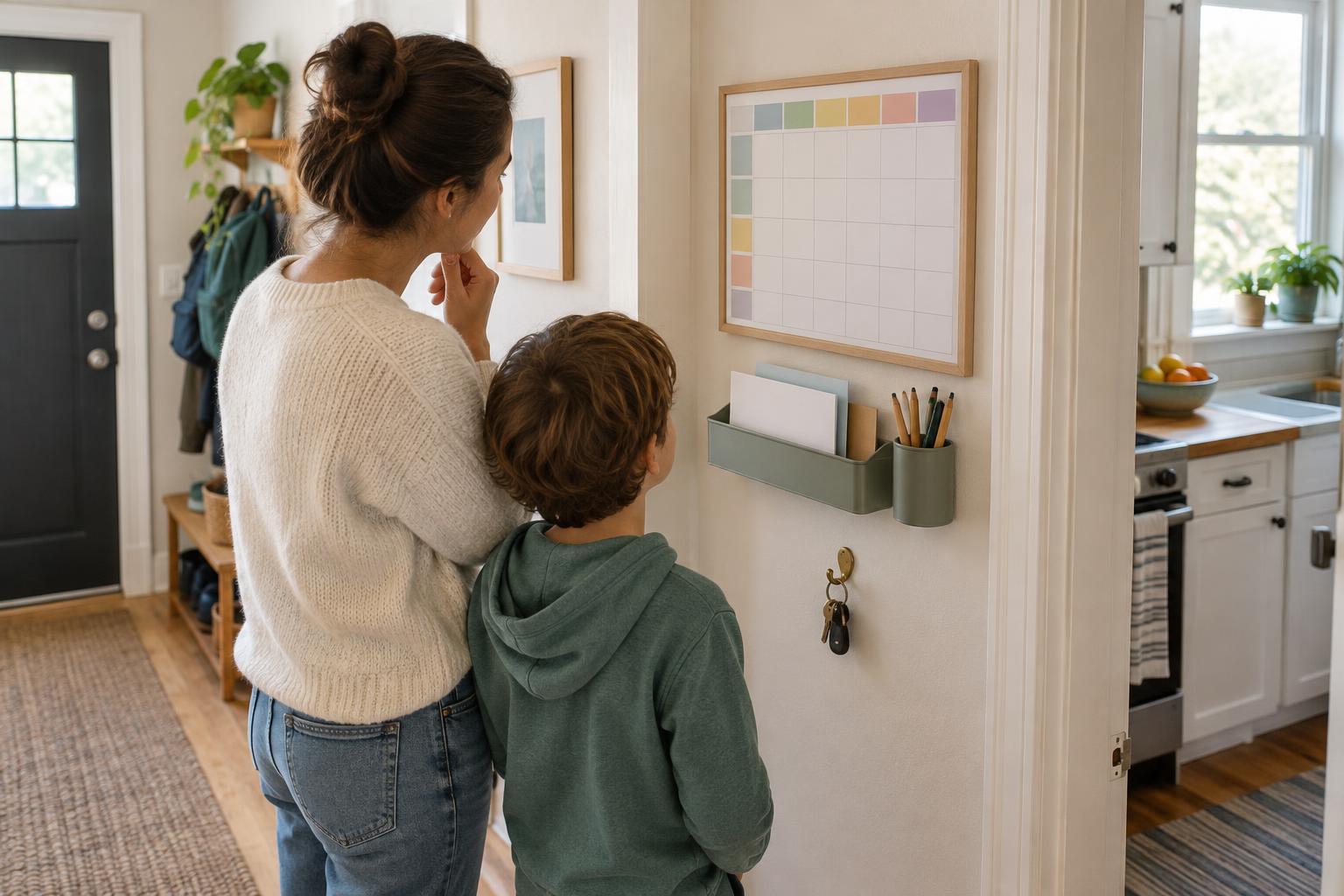
Permission slips, artwork, classroom notices and completed assignments often arrive in the same backpack pocket. The easiest way to manage them is to give them one landing place: a shallow tray, wall pocket or folder near the spot where bags are unpacked. It need not be large. A small container makes it easier to notice when papers need attention.
Start with a quick sort rather than trying to make every keep-or-toss decision on a busy afternoon. Separate papers that need action from those that are simply coming home. Forms to sign, event details and anything with a deadline belong in an “act on” spot that adults check regularly. If a notice matters only until an event has passed, there is no need to file it with long-term keepsakes.
Choose what earns display space
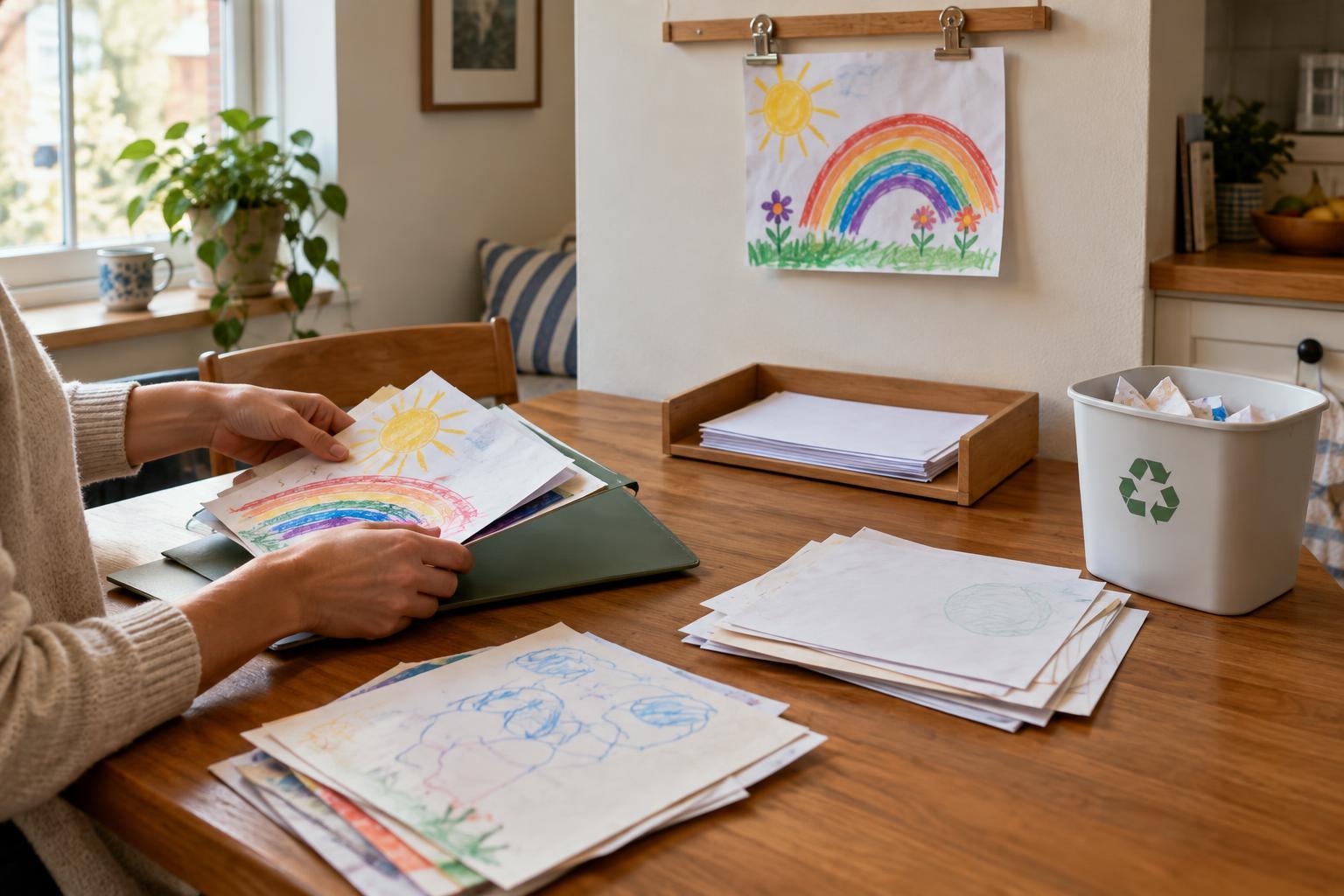
Displaying a child’s work shows that it is seen and appreciated, but every drawing does not need a permanent place on the wall. Choose a small display area, such as a section of the refrigerator, a corkboard or a string with clips. When new work goes up, older pieces come down for another look. That limit keeps the display enjoyable instead of crowded.
Children can help choose what stays visible. Ask which piece they feel proud of or want visitors to see. Their choice may be different from an adult’s favorite, and that is part of the fun. A rotating display also gives work a moment to shine without turning the kitchen into an archive. If a piece is too large or fragile to keep, a photo can preserve the memory, though it is fine to let some work exist only for the time it was displayed.
Save a small, meaningful selection
A keepsake box or folder works best when it has a clear limit. Consider one labeled folder or slim box per child for the school year. Save work that captures a story you want to remember: an early attempt at writing, a project your child worked hard on, an especially funny drawing or a note that means something to your family. Keeping a few varied examples can tell a richer story than keeping every worksheet.
Keep practical records separate from sentimental papers. Documents you may need to find again, such as school contact information or ongoing program details, belong in an accessible household file rather than a memory box. If a paper has a deadline or calls for a response, leave it in the action spot until it is handled. This separation makes it less likely that an important form will disappear beneath a stack of art.
Recycle without making it a big event
Many routine practice sheets, duplicate notices and outdated reminders can go once they have served their purpose. Check both sides before letting a paper go; a classroom note may be printed on the back of a worksheet. Remove anything your child wants to show someone first, and avoid clearing out their favorite pieces without a conversation.
If a page contains names, contact details or other private information, dispose of it in a way that protects those details rather than placing it straight into an open recycling bin. For ordinary papers, follow your building’s or local recycling rules. When you are unsure whether to keep something, set it aside for the next review instead of making the decision in the rush of backpack unpacking.
Make the routine easy to repeat
Choose a regular time to empty the landing spot, perhaps while packing bags for the next school day or at the end of the week. Handle action papers first, refresh the display, add any favorites to the keepsake folder and clear the rest. A brief reset is usually easier than sorting a large pile after it has moved from counter to table to drawer.
At the end of a term or school year, look through the keepsake folder together. Some pieces will still feel special; others may be easier to release after time has passed. Write a child’s name and school year on anything you keep, especially if several children’s papers share a shelf. The goal is not a perfect archive. It is a manageable home for the papers that matter, with room for the next backpackful.