Start with how your family uses the space
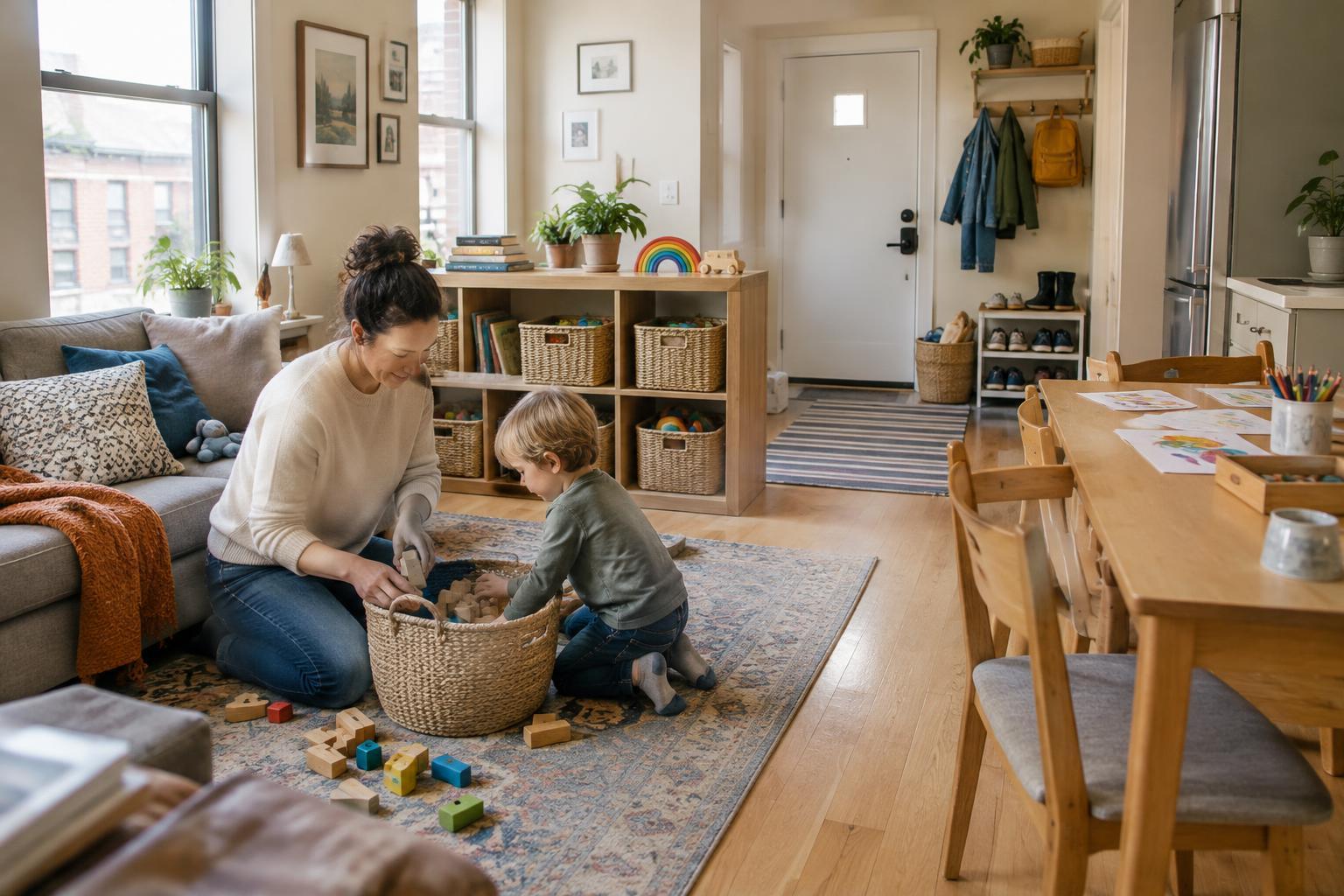
In a small apartment, the same table might host breakfast, crafts, homework, and dinner. Before buying containers or rearranging furniture, notice where daily activities happen and what tends to get left behind. A pile beside the door may mean bags need a landing spot. Toys on the couch may mean the play area is too far from where the family spends time. These patterns are useful clues, not signs that anyone is doing organization wrong.
Choose one or two priorities rather than trying to overhaul the whole apartment. You might want a clear path through the living room, a table that can be reset for meals, or an easier bedtime cleanup. Decide what each shared area needs to do most often, then give the items used there a nearby home. A space can serve several purposes without storing every supply for every purpose.
Give everyday items easy-to-reach homes
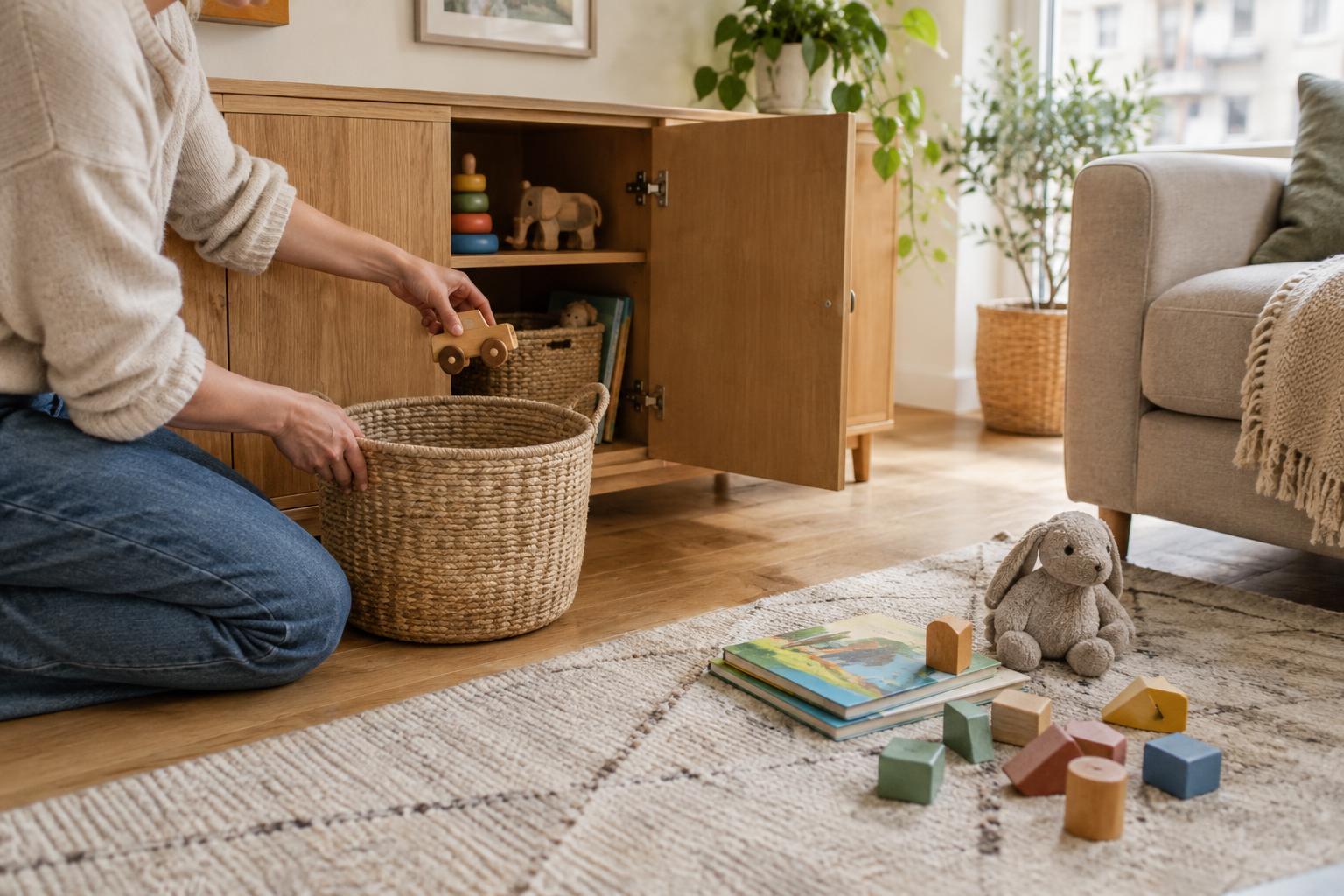
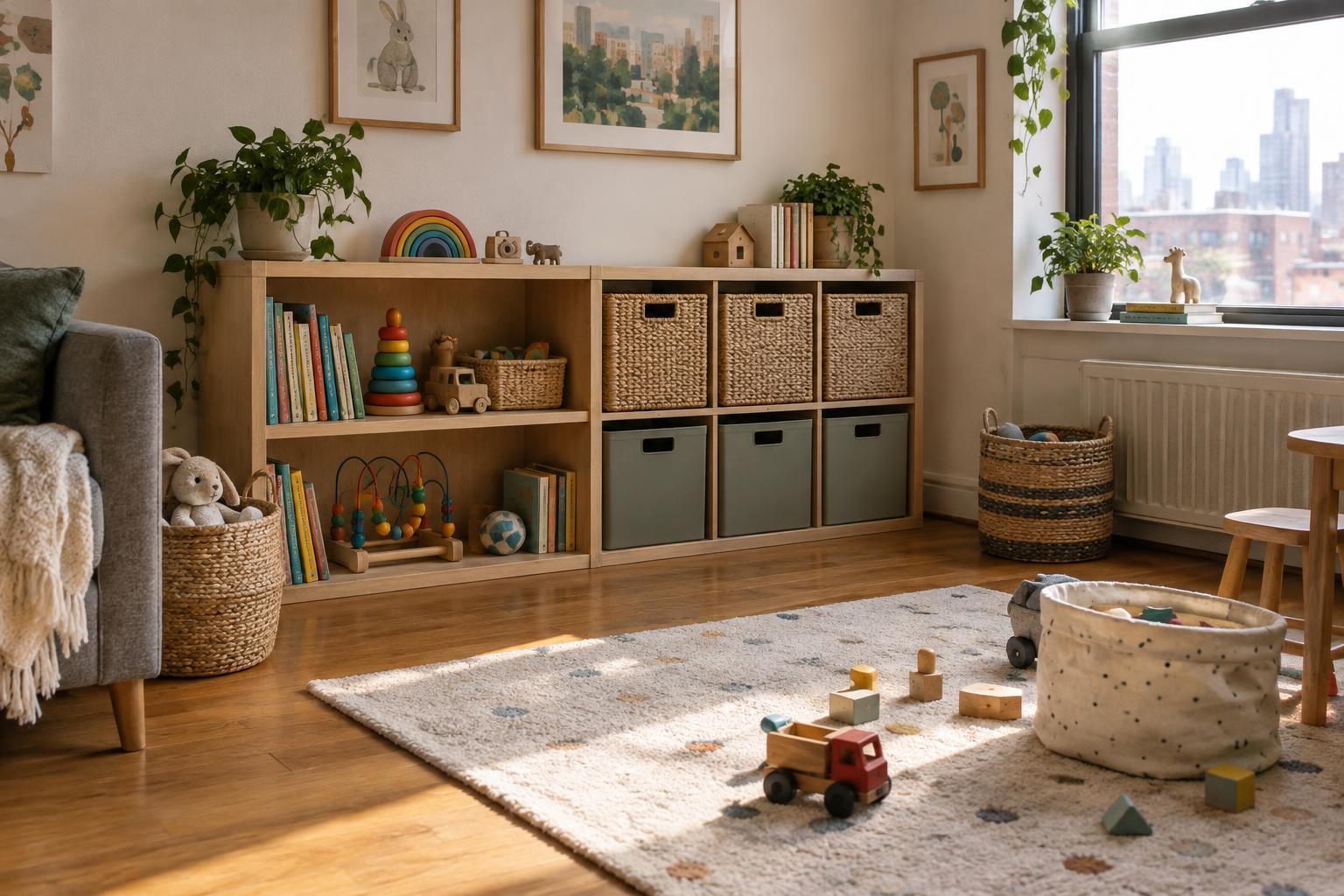
The most effective storage is often the storage people will actually use. Put frequently used toys, books, shoes, and art supplies where they can be returned without moving a stack of other things. Open bins, a low shelf, or a basket beside the sofa may work better than a tightly packed closet. Use simple labels or picture cues if they help children recognize where things belong.
Keep categories broad enough to make cleanup manageable. One container for building toys and another for drawing supplies may be easier to maintain than a separate compartment for every small piece. Leave some empty space in each container so putting things away does not require careful packing. Less-used items can go higher up or farther back, provided adults can reach them safely when needed.
Make shared rooms flexible
When kids share adult spaces, organization works best when activities can begin and end without a major furniture shuffle. A tray can hold the supplies for a table activity and move to a shelf at mealtime. A small basket of favorite books can live near the spot where you read together. If floor play happens in the living room, decide where its materials will go when the floor needs to be clear.
Shared bedrooms can also benefit from clearly defined personal places, even when the room cannot be divided. Each child might have a shelf, a drawer, or a small box for belongings they do not want mixed into communal storage. Try to keep sleep areas as easy to use as possible: avoid making the bed a default holding place for laundry, toys, or bags that must be moved every night.
Use the entryway as a daily reset point
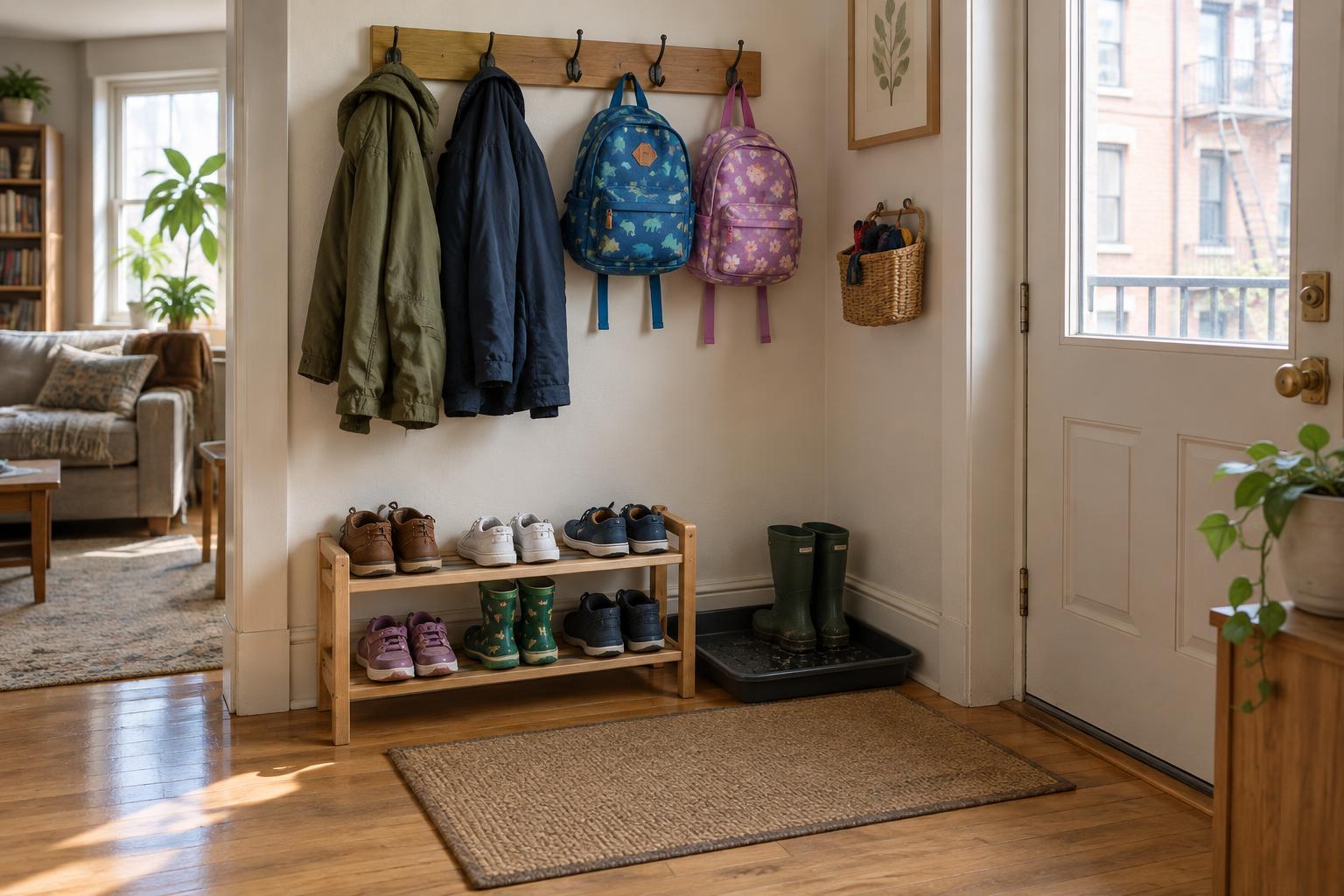
A compact entryway has to handle a surprising number of transitions. Give coats, bags, shoes, and outgoing items distinct places if space allows. Hooks at usable heights, a narrow shoe tray, or a basket for hats can make arrivals easier. If there is no true entryway, a small section of wall or the side of a closet can serve the same purpose.
Keep this area focused on what the family currently uses. Extra pairs of shoes, out-of-season gear, and old papers can crowd out the items needed today. A small spot for things that must leave the apartment, such as library books or a return package, can help prevent last-minute searches. Check it regularly so it does not become permanent storage.
Build a cleanup routine that fits real life
A small home can look cluttered quickly because everyday items stay in view. Instead of aiming to keep every surface clear all day, choose a few dependable reset moments. Five minutes before dinner might be enough to return toys to bins and clear the table. Another short reset before bed might focus only on the floor and the entryway. The goal is to make the next activity easier, not to make the apartment look untouched.
Invite children to take on specific, manageable jobs, such as placing books in a basket or putting shoes by the door. Adults can handle decisions about what to keep, store, or let go. Revisit the setup when routines change or a container becomes too full. An organized small apartment is not one that never gets messy; it is one where the family knows how to make space for what comes next.