Start with a category, not a whole room
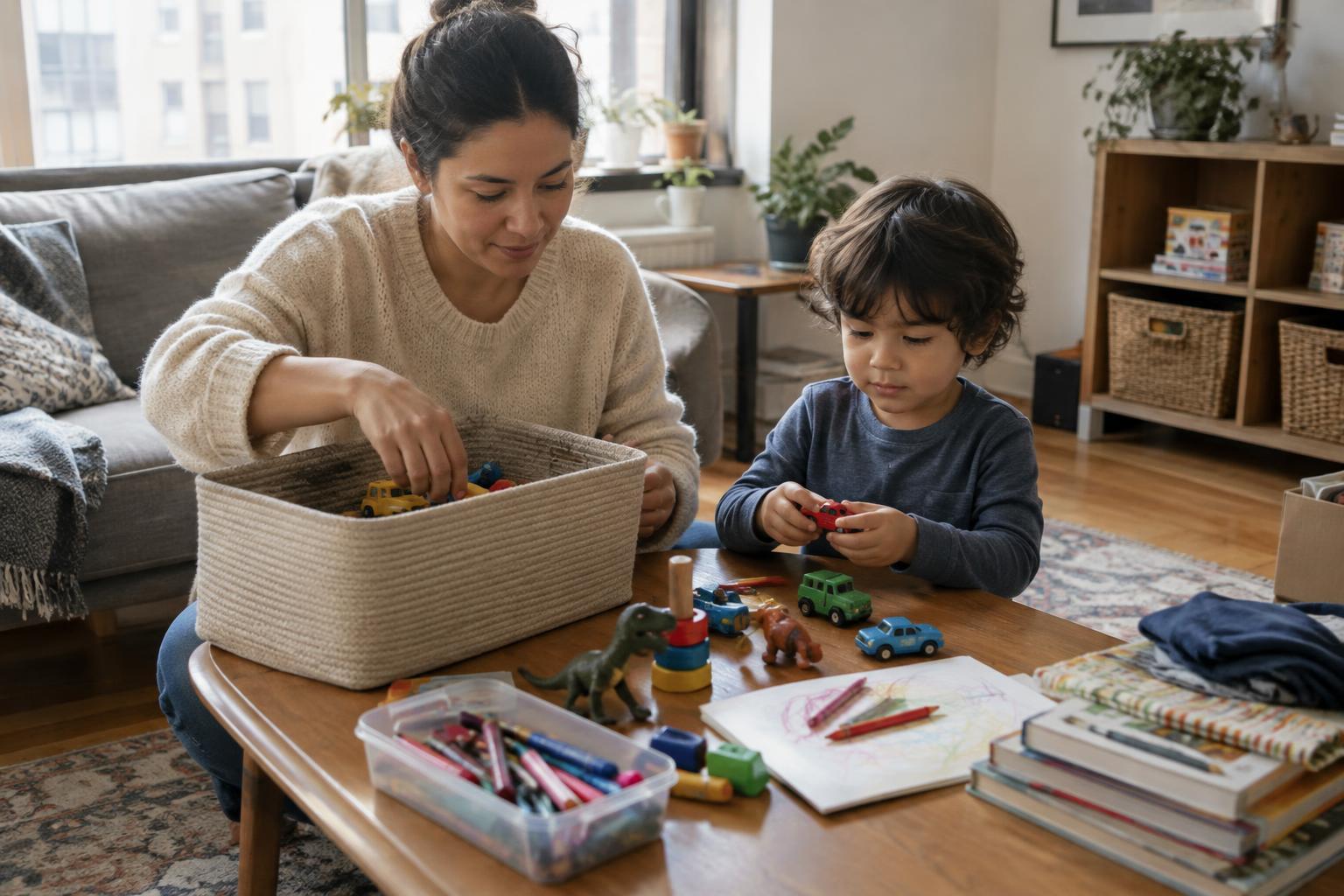
When family belongings are spread across closets, bedrooms and entryways, clearing an entire room can seem overwhelming. Instead, choose one narrow category, such as water bottles, board games or children’s hats. Gather only the items in that category so you can see what you have. A small group of belongings is easier to sort than a mixed pile, and finishing it gives you a clear stopping point.
Begin with something that carries few strong feelings. Everyday supplies are often simpler to decide on than keepsakes or favorite toys. Set aside a short stretch of time, and choose a category you can reasonably finish within it. If a category turns out to be larger than expected, make it smaller: sort mittens today and winter coats another day. The goal is steady progress, not an emptied home by bedtime.
Decide what earns a place in daily life
As you handle each item, ask whether your household uses it, needs a backup or genuinely wants to keep it. Notice condition as well as quantity. A lunch container with a missing lid may not be useful, even if the container itself looks fine. Several versions of the same item might be helpful in a busy week, but keeping more than your storage space can hold may make the useful ones harder to find.
Create simple destinations: keep, pass along, recycle or discard where appropriate, and decide later. Use the decide-later group sparingly, especially for items that need another family member’s input. Give it a specific place and a time to revisit it so it does not become a permanent mystery box. If you plan to donate something, check that it is clean and usable before putting it in an outgoing bag.
Make room for children’s choices
Children may value belongings differently from adults. A worn-looking object might be part of a game they play every week, while an expensive toy may sit untouched. For shared sorting, try offering a limited choice: which puzzles would they like to keep where they can reach them? This gives children a voice without asking them to make every decision about everything they own at once.
It can help to separate practical decisions from sentimental ones. Clothing that no longer fits can move out of a drawer, while a few meaningful pieces can go into a designated memory container. You do not have to settle every keepsake question during a routine tidy-up. If a child is not ready to part with an item and there is room for it, you can revisit the choice later rather than turning decluttering into a contest.
Give the keepers an easy home
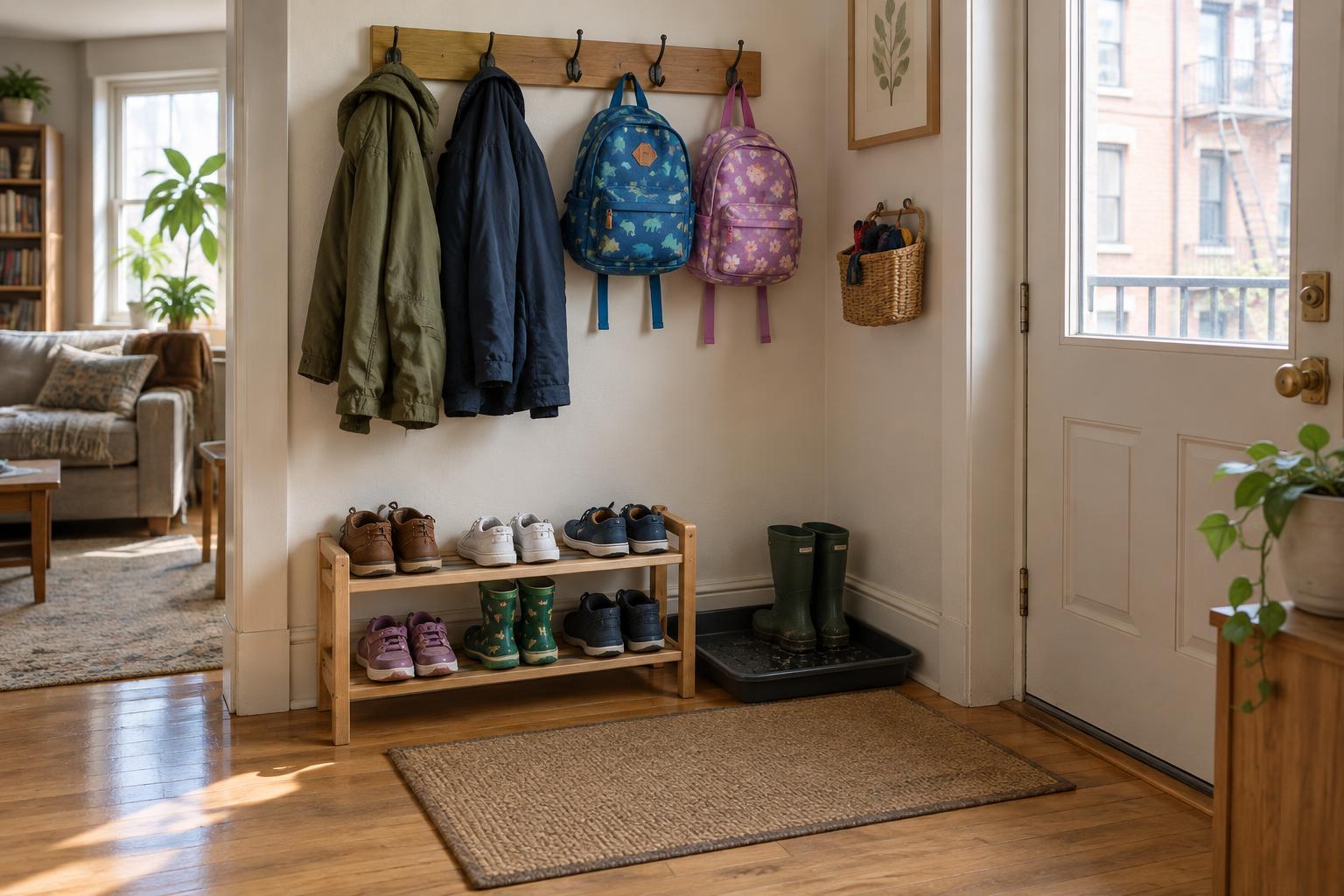
Once you know what is staying, store items near where they are used. Put outdoor accessories close to the door if space allows, and keep craft supplies where they can be brought out and put away without a long search. In a small home, accessible space is especially valuable: reserve easy-to-reach shelves and drawers for things your family uses often, and place occasional items higher up or farther back.
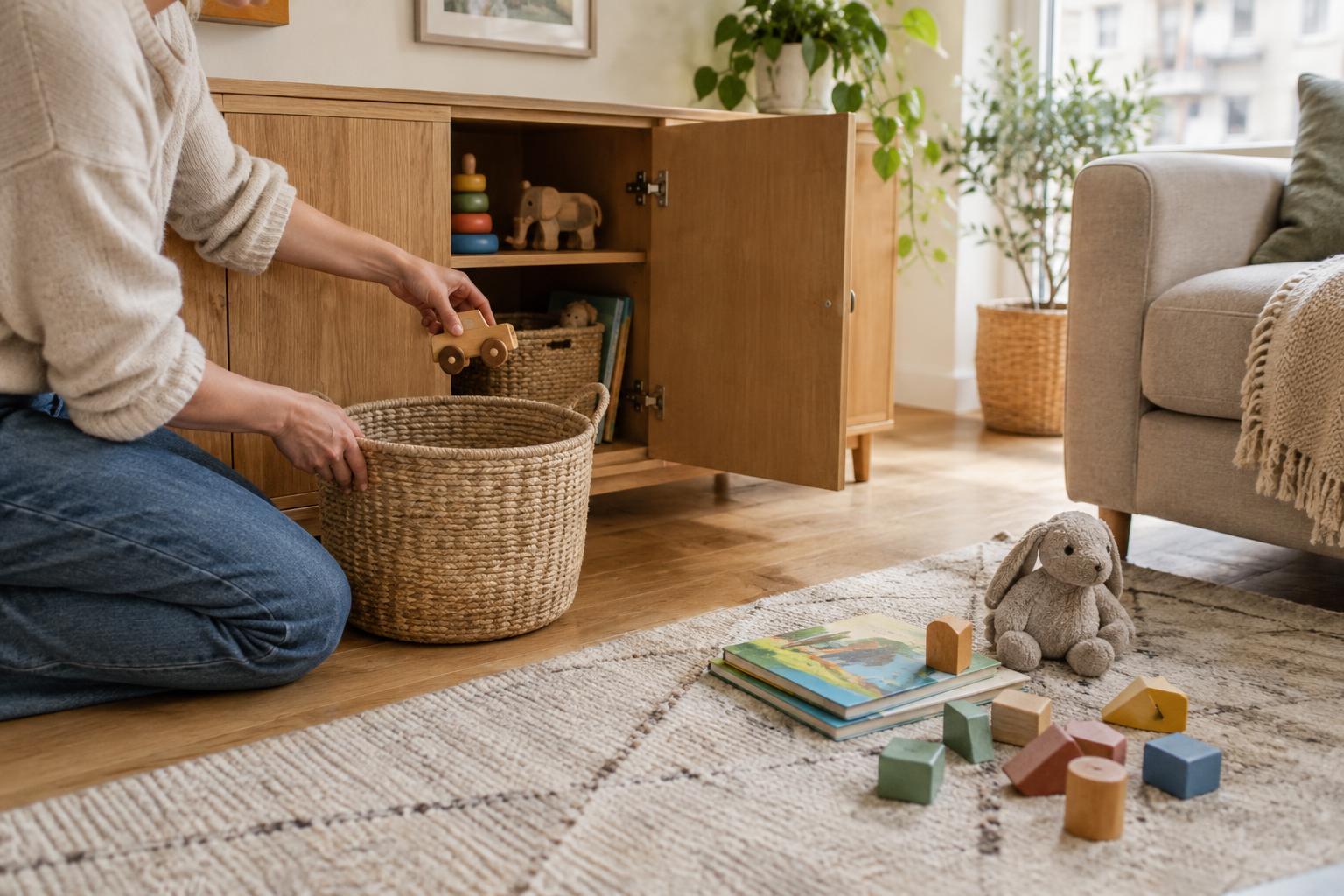
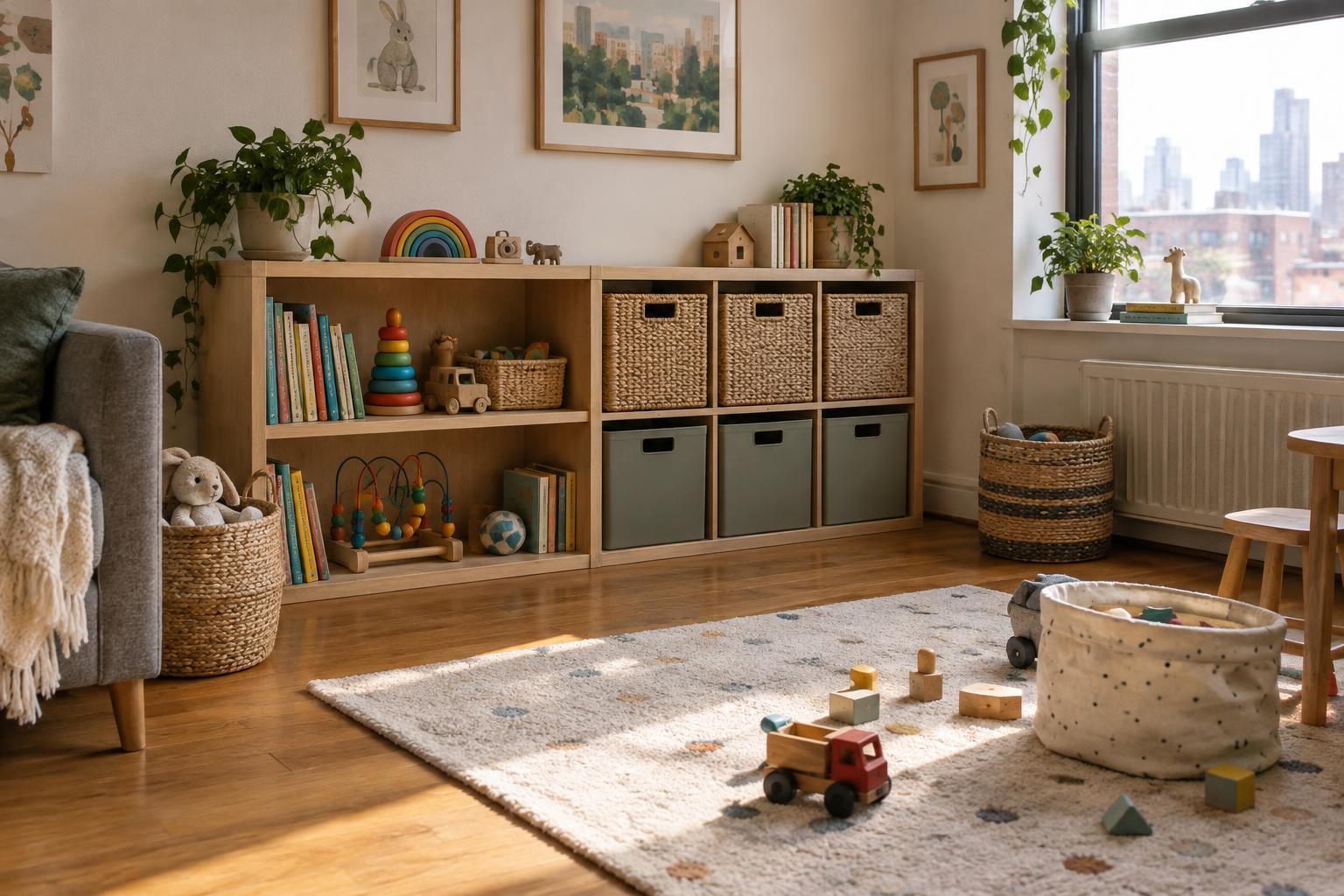
Use containers you already have before buying organizers. A labeled bin may help, but the label is less important than a clear rule everyone understands, such as all library books go in one basket. Leave a little open space when possible so items are easy to return. If putting something away requires moving three other things, the setup may be too complicated for everyday family routines.
Keep the process moving without starting over
Finish each session by dealing with the sorted items. Return what you are keeping, move outgoing belongings to a designated spot, and clear the work surface. An unfinished pile can make a small project feel like more clutter. Then note the next category you want to tackle. You might work through art supplies, school papers and sports gear over separate sessions rather than trying to address them all in one weekend.
Decluttering is not a one-time test of whether your family can stay perfectly organized. Belongings change as routines, interests and seasons change. A quick look at one category when its storage area feels crowded can prevent a larger reset later. Start small, notice what makes daily life easier, and let those observations guide what stays and where it belongs.