Start with the trip home
After school, it can be tempting to start asking about homework, forms, and tomorrow’s plans right away. But the trip home is already a transition: children are leaving a busy setting, navigating a sidewalk or bus, and adjusting to being with their caregiver again. A routine can begin before you reach the front door by keeping that transition simple.
Try a familiar question that does not demand a full report, such as “What would you like to do when we get home?” Some children will want to talk; others may prefer to watch the neighborhood go by. If you need to stop at a store or pick up a sibling, let your child know what comes next in a few clear steps. Predictability can be helpful even when the route changes.
Make arrival easy
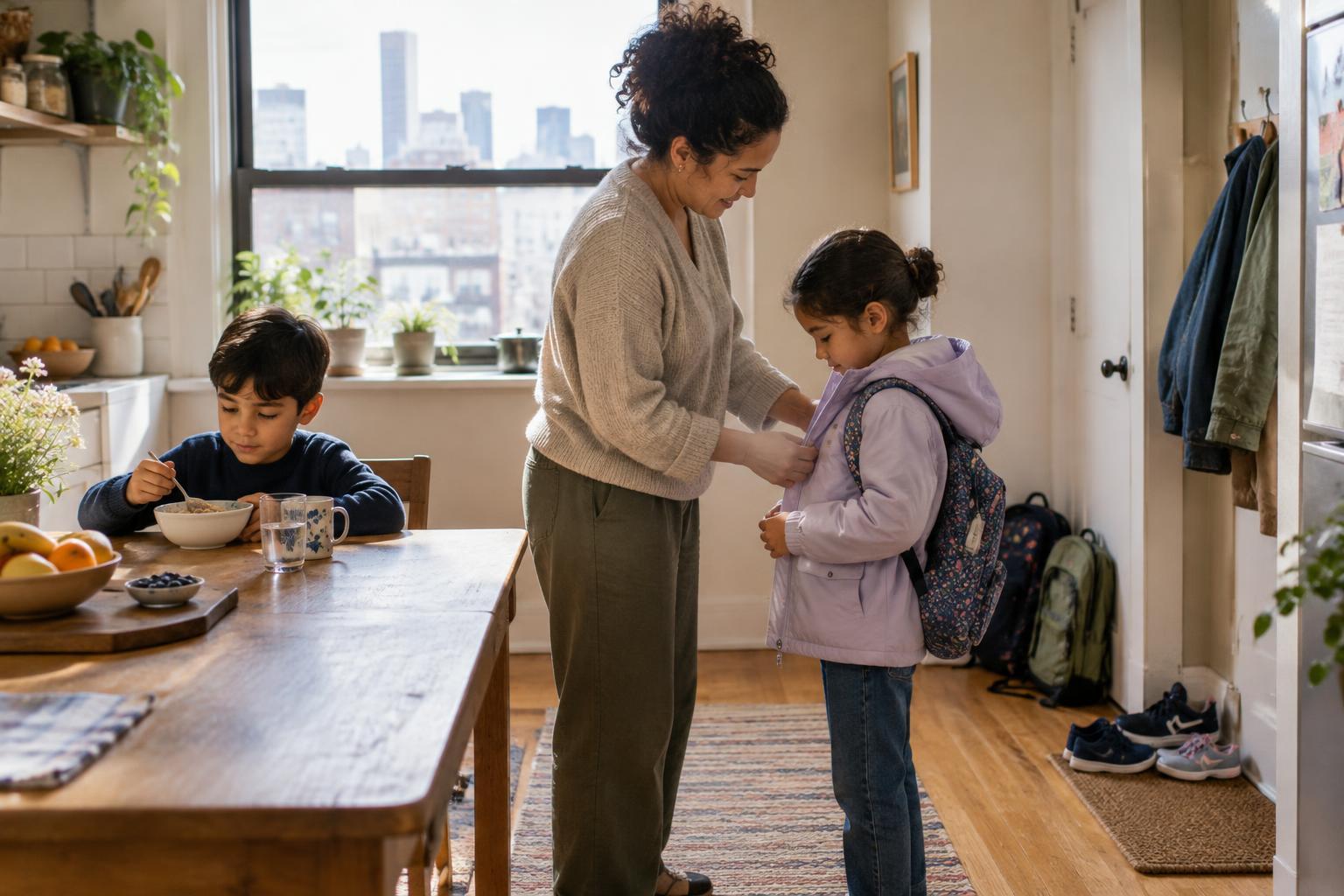
A useful after-school routine does not need a long checklist. Choose a few actions that make the rest of the afternoon easier: put shoes and bags in their usual places, wash hands, and take out anything a caregiver needs to see. Keep the landing spot within reach of the people who use it. A hook by the door and a tray for papers may do more for the routine than an elaborate organizing system.
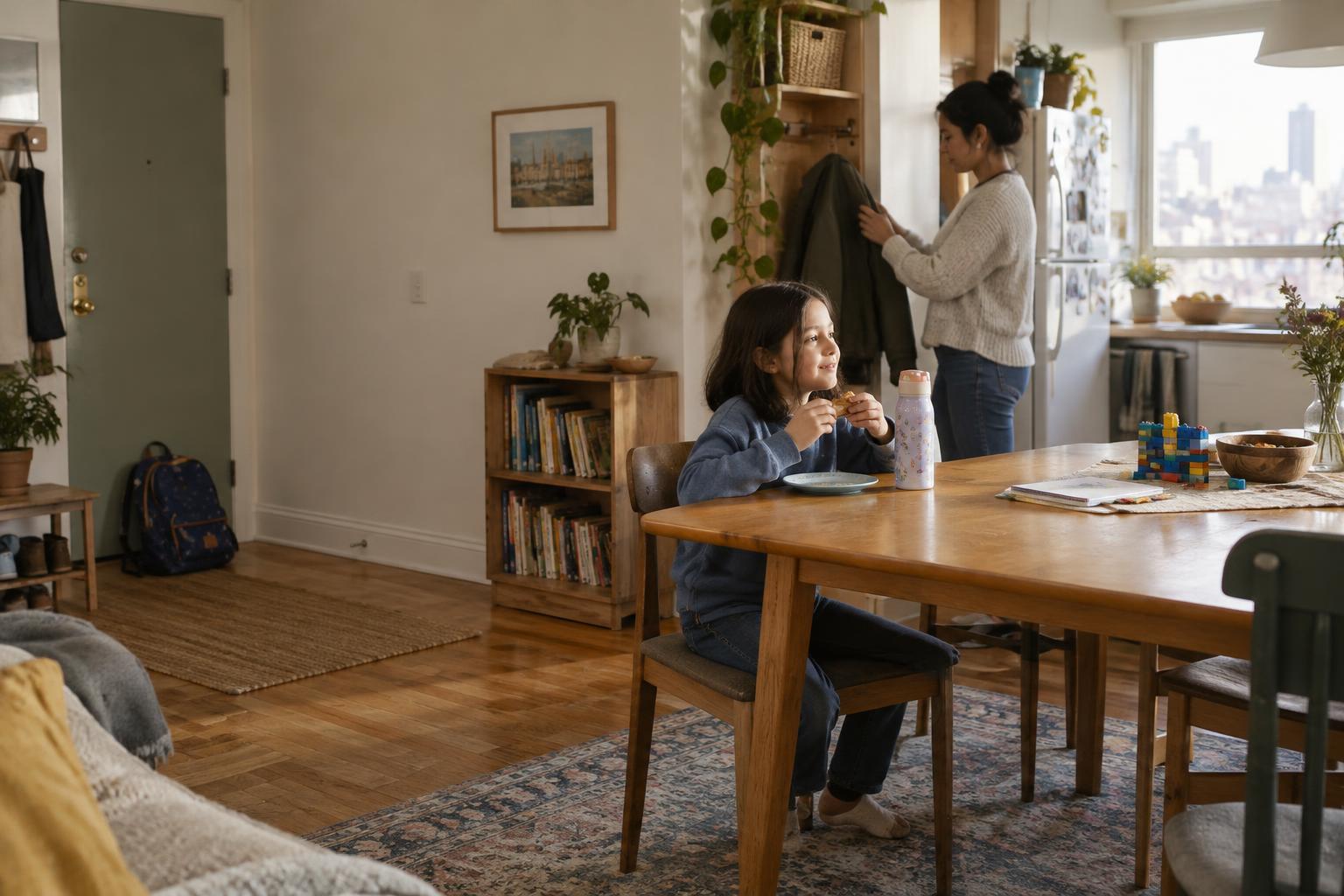
Next, offer a snack if that fits your household’s schedule. Simple options that are easy to serve and clean up can keep this part of the day from becoming another project. If dinner is soon, a smaller snack may make sense. The goal is not to create a perfect menu; it is to make arrival feel steady and give everyone a moment to settle.
Protect a pocket of unplanned time
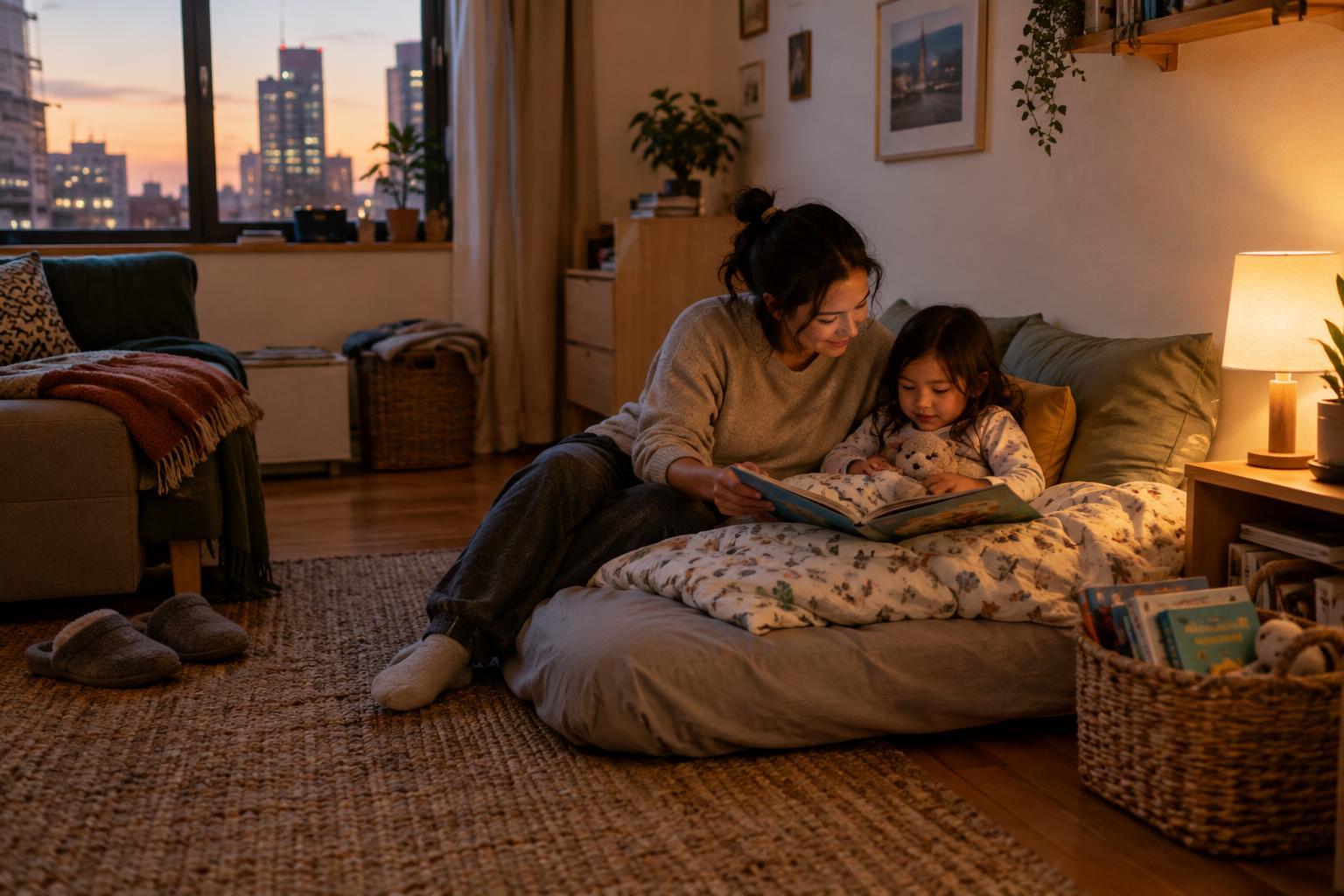
After the basic arrival steps, leave a short stretch without assignments or scheduled activities when possible. Unwinding can look different from day to day: drawing at the table, building with blocks, reading, listening to music, or simply sitting nearby. A child who has spent the day following a group schedule may appreciate having a small choice that belongs to them.
You do not have to fill this time with entertainment. Set out a couple of accessible options, then allow some quiet or boredom. If screens are part of your household’s afternoons, decide ahead of time where they fit rather than negotiating while everyone is tired. A clear stopping point, such as the start of dinner preparation, is often easier to follow than an open-ended promise to turn a device off “soon.”
Give homework and chores a clear place
When it is time to turn toward responsibilities, name the next step rather than the entire evening’s to-do list. You might say, “Let’s look in your bag,” then sort out which tasks need attention today. A brief check together can help separate homework from notices, library books, or supplies needed for tomorrow. For older children, the same check can be something they lead while you remain available.
A consistent place to work helps, but it does not have to be a dedicated desk. A cleared corner of the kitchen table may be enough. Consider what your child can start independently and where they may need help understanding directions. If the afternoon includes a class, an errand, or a long commute, adjust the plan rather than trying to squeeze every task into the usual order. Chores can stay small and specific, such as putting a lunch container in the sink.
Use a few anchors, not a rigid timetable
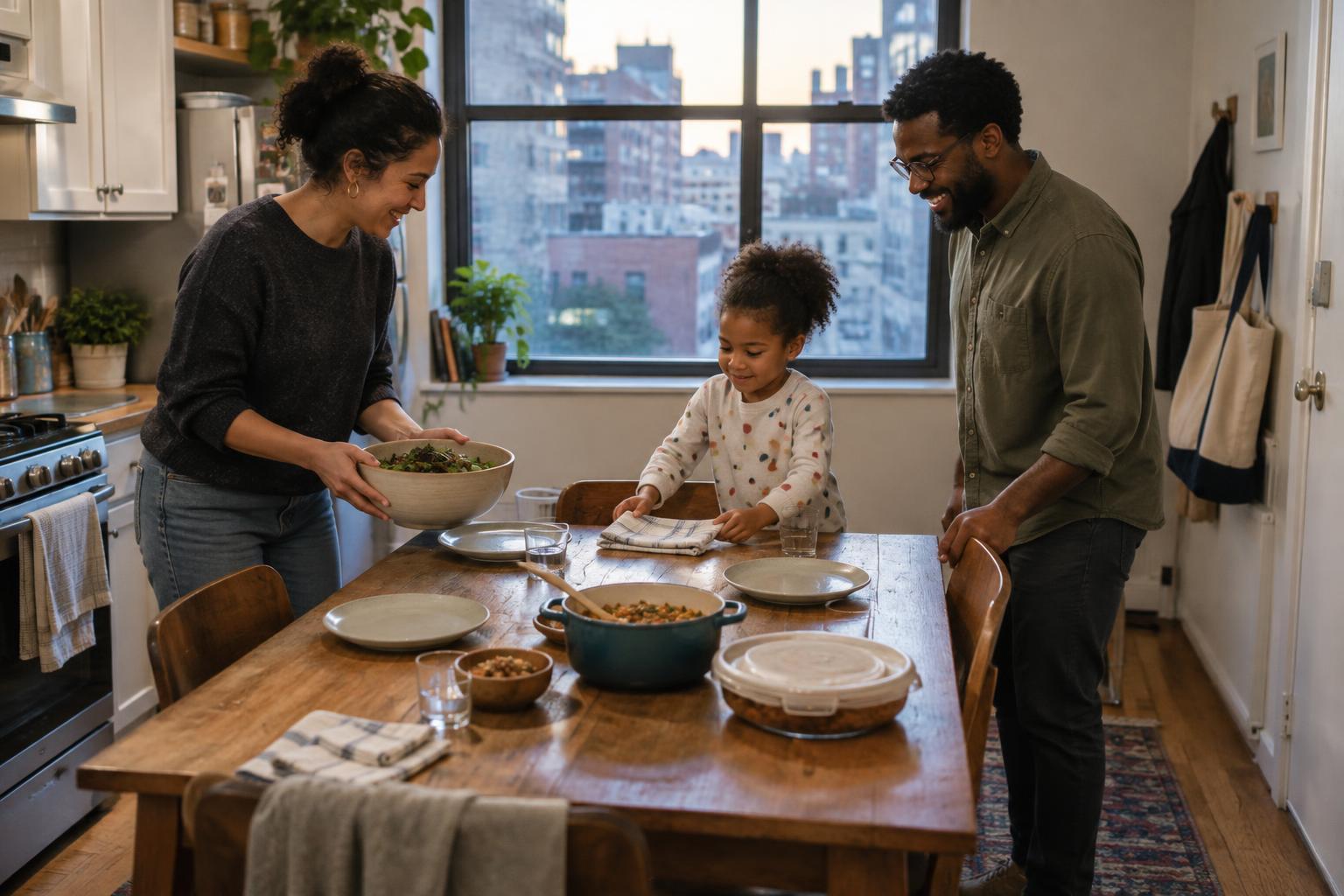
The most durable routine is one your household can repeat on an ordinary, imperfect day. Think in anchors: arrive, settle, unwind, handle necessary tasks, and move toward dinner. You can keep the order familiar without assigning a precise minute to every activity. That flexibility matters when pickup runs late, a friend wants to chat outside school, or someone comes home needing more quiet than usual.
At the end of the week, notice which parts reduce friction and which ones regularly stall. Perhaps papers need a better place to land, or homework goes more smoothly after free play. Change one step at a time and explain the change to your child. An after-school routine is not meant to eliminate every difficult afternoon. It gives the family a dependable way to come home, make room to breathe, and begin again together.