Set a small goal for the day
A city outing does not need to include every stop on your list. Pick one main destination, such as a museum, playground, or neighborhood event, and treat anything else as a bonus. This makes it easier to leave when everyone has had enough rather than pushing through a crowded afternoon to complete an itinerary.
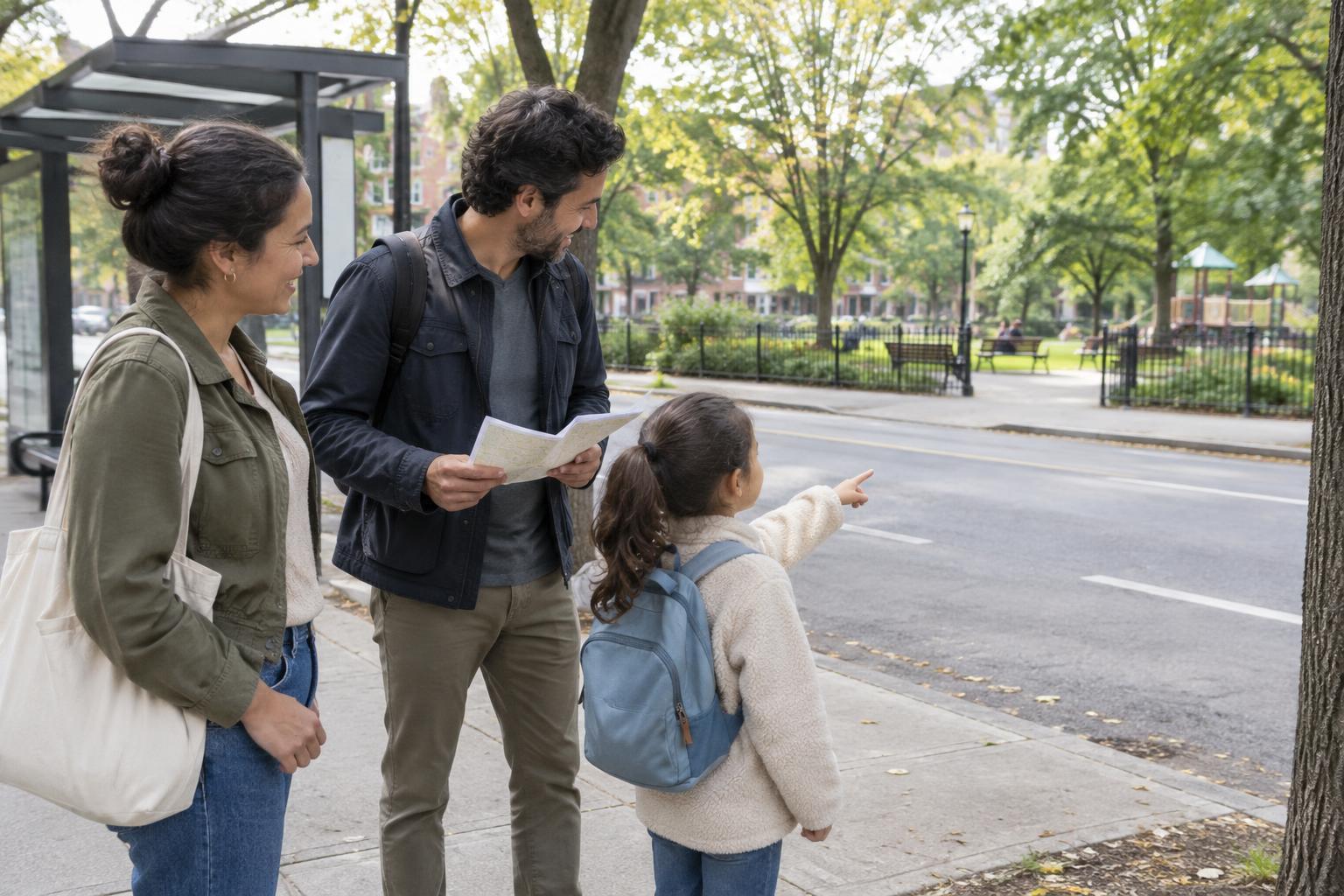
Before you go, explain the plan in simple terms: where you are headed, how you will get there, and where you might have to wait. You can say, “We’ll ride the train, walk to the entrance, and maybe stand in line before we go in.” Knowing the order of events may not make waiting exciting, but it gives kids a clearer picture of what comes next.
Pack for pauses, not just the destination
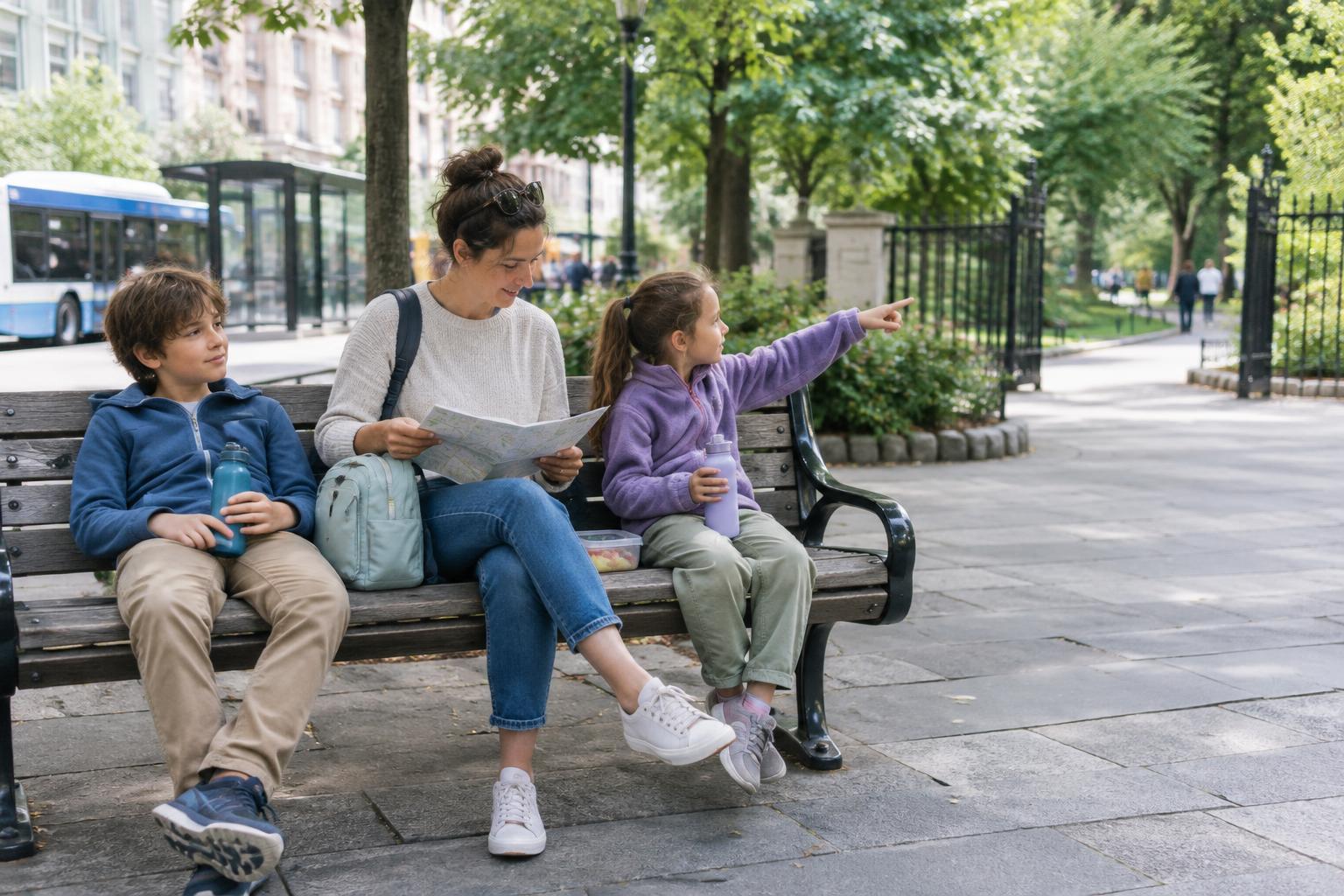
Think about the stretches when your family will be standing still: a ticket line, a platform, or a queue for a snack. Water, a simple snack where permitted, and a small activity can make those pauses more comfortable. Choose items that are easy to put away quickly, such as a pocket-size book, a notepad, or a game you can play without supplies.
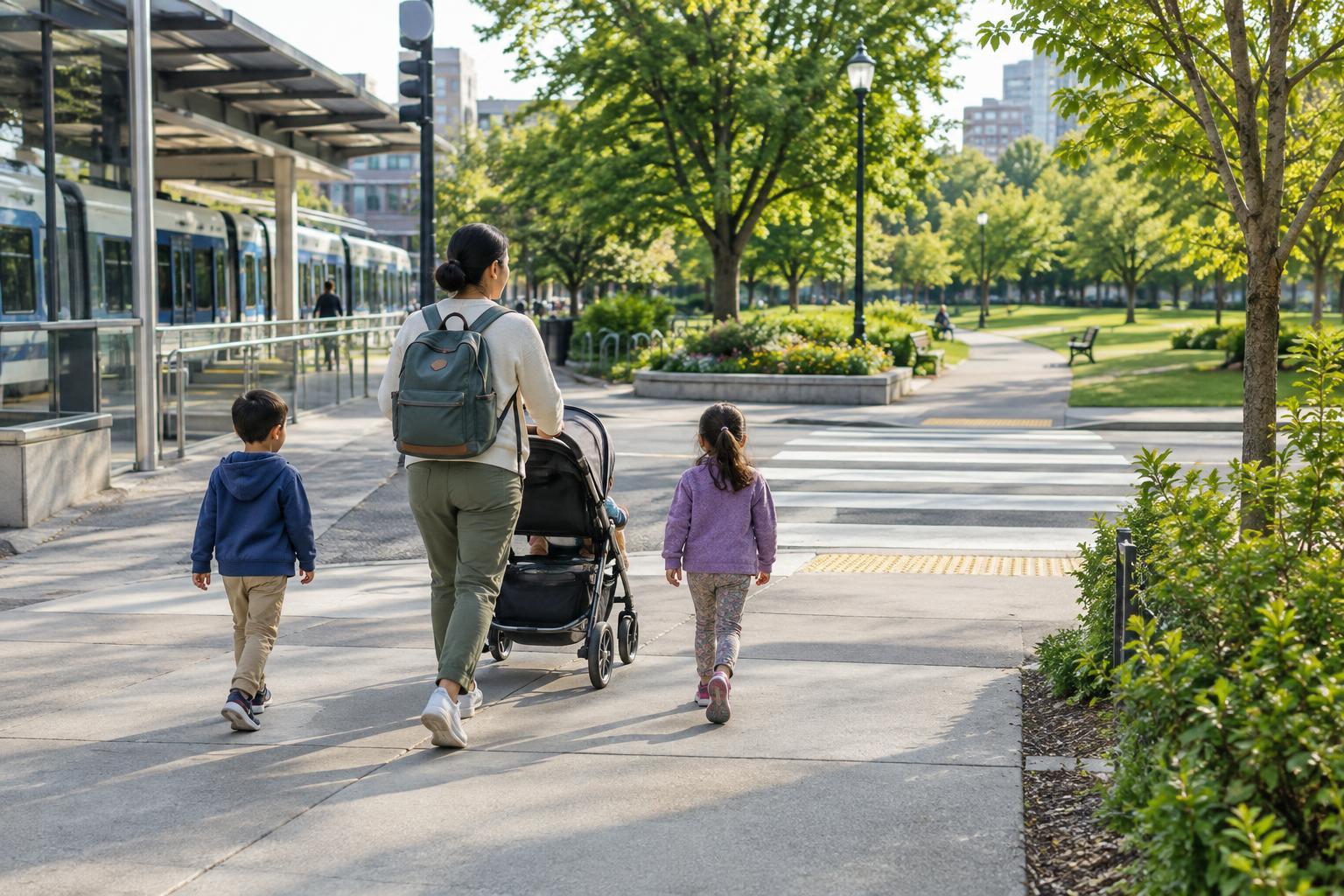
Keep the essentials where you can reach them without unpacking your whole bag. If you are bringing a stroller, consider whether the destination has narrow entries, stairs, or a place where strollers must be parked. If you are traveling with another adult, decide ahead of time who will manage tickets or directions and who will stay close to the kids. A brief plan can prevent a scramble at the busiest point of the trip.
Give kids a clear way to move through crowds
Before entering a busy area, agree on a simple rule everyone can remember, such as holding a hand, holding the stroller, or staying within arm’s reach. Pause somewhere less crowded to repeat the rule rather than trying to explain it while walking. For children who can understand it, point out a nearby staff desk or other obvious meeting point and explain that they should ask a staff member for help if separated.
Crowds move at uneven speeds. Walking along the edge of a busy space, stepping aside to check directions, and allowing extra time to cross a plaza or enter a building can feel calmer than trying to keep pace with everyone else. If one child needs attention, stop in a safe spot before reaching into a bag or looking at your phone. Staying together matters more than moving quickly.
Make the wait something you do together
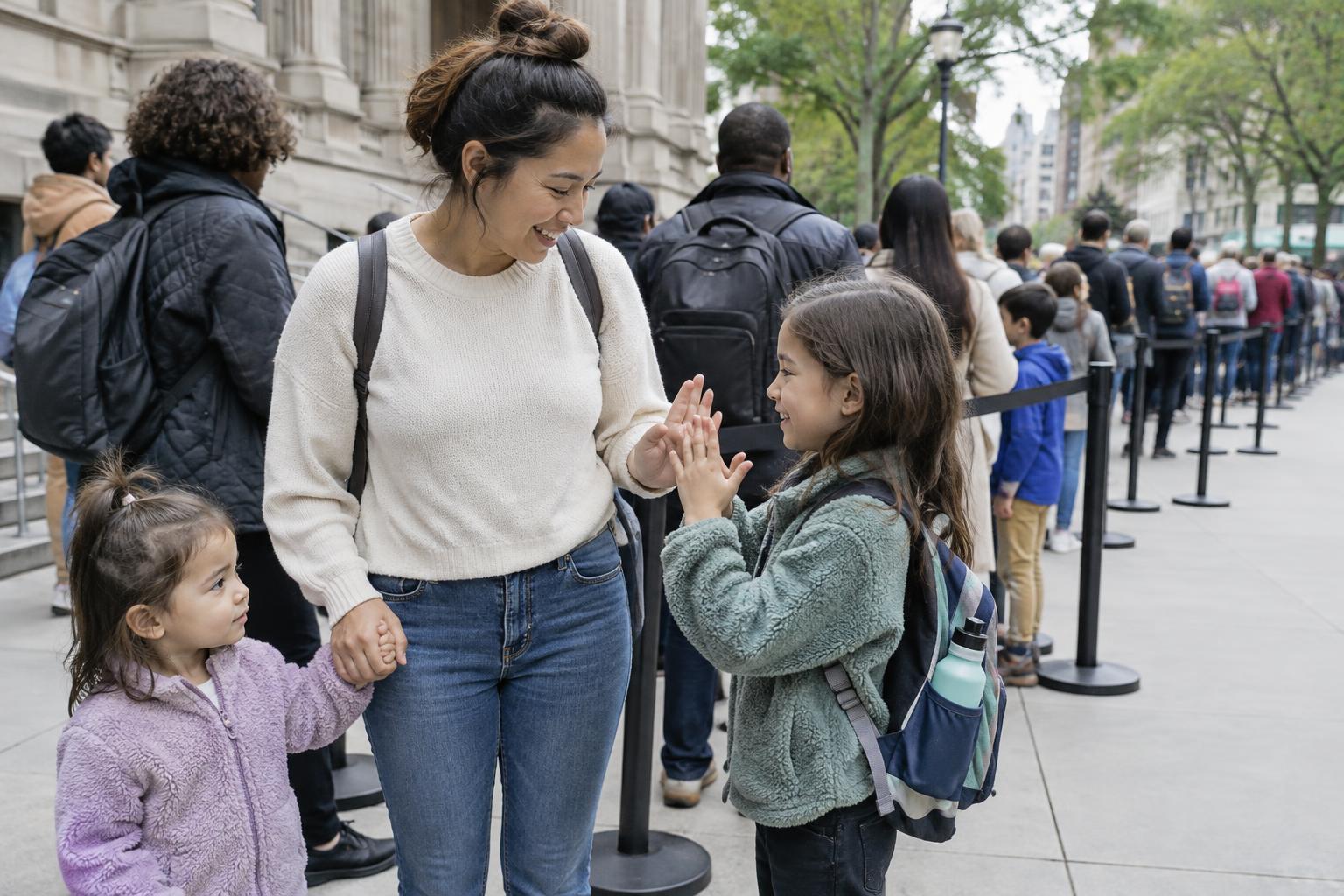
A line is easier to face when kids have a job besides “be patient.” Invite them to look for three colors, count doors, invent a story about what they might see inside, or choose between two activities for later. Quiet games work especially well in tight spaces because they do not require room to move or materials that might fall.
For a long wait, break the time into visible steps without promising an exact finish. You might point out that the family is waiting to reach the corner, then the sign, then the entrance. Offer a sip of water or a short conversation at each step. If kids are getting restless, acknowledge it plainly: “This is taking longer than we hoped.” Then tell them the next choice, whether that is staying a little longer or finding another activity.
Know when to change plans
Leaving a line is not a failed outing. A crowded entrance, a delayed ride, or a wait that has stopped being worthwhile may be a good reason to switch to your backup plan. Before the trip, identify an easy alternative: a nearby open space, a walk past interesting storefronts, or a chance to head home and try another day. Keep that option modest so it does not become another complicated journey.
Afterward, notice what worked for your particular family. Maybe an early start helped, or maybe everyone did better after a relaxed morning. Perhaps a simple line game was enough, while carrying too many activities made the bag harder to manage. Each outing offers a chance to adjust. The goal is not to eliminate every wait; it is to give your family room to handle one without letting it define the whole day.