Trying to change everything at once
When family life feels scattered, it is tempting to create a complete new schedule: earlier bedtimes, packed lunches, tidy rooms, less screen time, and a calm exit through the front door. Each goal may make sense on its own. Together, they can turn an ordinary day into a long list of opportunities to fall behind. A routine that requires everyone to learn several new habits at once may be difficult to repeat.
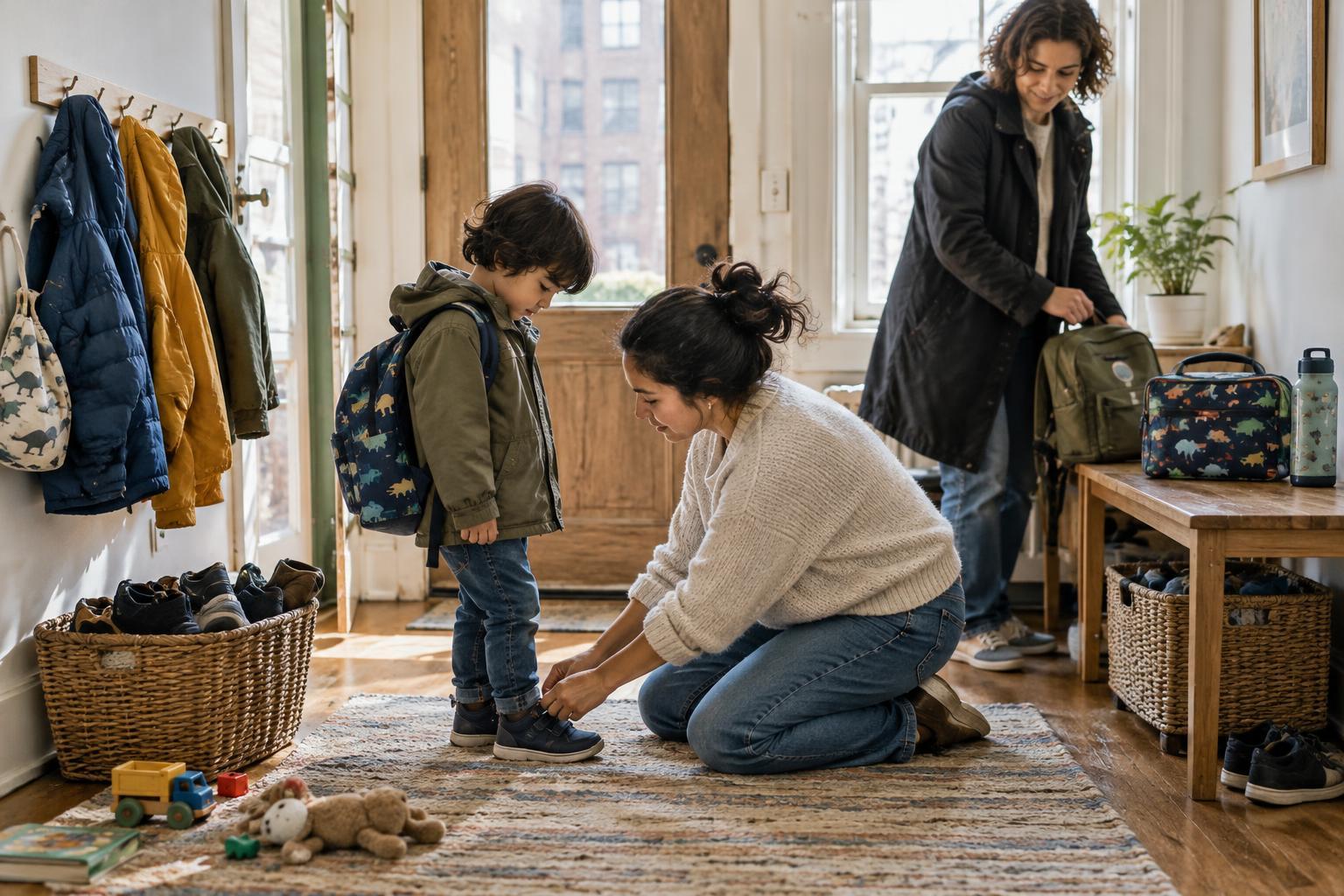
Start with one recurring pinch point, such as finding shoes before school or clearing the table after dinner. Choose a small action that makes the next step easier: place a shoe basket near the door, or ask each person to carry one item to the kitchen. Give that action time to become familiar before adding another. A modest routine that happens most days is often more useful than an ambitious one that lasts only a week.
Planning for an ideal day instead of a typical one
A routine can look reasonable on paper while leaving no room for the elevator that takes longer than expected, a child who needs help with a coat, or a caregiver coming home tired. In city family life, travel, shared spaces, and changing schedules can make tight plans especially frustrating. If every task depends on the one before it happening exactly on time, a small delay can unsettle the whole morning.
Build the plan around what usually happens, not the smoothest day you can imagine. Decide which steps are essential and which can wait. For example, the morning essentials might be getting dressed, eating something, and leaving with the needed bags; a fully cleared breakfast table might be optional. Keep a short backup version for rushed days. It is not a lesser routine—it is a practical way to preserve the parts that matter.
Leaving the steps and handoffs unclear
Instructions such as “get ready” or “clean up” can mean different things to different family members. One person may think the backpacks are packed; another may assume that task is still on someone else’s list. When expectations stay in a caregiver’s head, that person also has to remember, explain, and check every step. The routine may depend less on cooperation than on constant prompting.
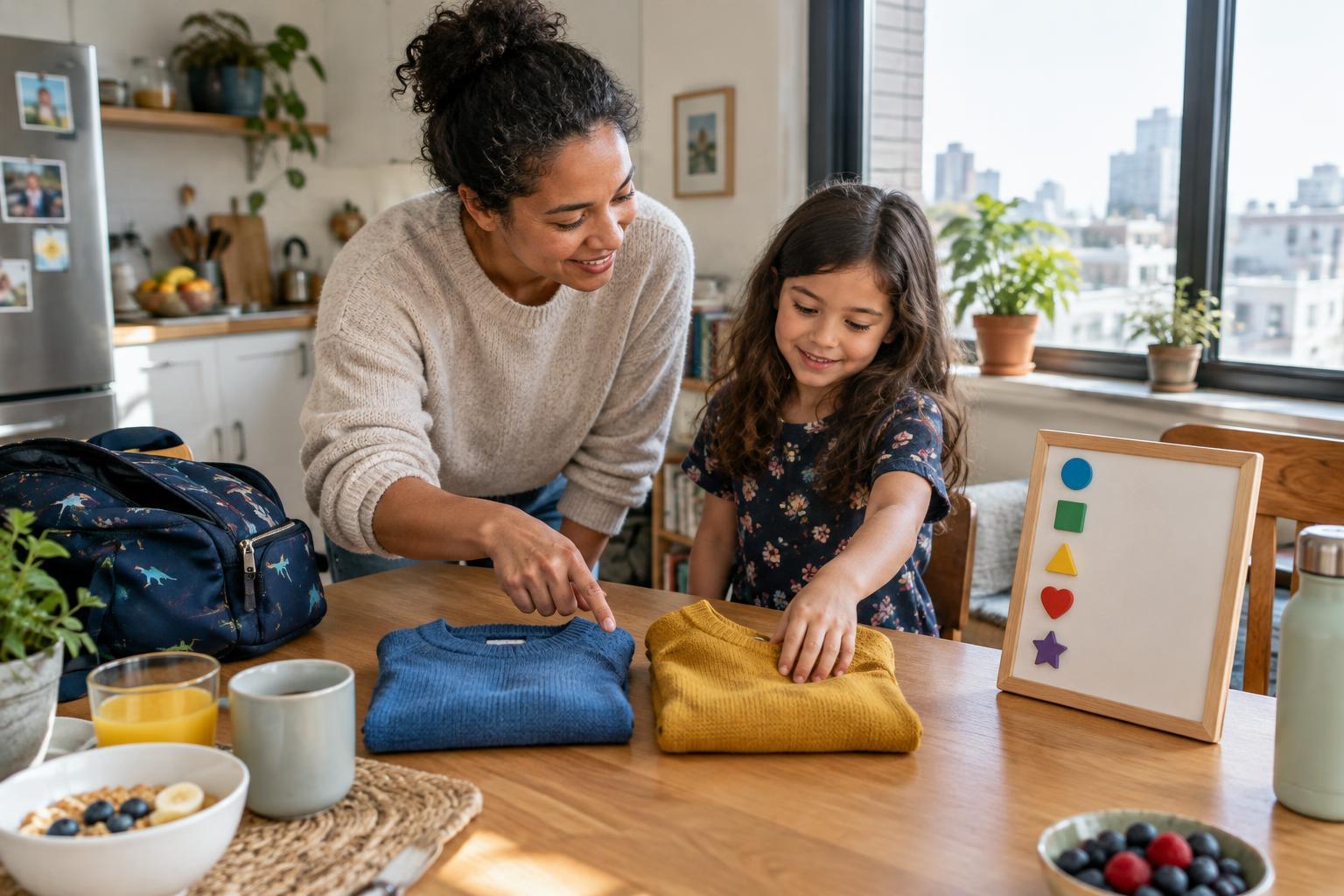
Make the next action easy to recognize. A simple sequence near the door might say: shoes, coat, water bottle, bag. For younger children, pictures or objects placed in order can serve the same purpose. Caregivers can also agree on who handles a specific handoff, such as checking that lunch is ready while another person helps with coats. The aim is not to assign blame when something is missed; it is to make the plan visible enough that people can share it.
Relying on memory instead of the space around you
Even a simple routine becomes tiring when supplies live in different rooms or every step requires a reminder. If permission slips, reusable bags, and keys have no regular place, leaving home can turn into a search. At bedtime, a missing book or toothbrush can interrupt a sequence that was going smoothly. These are not signs that a family needs to try harder; they are clues about where the setup could help.
Put frequently used items close to the action they support, as space allows. A small tray by the door can hold keys and transit cards. A basket can collect library books that need to go back. Keep a bedtime book where reading happens rather than expecting someone to retrieve it each night. In a compact home, one clearly labeled bin may be enough. The goal is to reduce decisions and searching, not to create a perfect organizing system.
Treating interruptions as proof the routine failed
Children’s needs change, work hours shift, and some evenings are simply harder than others. A routine built around never missing a step can feel broken after one late arrival or an unexpected outing. That all-or-nothing approach makes it harder to return to the plan, even when most of it still helps. Consistency does not have to mean doing every task in the same order at the same minute.
Choose a few anchors that are easy to return to, such as putting bags by the door before bed or reading together after pajamas. On a disrupted day, skip the extras and restart at the next anchor. If the same step keeps causing trouble, adjust it rather than insisting everyone push through. Family routines are tools, not tests: the best version is one your household can use, pause, and pick up again.