Start with fit, not the number on the tag
Kids’ clothing sizes are useful labels, but they are not a reliable substitute for checking fit. Two shirts marked the same size may have very different sleeve lengths, and a child may need one size in tops and another in pants. Begin by gathering clothes from drawers, closets, laundry, and any bags waiting to be unpacked. You do not need to sort the whole household at once; one child’s clothes or one type of clothing is a manageable starting point.
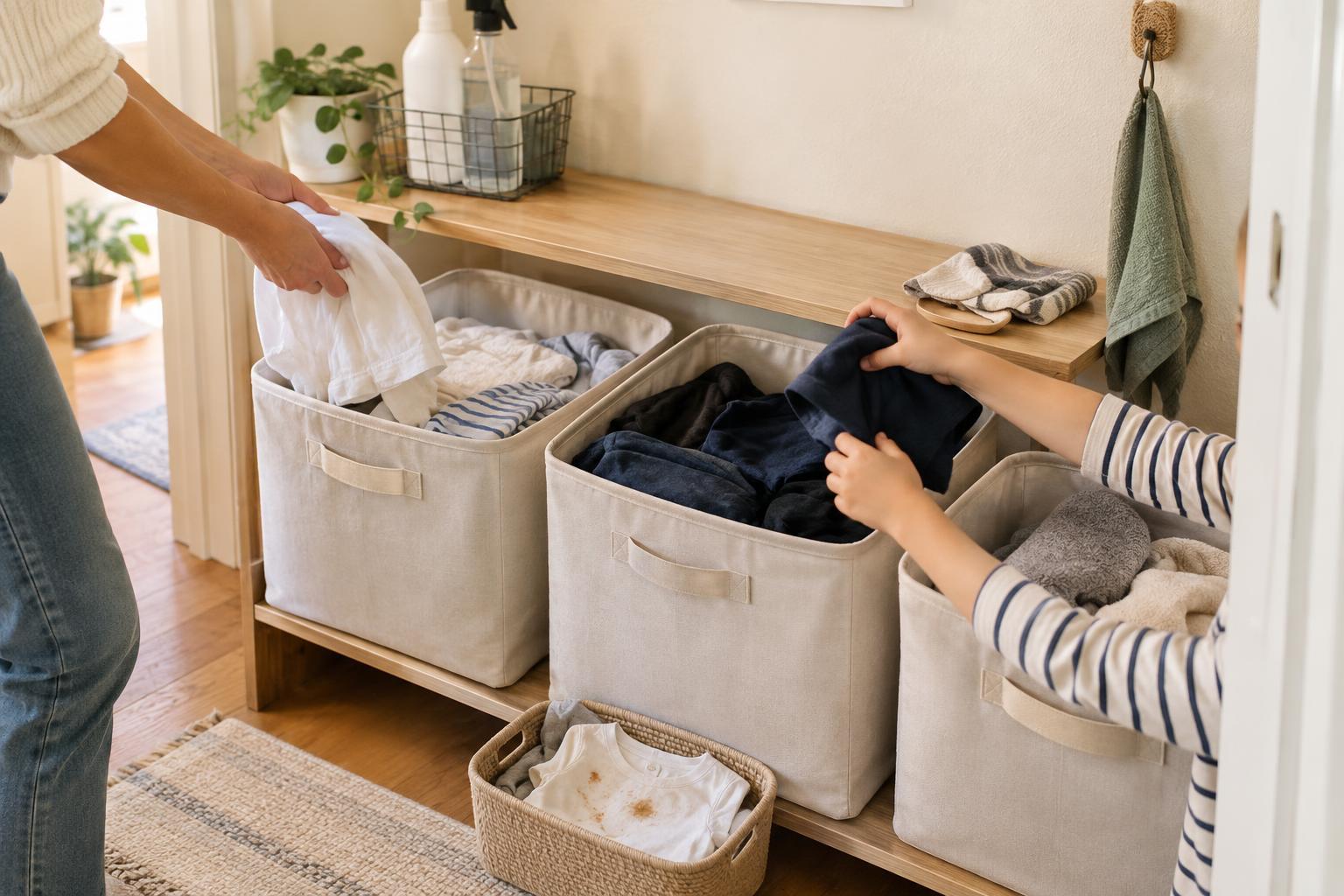
Make three piles: fits now, likely to fit next, and no longer needed. Put anything that is uncomfortable, damaged beyond repair, or unlikely to be worn back into a separate decision pile. If you are unsure about an item, have the child try it on when convenient rather than letting it occupy prime drawer space indefinitely. Keep your “fits now” group focused on clothes that suit your family’s actual routines, not every item that technically fits.
Give current clothes the easiest access
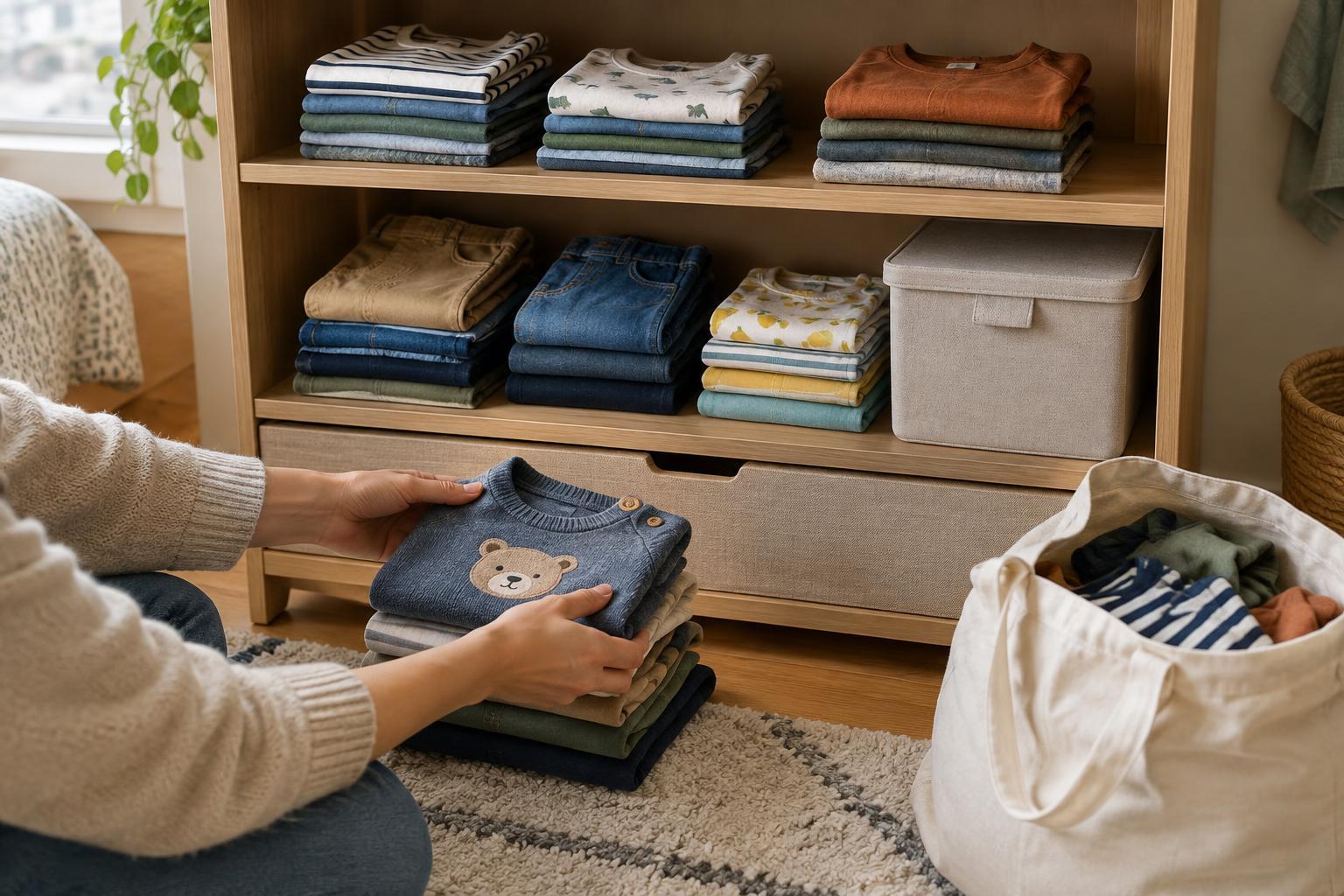
The clothes worn most often belong where a caregiver or child can reach them without moving a stack of other things. Group everyday items by type, such as tops, bottoms, pajamas, and underwear. Drawer dividers, small open bins, or simply folding items in short rows can help keep categories visible. The best method is the one everyone who puts away laundry can follow.
Season matters within the current size, too. Keep the layers and weather-appropriate clothes you use regularly in easy reach, with less-used pieces on a higher shelf or at the back of a drawer. In a small city home, there is no need to give equal space to every season all year. A few unexpected-weather options can stay accessible while the bulk of off-season clothing moves elsewhere.
Store the next size as a ready-to-use kit
Clothes a child may grow into soon deserve their own clearly labeled space, separate from both current clothes and distant hand-me-downs. A bin or shelf labeled with the child’s name and an approximate size works well. Before storing each item, check that it is clean and in usable condition. That small step makes the bin helpful when you open it later, rather than another sorting project.
Within the bin, group clothes loosely by season or type. If the next-size collection is large, use smaller bags or bundles for warm-weather and cool-weather items, with labels you can read without opening everything. Avoid packing the bin so tightly that you cannot see what is inside. A quick inventory on a note or on the bin lid can prevent buying another winter coat when one is already waiting.
Make a clear route for outgrown clothes
A single bag or basket for outgrown clothes keeps them from drifting back into everyday drawers. When it fills, sort its contents into items to keep for a younger child, pass along, recycle where appropriate, or discard if they are unusable. Keep hand-me-downs only if you have room for them and a reasonable expectation that they will be worn. Passing along good clothes can be more useful than storing multiple bins you cannot easily manage.
Label stored hand-me-downs with the size range, season, and a brief description, such as “4–5 years, cool weather, tops and pants.” Use the label as a guide rather than a promise of fit. If you store clothes in a closet, under a bed, or on a high shelf, choose containers that suit the space and protect the contents from dust. Put heavier bins where they are easier to lift safely.
Reset the system at natural transition points
Clothing organization does not need a constant overhaul. Check drawers when the weather shifts, when laundry starts revealing several too-small pieces, or before you shop for a new size. Pull out the next-size bin, try likely items, and move what fits into the everyday area. At the same time, remove clothes that no longer fit so the drawers do not become crowded again.
Leave a little open space in each category. It makes clothes easier to put away and gives you a clearer view of what is actually missing. If your child helps choose outfits, labels with simple words or pictures can make the setup easier for them to use. The goal is not a perfect closet: it is a repeatable path from “fits now” to “fits next” to “ready to leave,” with fewer decisions on busy mornings.