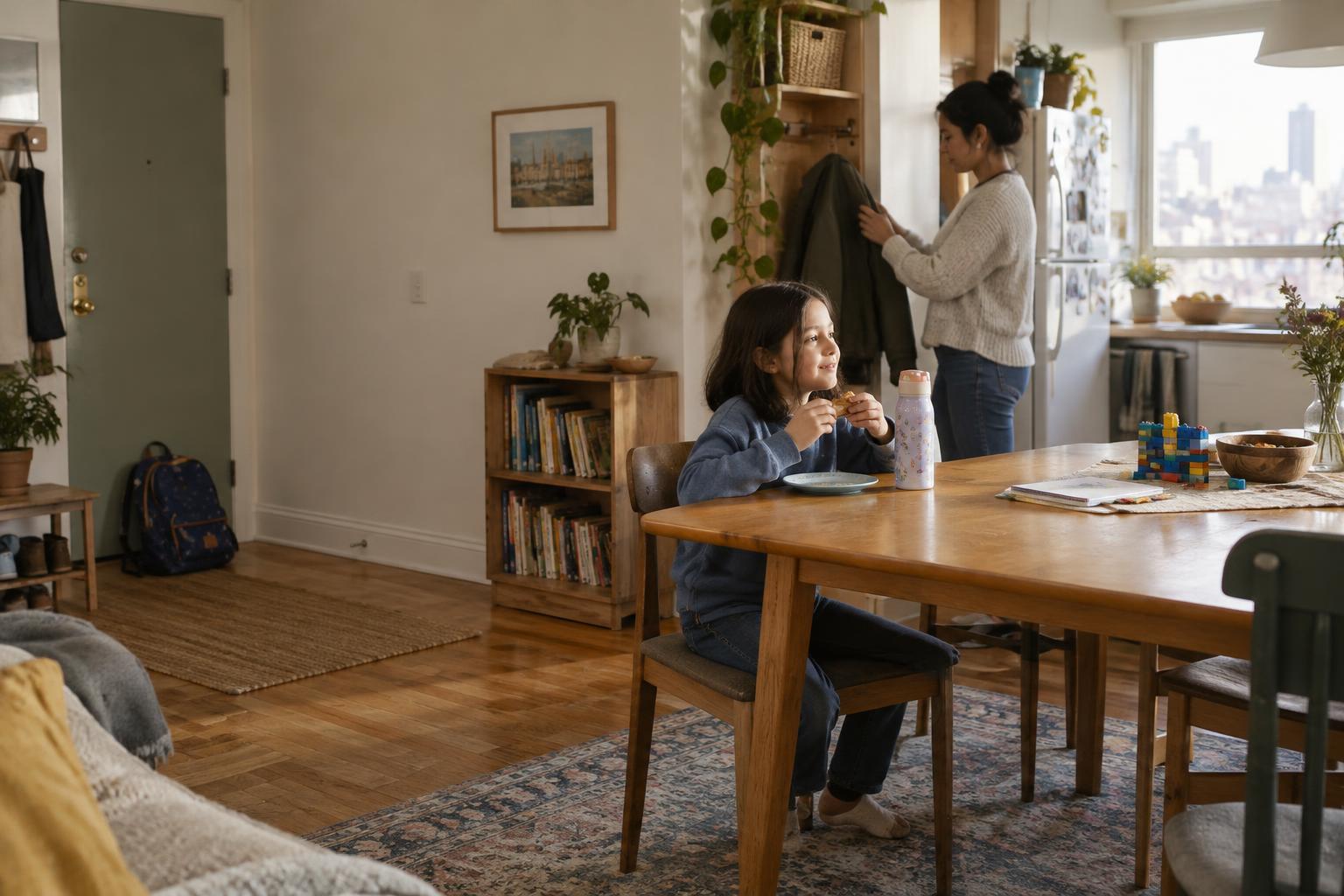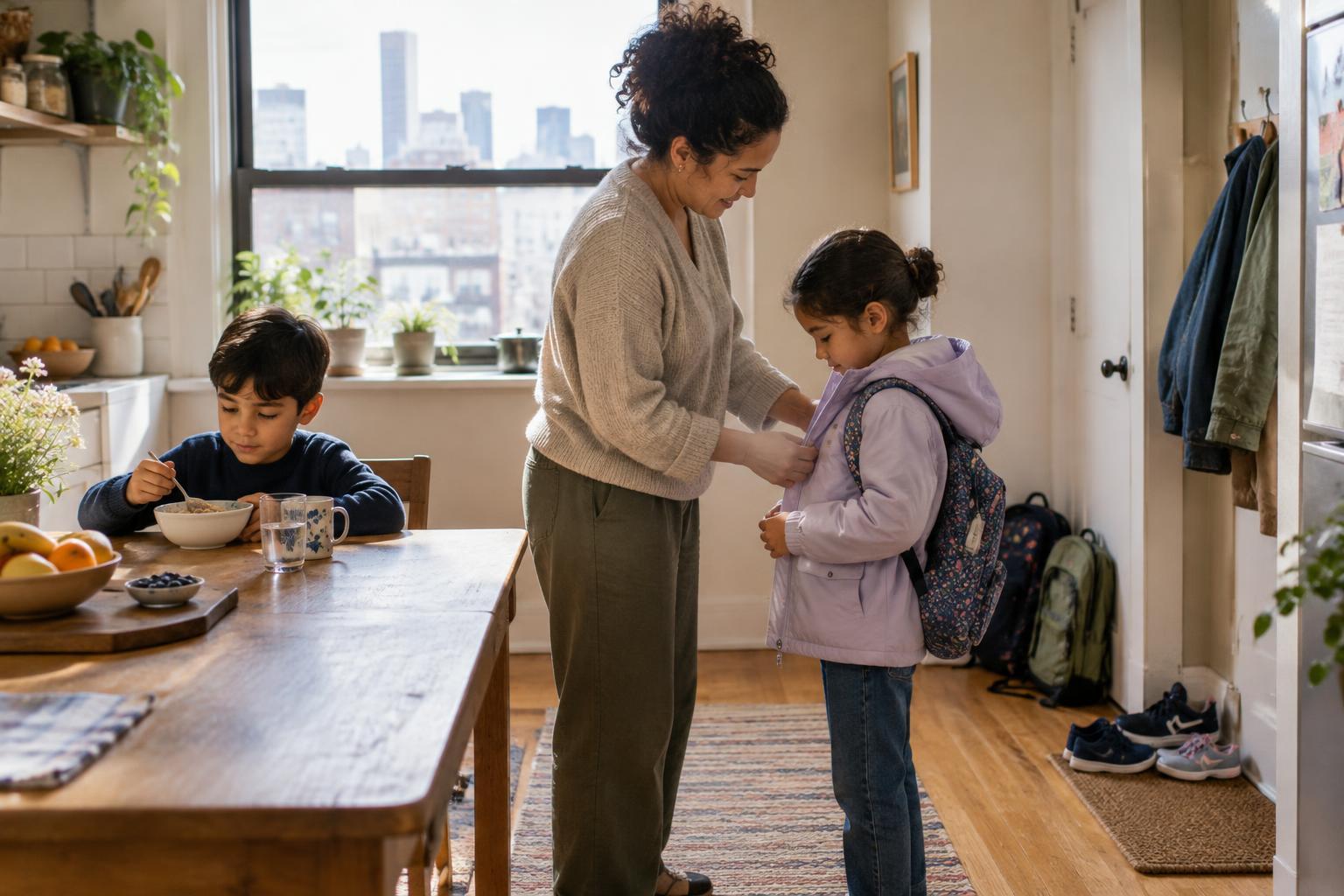
Start with a sequence, not a perfect room
In a small home, bedtime can overlap with dinner cleanup, an older child’s homework, or an adult getting ready for the next day. Waiting for the whole apartment to become quiet may not be realistic. Instead, choose a few steps that can happen in roughly the same order most evenings. For example: put away one set of toys, wash up, change into pajamas, share a book, then say goodnight. The familiar sequence can matter more than having a separate room for every activity.
Keep the routine short enough to repeat on an ordinary weeknight. If it takes too much preparation, it may be hard to maintain when everyone is tired. Decide which steps are essential and which are optional. A long bath or several stories might be pleasant when there is time, while a washcloth, one book, and a goodnight phrase can form a workable shorter version.
Give bedtime a small footprint
A dedicated bedtime basket can make a shared space easier to manage. It might hold pajamas, a few books, a comfort item, and anything else used every night. Store it near the sleeping area or somewhere a child can help carry it. When the routine is over, the basket goes back to its spot. This avoids searching through a crowded room just as everyone is winding down.
Think about what the sleeping area looks and sounds like from a child’s position. A lamp aimed toward an adult’s work surface may shine directly onto a pillow; a hallway conversation may be louder beside the door. Small changes, such as turning a lamp away, closing a door partway when appropriate, or moving a noisy task until later, can help define bedtime without rearranging the home. Keep walkways clear and use lighting that lets people move safely after dark.
Plan for people on different schedules
Shared rooms often mean one person is ready to sleep while another is not. Talk through the evening plan before bedtime begins, especially with older children who can help make choices. One child might read quietly with an adult in another corner while a younger sibling settles. If two children go to bed at different times, consider giving each a brief individual goodnight moment, even if they share the same final steps.
Adults may still need to cook, work, or get ready for bed nearby. Rather than aiming for complete silence, identify the sounds and lights you can reasonably reduce during the first part of bedtime. Set out dishes or clothes earlier if that prevents rummaging later. Agree on a quieter route through the room and a place for essentials such as keys or chargers. These adjustments make it easier for the household to keep moving without treating a sleeping child’s presence as a test everyone must pass.
Make transitions clear and calm
Moving from active play to sleep can be especially noticeable when both happen in the same room. A simple cue helps mark the change: toys go into a bin, the main light goes off, and a smaller light comes on for a book. Give a brief heads-up before starting, then offer a limited choice within the routine, such as which of two books to read. The choice gives a child a part to play without reopening the question of whether bedtime is happening.
If a child asks for another drink, story, or trip out of bed, respond in a way you can repeat. It may help to include predictable requests before the final goodnight: a drink of water, a bathroom visit, and a chance to choose a comfort item. No script will make every evening smooth, but a steady response can keep a small disruption from turning into an entirely new routine.
Keep a version for crowded or difficult nights
Visitors, late arrivals, and unusually busy evenings can disrupt even a well-planned routine. Make a compact version in advance: wash up, change clothes, read or tell one short story, and say the same goodnight words. You can do most of those steps beside a bed or on a sofa before moving to the sleeping spot. Returning to the usual sequence the next night is more useful than trying to make up for everything you skipped.
After a week or two, notice where the routine tends to stall. If books are hard to find, move them closer. If cleanup sparks arguments, make the pre-bed task smaller. If one child needs more attention, build a few minutes of connection into an earlier part of the evening. A bedtime routine in a shared space is not about making family life invisible. It is a practical agreement about what happens next, shaped to fit the people and room you have.