Start with what actually happens
Before making a new schedule, notice where your current morning tends to stall. Perhaps choosing clothes takes longer than expected, someone is hungry after putting on their shoes, or the walk to the bus stop needs more time than it seems. For a few days, pay attention to the order of events rather than trying to time every minute. The aim is to find the moments that create a scramble, not to judge how anyone uses their time.
Choose one or two friction points to change first. If everyone is searching for bags at the last minute, a designated spot near the door may help more than an earlier wake-up. If breakfast regularly gets squeezed out, set out dishes before bed or keep a few simple options available. A routine is easier to stick with when it solves a problem your family recognizes.
Move decisions to the night before
Mornings often feel crowded because they contain too many small choices. Before bedtime, invite children to choose clothes from a couple of suitable options, check that bags contain what they need, and decide on a breakfast plan. Adults can prepare their own essentials, too: keys, transit cards, work items, and anything that needs to leave the apartment. Keep the preparation short enough that it does not turn the evening into another rush.
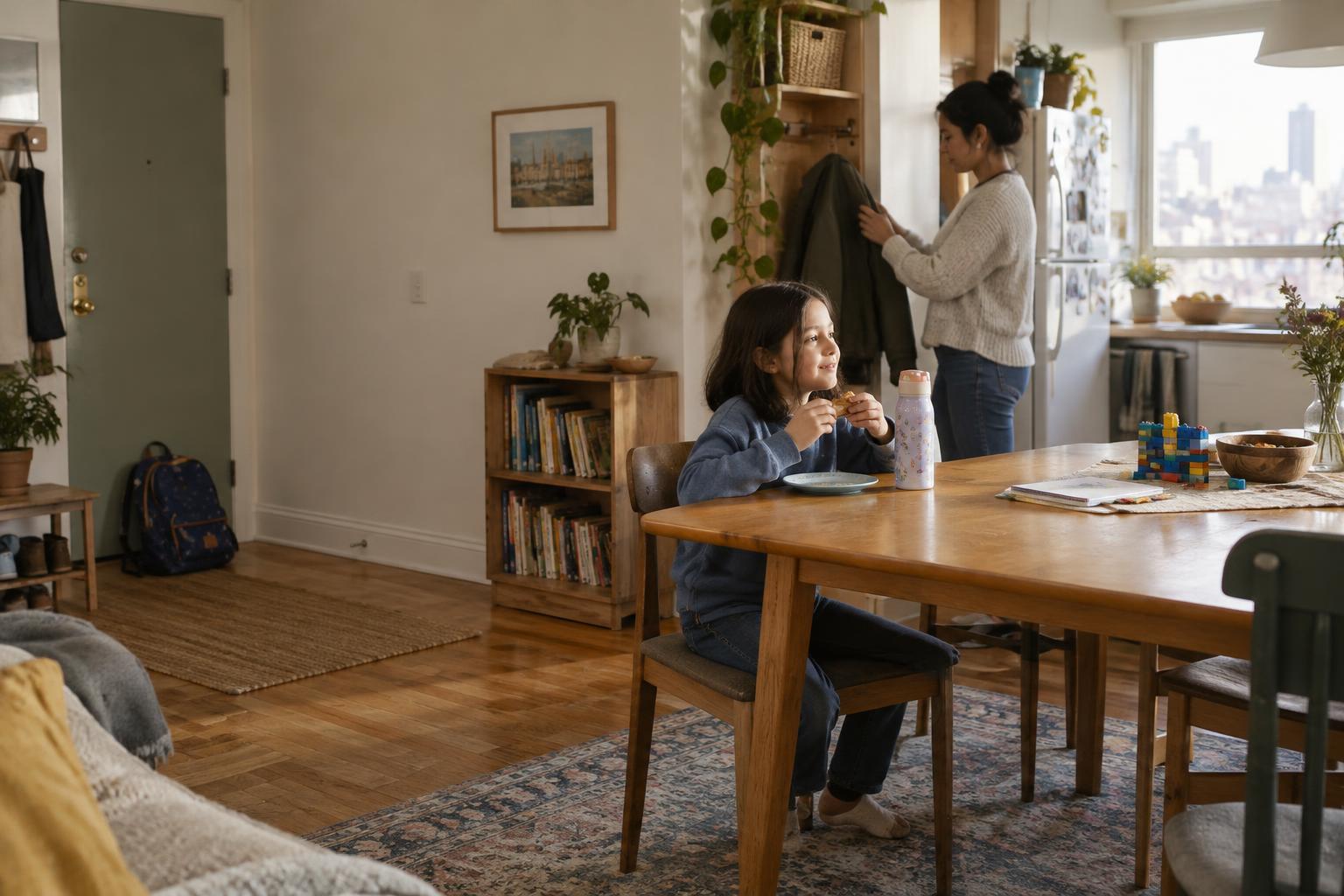
A launch spot can make these choices visible. Use hooks, a shelf, or a basket for items that need to go out the door. In a small home, it need not be a dedicated piece of furniture; one consistent corner is enough. Put occasional items, such as library books or forms, there as soon as you remember them rather than relying on a morning reminder.
Give the morning a simple order
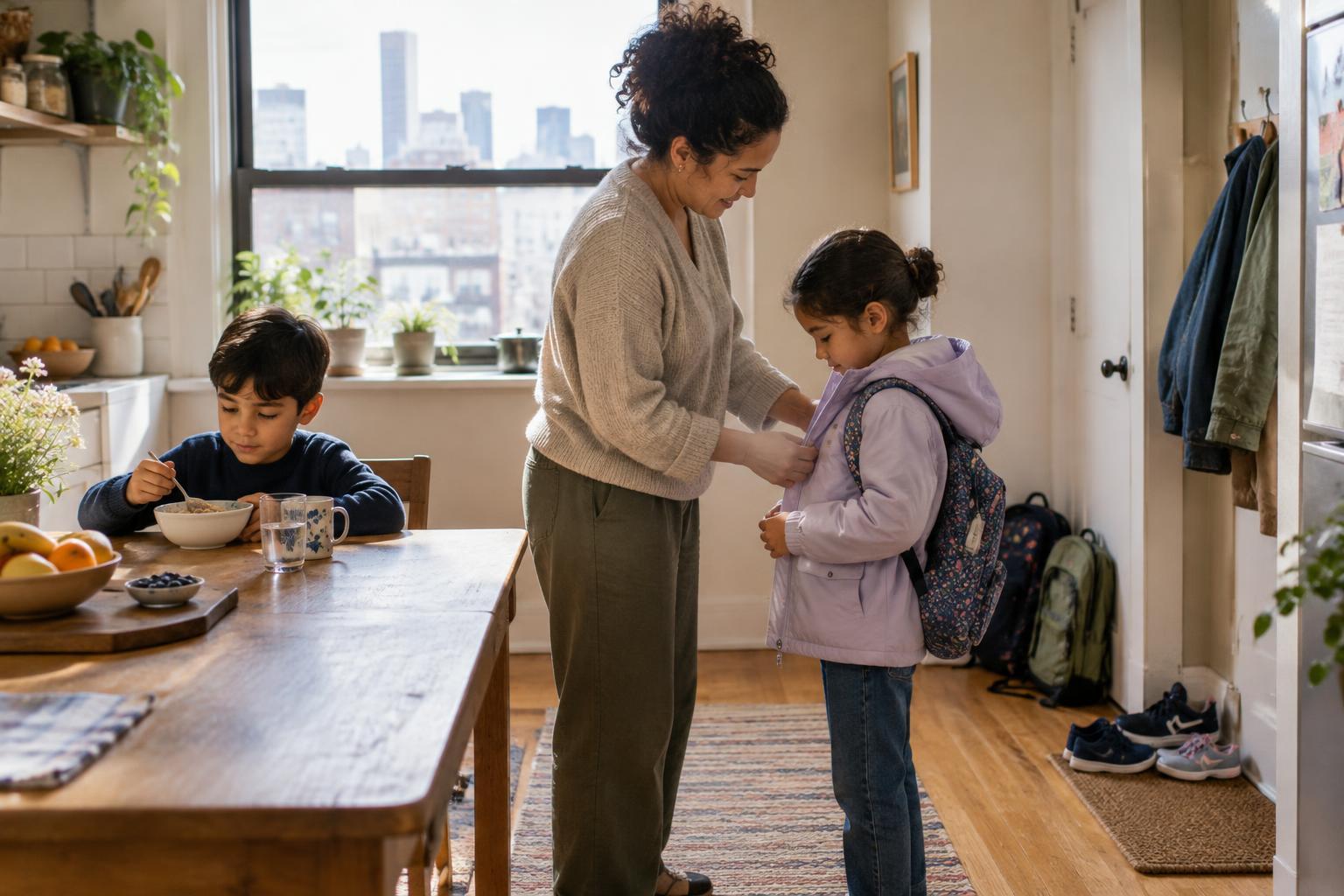
A useful routine tells everyone what comes next without requiring constant instructions. You might use a sequence such as getting dressed, eating breakfast, washing up, collecting bags, and putting on outerwear. The best order is the one that fits your household. A child who gets distracted after breakfast may do better getting dressed first; another may need food before tackling anything else.
Keep the sequence easy to see or repeat. Younger children may like a small picture checklist, while older children may prefer a short written list they can manage themselves. These tools are prompts, not tests. Try giving one clear cue at a time—“Breakfast is finished; next is teeth”—instead of announcing every remaining task. As children become familiar with the order, they may be able to take charge of parts of it without being hurried through each step.
Leave room for real life
If the plan works only when everyone moves quickly, it is likely to feel rushed. Build in a modest buffer before the time you truly need to leave, especially when your trip involves a stroller, stairs, weather gear, or transit. Think of that time as part of the routine, not as spare time to fill with another chore. It gives everyone room to find a missing mitten or finish a conversation without immediately falling behind.
A flexible backup plan can also lower the stakes. Decide which tasks are essential before leaving and which can wait. On a difficult morning, breakfast might be simpler, a hairstyle might be quicker, or a nonessential errand might move to another day. Keep the departure goal clear, but allow the path there to change. One disrupted morning does not mean the routine has failed.
Share responsibility without making speed the goal
Children can participate in age-appropriate ways, such as placing shoes by the door, putting a lunch bag in a backpack, or checking off a familiar task. Adults can divide responsibilities as well, whether one person handles breakfast while another helps with outerwear or everyone manages their own belongings. Be specific about who does what; vague requests to “get ready” can be hard to act on when several jobs are left.
After a week or two, ask what feels easier and what still feels tight. A brief family conversation may reveal that the schedule needs a small adjustment, or that a task belongs in the evening instead. The goal is not a silent, perfectly efficient morning. It is a dependable rhythm that helps everyone begin the day feeling prepared, with enough space for the ordinary surprises of family life.