Start with the moments you already have
A family storytelling tradition can begin with something as small as, “Remember when we missed the bus and found that little garden?” Everyday memories give everyone a place to start. A rainy trip home, a game invented while waiting in line or an unexpectedly good snack can all become stories. The point is not to record every detail. It is to notice moments that your family enjoys revisiting.
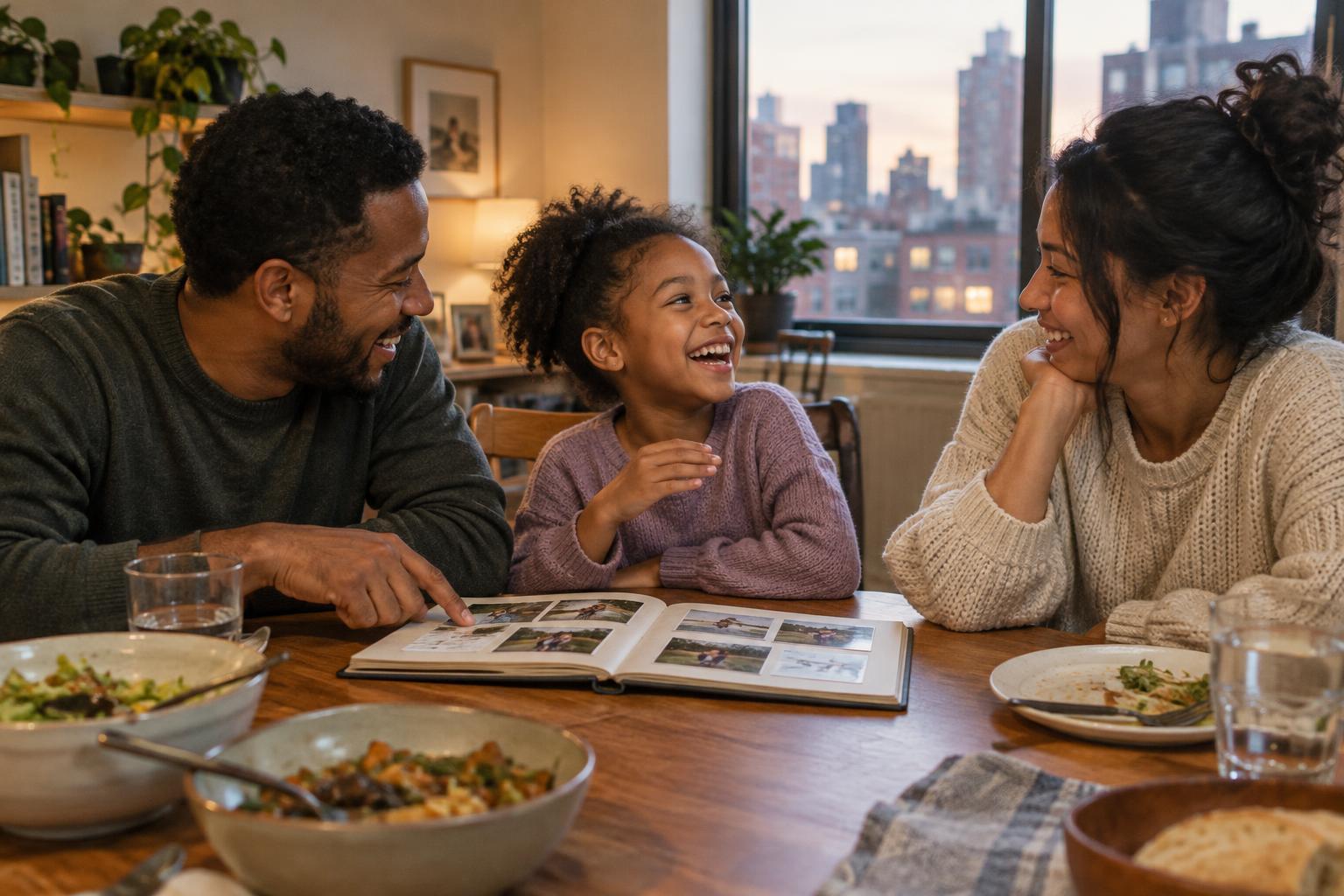
For one week, try collecting memories without deciding which ones are important. At dinner, on a walk or before bed, ask each person to name one moment from the day. If nobody has an answer, offer your own: “I liked how we all squeezed under one umbrella.” A specific detail often helps another person remember something they want to add.
Choose a routine small enough to keep
Pick a time that already exists in your family’s week rather than creating an elaborate new event. You might tell one story on the way to a regular errand, at Sunday breakfast or while putting away laundry. Two minutes is enough. On a busy day, the tradition might be just one sentence: “Today’s story is about the pigeon that watched us eat lunch.”
A repeatable opening can make it easier to begin. Try “Tell me about a time we…” or “What happened next?” You can rotate who chooses the memory, but there is no need to insist that everyone speak. Listening, asking a question or making a sound effect are all ways to take part. If the routine slips for a few weeks, simply start again with something that happened today.
Let different versions belong in the story
People often remember the same outing differently. One person recalls the long walk; another remembers the bright mural at the corner. Instead of settling on an official version, invite each person to contribute a detail. You could ask, “What do you remember seeing?” or “Which part made you laugh?” The result may be a fuller story, and the different perspectives can be part of its charm.
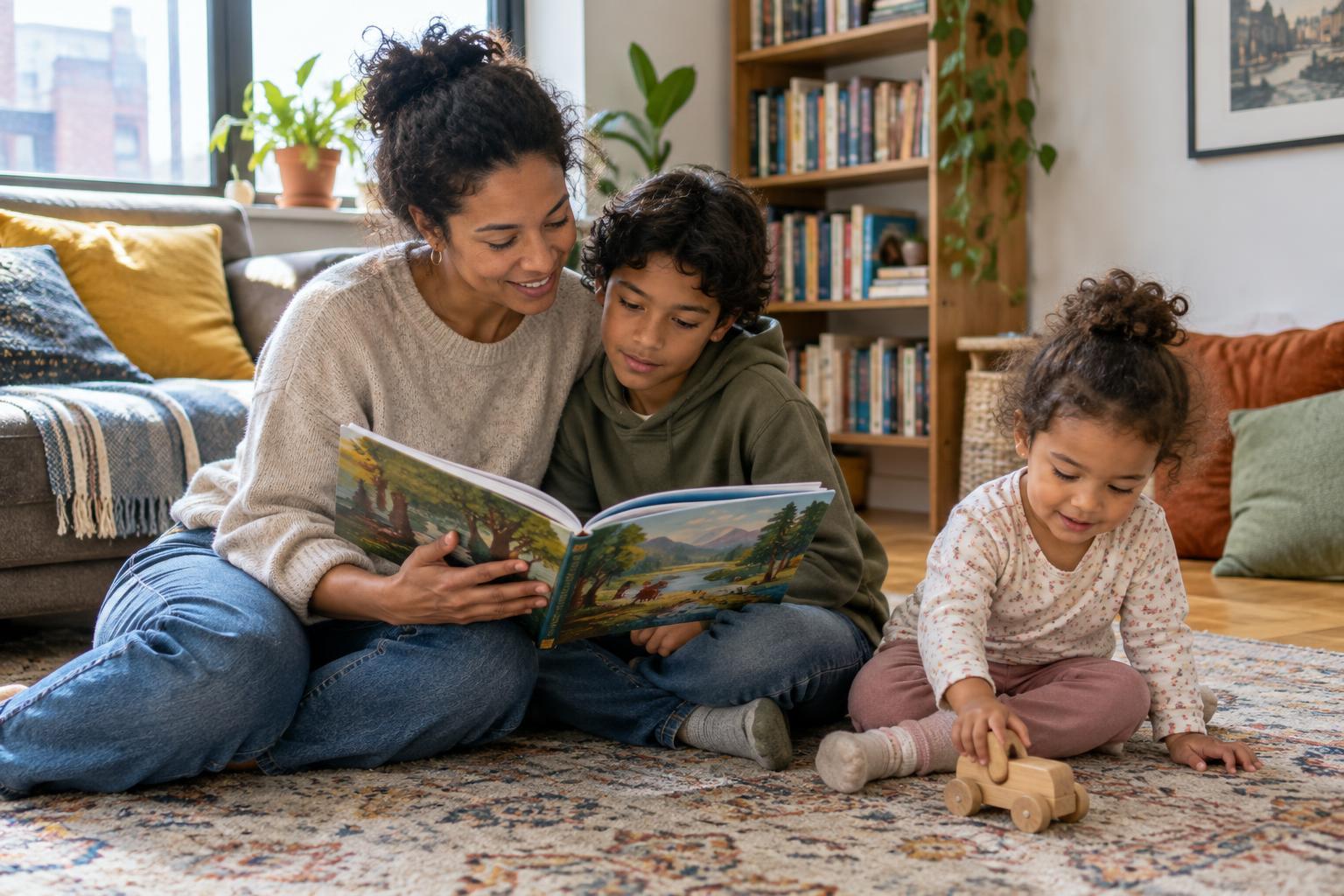
Children may prefer to tell a memory through drawings, pretend play or a few repeated words. Older relatives and caregivers may have stories from before the children were born. Pairing a recent memory with an older one can be fun: “That crowded train reminds me of a trip I took when I was little.” Give storytellers room to stop or change the subject, especially if a memory feels embarrassing or upsetting to someone involved.
Keep a light record, if you want one
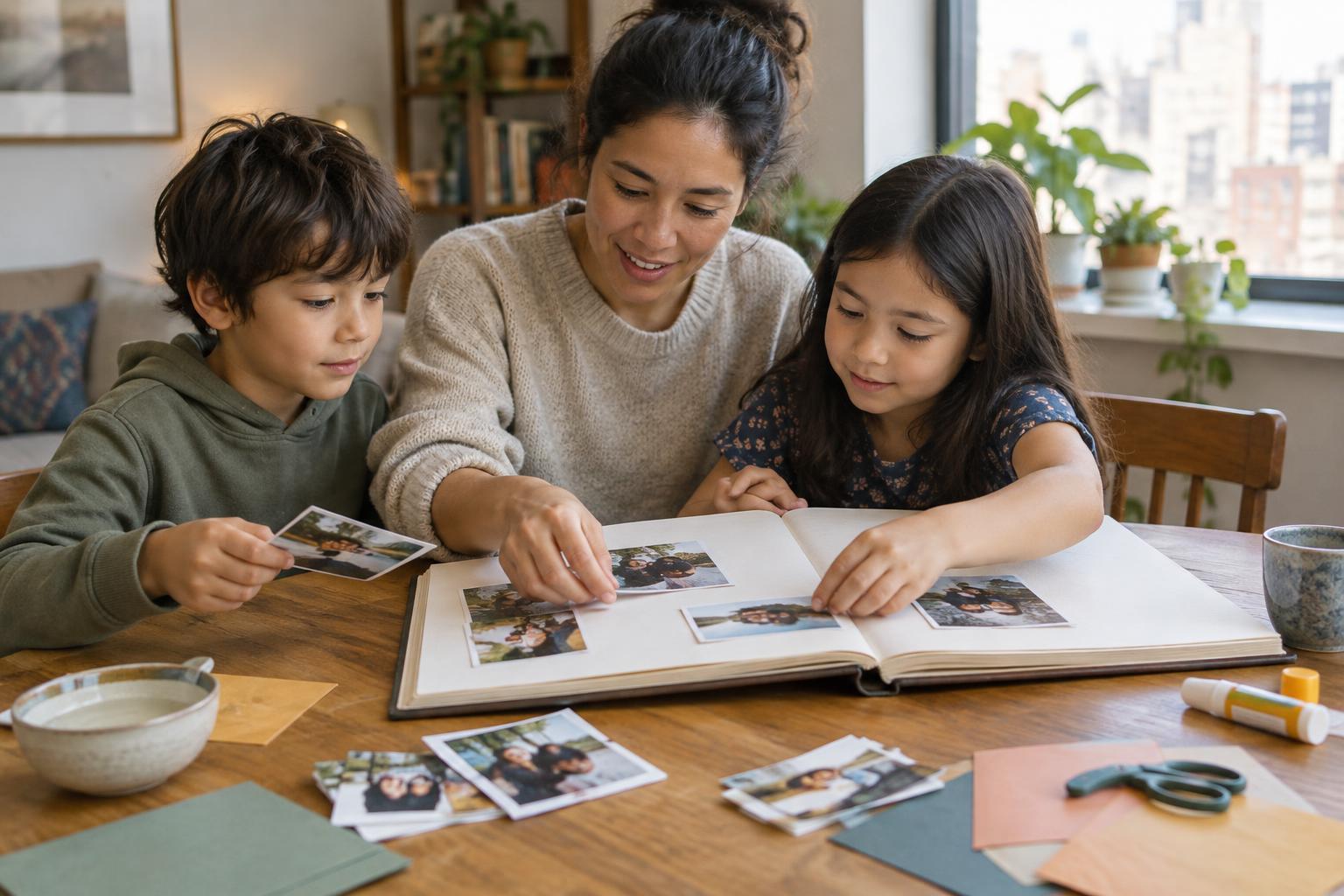
You do not need a scrapbook to have a storytelling tradition. If your family likes keeping things, choose a format that fits your space and energy: a notebook by the kitchen table, a folder of children’s drawings or short voice recordings made with permission. A note such as “We saw three dogs in matching coats on our walk” may be enough to bring the whole scene back later.
Consider making the collection easy to browse. Give a page or recording a brief title, or tuck a ticket or small drawing beside a written memory. Skip the pressure to make every entry polished. If you use photos, remember that a story can be meaningful without an image, and ask before sharing anyone else’s words or picture beyond the family.
Make room for stories that change as your family does
As routines and interests shift, your storytelling tradition can shift too. A young child might want to hear the same funny incident every night. Another family member might enjoy choosing a new memory each week. During a busy season, stories may happen only when someone says, “This reminds me of…” That still counts.
Over time, you may notice recurring characters and places: a neighbor who always waves, a favorite bench, the grocery store where someone learned to choose the ripest peach. These ordinary details help make a family’s shared world recognizable. Start with one memory, let others add what they recall and enjoy the telling as much as the keeping.