Give the meal a change of scene
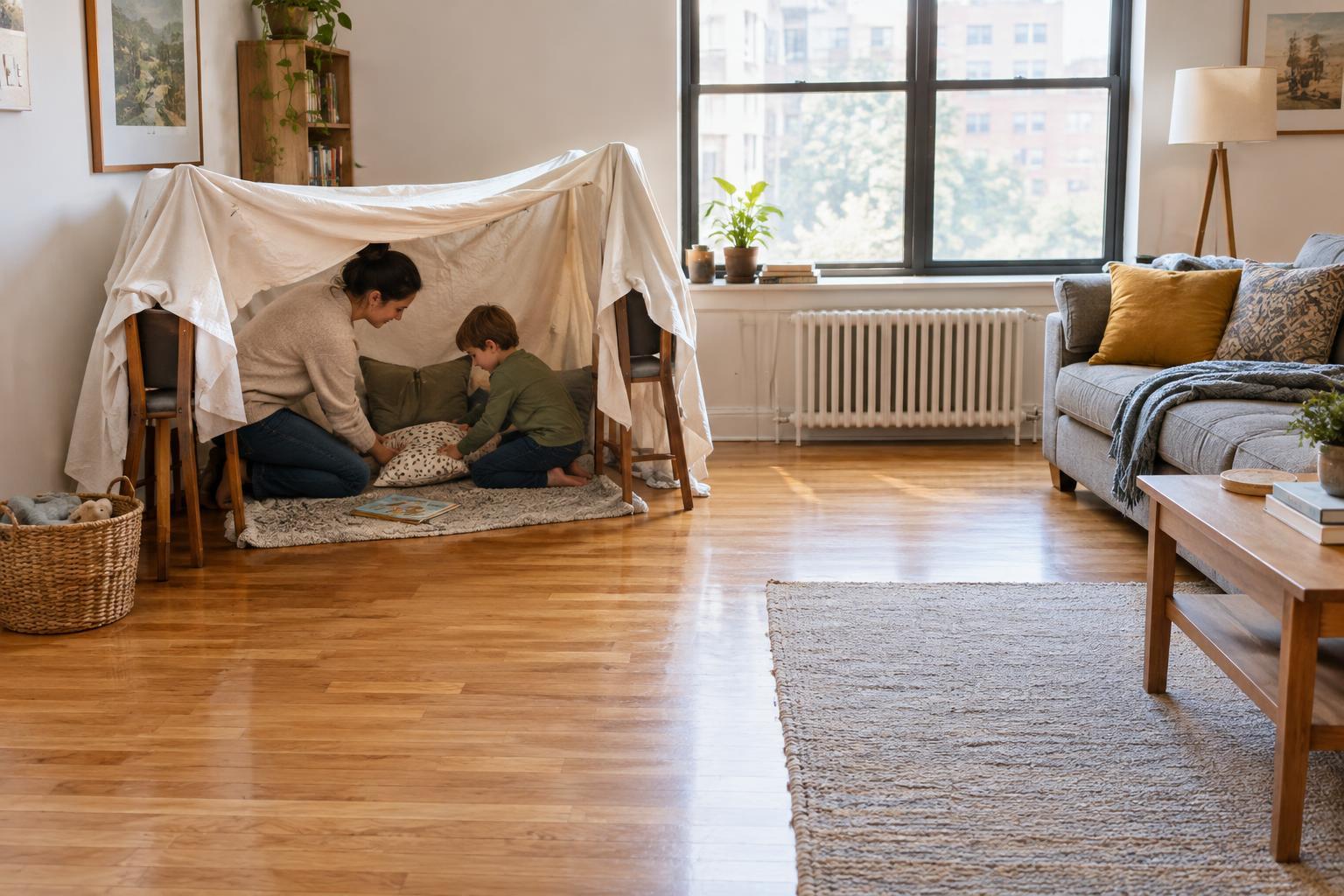
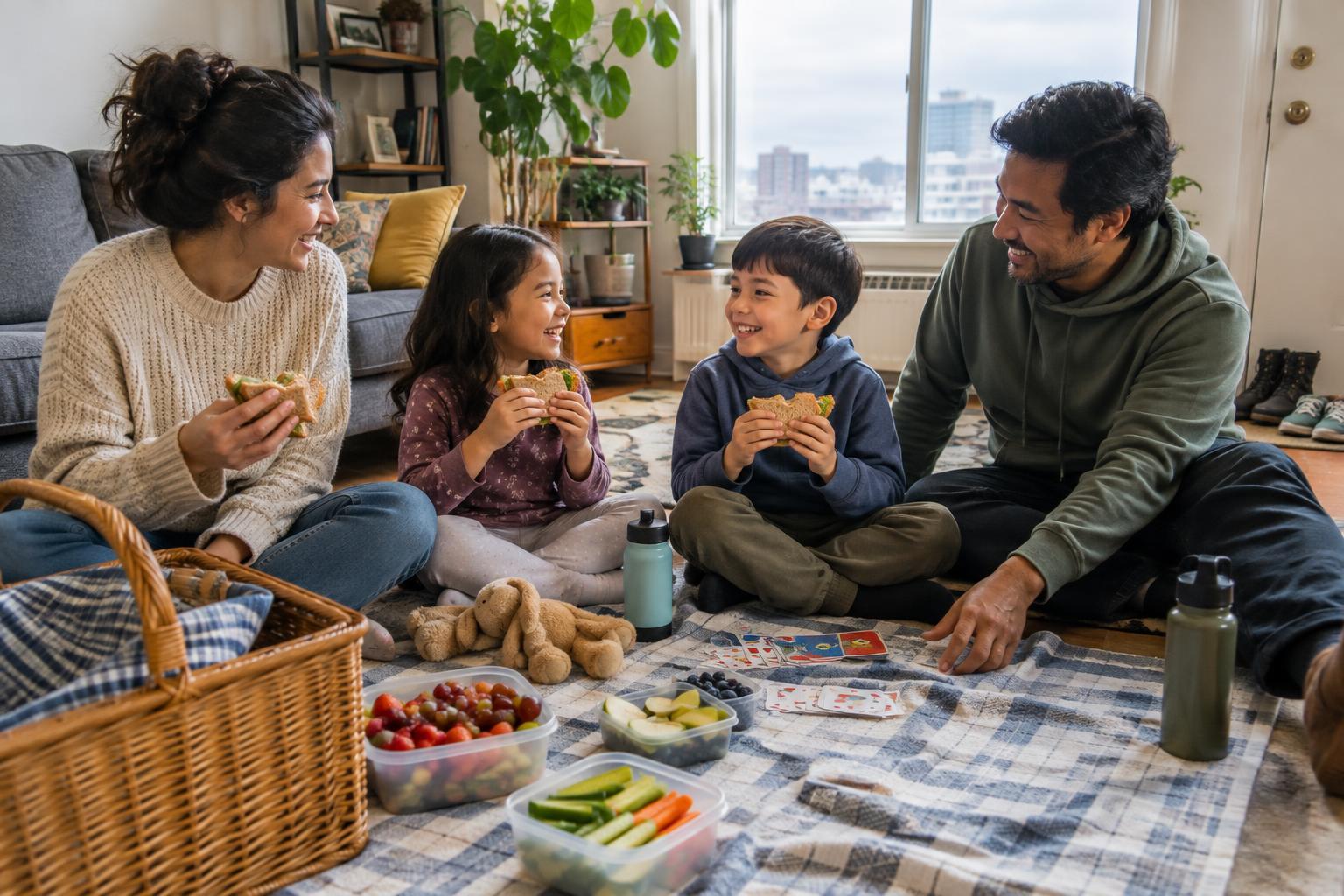
When weather, schedules, or other circumstances keep your family inside, a picnic can still offer a break from the usual routine. The key is to make one familiar corner feel different. Spread a washable blanket on the living room floor, move a few cushions nearby, and call it the picnic spot. If floor seating is uncomfortable for anyone, use the dining table instead and add a blanket as a tablecloth. The change matters more than the location.
Keep the setup small enough to enjoy. In a compact home, clear just enough space for everyone to sit and reach their food. Put away items that might be stepped on or knocked over, and leave a path through the room. If children want to help, ask them to choose the blanket, place napkins, or make a paper sign for the picnic. Giving each person a little job makes preparation part of the activity.
Pack food as though you are going somewhere
Instead of serving straight from the kitchen, put the meal in a basket, tote, or reusable container. Unpacking it together adds a sense of occasion without requiring a special menu. Sandwiches, cut fruit, crackers, vegetables, and other foods your family already enjoys are all reasonable options. You can make an ordinary lunch feel more like a picnic by dividing it into small containers and letting everyone assemble their own plate.
Choose foods and serving pieces that suit the ages and needs of the people eating. A tray or sturdy mat under drinks can help contain spills, while reusable cups and napkins keep supplies simple. Foods that need to stay cold should remain refrigerated until it is time to eat, rather than sitting in the picnic basket during setup. There is no need to prepare a feast: one easy meal and a shared snack can be plenty.
Add one or two picnic touches
A little atmosphere can make the room feel less like the place where everyone ate yesterday. Open the curtains if the light is pleasant, play music at a comfortable volume, or place a few paper flowers near the blanket. Children might enjoy drawing a view of a park or skyline to hang nearby. These details work best when they are quick to arrange and easy to put away.
You can also give the picnic a gentle theme. Pretend you are visiting a garden and look for green objects around the room, or set out a small stack of books for a story picnic. Let the theme guide a choice or two, not the entire day. If decorations start to feel like another chore, skip them. Sitting together in a different spot is enough to make the meal feel distinct.
Plan an activity that fits the space
After eating, offer an activity that can happen on the blanket. A family drawing page, a guessing game, or a round of storytelling needs little equipment. Try passing around a small object and inviting each person to add one sentence to a made-up adventure. Younger children can contribute a sound or choose what happens next; older children can help keep the story going.
For a more active option, set up a short indoor scavenger hunt before the picnic begins. Ask family members to find something soft, something blue, or something that reminds them of being outdoors. Keep the search within agreed-upon rooms so it stays manageable. If everyone would rather rest, read aloud or listen to music instead. A successful picnic does not depend on filling every minute.
Make cleanup part of the plan
Before you sit down, choose a place for used napkins, dishes, and leftover food. When the meal ends, each person who can help can carry one thing back to the kitchen. Shake crumbs from the blanket where they can be collected, then fold it away or set it aside for washing. A short cleanup makes it easier to say yes to another at-home picnic.
Notice what your family liked most. Perhaps unpacking the basket was the highlight, or maybe everyone stayed longest for the stories. Keep that part next time and let the rest change. An indoor picnic can be a simple way to mark a rainy afternoon, enjoy a meal together, or bring a little variety to a day at home—no perfect setup required.