Keep the routine small enough to repeat
A useful drop-off routine does not need to be elaborate. Its job is to give a child a recognizable sequence: arrive, put belongings where they go, say goodbye, and join the caregiver or class. When the same few steps happen in roughly the same order, everyone has a clearer idea of what comes next. That can be especially helpful on mornings shaped by subway delays, crowded sidewalks, or a rushed search for a missing mitten.
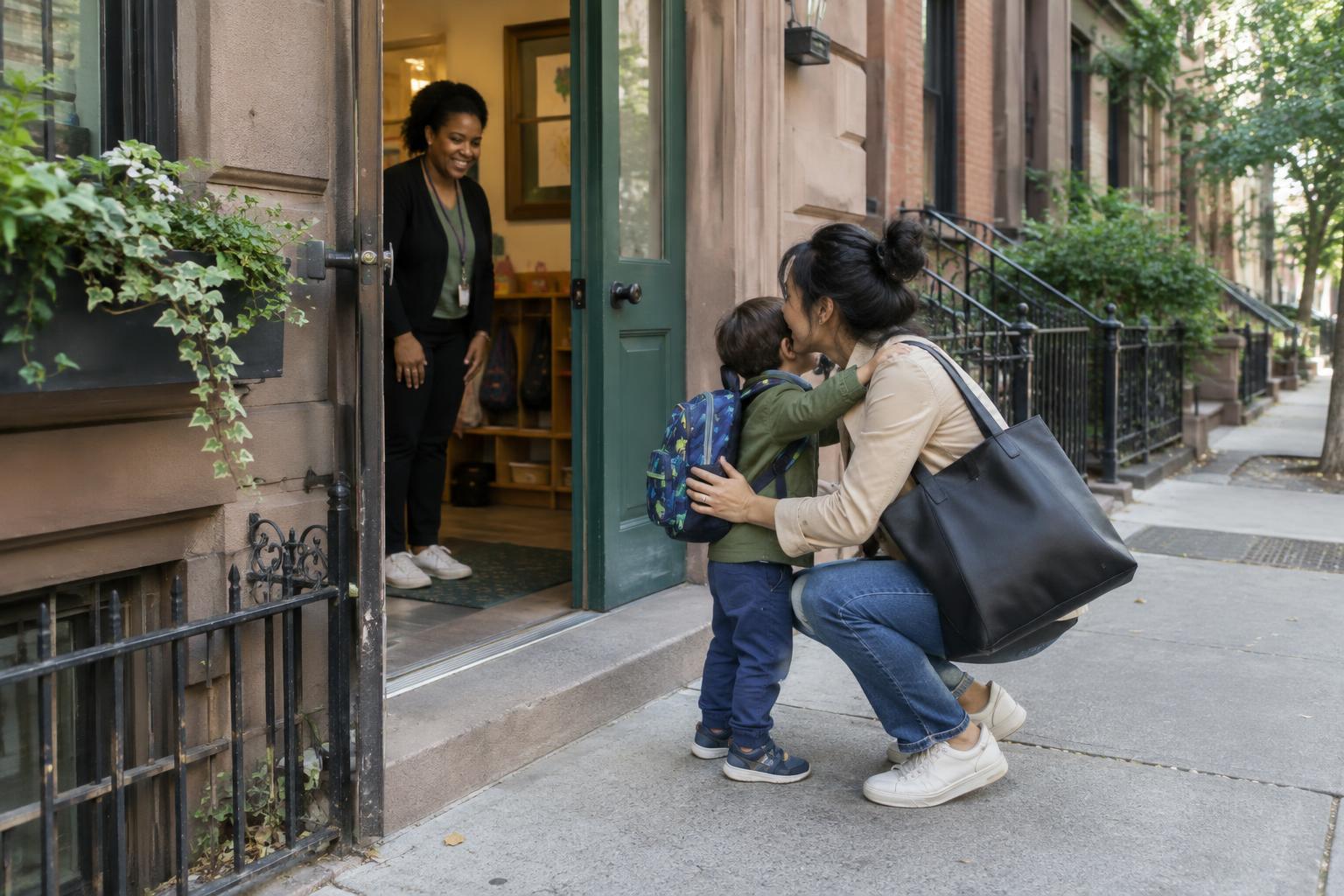
Start with what the daycare or school already expects. Some programs welcome families inside; others ask for a handoff at the door. Choose two or three steps that fit those rules rather than creating a ritual you cannot reliably complete. For example: hang up the bag, give one hug, say a familiar goodbye, and wave from the doorway. The aim is consistency, not a perfectly calm exit every day.
Prepare the handoff before you reach the door
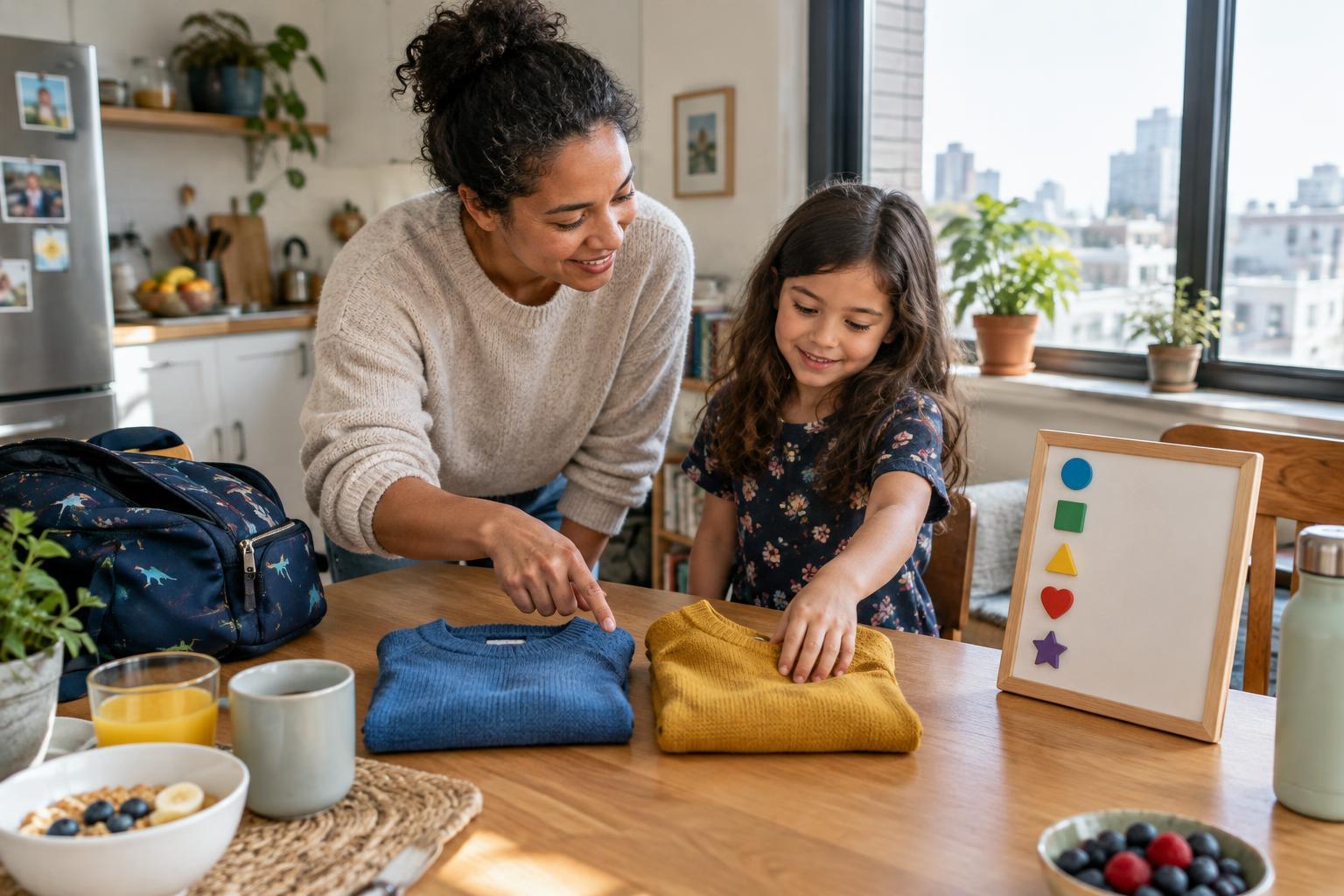
The easiest way to shorten a goodbye is to handle small decisions earlier. Pack the bag the night before when possible, check any notes or items the program needs, and decide who will do drop-off. If more than one adult takes turns, agree on the same basic sequence and goodbye phrase. The details can still sound like each person; the child simply gets a familiar pattern.
On the way there, give a brief preview instead of negotiating every step at the entrance. You might say, “We’ll put your bag away, have one hug, and then I’ll go to work while you go in with your teacher.” Use words that match your child’s understanding and your actual plans. If pickup arrangements change, share only what you know for certain, and make sure the program has the information it needs.
Make the goodbye clear and kind
At the door, get close enough to connect without turning the goodbye into a long discussion. A hug, a special handshake, or a quick wave can be enough. Say that you are leaving, name who will take over, and follow through. Slipping away unnoticed may seem easier in the moment, but a clear goodbye gives your child an honest point of transition.
It is okay if a child is upset. You can acknowledge the feeling without changing the plan each time: “You wish we could stay together. I’m going now, and Sam will help you get started.” Then make the handoff to the designated caregiver. Ask staff how they prefer families to do this, especially if a child needs help entering the room. A predictable goodbye does not promise tear-free mornings; it gives adults a steady way to respond.
Have a plan for mornings that go sideways
Even a well-practiced routine will meet exceptions: a late train, a substitute teacher, a different drop-off adult, or a child who wants one more hug. Keep a shortened version ready for those days. It might be as simple as “bag, hug, goodbye.” If you have time to explain a change, do it briefly before arriving. If you do not, focus on a calm handoff rather than trying to make up for the disruption with a longer farewell.
If something important happened before drop-off, share the useful facts with staff through the channel they prefer. A quick note that your child slept poorly or that someone else will pick up may help the caregiver respond and plan. Keep that exchange separate from the goodbye when you can, so your child is not left waiting while adults have a long conversation at the door.
Adjust the routine without starting over
Give a new routine a little time, then notice what is workable. Can your child follow the sequence? Can the drop-off adult repeat it on an ordinary rushed morning? Does it fit the program’s arrival process? If one step regularly creates a struggle, simplify it. A choice between a hug and a wave may be easier to manage than an open-ended question about how to say goodbye.
You can also ask the caregiver what happens after you leave and whether there is a smoother way to make the handoff. If distress is persistent or the arrangement is not working for your family, discuss it with the program rather than assuming you must keep doing the same thing. The most useful routine is not the most creative one. It is a short, respectful goodbye that the adults can carry out and the child can come to recognize.