Start with what the room needs to do
In a city home, the living room may be a play area, reading spot, dining overflow and place to unwind after bedtime. Before buying organizers or rearranging furniture, notice what happens there on a typical day. Where do children naturally spread out? Which seat do adults actually use? What needs to stay available, and what is only brought out occasionally? The goal is not to give every activity a permanent corner. It is to make the room easy to change from one use to another.
Choose two or three priorities to guide decisions. You might want a clear path to the door, a comfortable seat that stays mostly free of toys, and a patch of floor large enough for building or pretend play. Those priorities are more useful than trying to keep every surface empty. They also help when space is tight: a piece of furniture earns its place by supporting the room’s everyday uses, not just by looking tidy.
Create flexible zones without dividing the room
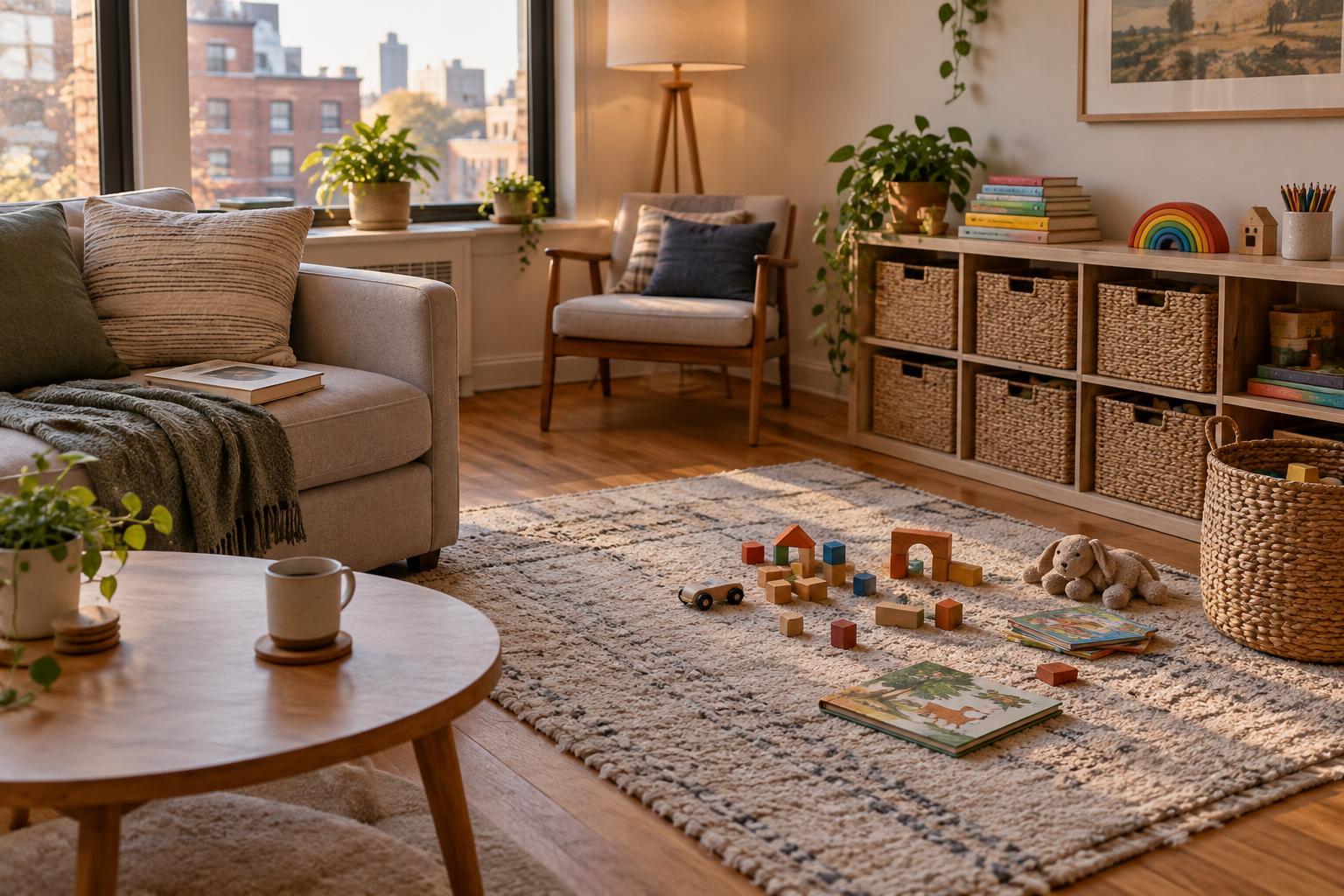
A play zone can be as simple as the space beside a rug or a low shelf. A small mat or tray gives activities a visible boundary, even if that boundary moves when the room is needed for something else. Keep enough open floor for children to play comfortably, but leave main walkways clear. If a table is used for puzzles, drawing and adult tasks, give it a nearby place to hold supplies so it can be cleared without a search through the whole apartment.
Protect an adult landing spot, too. That might be one end of the sofa with a lamp and a side table, rather than a separate seating area. A basket for books, chargers or a throw can make it ready for downtime. The point is not to keep children out of part of the room; it is to avoid starting every evening by moving toys off the only comfortable chair.
Store toys for easy use and easy cleanup
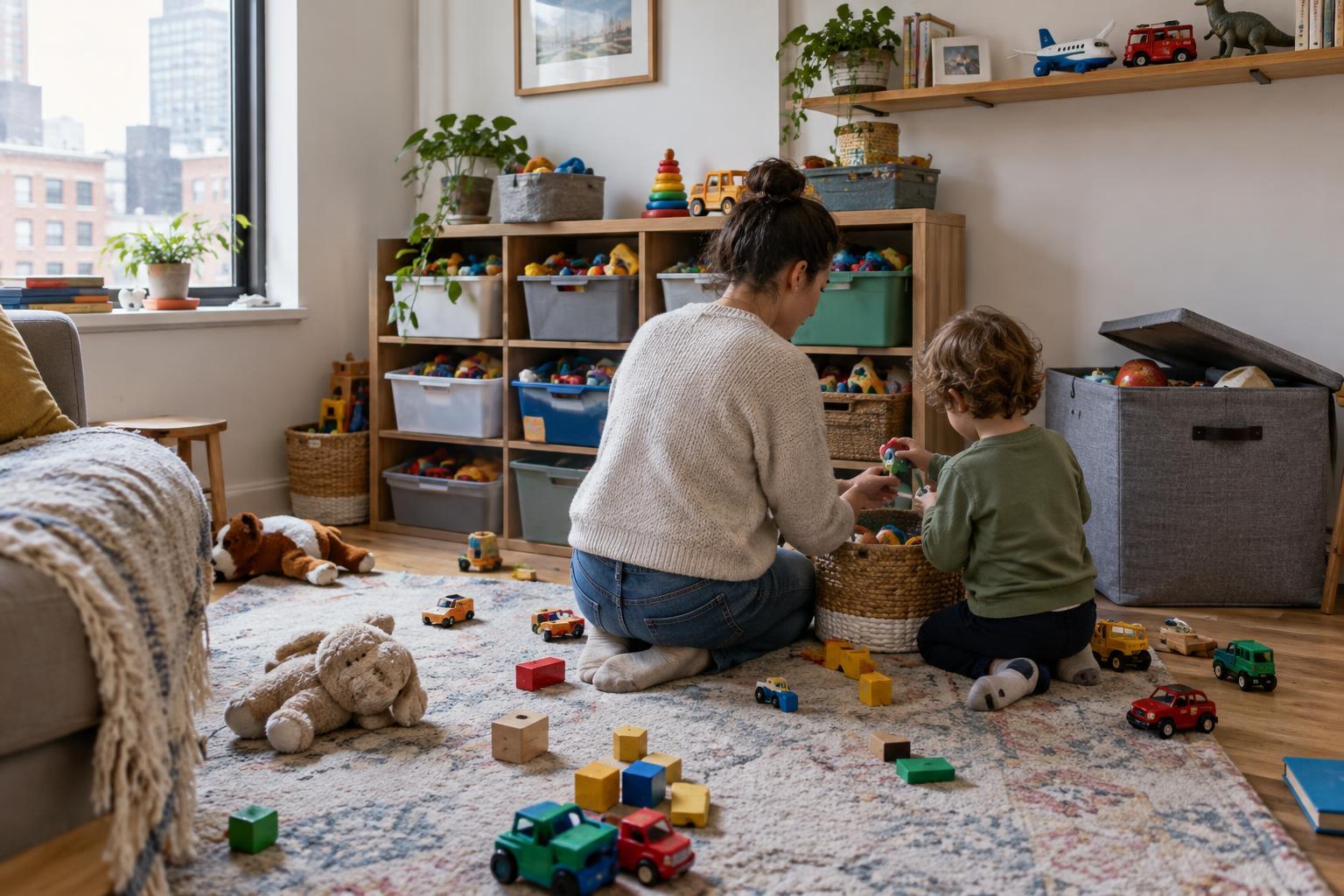
Storage works best when it matches how things are used. Keep everyday toys within children’s reach in a few sturdy bins or low shelves, and put occasional activities higher up or elsewhere. Broad groups such as building pieces, pretend-play items and art supplies are often easier to maintain than dozens of narrow categories. A container also sets a natural limit: when it is too full to close or return to its shelf, it may be time to move some items out of the living room.
Open baskets make pickup quick, while closed storage can give the room a quieter look at night. A mix often works well. Choose containers that fit the actual shelves and are manageable to carry, rather than buying a matching set first and figuring out where it goes later. Keep small pieces and supplies that need supervision in a place appropriate for the children in your household. The easiest system is one everyone can use without a complicated sorting lesson.
Make the shift to evening a small routine
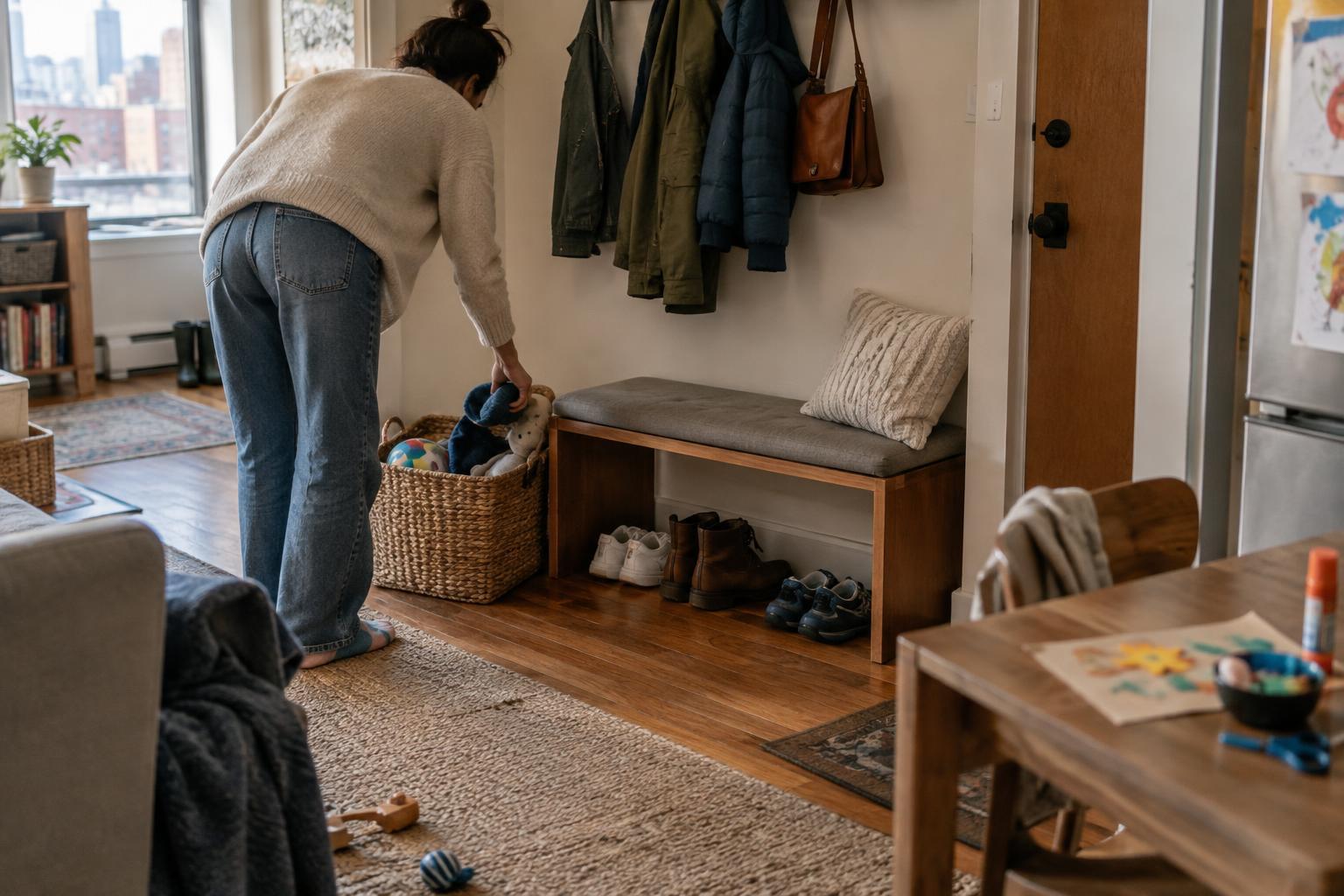
A living room does not need a full cleanup every time someone changes activities. Pick one dependable transition, such as before dinner or before the evening wind-down, and make it brief. Return toys to their main containers, clear the seating area and put cups or papers where they belong. If children are old enough to help, give them a specific task: put blocks in the bin or carry books to the shelf. A visible finish line is easier to follow than a general request to tidy up.
Some projects deserve to stay assembled. A tray, shelf or designated corner can hold a work in progress without letting it take over the whole floor. This makes room for longer play while still giving adults usable space later. On busy days, focus on clearing paths and one place to sit. A routine that works on an ordinary tired evening is more valuable than an ideal reset nobody has the energy to do.
Let the setup change with your family
Treat the room as a working arrangement, not a finished project. After a few weeks, notice which bins are always out, which storage is ignored and where clutter keeps gathering. Move the frequently used items closer to where they are used, and reconsider anything that must be shifted every day. As children’s interests change, swap what is available in the living room instead of adding more containers to the same space.
A shared room can look lived in and still feel restful. Clear surfaces where they matter, give play a practical home, and keep the evening reset modest. When both children and adults can find what they need and put it away without much friction, the living room is doing its job.