Make the routine easy to find
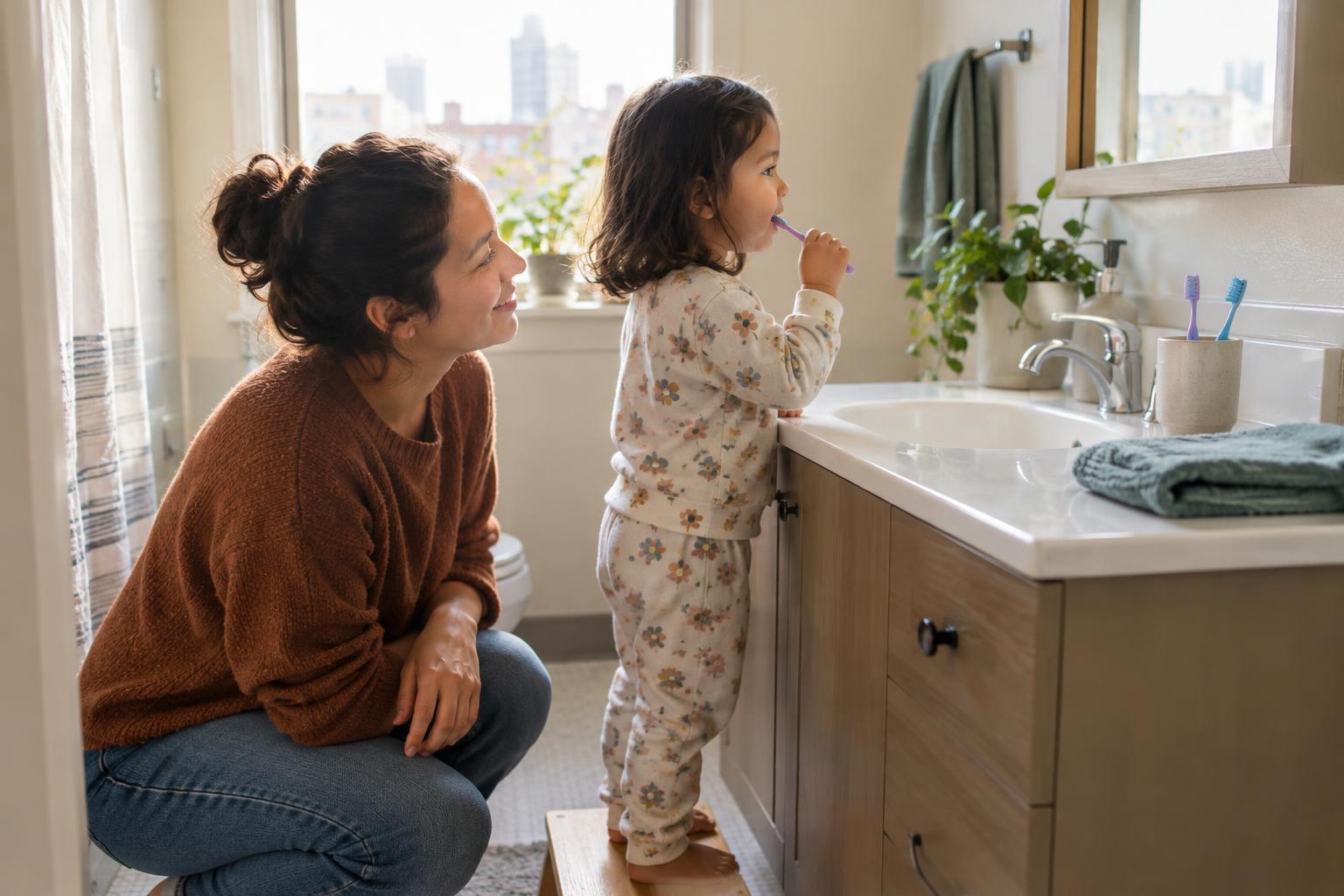
A routine is easier to repeat when everyone knows where it begins. Keep toothbrushes and other everyday supplies in one familiar spot, with a stable step stool if your child needs help reaching the sink. In a shared or small bathroom, a labeled cup or container can give each person a clear place for their things without taking over the counter. The goal is not a perfect setup; it is one your family can use on an ordinary, busy day.
Choose a regular place for brushing in the morning and evening, then connect it to something that already happens, such as getting dressed or changing into pajamas. Rather than calling from another room, try walking to the bathroom together. That short transition can be especially helpful when a child is absorbed in play or when the household is moving through several tasks at once.
Give kids a real, manageable role
Participation does not have to mean doing the whole job alone. A child might carry their toothbrush to the sink, choose between two toothbrushes, put a cup back on its shelf, or take the first turn brushing before an adult helps finish. Offer choices you can comfortably honor: “Would you like to brush before or after pajamas?” is often more useful than asking whether they want to brush at all.
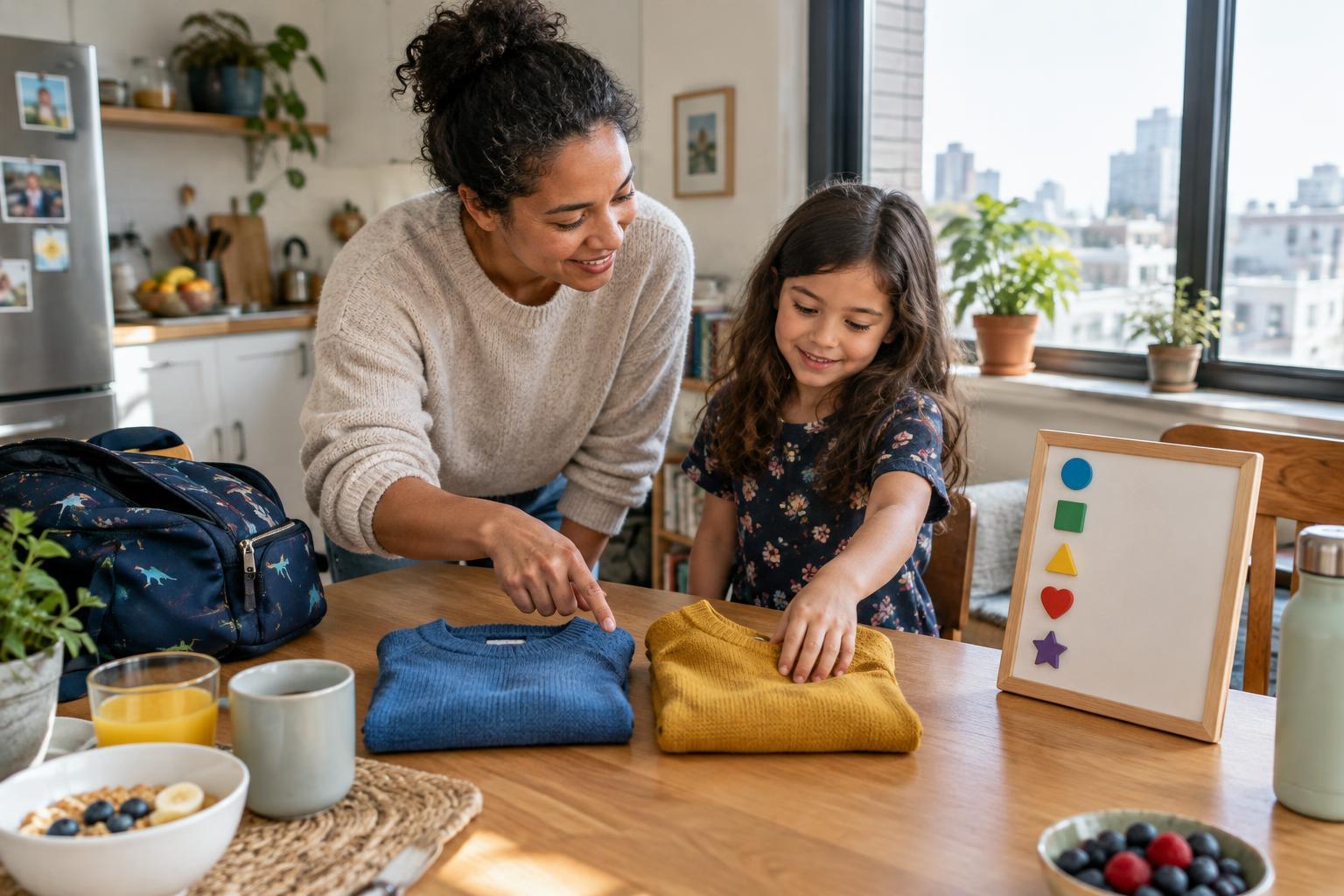
For a child who likes a visual reminder, keep the sequence short: get the brush, brush with help, rinse or put supplies away as appropriate, and move on to the next part of the day. A simple picture card can work without becoming another project to maintain. As children grow, their part can change. Let them practice new responsibilities while keeping the adult involvement they still need.
Keep the steps predictable, not rigid
The same few steps, repeated in roughly the same order, can reduce negotiations. You might use a familiar phrase to start, take turns at the sink, and end by putting the toothbrush away. If a timer or song makes the routine more pleasant, use it as a cue rather than a contest. Some children enjoy counting or making up a silly name for each step; others prefer a quieter, straightforward approach.
Predictability still leaves room for a difficult day. After an outing, a late commute, or an evening when everyone is tired, aim to return to the basic sequence instead of introducing new rewards or rules on the spot. If the routine regularly becomes a struggle, notice where it stalls. The problem may be the transition to the bathroom, a crowded sink, or too many choices rather than brushing itself.
Make space for cooperation
A calm invitation often works better than a long explanation when a child is tired. Try describing the next small action: “Let’s get your toothbrush,” then pause long enough for them to do it. You can model the routine by brushing your own teeth nearby if the space allows. For siblings sharing a bathroom, decide in advance who uses the sink first, or give one child a job they can do while waiting.
Children may object, delay, or want to do everything independently. Acknowledge the feeling while keeping the expectation simple: “You want to do it yourself. You can start, and I’ll help finish.” That approach gives them a meaningful part without turning every evening into a debate. If a particular step seems uncomfortable or consistently upsetting, ask a dental professional for guidance suited to your child.
Build a version that survives busy days
A useful routine has a place in real family life, not just an ideal schedule. Think through the moments that tend to interrupt brushing: an early school departure, a bath that runs late, or one bathroom serving several people. Prepare for those moments by keeping supplies easy to reach and agreeing on a simple order for bathroom time. When another caregiver handles bedtime, share the same basic sequence so the child knows what to expect.
Over time, notice what your child can do with less prompting, and adjust their role one step at a time. You do not need a new chart each time the routine changes. A brief, specific comment such as “You got your brush ready while I cleared the sink” recognizes their contribution. The aim is a dependable shared habit: a child gets to participate, and an adult stays involved in making sure brushing gets done.