Plan around the people who share your building
A living-room dance party does not need a big floor or a booming speaker. Before you press play, choose a time when household members are awake and nearby neighbors are less likely to be resting. Check any building rules about noise or quiet hours, then keep the party short enough that it feels like a treat rather than an all-afternoon event.
Think about where sound travels. Music may carry through a shared wall, while stomping and jumping can be noticeable in the apartment below even when the volume seems low to you. If you have a choice of rooms, pick one away from a shared bedroom wall and give yourselves space to move without bumping furniture. A brief, friendly heads-up to a neighbor may be appropriate if you know them, but it is no substitute for keeping the party considerate.
Set up a small, comfortable dance floor
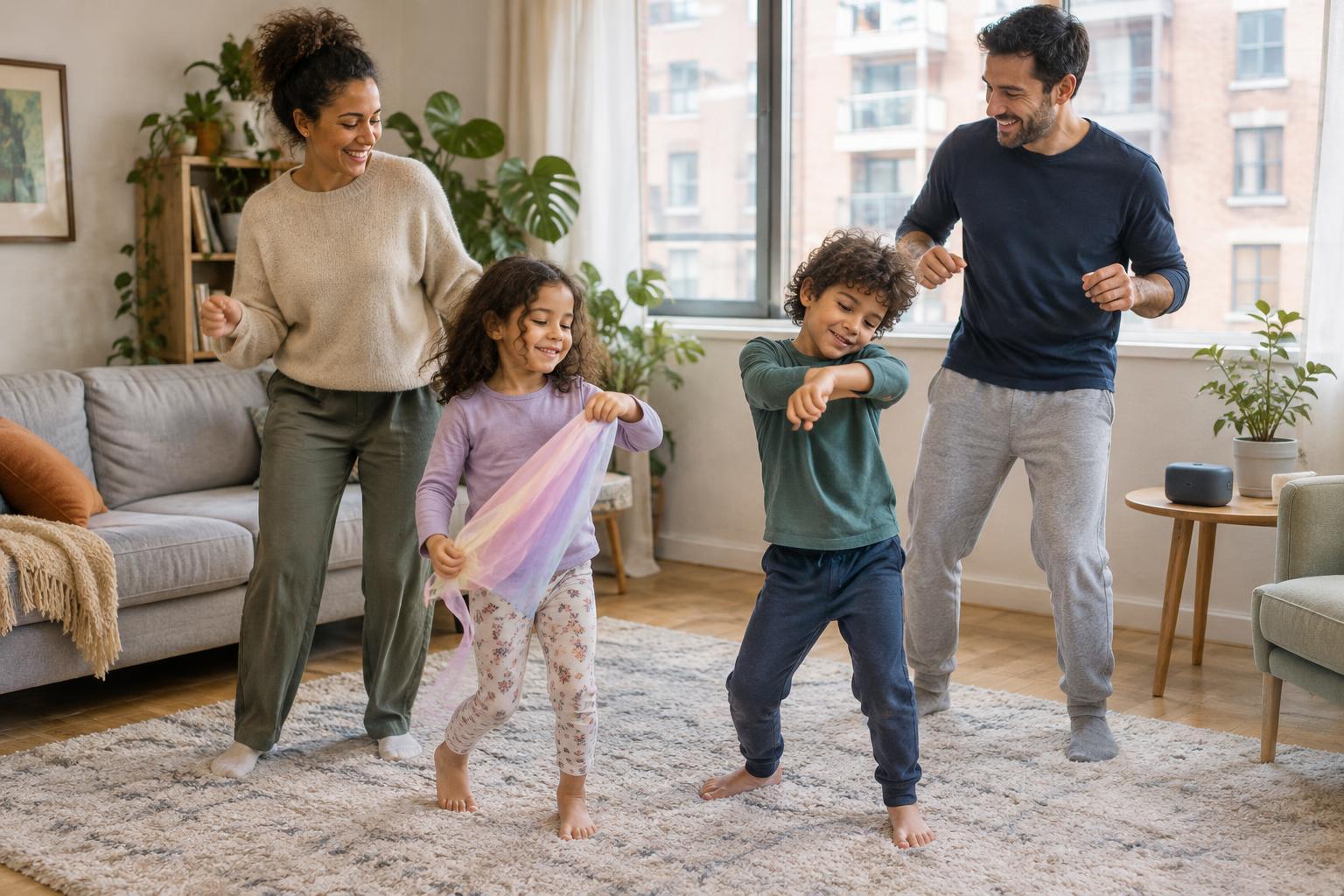
Clear a patch of floor before the dancers arrive. Move hard-edged furniture out of the path, put away small toys, and make sure cords and speaker cables are not underfoot. Leave a route to the door and give everyone enough room to turn without knocking into a table or one another. For younger children, a smaller dance space can be easier to manage than an entire open room.
A rug can help make a room feel cozier and may soften some footfalls, provided it lies flat and does not slide. Choose socks, soft-soled footwear, or bare feet according to what is comfortable and safe on your floor; slippery socks on a smooth surface are not a good trade-off for quieter steps. Put drinks in a separate spot so spills do not become part of the choreography.
Make the playlist lively without turning it up
Test the volume from more than one place in the apartment. If you can hear every beat clearly from the hallway or through a closed door, turn it down. Position a speaker away from shared walls and keep it off surfaces that rattle. You can still create party energy with familiar songs, a colorful scarf, or a pretend announcer introducing each dancer.
Invite children to help choose a short playlist before the party. Taking turns selecting songs helps avoid repeated requests to restart a favorite track, and a clear last song makes the ending less abrupt. If the music seems too quiet at first, try moving closer to the speaker instead of raising the volume. A dance party can feel special because everyone joins in, not because it sounds like a concert.
Choose moves that do not rely on jumping
Set the tone with a simple challenge: dance as if the floor is a cloud you do not want to wake. Try slow-motion dancing, mirror moves, arm waves, gentle spins, or a freeze dance where everyone holds a funny pose when the music pauses. Children can take turns leading a sequence of three quiet moves for everyone else to copy. These games give energetic dancers something to focus on besides how high they can leap.
For a change of pace, sit on the floor for one song and make up hand motions, or hold a scarf and move it to the rhythm. A soft-to-loud movement game can be fun, too: the dancers move in tiny motions for a verse, then use bigger arm gestures for the chorus while keeping their feet light. If someone needs a more active break, pause the music and choose an activity that suits your space rather than letting the dance floor become a running track.
End on a calm note
Give a warning before the final song, then let everyone help with a quick reset. Put props in a basket, move furniture back, and check that nothing has been left where someone might trip later. A slower closing song or a seated stretch can mark the shift from party time to the next part of the day.
If a neighbor lets you know the party was audible, listen and adjust without making it a debate. You might lower the music, move to another room, or save the next party for a different time. The goal is not perfect silence. It is a small, joyful family ritual that leaves room for the other households around you to enjoy their homes, too.