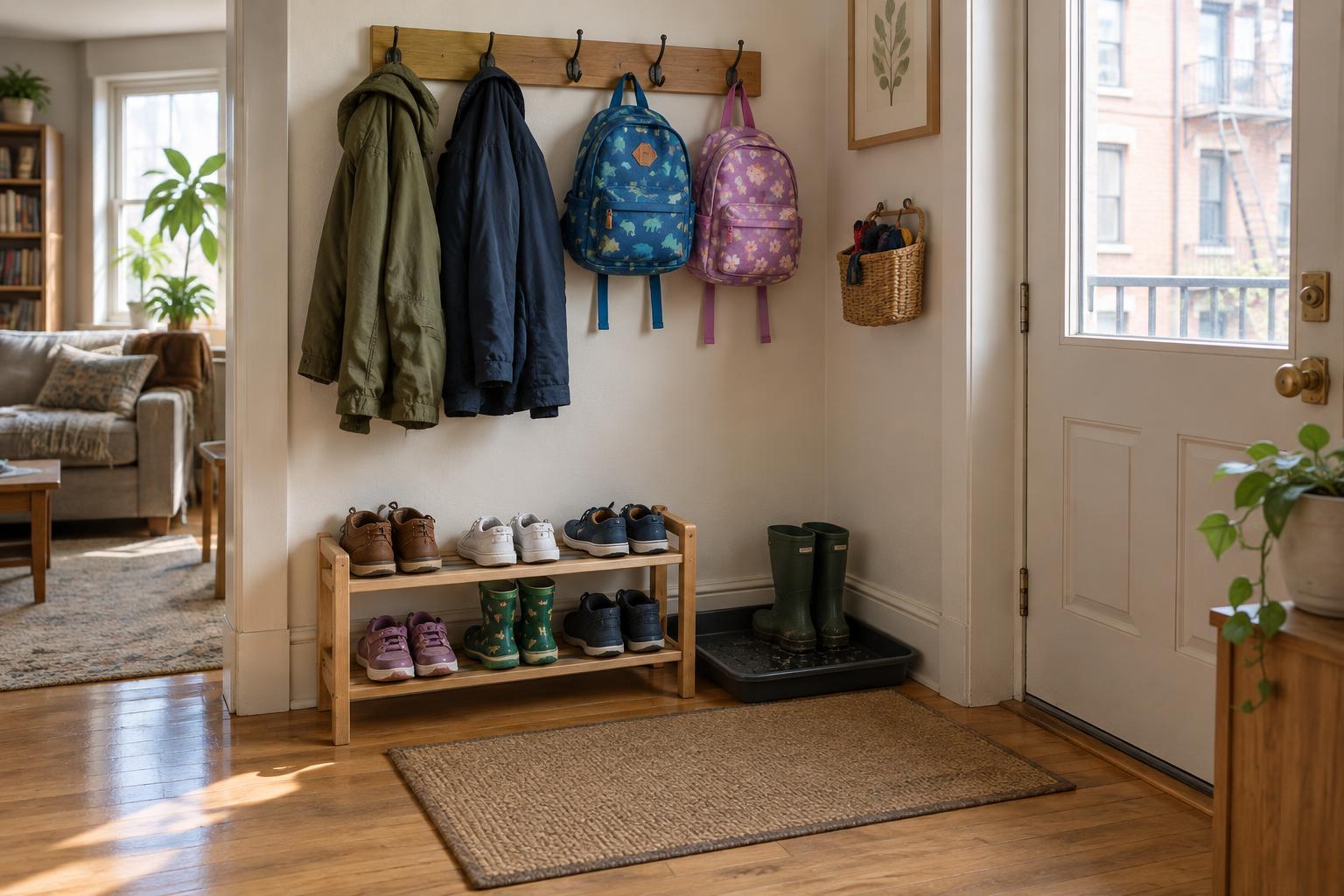
Start with the space you already have
A toy rotation means keeping some toys available for play while others rest out of sight. You do not need a matching set of bins or a dedicated playroom to try it. The goal is to make the toys your family already owns easier to find, use and put away.
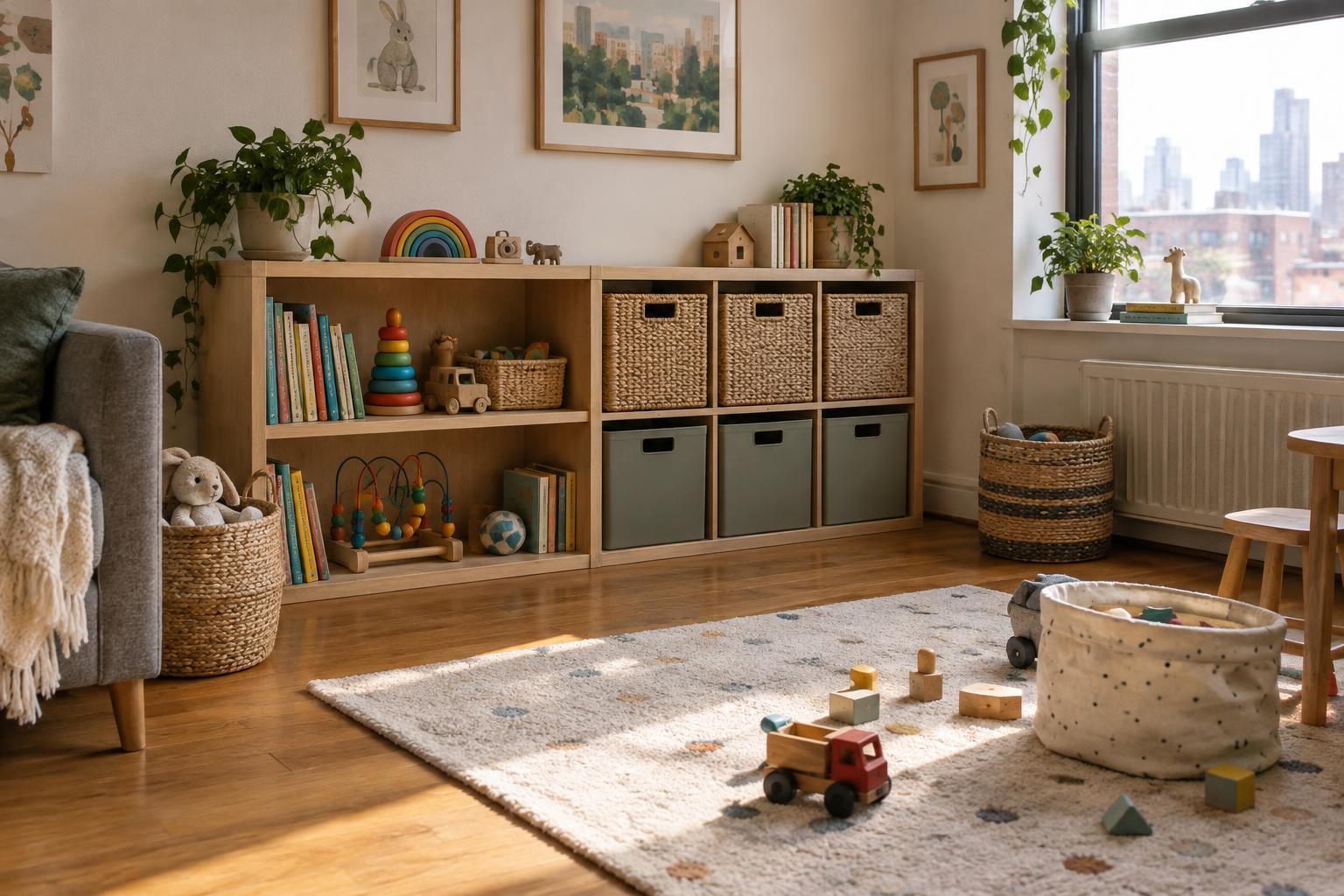
First, look at the places where toys currently live: a shelf, a basket, a closet corner or a drawer. Choose one spot for the toys in active use and one existing spot for those taking a break. The resting spot can be an empty section of a closet, a box you already own or the back of a shelf. If there is no spare space, begin with just one toy category rather than trying to rotate everything at once.
Choose what stays available
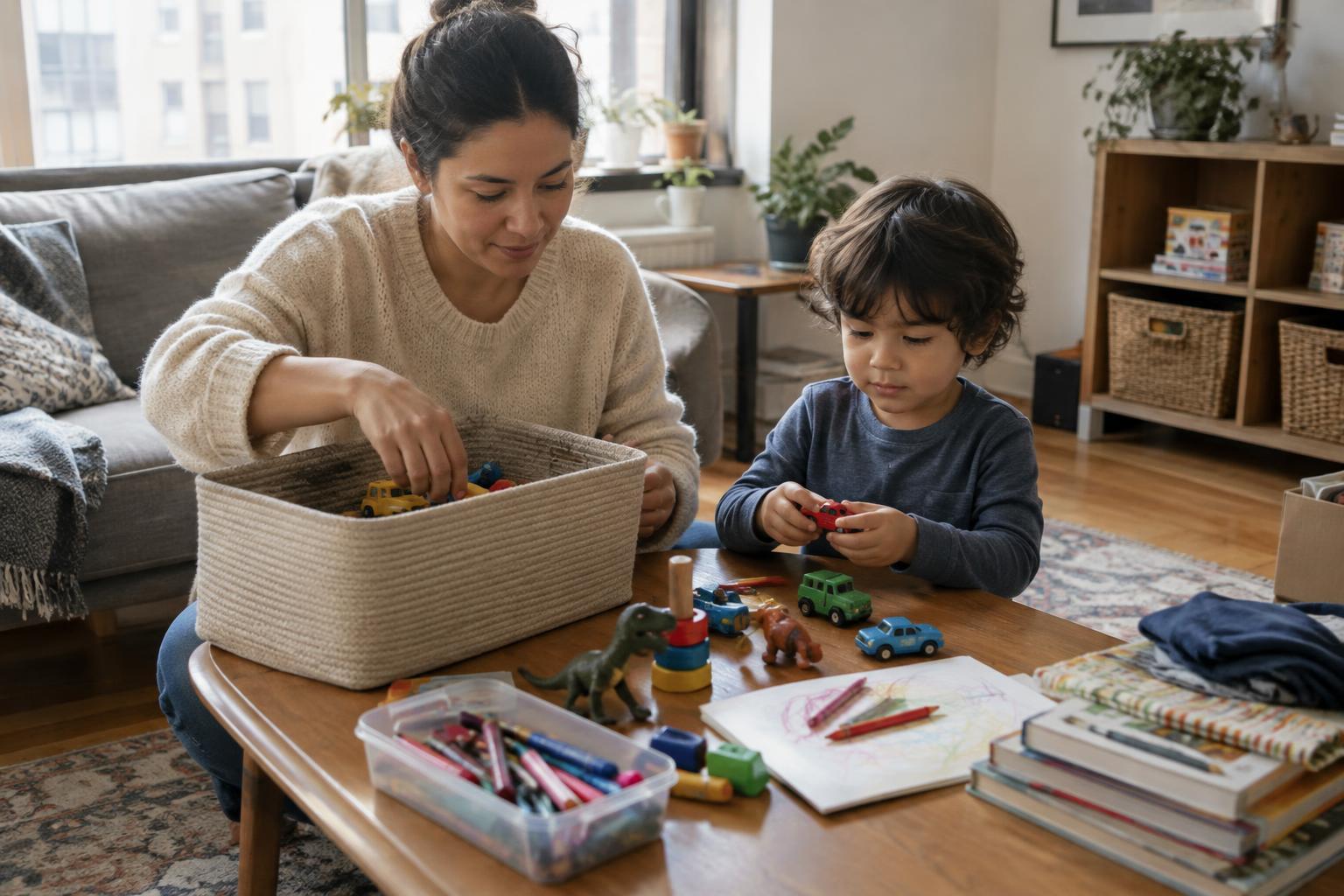
Gather toys from their usual hiding places so you can see what you are working with. Set aside broken items, pieces that belong elsewhere and toys no one wants to use right now. This is a sorting session, not a demand to get rid of anything. If children want to help, invite them to pick a few favorites that should stay within reach.
For a first rotation, aim for a mix rather than an exact number: perhaps something to build, something for pretend play, a few books or puzzles, and an open-ended material such as blocks or drawing supplies. Keep beloved everyday toys available if moving them would cause unnecessary frustration. A useful test is whether each item in the active area has an obvious place to go when playtime ends. If the shelf or basket is crowded, move a few things to the resting spot.
Use containers as boundaries, not a shopping list
Existing containers can do the work. A shoebox can hold small figures; a reusable bag can group dress-up accessories; a drawer can hold puzzles. Keep loose parts together so a rotated toy is ready to play with when it returns. If a container needs a label, a piece of paper will do. You can also use a photo or simple drawing to help children recognize where things belong.
In a compact home, think about access as well as volume. Put active toys where children can reach them safely, and keep resting toys in a place adults can retrieve without pulling apart the room. Avoid stacking heavy containers overhead or blocking a hallway or exit. If a large toy cannot be stored easily, let it stay put and rotate smaller toys around it. The system should fit your home, not force your home to fit the system.
Swap a little at a time
There is no required rotation schedule. Some households swap toys when interest fades; others find it helpful to check the active area during a regular room tidy. Start by exchanging one or two items. Notice what gets used and what is repeatedly ignored, rather than changing everything on a calendar.
Bring back a resting toy in a spot where it is easy to notice, with its pieces together. You do not need to stage an activity or make the swap a surprise. Children may also ask for something that is stored away, and it is fine to retrieve it. The rotation is a tool for reducing clutter, not a rule about which toys children are allowed to enjoy. If requests for stored toys happen often, consider keeping those items in the active group.
Keep the system easy to reset
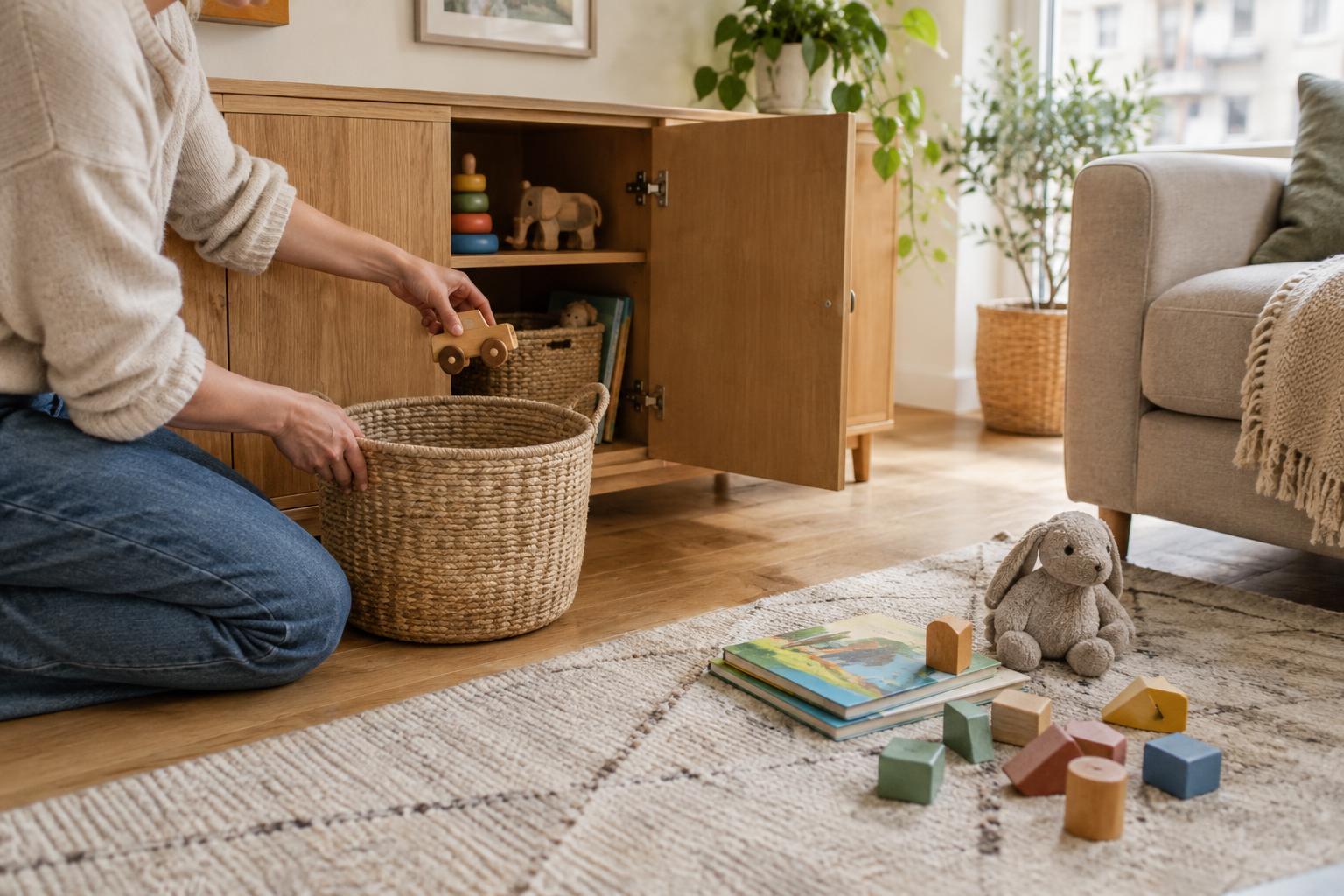
A toy rotation works best when putting things away takes less effort than finding a new place for them. Leave a little room in each active basket or shelf so children can return items without arranging them perfectly. Before a swap, gather stray pieces and check whether anything needs cleaning or repair. A quick reset is enough; the whole room does not have to be spotless.
As interests and routines change, adjust the groups. You might keep quiet toys handy for early mornings, choose compact activities for a shared living room or pause a rotation during a particularly busy week. If your resting area fills up, reconsider what your family still uses before looking for more storage. The most useful toy rotation is one that makes everyday play and cleanup simpler with the space you already have.