Start small enough to begin
A family photo album does not need to tell your whole family history. Choose a starting point that feels manageable: one outing, a favorite weekend at home, or a handful of everyday moments from a recent month. A short album can grow later. For now, finishing one page together may be more satisfying than sorting every photo you own.
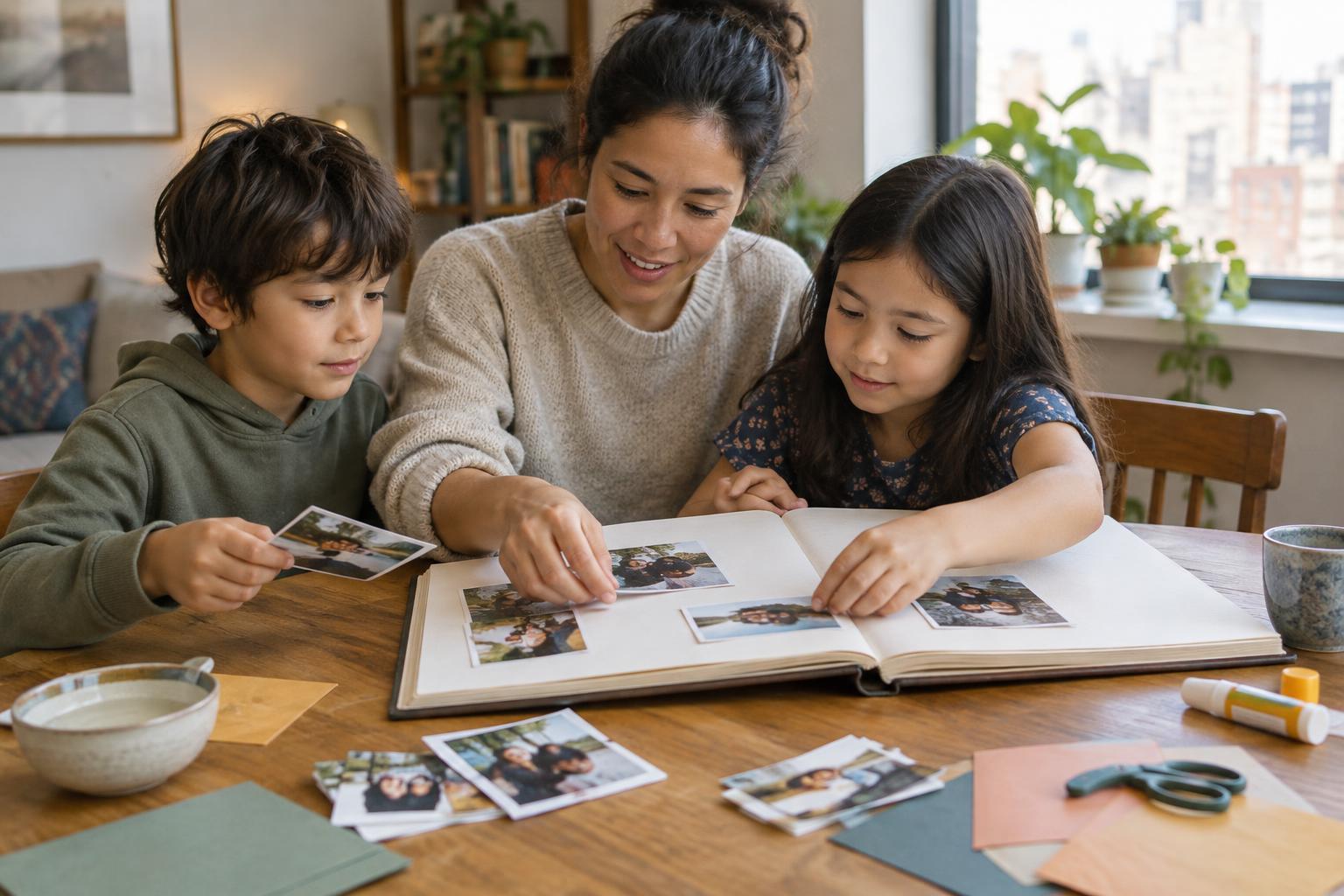
Gather a few printed photos, an album or notebook, and whatever supplies you already have, such as paper, pencils, or photo corners. If your pictures are mostly on a phone, pick only a few to print for the first session. You can keep a small envelope for photos that have not found a page yet. That gives the project a place to pause without leaving a pile on the table.
Let everyone help choose the story
Before arranging anything, spread out the pictures and ask what people notice or remember. A child might choose a photo because of a tiny detail an adult overlooked: the snack on a park bench, a funny face, or a familiar bus window. Those choices can make the album feel like a family record rather than a collection of pictures selected by one person.
Give each person a way to contribute that suits their interest. One child might choose colors or draw a border; another might dictate a caption or put photos in order. Adults can handle cutting or attaching pictures if needed. It is fine if someone only wants to look and talk. Sharing the memories is part of making the album, even when not everyone works on the page.
Build one page around one idea
A simple page is easier to make together than a complicated design. Try choosing two or three photos and giving them a loose theme, such as “our rainy-day walk” or “dinner we made together.” Leave room for a date if you know it, the names of people pictured, or a sentence about what happened. If you are unsure of a detail, skip it rather than guessing.
Captions can be short and conversational. Ask, “What should we remember about this day?” and write down the answer in the speaker’s own words if they would like that. A ticket stub, a small drawing, or a handwritten list of favorite moments can sit beside the photos. Everyday scenes deserve space too. A page about reading on the couch or carrying groceries home may become just as meaningful to revisit as a special trip.
Make room for real family life
Album-making works best when it can survive interruptions. Set a modest stopping point, such as choosing the photos or completing one page, and put supplies in a box when you are done. There is no need to work in chronological order. If a picture sparks a good conversation today, make that page today and leave the rest for another time.
Consider how each person feels about the photos you include, particularly images that may embarrass a child later. Let family members say no to a picture when possible. If the album may be shown beyond your household, think about whether names, locations, or other personal details need to appear. A private album can hold memories without recording everything.
Keep the album easy to return to
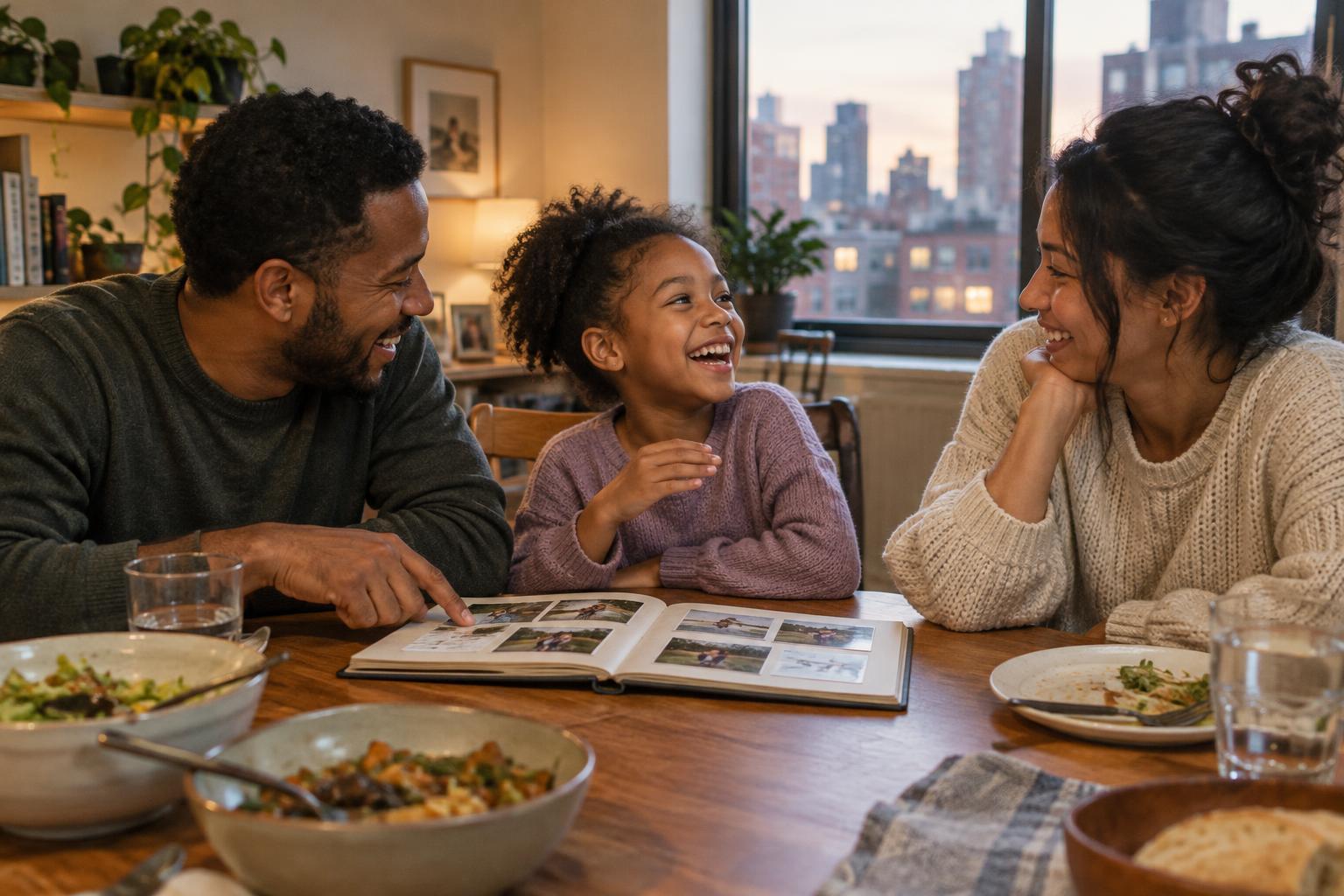
Once a page is finished, put the album somewhere people can browse it, provided it is safe from spills and small hands that might tear loose pieces. Looking through it can prompt stories that were not written down the first time. You can add a note later or simply enjoy hearing different versions of the same day.
The next page does not have to happen on a schedule. When you have a quiet afternoon or a few new prints, invite the family to pick another small story. Page by page, the album becomes a record of ordinary life—and of the time you spent noticing it together.