Start with a plan small enough to enjoy
The best family movie night is not necessarily the one with the most decorations or snacks. It is the one that fits the people, space, and energy you have that evening. Pick a start time that leaves room for getting comfortable and settling in, especially if some family members have an early bedtime. If a full-length film feels like too much, a short movie or a pair of episodes can still make the night feel special.
Before choosing anything to watch, ask what people want from the evening. Someone may be hoping for laughs; someone else may want an adventure or a familiar favorite. A quick conversation helps everyone feel included without turning the choice into a long debate. It also gives adults a chance to set simple boundaries, such as how late the evening can run or which options feel suitable for the group.
Make choosing the movie a shared job
An open-ended question like “What should we watch?” can lead to endless scrolling. Instead, have each person suggest one option, then narrow the choices to two or three that work for the whole group. Check the description and running time before voting. For younger children, showing a few pictures or briefly describing each choice may be easier than asking them to pick from a long list of titles.
Not everyone has to get their first choice every time. You could take turns being the person who makes the final pick from the shortlist, or keep a family watch list for another night. If tastes are far apart, try alternating who gets priority from one movie night to the next. The aim is not to find a film that every person loves equally; it is to make the decision feel fair enough that everyone can settle in.
Give everyone a role before the opening scene
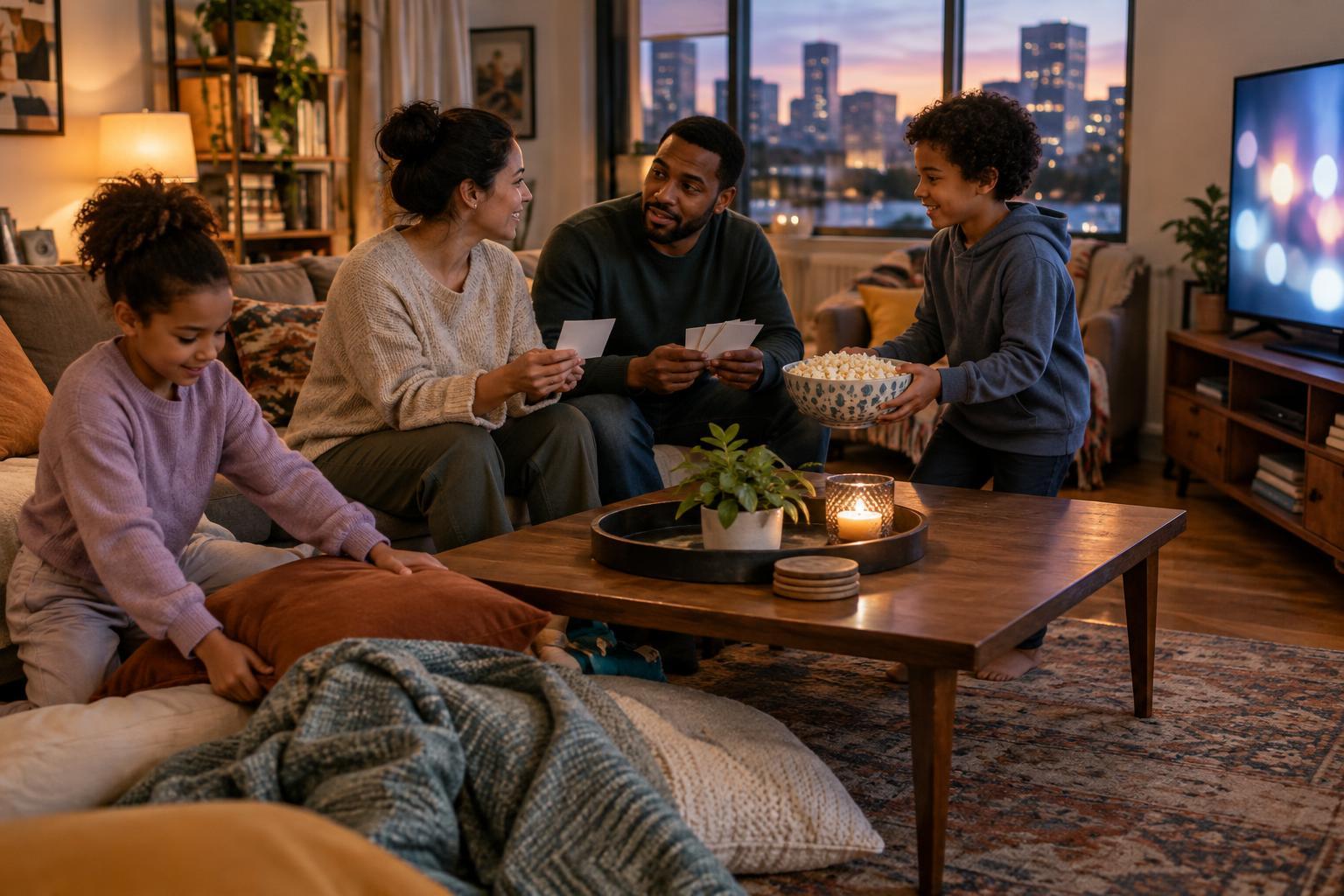
Small jobs turn preparation into part of the activity. One person can arrange cushions, another can set out cups, and someone else can dim the lights or make simple paper tickets. Children who do not want a job can still help choose where to sit. Keep tasks short and optional so that setting up feels like anticipation, not another round of chores.
Snacks can be simple, too. Put out something the family already enjoys, along with water, and decide where food will stay if spills are a concern. In a small apartment, a blanket on the floor can mark out the movie area without rearranging the whole room. If there are neighbors nearby or people sleeping at home, check the volume before the film begins; subtitles may help when you want to keep it low.
Leave room for different ways to watch
Watching together does not require everyone to sit perfectly still. Some children may want to hold a soft toy, draw quietly, or change seats during the movie. An adult might need to step away briefly to handle a household task. Agree on a few useful expectations, such as keeping walkways clear and asking for a pause rather than talking over an important scene. That gives the evening some structure without making it rigid.
Plan for a break, particularly if the movie is long or the audience includes younger viewers. A pause gives people a chance to use the bathroom, refill water, or ask about a confusing part of the story. If someone loses interest, they could look at a book nearby or join again later. Letting one person take a break is often easier than trying to make everyone engage in exactly the same way for the entire film.
End with a conversation, not a quiz
When the credits roll, try an easy question: “Which part would you want to see again?” or “Who surprised you?” People can answer in a sentence, act out a favorite moment, or simply say they liked the snacks best. There is no need to search for a lesson in every story. Sharing different reactions is itself a way to keep the experience going.
A brief reset can be part of the ritual. Ask everyone to carry one item back to its place, then add any new suggestions to the watch list for next time. You might discover that the lasting favorite is not the movie but the chance to choose cushions, sit close, and spend an unhurried evening together. That is a family activity worth repeating, even when the plan stays wonderfully simple.