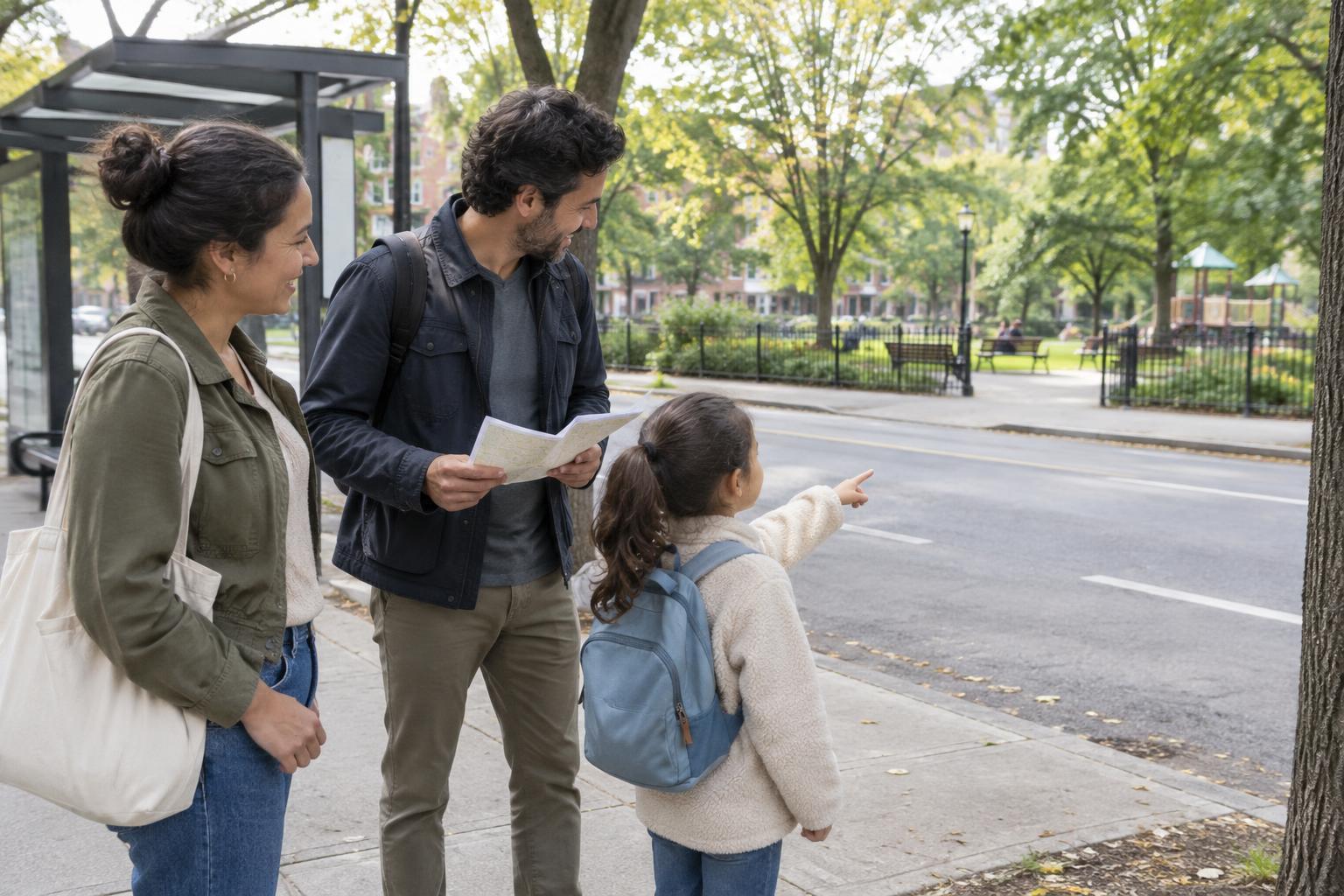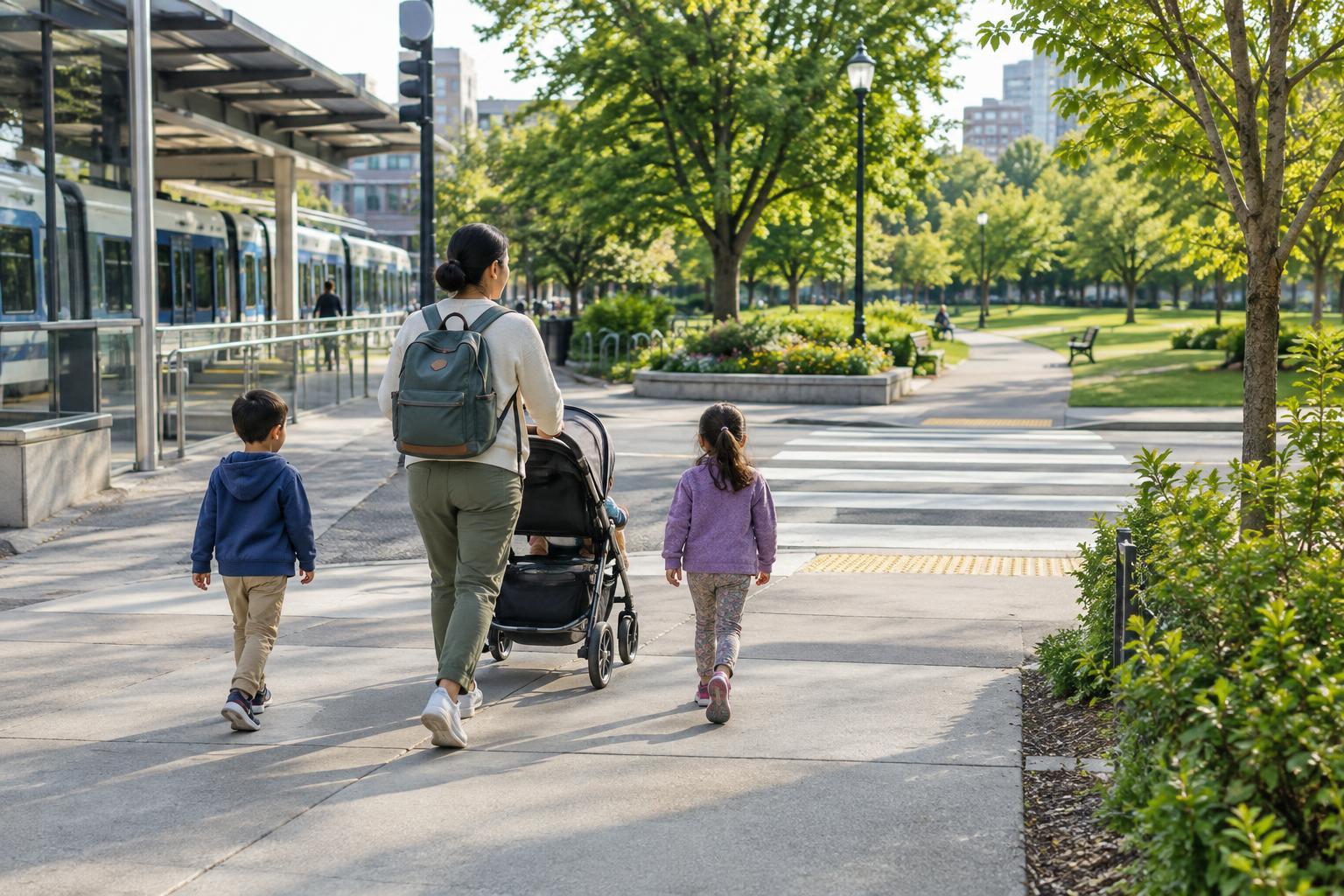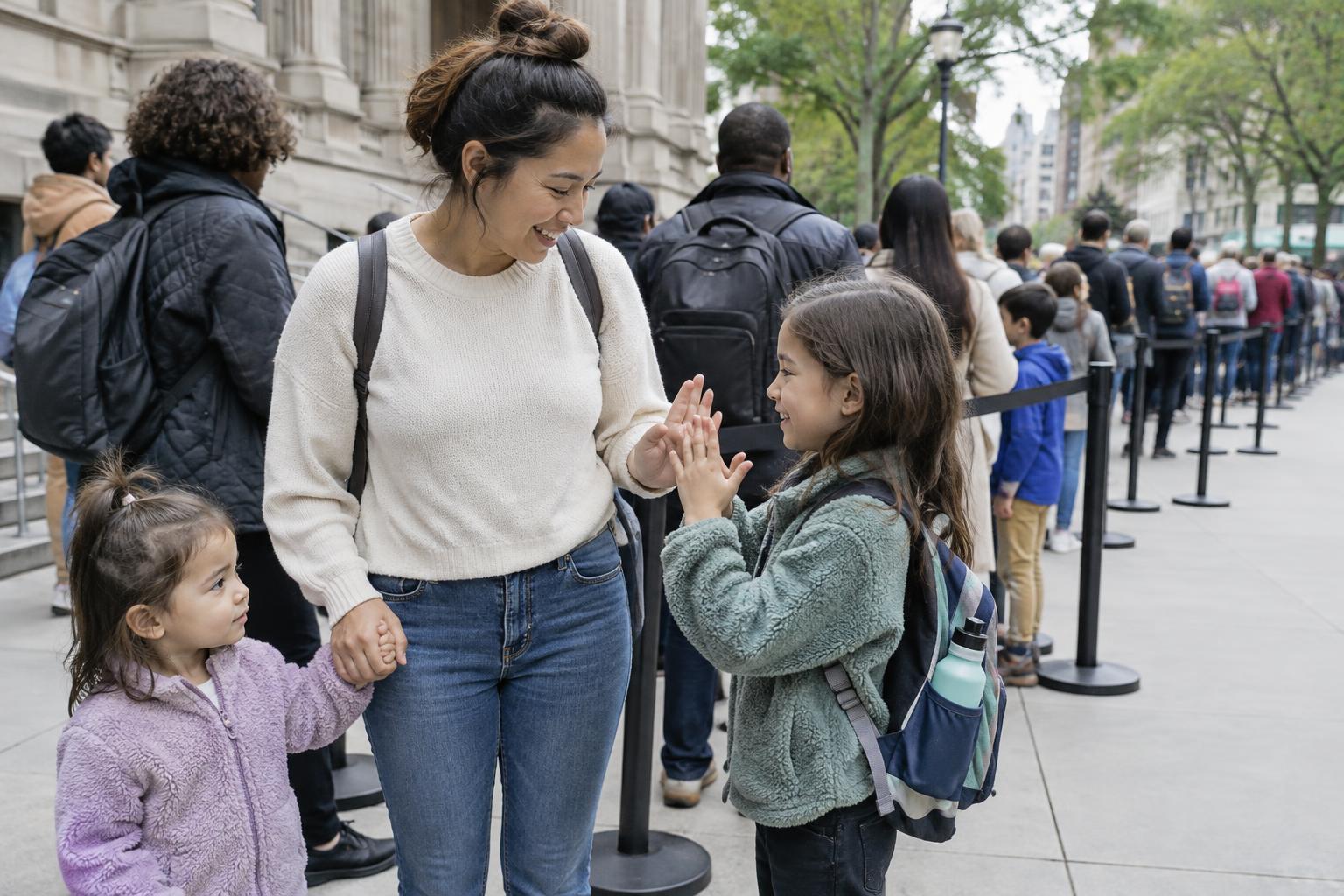
Mistake 1: Treating every stop as a must-do
A library visit, a playground, lunch and a museum may each sound manageable on its own. Put them together, and the day can become a race from one entrance to the next. Children may want to linger at the simplest stop, while adults may feel pressure to get their money’s worth from a ticketed one. When every activity is essential, an ordinary delay can feel like a setback.
Choose one main destination and one optional stop nearby. Decide in advance which stop you would skip if the family is tired or the first activity runs long. This makes room for discoveries that are part of a city outing: watching a bus pull away, examining a storefront display or returning to a favorite piece of playground equipment. A shorter day that everyone enjoys is still a successful day.
Mistake 2: Counting travel time but not transitions
A route planner can help estimate time between destinations, but it cannot account for every part of moving a family. Gathering belongings, finding a restroom, getting everyone into coats and reaching a platform or bus stop all take time. The trip between two nearby places may feel long if it involves a crowded crossing, stairs or several changes of direction.
Before adding a stop, picture the whole transition from leaving one activity to starting the next. Check whether your route works with a stroller if you use one, and identify a simpler backup route when possible. Leave a generous gap between timed reservations. If you are meeting someone, share a realistic arrival window rather than building the day around a precise minute.
Mistake 3: Planning meals and breaks as afterthoughts
It is easy to schedule the exciting parts first and assume food will fit somewhere between them. That can leave the family searching for lunch just as everyone is ready to sit down. A snack may help bridge a gap, but it is not a substitute for knowing when and where you expect to pause. Breaks matter for adults, too, especially when the day involves carrying bags or standing in lines.
Look for an easy place to eat or rest near the main destination, and think about what you will do if it is busy. Pack water and a few familiar snacks if that suits your family. Build in a pause that does not depend on buying something: a bench, a quiet corner or a few minutes in the shade can give everyone a chance to reset before the next decision.
Mistake 4: Packing for every possibility
A bag filled for every imaginable problem can become its own problem. It is harder to find what you need, and carrying extra weight makes long walks less pleasant. On the other hand, leaving behind a small essential can force an avoidable detour. The goal is not to pack as little as possible; it is to pack for the route and the people actually going.
Start with items you expect to use, such as water, weather-appropriate layers and anything needed for changes or cleanup. Keep frequently used things easy to reach rather than at the bottom of a bag. If children can carry a small bag comfortably, let them choose one lightweight item for downtime. Before leaving, check practical details that affect the day, such as entry requirements, opening hours and whether your planned stops allow the items you are bringing.
Mistake 5: Waiting too long to change the plan
A multi-stop day rarely unfolds exactly as imagined. Weather may shift, a place may be busier than expected or one child may be finished before everyone else. Trying to complete the original itinerary can turn a small inconvenience into a difficult afternoon. Changing plans does not mean the outing failed; it means you are responding to the day you are actually having.
Agree on a simple turning point before you go: after the main stop, decide together whether to continue, switch to something easier or head home. Offer limited choices children can understand, such as another short stop or a relaxed trip back. End while the day still feels manageable when you can. The best itinerary is not the one with the most destinations, but the one that leaves room for your family to enjoy being out together.