Mistake 1: Giving every toy a complicated home
A detailed sorting system can look satisfying when you set it up: one box for vehicles, another for figures, and several more for their tiny accessories. But if putting things away requires a series of decisions, cleanup can stall. A caregiver may end up doing all the sorting, or toys may collect beside the bins instead of inside them.
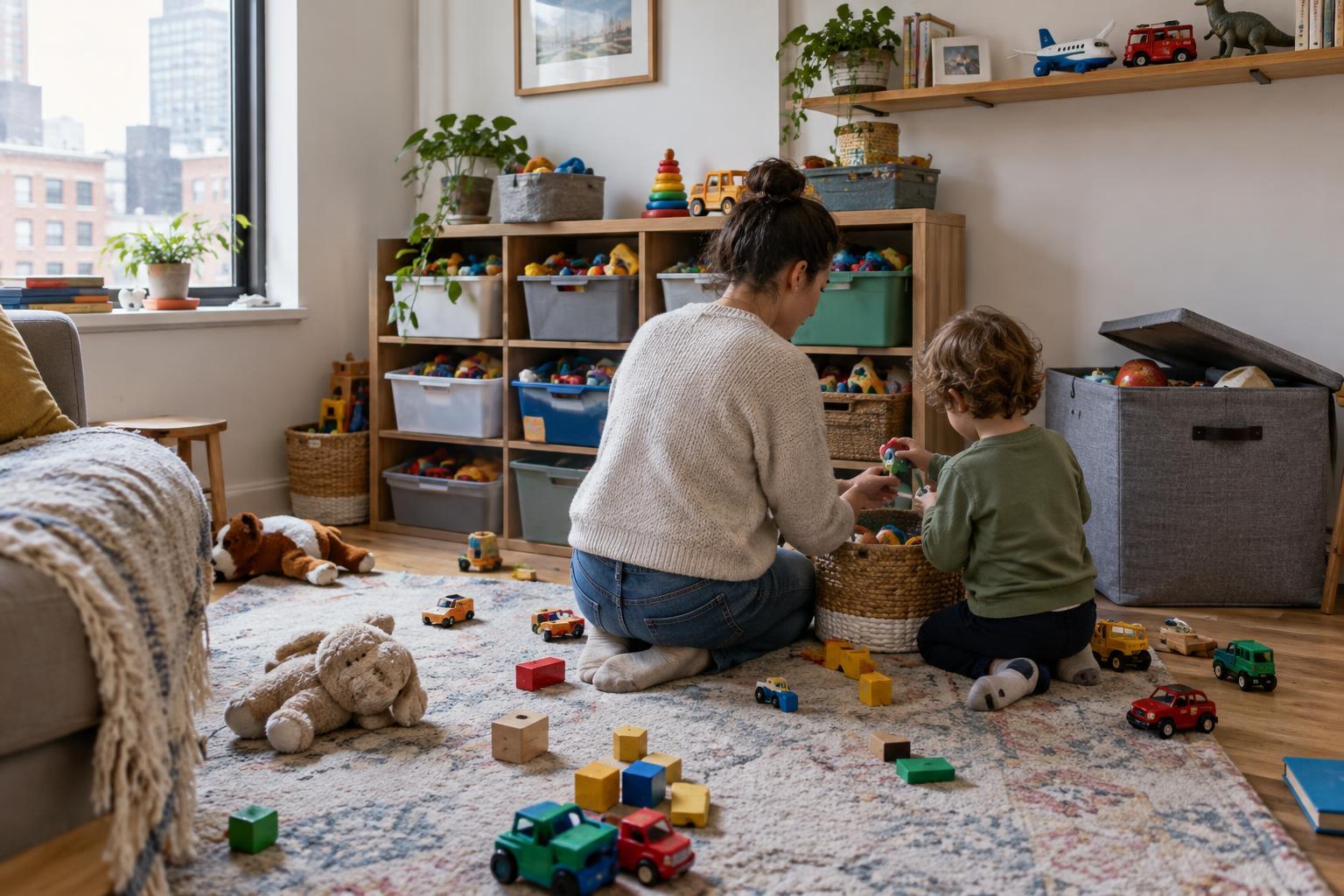
Try broad categories that are easy to recognize, such as building toys, pretend-play items, art supplies, and games. A few mixed pieces in the wrong bin are usually less troublesome than a system no one wants to use. If a set needs to stay together, give it one container rather than separate homes for each part.
Mistake 2: Using containers that are too full or hard to open
An overstuffed bin turns cleanup into a packing puzzle. Toys have to be stacked in just the right order, lids will not close, and children may need help pushing everything into place. Deep containers can cause a different problem: finding one toy means emptying the whole bin onto the floor.
Leave a little room at the top of each container so putting toys away takes less effort than taking them out. Low, open bins work well for items used often. Smaller containers can help with pieces that disappear at the bottom of a large box, but use only as many as your household can comfortably maintain. If a bin stays full even after tidying, it may be time to move some toys out of the everyday play area.
Mistake 3: Putting everyday toys out of reach
High shelves can keep a room looking clear, but they are awkward places for toys children are expected to put away themselves. If cleanup depends on an adult lifting each item into place, a quick reset becomes a handoff. The same issue comes up with heavy baskets, stacked boxes, or furniture that must be moved to reach storage.
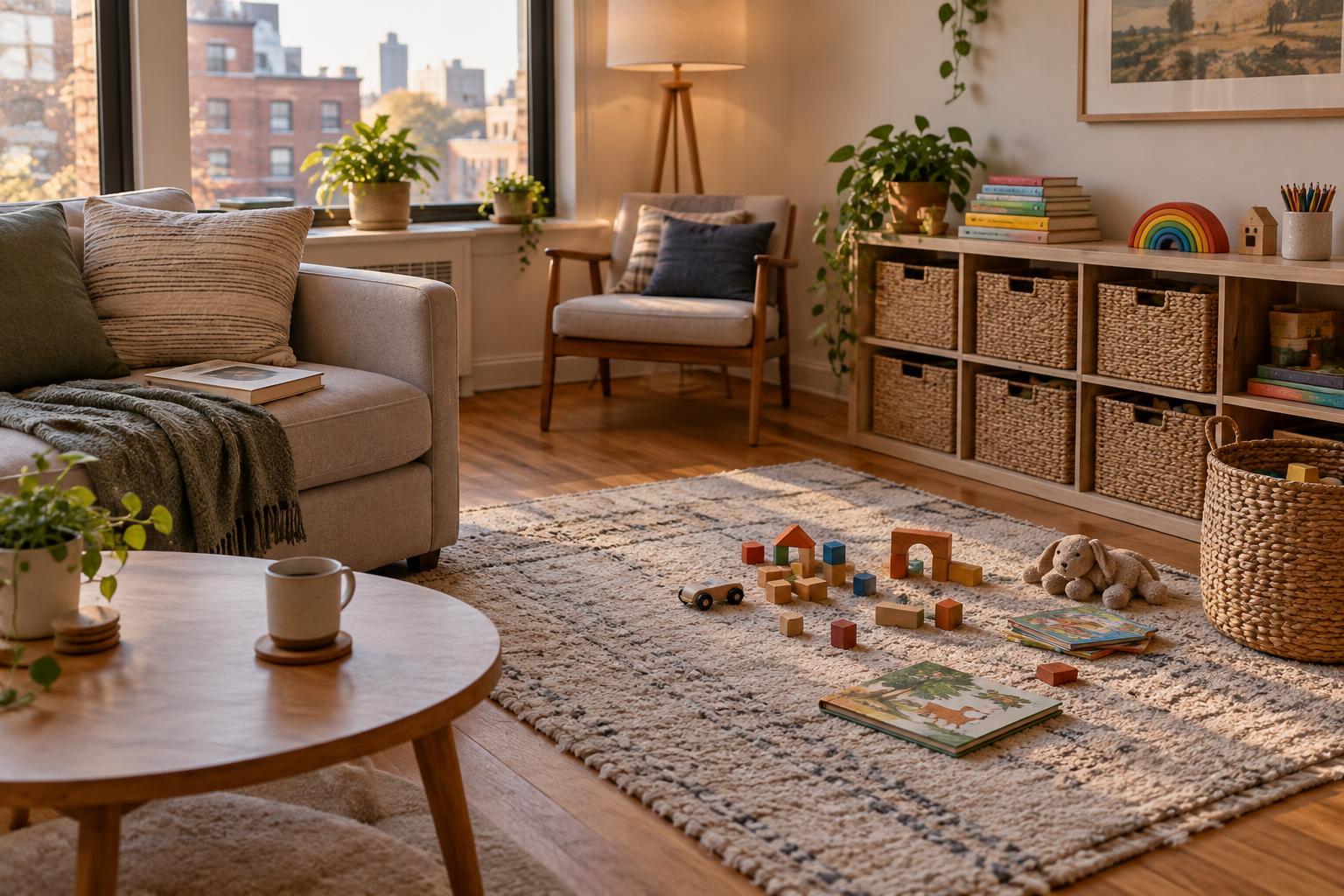
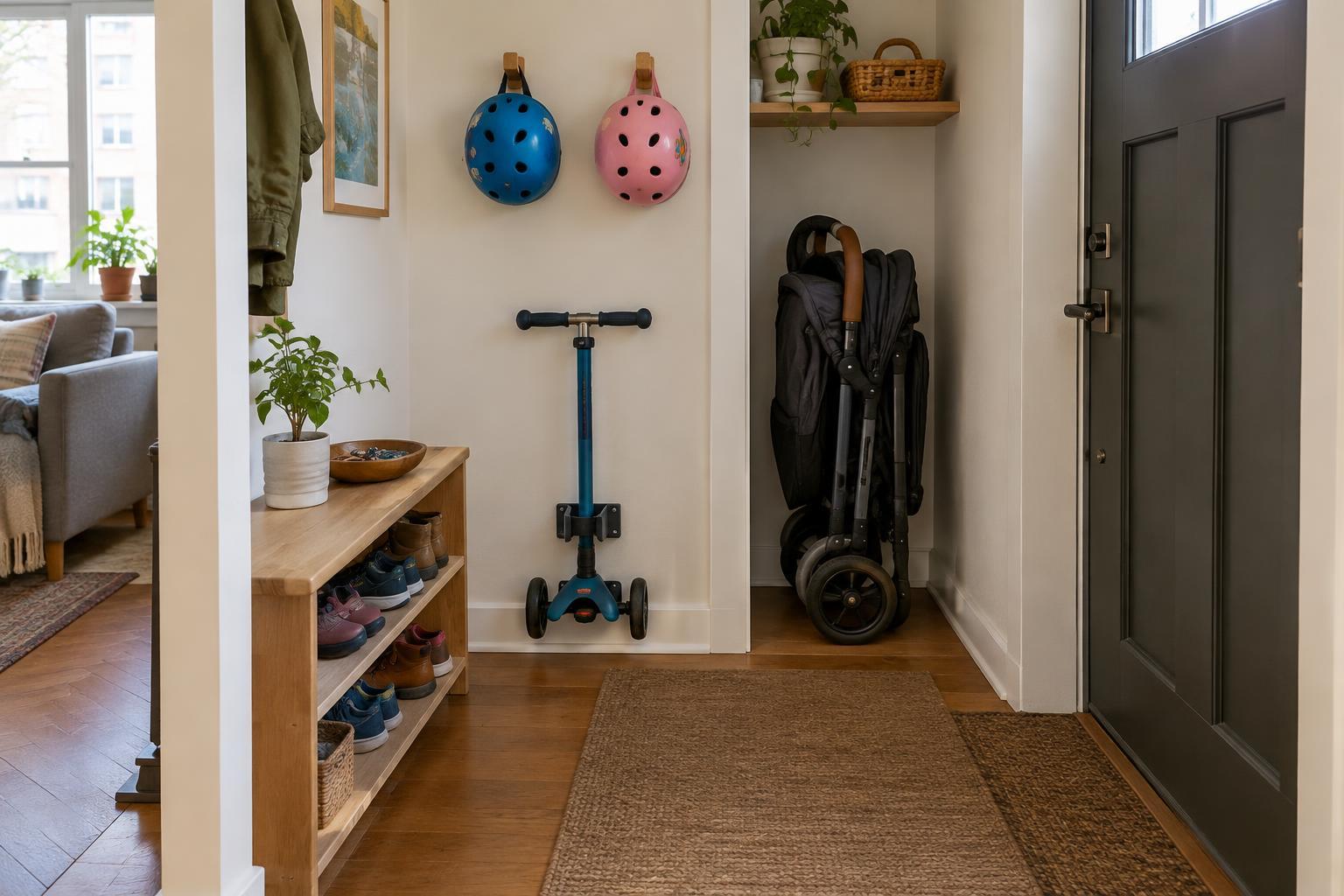
Keep frequently used toys in spots children can reach safely and easily. Reserve higher or less accessible spaces for items an adult brings out, such as occasional craft supplies or games with many pieces. Before settling on a storage layout, try putting away a typical play session. Notice whether anything has to be lifted too far, squeezed behind furniture, or balanced on top of another box.
Mistake 4: Organizing for the room you wish you had
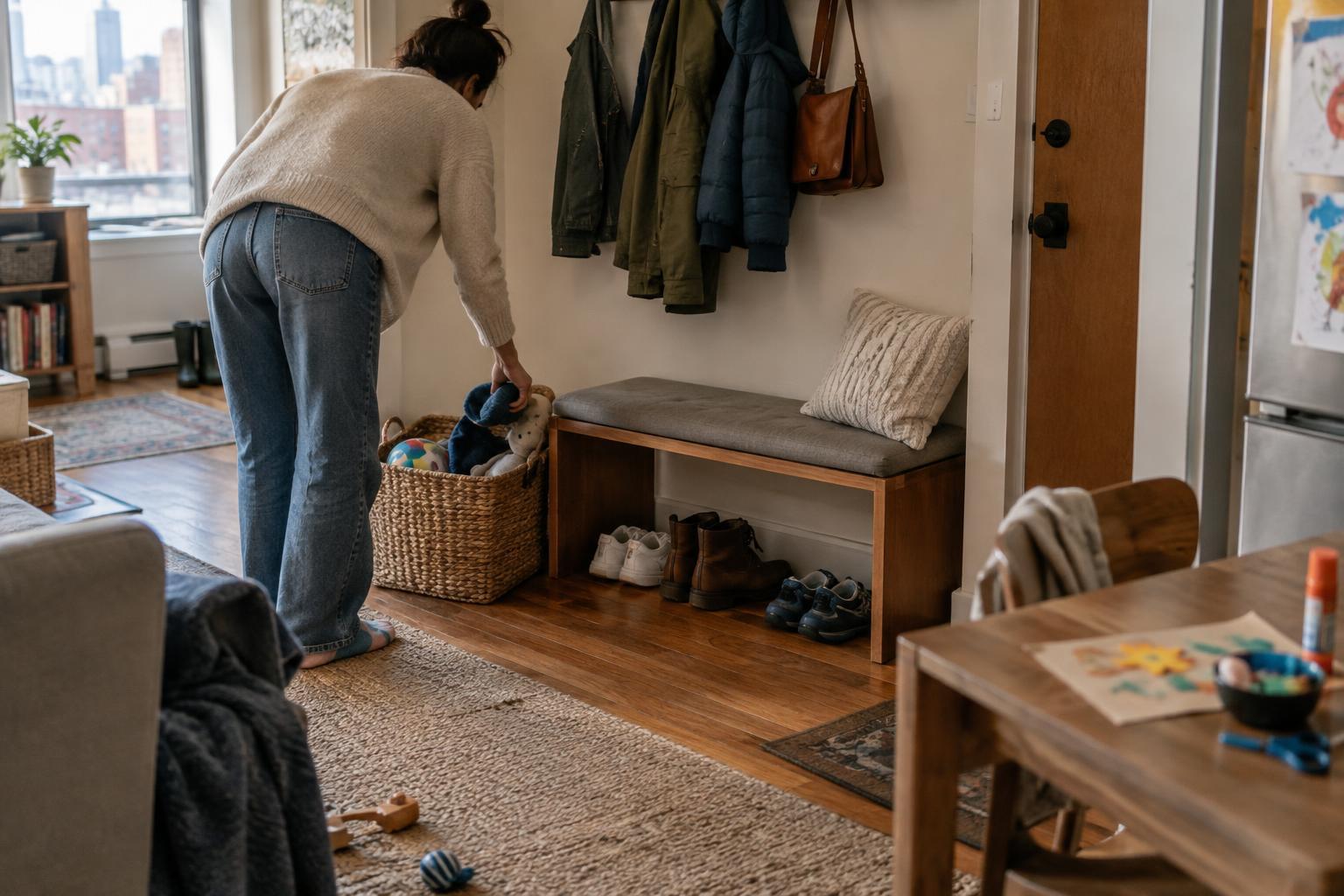
In a city home, play may happen wherever there is open floor space: beside the sofa, at the kitchen table, or in a bedroom shared with other activities. A storage setup can be perfectly tidy in one corner and still be inconvenient if toys regularly end up across the home. Carrying every piece back to a distant shelf adds a step to an already busy transition.
Look at where toys are actually used before deciding where they belong. A small basket near the living-room play spot or a tray for table activities may be more useful than one large toy station. If items often move between rooms, a lightweight carry bin can make the return trip simpler. Storage does not need to stay invisible; it needs to fit the way your household uses its space.
Mistake 5: Treating cleanup as one enormous task
Even a good storage system can feel overwhelming when every toy is out at once. A request to “clean the room” leaves a lot to figure out: what belongs where, which project is still in progress, and what to pick up first. The larger the mess, the easier it is for cleanup to become a long negotiation.
Make the next step specific. You might start with “put the blocks in this bin,” then move to books or dress-up items. A brief reset before switching activities can also keep the floor from filling up, though it does not have to happen every time. For projects worth saving, choose a designated shelf or tray so they are not mistaken for clutter.
The most helpful storage system is one that makes the ordinary day easier, not one that looks perfect when no one is playing. Start by changing the part of cleanup that causes the most friction. A reachable bin, a broader category, or a better location may do more than a complete reorganization.