Choose a time you can actually use
A weekly family activity night sounds simple until it meets late commutes, homework, laundry, and different bedtimes. Rather than picking the evening that looks best on a calendar, look for a window your household already tends to spend together. It might be an hour after dinner, a Saturday morning, or a Sunday afternoon. “Night” can be the name of the tradition even if daylight works better for your family.
Start with a short commitment, such as 30 to 45 minutes, and treat setup and cleanup as part of that time. If schedules vary, choose a regular anchor instead of a strict start time: after Friday dinner, for example, or before the weekend grocery trip. The goal is a repeatable chance to connect, not another appointment everyone has to rush to make.
Build a small menu of easy options
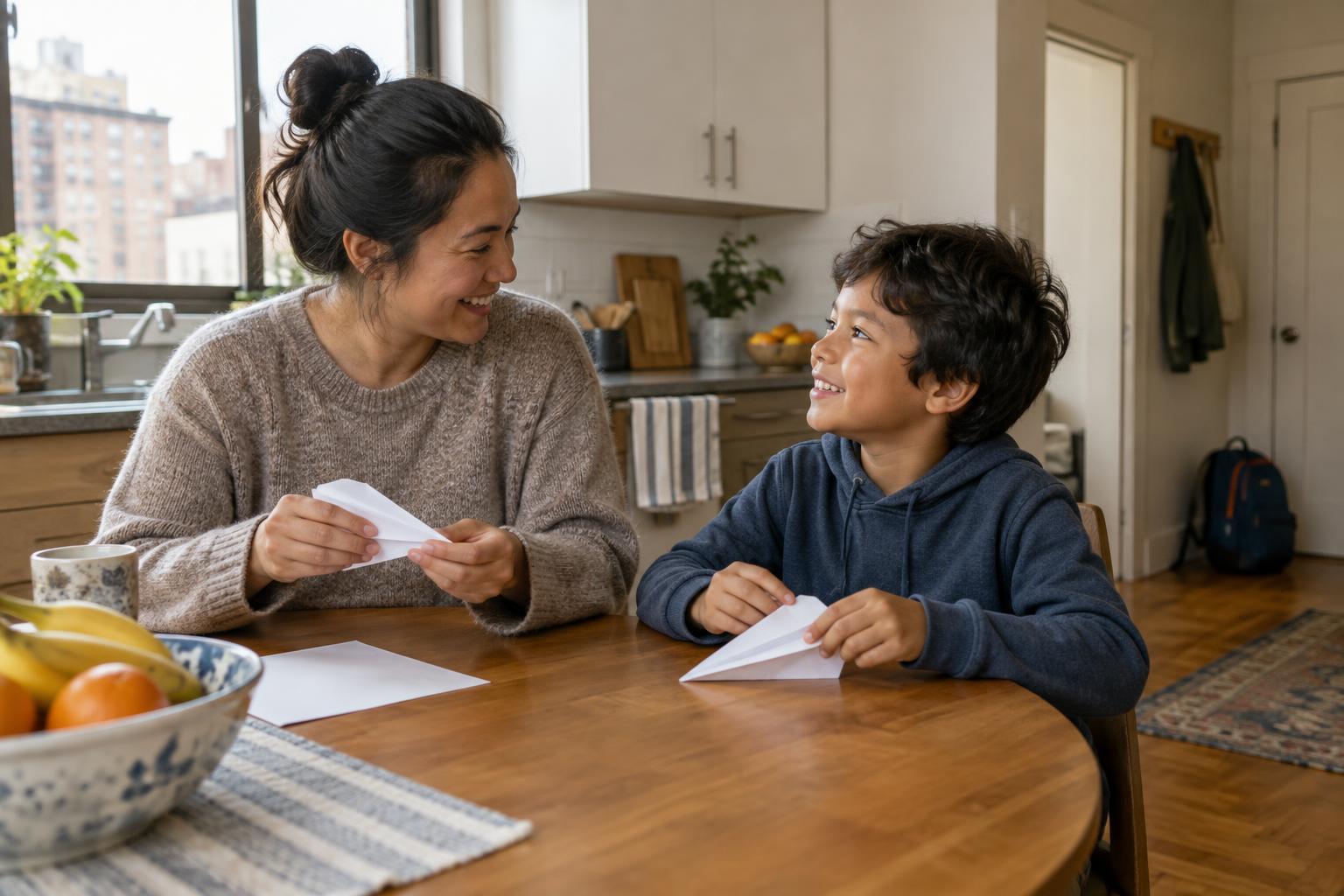
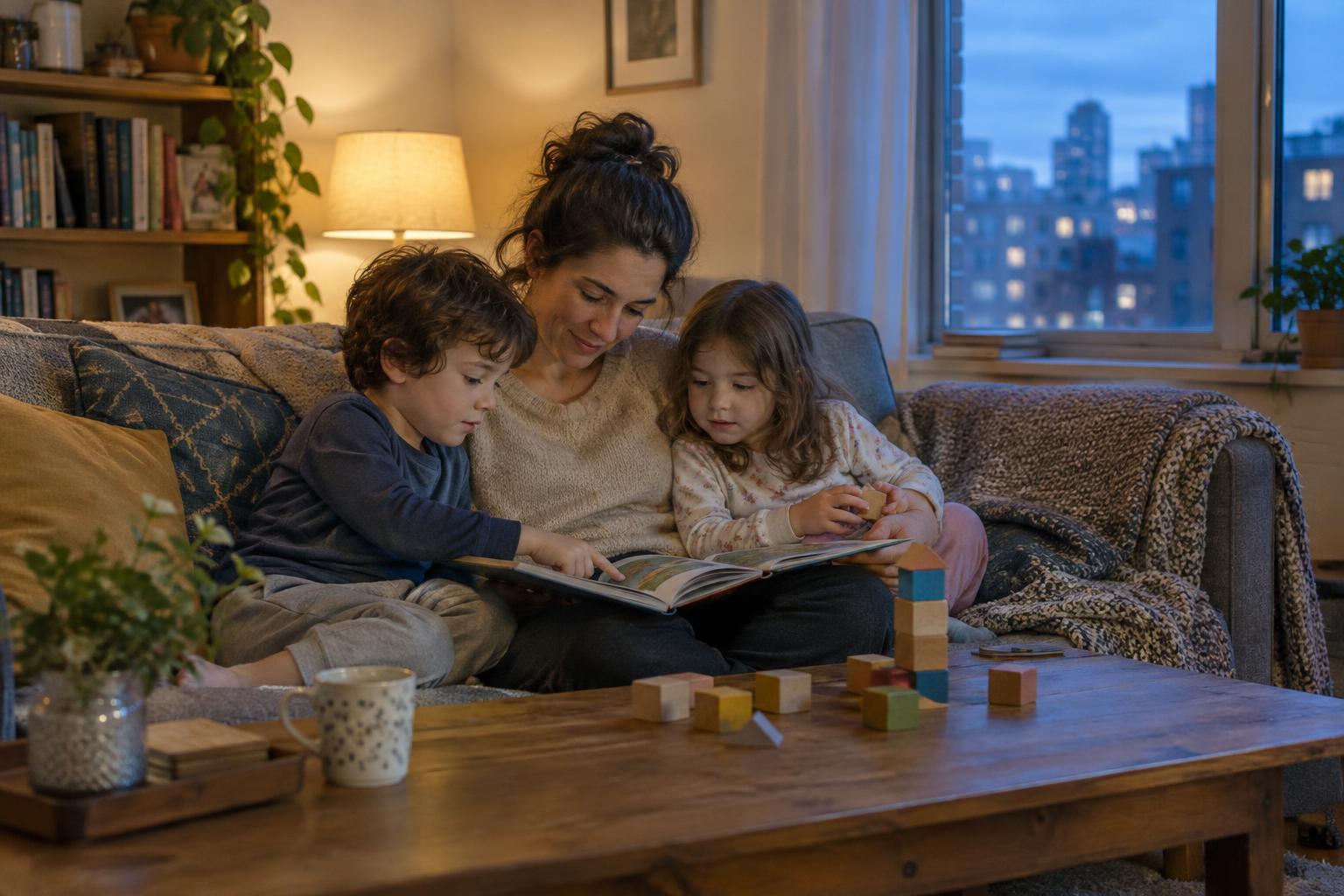
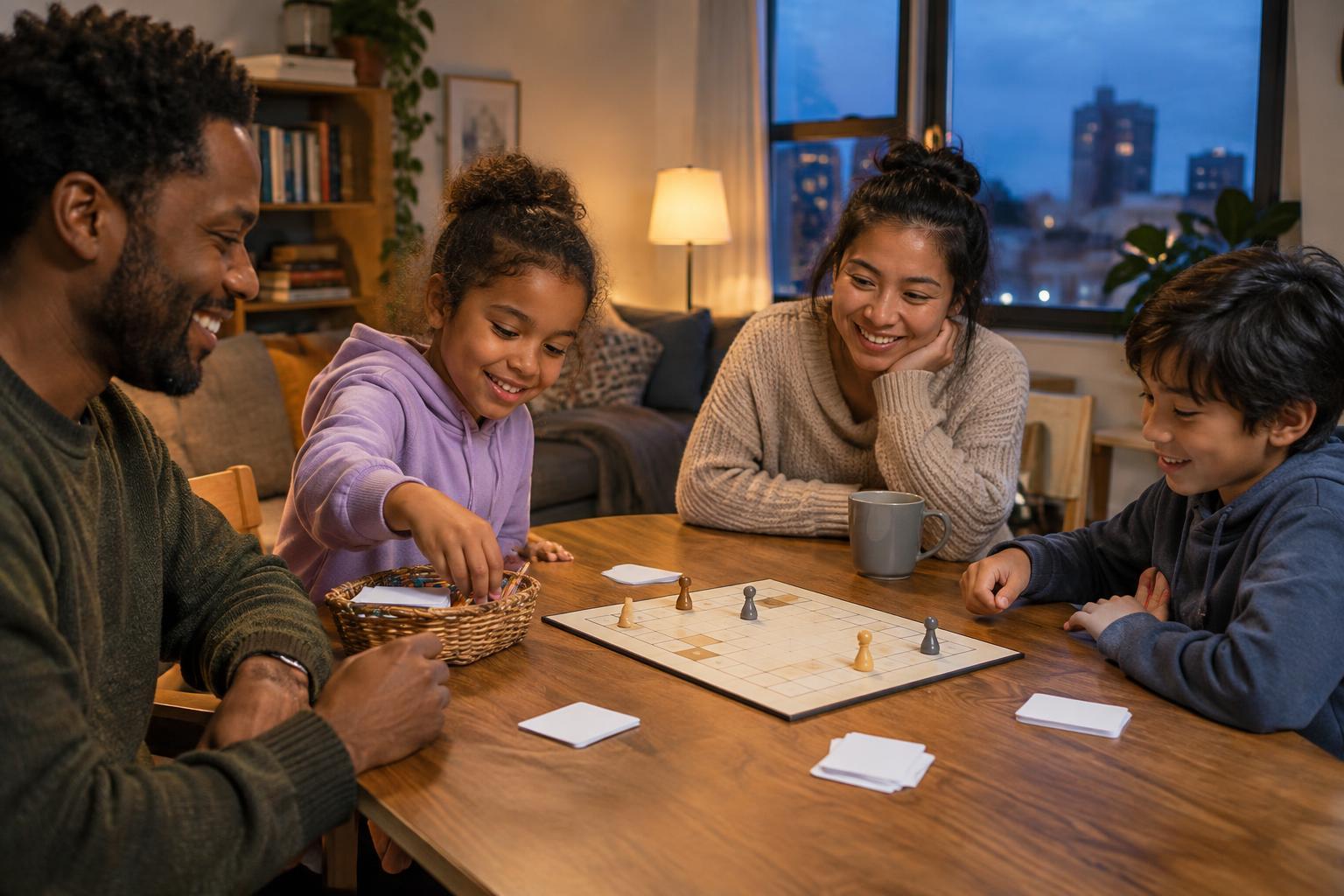
Deciding what to do each week can become the hardest part. Make a list of activities that use things you already own and fit your available space. In an apartment, that might mean a card game at the kitchen table, a living-room picnic, a shared drawing challenge, or building a blanket fort that comes down before bed. A read-aloud with different people choosing the voices can be just as much of an activity as a craft.
Keep a few choices for different energy levels. On an energetic day, try a neighborhood walk with a simple mission, such as finding three interesting signs or noticing changes in familiar storefronts. On a tired day, put together a puzzle or let each person pick one song for a family playlist. Having quiet and active choices makes it easier to keep the routine without forcing the same mood every week.
Let everyone have a say without making planning a chore
Family members are more likely to look forward to the time when they can influence it. Offer two or three workable choices rather than an open-ended question that leads to a long debate. Younger children can point to a picture or choose between supplies you set out. Older children may enjoy taking a turn picking the game, choosing a snack, or explaining the rules of something they like.
Set a few friendly boundaries in advance: how much time you have, whether you are staying home, and what materials are available. You can rotate who chooses or alternate between group favorites and new ideas. Not every activity has to delight every person equally. The useful measure is whether people have a way to join in, even if someone’s contribution is keeping score, setting the table, or choosing the closing song.
Make starting and cleaning up part of the routine
A small opening ritual helps activity time feel distinct from the rest of the week. You might clear the table together, put phones aside for the first part of the activity, or serve an ordinary snack in the same bowls each time. Keep supplies in one easy-to-reach spot if you can. A deck of cards, paper, crayons, and a few reusable game pieces give you several options without requiring a closet full of equipment.
Plan the ending before you begin, especially when space is shared. Leave ten minutes to put things away, and give each person one manageable job. If a project cannot be finished in one sitting, take a photo of the stopping point or place the pieces in a container for next time. A predictable finish makes it easier to say yes to starting, even on a busy evening.
Keep the tradition flexible enough to last
Some weeks will not support a full activity. A ten-minute round of questions over dinner or one quick game still counts if it gives you time together. If someone is away or needs a quiet evening, the rest of the household can carry on without treating their absence as a failure. You can also skip a week and pick up again; there is no need to make up for lost time.
After a few tries, ask what felt fun and what felt like work. Keep the activities people request again, and let the complicated ones go. A successful family activity night is not measured by impressive projects or perfect attendance. It is a familiar invitation to pause, share an experience, and enjoy the company you have in the time available.